
By Uvil Zajmi
Memorie.al / A small town down in the south of the country, only 20 km from Përmet, known for its tradition, history, residents, but also for a modest beverage factory, “Musa Fratari.” However, what stirred me, provoked me, and increased my curiosity to stop at that factory, was a very particular piece of information, which I found while browsing an issue of the magazine “Ylli” from 1962, the largest at the time, monthly and widely read. Precisely on one of its pages, from that distant March, my attention would be drawn by a piece with a very surprising title: “The First Albanian Champagne,” authored by the well-known publicist Pipi Naçe, who writes: “A visit to the new factory ‘Musa Fratari’ in Këlcyrë.”
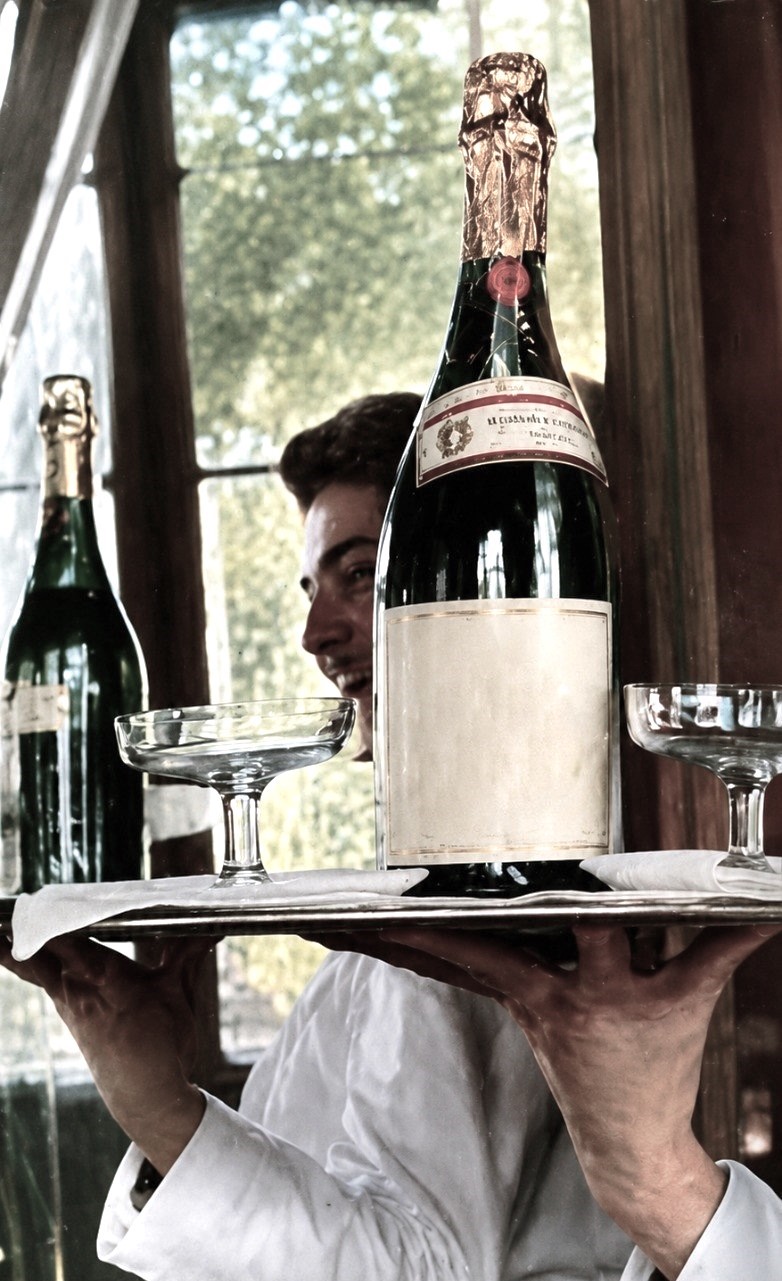
This is the title with which the author begins the article, accompanied by a photo, clearly showing a waiter serving a bottle of champagne to customers. It seems somewhat unbelievable if one were to hear today about such a fact, with a factory named after a national hero as its protagonist. Right there in Këlcyrë, a town in the south of the country, in that simple environment with those conditions and machinery provided by local specialists, the champagne “Përmeti” would be produced.
We are in the years when socialism dominated everywhere, in enterprises, institutions, schools, families, in every sector of work and life for Albanians. For that system, French champagne, as a drink of the bourgeoisie, was not preferred; moreover, a production of the Albanian brand would have been more than a challenge for it.
Xhevahir Lumani: “How I Found the Champagne Bottle”
Xhevahir Lumani, among the few who experienced that factory, and as he returns to those years, recalls: “It was the Russians who built it, also with the desire to produce champagne,” he says. From the specialists, names, managers, responsibilities, how work was done, to the moment he found a bottle of the famous drink, a product of that workshop, etc., he introduces us to them in this interview.
Mr. Xhevahir, what connects you to that factory?
Initially, I did my internship there after high school, and then I worked for five years at that factory, or food-processing plant of Këlcyrë.
Who had designed that factory?
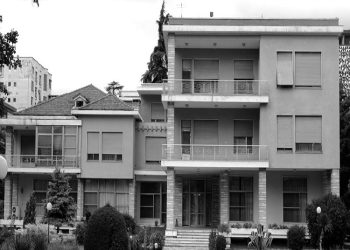
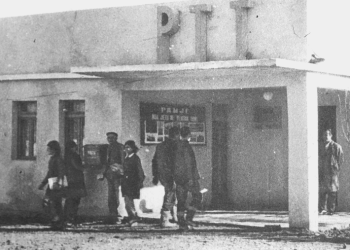
It was the Russians who, after coming to Këlcyrë, first designed a combine, with several departments, such as those for processing grapes, fruits and vegetables, producing cognac, raki, uzo (aniseed brandy), various wines, preserves, etc. It was built on the outskirts of the town, not of large dimensions, single-storey, of a typical style suitable for the region.
And with the name of a hero…?
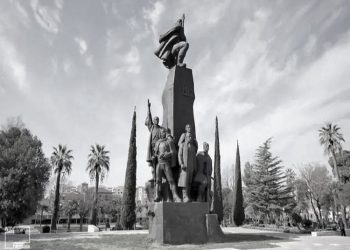
Just as was done for the time, when every factory, plant, school, took the name of a war hero, or a prominent personality. It was given the name “Musa Fratari,” a “Hero of the People,” born in Fratar of Përmet, a former student of the Korçë high school, a distinguished fighter up to the Spanish War, who passed away in 1938, not yet 28 years old. His bust was placed there, where it stayed for several years. Then it was removed and placed in a beautiful flower garden on a hill, and later it was brought to the center of Këlcyrë.
What was the contribution of the Soviet specialists?
The Russians brought equipment, machinery, grape processing distilleries, and they also made the vats. Their technicians lived there, as two-story buildings were constructed for them. I recall that in those buildings, when they left, in some of their apartments, Albanian specialists and technicians were settled, among them Sotir Sevo, etc. Modern entrances, with showers, quite good conditions for the time.
Do you remember how work was done there?
In quiet times, not at the peak of summer, about 50-70 workers worked at that factory, men, women, boys, and young girls, a large number moving from one department to another, always active and engaged. During the vegetable processing period, or in autumn, their number increased to up to 250, with farmers from the area, even school pupils, especially when grapes were collected and processed. Work was done according to norms, in shifts, with payment based on professional category.
How was the workforce ensured?
All those who were taken to work in that factory were from Këlcyrë, surrounding villages, and from Përmet, especially the specialists. With the aim also of employing the people of that somewhat poor area, who could not guarantee sufficient income for a family to live on.
From Pipi Naçe’s article, we read that there were quite well-trained people?
Each sector had its specialists who directed the work, such as Sotir Sevo, Syrja Hodo, Llazi Kllapi, etc. But also many women, I recall Efthimi Sevo, Ervehe Bejollari, etc. All trained, masters of several professions, such as mechanics, adjusters, welders, technologists, skills acquired in high schools, or in factory courses opened specifically for this purpose.
Regarding the grape varieties, how was it done, who guaranteed them?
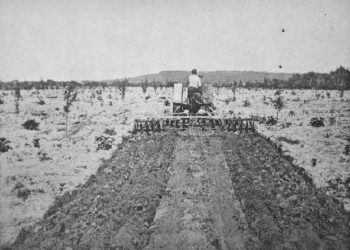
That is a well-known area, endless fields, full of vineyards with all varieties of grapes, white and black. This greatly aided the production of alcoholic beverages.
Let’s talk a little about the champagne, where and how did the idea for its production come about?
The idea came from the Russian specialists, based on the quality, the characteristics, the grape varieties; they saw the possibility of producing a drink similar to champagne.
But without being able to realize it…?
Because after the breakdown of relations with the Soviets, in 1961 or 1962, they left. But it was our specialists, the beverage technicians Sotir Sevo, Njazi Kllapi, engineer Thoma Nasi, who continued the work and processes for champagne production, when alongside several wines; the factory had managed to produce that very special product for the time. I also recall a director, Eqerem Alia.
It is said that for the production of champagne, several processes are involved?
Yes, more than true. Champagne has a special treatment in production. It must be well clarified, filtered 3-4 times, and care is taken to avoid high acidity. Four percent sugar is added to this liquid to produce carbon dioxide gas, then the clarification process. It is then placed in thick bottles to withstand internal pressure, etc.
And the packaging of the champagne, how was it achieved, where were the bottles and their labels produced?
The bottles had been brought by the Russians, and they put the name “Përmeti” on the label. Among other things, during the first three months, they are turned left and right, so that no sediment remains around the bottle. The champagne is decanted once more, and then it goes through aging. Certainly, the more time that passes the better and more flavorful it becomes. The champagne bottles are placed with the neck down, in special rooms designated for them.
During those years you worked there, do you recall any particular event?
I recall one day, after the 1970s, the factory supervisor calls me. Near his office, there were the vats, and between them there were gaps filled with various bottles produced over the years, from 1961, when the factory started operations. “Clean these out,” he told me, “because it’s been a long time since they’ve been here.”
While I was cleaning, among the bottles I was sorting, I saw that there was also a champagne bottle. The label was damaged. I took it in my hand, with a wide base, the kind that holds pressure. So different from a wine bottle. Wider at the bottom and indented from below, well corked, with a metal cap tied with wire.
What happened, what did you do?
I opened it and tried it; it was champagne. I didn’t tell anyone, but all those bottles were later thrown away. Along with them, our champagne of the “Përmeti” brand.
“Shkumbues” – The “Morava” Champagne
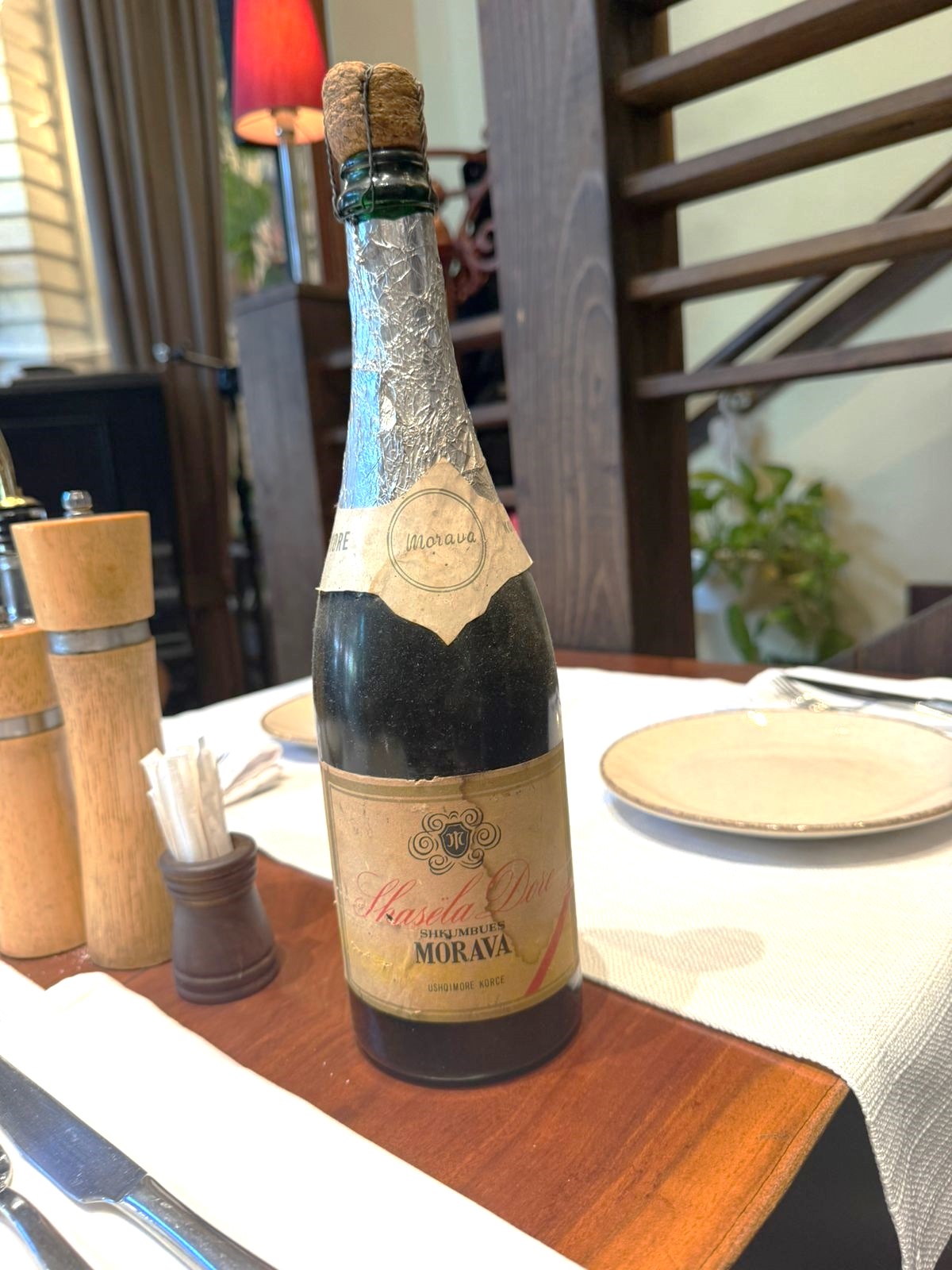
While we are seated in a bar near the pedestrian street in the capital, a completely unique bottle placed in a corner catches your attention. Driven by curiosity, as you approach it, initially struck by its age, then its shape, you suddenly read “SHKUMBUES” (Effervescent). I take it in my hand, a champagne bottle of Albanian brand, with a label referring to a name, in handwriting, “Shasëla Dore” and below it in capital letters: SHKUMBUES “MORAVA”, Ushqimorja (Food Processing Enterprise) – Korçë.
With the man who has it in his collection, Muharrem Çobo, the conversation is very interesting, as he begins the account: “That’s what they called it, that’s how we find it. This is a bottle from Ardian Cerga, the well-known actor. Cerga and I have been close friends for a long time. One day, he tells me: ‘Muharrem, at home I have a bottle of champagne, which at that time they called “Shkumbues.” We were in Korçë, shooting the film ‘Mësonjëtorja’ (The School). We had taken several such bottles, and after consuming them, I kept one of them.’ A few days later he brought it to me, and this is what you see.”
I was interested in finding out what its story was. I met and spoke with the former director of that enterprise, the Food Processing Enterprise of Korçë, Duro, and he told me: “It was a drink that was produced for a period of almost three years. It must have been between the 1970s and 1980s. Then, from someone, a directive came, saying that this is champagne, a bourgeois drink, we must not produce it anymore, and it was prohibited.”
But Muharremi also has a regret, which he does not hesitate to express: “Given our productions, today we have our own champagne, we call it ‘Shendeverë,’ but the bottle that Cerga gave me, I have placed it there, as a piece of history. For me, it is very important, what the productions of that time were, more so wine, but also other beverages; if there were a museum where they had been preserved, it would be a very interesting thing, but unfortunately, there isn’t one. Of course, they were state property, we were in communism or fascism, but they remain productions of this country, which would show and transmit only tradition.” / Memorie.al