From Bashkim Trenova
Part Twenty‑Two
– NAZIBOLSHEVISM – LITERATURE AND THE ARTS –
PREFACE
Memorie.al / Historians, political philosophers, intellectuals of various schools or positions have devoted thousands and thousands of pages, entire volumes, studies and articles to the comparison between Nazism and Communism. Generally speaking, their publications and studies focus on the police control of society by these dictatorships, the role of the dictatorial state hierarchy and the head of state as suppressors of free thought, the omnipresence of official propaganda in society, the mass massacres and the network of concentration camps, the activity of the police – the NKVD in the USSR (later the KGB) and the Gestapo in the Third Reich. In his book “Le Passé d’une illusion” (The Past of an Illusion), François Furet notes that Nazism and Communism share the same opposition to liberal democracy and to what they call “capitalist bourgeoisie”. Both ideologies claim to be socialist and use the image of socialism. Communist countries called themselves “socialist”. “Nazism” is a shortening of National Socialism.
Continued from the previous issue
FILM
Also in 1967, Soviet cinema produced the film ‘Анна Каренина’ (‘Anna Karenina’), based on the novel of the same title by Leo Tolstoy. The film, directed by A. Zarkhi, as its title indicates, centres on Anna Karenina, a young married woman who belongs to 19th‑century Russian high society. She falls in love with Vronsky, a charming young man. She abandons her husband and children. In the end, the novel’s heroine, in deep despair, throws herself under the wheels of a train. Where is the communist morality of the novel and subsequently of the film? Perhaps the Bolsheviks calculated that by doing so they would ruthlessly unmask, in the 20th century, the morality of 19th‑century Tsarist high society and, comparatively, prove the values of the new communist morality?! It seems naive, nevertheless…! Why not?
‘Капитанская дочка’ (‘The Captain’s Daughter’), a film by Vladimir Kaplunovsky, produced in 1958, based on the novel of the same title by Alexander Pushkin; ‘Мёртвые души’ (‘Dead Souls’) by Nikolai Gogol, made by Leonid Trauberg in 1960 – these are also part of Soviet propaganda cinema. Other film directors such as T. Sabinski, I. Perestiani, V. Gardine, and A. Sanine would bring to the screen the literary works of the Russian classics. The adaptation or screening of classical literary works also serves to align Soviet power as the heir and continuer of the great national culture, to present a magnificent image of Soviet culture, especially to the outside world.
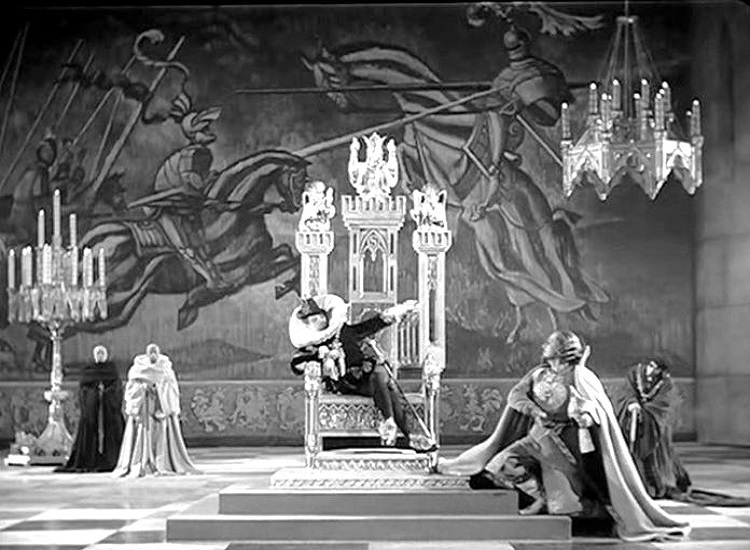
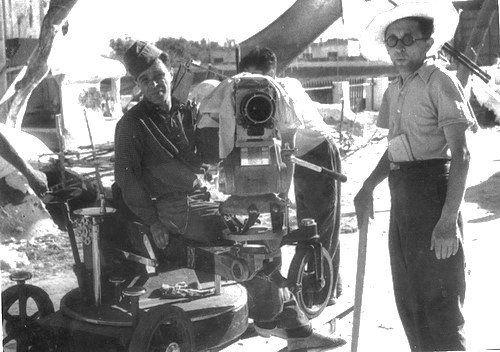
Soviet cinema has as its main and primary axis the heroism of the Communist Party and the Bolsheviks in general, the grandeur of the Bolshevik action and of revolutionary, Marxist‑Leninist ideology. It strikes at Tsarism and then at the bourgeoisie and the February Revolution of 1917. To fulfil this role, it relies on the emotional – i.e. it speculates with the viewer’s emotions – it does not respect historical reality and turns the October Revolution into a legend, the official version given by the Bolsheviks. This is evidenced, right after the revolution, by the films of 1917: ‘Революционер’ (‘The Revolutionary’) by Evgeni Bauer, ‘Не надо крови’ (‘No More Blood’) by Yakov Protazanov, and others such as ‘Броненосец Потёмкин’ (‘Battleship Potemkin’) of 1925 by Sergei Eisenstein, which is known as one of the greatest propaganda films of all time.
In “Battleship Potemkin”, Eisenstein deals with the mutiny of the sailors of this famous battleship off the shores of Odessa in 1905. He films in close‑up the worm‑infested meat served as food to the sailors, simple sons of the people. Those who symbolise the authorities – the officers, the doctors, the priests – are not on the sailors’ side and do not admit that the meat is inedible. Thus, the sailors revolt against the authorities. Their rebellion develops simultaneously with the revolt of the people of Odessa. According to the film, the people and the sailors are on the same path because they belong to the same social class. The death of one sailor further inflames the people of Odessa, because they see, in this particular case, their own death under the same conditions, “death for a crust of bread”.
The film spares none of the representatives of official authority – all of them, officers, doctors and especially the Orthodox priests, openly show their contempt for the sailors. Following the film, one notes that if the sailors’ uprising was supported by the inhabitants of Odessa, its brutal suppression by the authoritarian power is accompanied by the merciless killing even of mothers and their children. But above all, the Potemkin mutiny shows that the people are linked with the soldiers, something that is not found in any other historical case. By rewriting history, the film demonstrates that if there is class solidarity, the soldiers – i.e. the people – emerge victorious over the officers (aristocrats, bourgeois). The film ends with the solidarity of all the sailors. Those from the warships that were supposed to sink the Potemkin by firing their artillery at it, salute the mutineers.
This film by Eisenstein, distorting history, serves the Bolshevik myth according to which the army joined the Revolution in October 1917. And not only that. The film footage itself is sold as if it were documentary footage of the revolt in Odessa! Despite everything, despite the powerful publicity campaign mounted for this film, despite the widespread legend that it was received with extraordinary success by the working masses, “Battleship Potemkin” was withdrawn from cinemas immediately after two weeks, making way for Allan Dwan’s “Robin Hood”, with a script by D. Fairbanks.
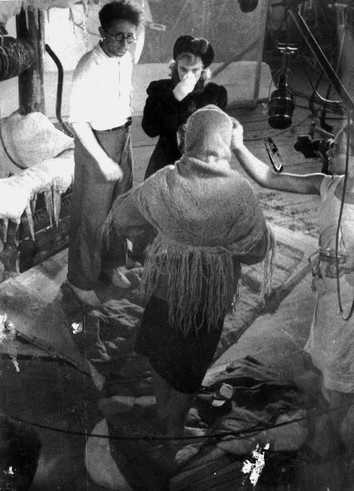
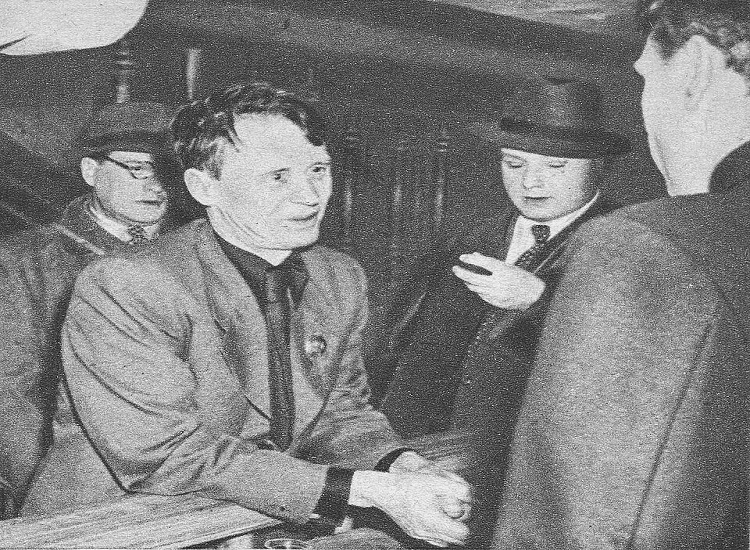
The film ‘Октябрь’ (‘October’) by Sergei Eisenstein and Grigori Aleksandrov, made in 1927 and known as a “classic” film of Soviet propaganda cinema, was produced for the 10th anniversary of the October Revolution. To give it the passport of historical truth, Eisenstein hired non‑professional actors. He recruited them in Leningrad bars: a worker playing the role of Lenin! For the making of the film, to present it as a faithful reflection of historical truth, troops of the “Red Army” were mobilised for the shooting of scenes involving crowds. The military equipment we see in the film was borrowed from the “Red Army”.
Soviet propaganda wanted to use this film to build the myth of an October Revolution supported by the masses, a popular revolution carried out by the people. In Soviet cinema, as in other fields of art, the proletariat had to be presented as the main actor of history. Historians have shown that the October insurrection – or, in other words, the October Revolution – was carried out by determined men, but without genuine popular support from the masses of the capital. This truth does not conform to the principles of Marxism‑Leninism, especially to the widespread idea that whole crowds of people mobilised behind the Bolsheviks. In support of this idea, of this propaganda, is also Eisenstein’s film “October”. How faithful to the truth Eisenstein’s “October” is, is shown by the fact that over the years 45 minutes of film were cut from it, which included the figure of Trotsky.
Among the most produced films of Soviet cinema of the time is undoubtedly also ‘Конец Санкт‑Петербурга’ (‘The End of St. Petersburg’) of 1927, directed by Vlesovod Pudovkin, likewise for the 10th anniversary of the October Revolution. The film shows that only the October Revolution expressed and defended the aspirations of the people. It denounces Tsarist Russia’s entry into war in 1914 as a manoeuvre by the regime speculating on the patriotic feelings of the people to put an end to their discontent and just demands. The film “The End of St. Petersburg” positions itself against the February Revolution of 1917, which it presents as bourgeois and in the service of capital.
It speaks out against the Russian Provisional Government, which continued the war in the name of the homeland. The Bolsheviks, on the contrary, demand an end to the war that serves only the capitalist patrons, their enrichment. Subsequently, the film shows how the Russian army troops heed the Bolsheviks’ call, abandon the front, despite threats from officers and representatives of the provisional government. Further, against the background of the “Internationale”, the outbreak of the October Revolution is presented, the transfer of the capital of the Tsars, St. Petersburg, into the hands of the revolutionary forces, its transformation into the centre of the revolution, into Lenin’s city, Leningrad.
‘Москва в Октябре’ (‘Moscow in October’) by Boris Barnet is another film made for the 10th anniversary of the October Revolution. Barnet, like Eisenstein with “October” or Pudovkin with “The End of St. Petersburg”, makes a fake “documentary” about the Bolshevik uprising against the cadets stationed around the Kremlin, extolling revolutionary Russia. Barnet himself wrote about this film: “The October Revolution has now become, in many respects, a beautiful legend. That is why it has become possible for us sometimes to depart from historical accuracy in order to give a stronger illumination of one or another event.”
‘Мы из Кронштадта’ (‘we from Kronstadt’) made in 1936 is another Soviet film dedicated to the Revolution and the Civil War. Its director is Efim Dzigan, and the scriptwriter is the playwright Vsevolod Vishnevski. The film focuses on the events of October 1919, on a group of pro‑Revolution sailors who fought not at sea but on land against the Whites led by Nikolai Yudenich. The latter, initially victorious, throw from the top of a cliff into the sea the sailors they have captured, having tied a stone to each of their necks. After a few seconds, one of the sailors, who had kept a knife, manages to cut the rope holding the stone around his neck comes out of the water and returns to shore.
He reaches Kronstadt and takes command of the fleet, which lands exactly at the place where the Whites had thrown his comrades. The sailors climb to the top of the cliff. The Whites, while fighting against the infantry, find themselves under crossfire. They are forced to retreat and, to save themselves, jump off the cliff from which earlier they had thrown the enemy sailors. The Reds finally emerge victorious. “We are from Kronstadt!” – these words were carved into Hitler’s Reichstag a few years later, at the end of the Great Patriotic War, by the soldiers of the “Red Army” who brought Nazism to its knees.
‘Выборгская сторона’ (‘The Vyborg Side’) is a Soviet black‑and‑white film made by Grigori Kozintsev and Leonid Trauberg in 1938. This film is the last part of the trilogy about the life of Maxim, a young factory worker. It begins with an episode of the takeover of the Winter Palace by the Red Guard led by Maxim during the October Revolution. A seasoned Bolshevik, Maxim is appointed commissioner of the State Bank. Its directors are saboteurs; they tear up and hide important documents. With a small team of people from the same barricade as himself, Maxim manages to sort out the Bank’s affairs. Then, with the help of Evdokia, he uncovers a group of treacherous officers who intended to kill Lenin on the day of the opening of the Constituent Assembly. Afterwards, the film’s hero goes again to the front of the Civil War.
The Soviet Union is among the great victors of the Second World War. The losses of the peoples of the USSR during the War are estimated at between twenty and twenty‑five million dead, nearly half of them civilians. This reality also shows why resistance and victory over Nazism have a place of honour in Soviet cinema. Films from this historical period – both documentaries and feature films – were made during the war years, as well as afterwards, up to our own day.
Among the documentary films, we may recall: ‘Разгром немецких войск под Москвой’ (‘The Defeat of the German Troops near Moscow’) by Leonid Varlamov and Ilya Kopalin, made in 1942. As the title indicates, the film recounts the Battle of Moscow, which took place from 2 October 1941 to 22 January 1942, during the Second World War. “The Defeat of the German Troops near Moscow” won the Oscar for Best Documentary in 1943.
In the series of documentaries from this time we can also list the films: ‘День войны’ (‘A Day of War’) by Mikhail Sloutski, made in 1942; ‘Битва за нашу советскую Украину’ (‘The Battle for our Soviet Ukraine’) by Alexander Dovzhenko and Julia Solntseva, from 1943; ‘Разгром немецких войск под Москвой’ (‘The Defeat of the German Troops before Moscow’) by Ilya Kopalin and Leonid Varlamov, from 1942; ‘Сталинград’ (‘Stalingrad’) by Leonid Varlamov, from 1943; ‘Майданек’ (‘Maidanek’) by Roman Karmen, from 1944; ‘Суд идет’ (‘The Trial Approaches’) by Ilya Kopalin, from 1943; the colossal, almost documentary, 8‑hour film ‘Освобождение’ (‘Liberation’) by Yuri Ozerov, from 1972.
A large number of Soviet feature films about the war were made during the years 1941‑1944, but especially afterwards. We can mention ‘Секретарь райкома’ (‘The District Secretary’) by Ivan Piriev, made in 1942. The action takes place in the first year of the Great Patriotic War and deals with the confrontation between the commander of a partisan battalion, who is also the Secretary of the Party Committee of the District, Stepan Kotshet, and the German colonel Mackenau. Initially Mackenau manages to deceive Kotshet. A spy manages to infiltrate the partisan camp. The partisans’ actions fail, people die, Kotshet himself is arrested, but he manages to escape. In the end, the partisans unmask the spy, destroy the German armed unit and take Colonel Mackenau prisoner.
‘Машенька’ (‘Mashenka’) was also made during this year by Juli Raizman and appeared on cinema screens in 1942. The film shows how the telegraphist Masha Stepanova, during a fire drill, meets the taxi driver Aleksei Soloviev. Masha falls in love with Aleksei and takes care of him while he is ill. Afterwards, not everything goes well in their relationship. War breaks out. Masha serves as a nurse. Aleksei is mobilised into the 14th Armoured Division. They meet only for a few moments on one occasion. Aleksei transfers to the infantry and takes part in an offensive to liberate a city. They finally meet again later for a few minutes, during the Winter War. Masha conveys to Aleksei her feelings and loyalty during the years of separation and the trials of war. At the front, Aleksei realises what a gift it was for him to meet this girl.
This film was followed by the making of ‘Она защищает Родину’ (‘She Defends the Motherland’) by Friedrich Ermler, from 1943. The film shows how during the Second World War a peasant woman, whose child and husband have been barbarously killed by the Nazis, joins the ranks of the Soviet partisan resistance. Also from this year is the film ‘Жди меня’ (‘Wait for me’) by Alexandre Stolper, which deals with the fate of a pilot (Nikolai Ermolov) during the Second World War. All his friends assume he is dead. Only his wife does not believe that Nikolai has died and waits for his return. Also during this year was made the film ‘Два бойца’ (‘Two Fighters’) by Leonid Lukov. The film is about two Soviet infantrymen during the siege of Leningrad. It emphasises the importance of friendship between fighters from different regions and ethnicities.
A deep military friendship binds the machine‑gunner Arkadi Dziubin, a welder from Odessa, with Sasha Svintsov, a worker from the Urals. They tease and argue because of their social and ethnic differences, but both close ranks in the face of Nazi aggression. Also the film ‘Радуга’ (‘The Rainbow’) by Mark Donskoi, from 1944, is dedicated to the Second World War. It tells how the village of Nova Lebedivka was occupied by the Nazis, who are under constant attack by the partisans, supported by the vast majority of the population. The commander of the German garrison orders the destruction of the partisan group. The partisan Olena Kostjuk returns secretly to the village to give birth. She is denounced by a traitor. The German commander tries to make her reveal where the partisan camp is. He even goes so far as to kill her newborn baby before her eyes. The German commander tries to obtain information in the most varied and most barbaric ways, but neither torture nor cruelty shakes the determination of the population, which will soon be liberated by the Soviet army.
‘Жила‑была девочка’ (‘Once Upon a Time There Lived a Little Girl’) made by Viktor Eisymont in 1944, is another Soviet feature‑length film that shows the life of two little Russian girls during the siege of Leningrad. They experience hunger, bombings, cold, and the death of their relatives. These factors weaken their nervous system, but despite everything, they remain children – they play with dolls, build sandcastles and wait for their father to return from the war. The film was shot even under the heavy bombings of the invaders over Leningrad and was received with success abroad as well.
‘Великий перелом’ (‘The Great Break’) made by Fridrik Ermler in 1945 shows how during the Second World War the German command decided to break the resistance of the last Russian city on the Volga. General Vinogradov is ready to capitulate. The High Command of the Red Army appoints General Muraviov in his place. He is ordered to resist the enemy’s attacks at all costs and to inflict losses on him. The Germans continue their attacks. When the intelligence services announce the day and hour of the decisive attack, Muraviov decides to exhaust the enemy forces by increasing the number of counter‑attacks. During the great battle, the German forces are broken. / Memorie.al
To be continued in the next issue