
By Visar Zhiti
Part Seven
MEMORY PLAQUES AND SACKS…!
Continued from the previous issue
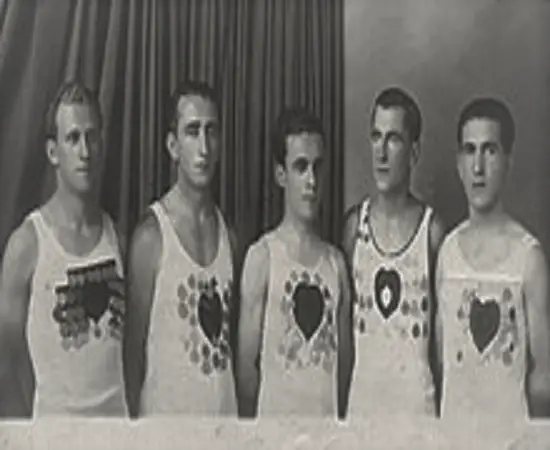
THE CHAMPION ATHLETE, IN PRISON – Qazim Dervishi (1908 – 1994)
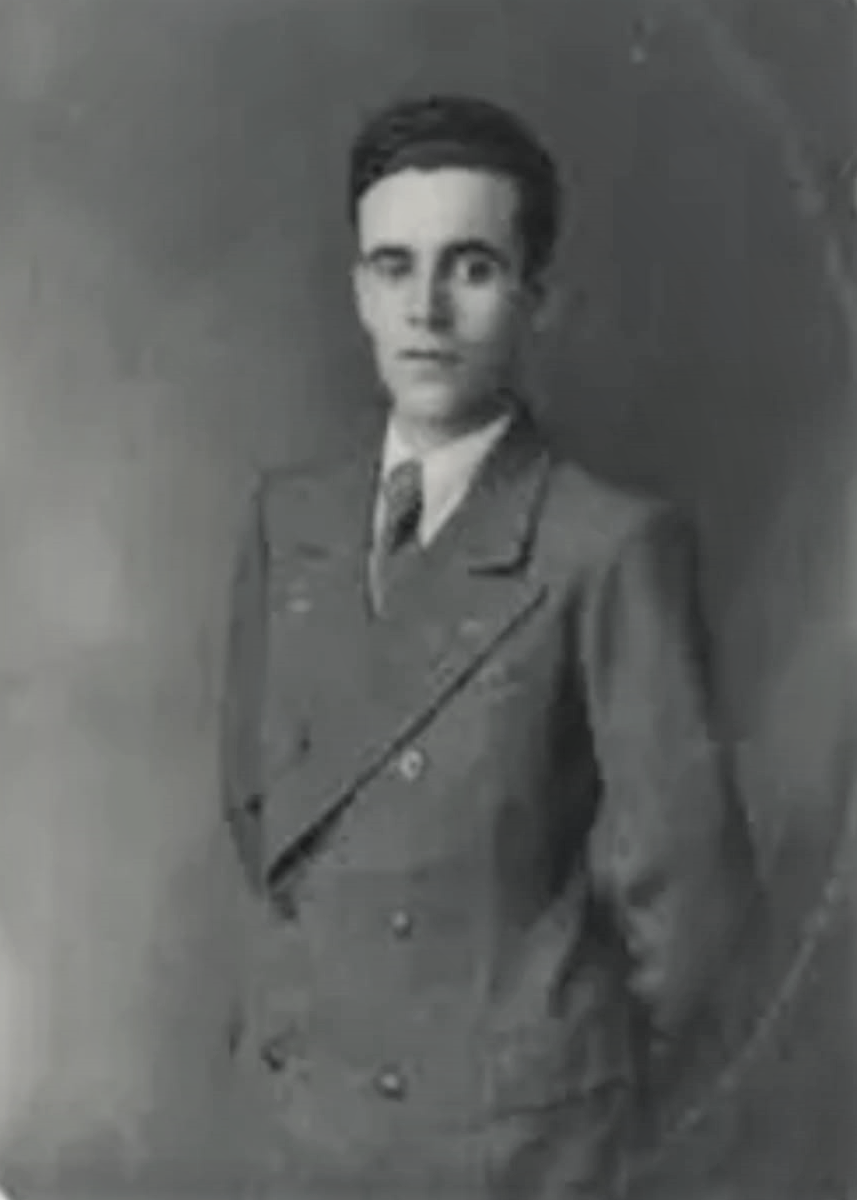
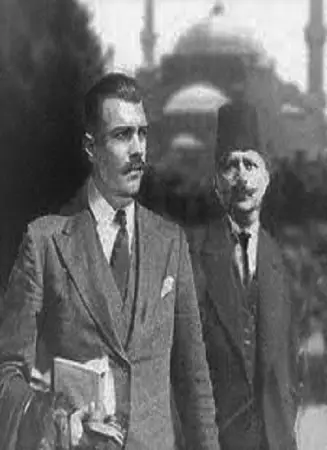
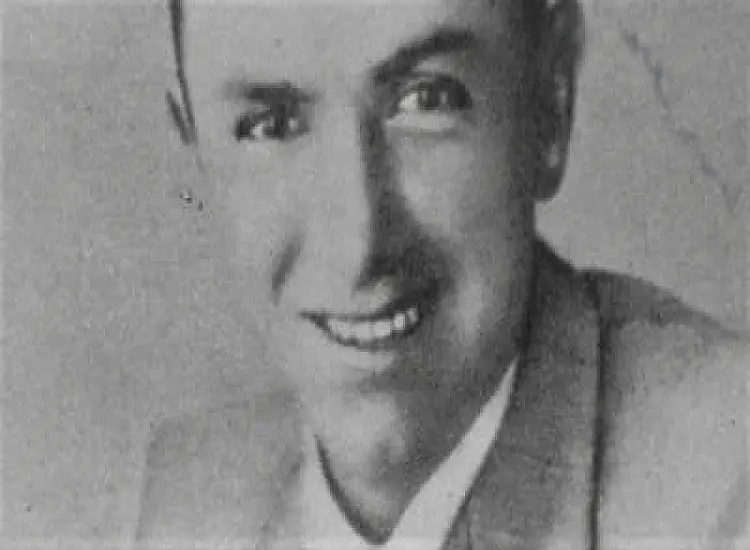
The first athlete, the one who would score the first goal… but also a translator from English…! His father had come from Tuzi to Shkodër, his mother was from Mjeda, says Pjetër Logoreci, Qazim’s friend, who had also been persecuted, along with the escapee…!
…Qazimi was a child given to games, as if born for them, a sports type. He played with his friends with a rag ball that his mother had made, even though Muslims considered it a “sin,” they said.
He became an orphan at the age of 12 and they wanted to send him to study in Turkey, but no, Qazimi insisted on the Shkodër high school. Despite all his talents for sports, they sent him to Tirana, to the new American school of Harry Fultz.
He worked, engaged in sports, was an initiator in everything and excelled in everything, etc., etc., meanwhile he was also an excellent English speaker.
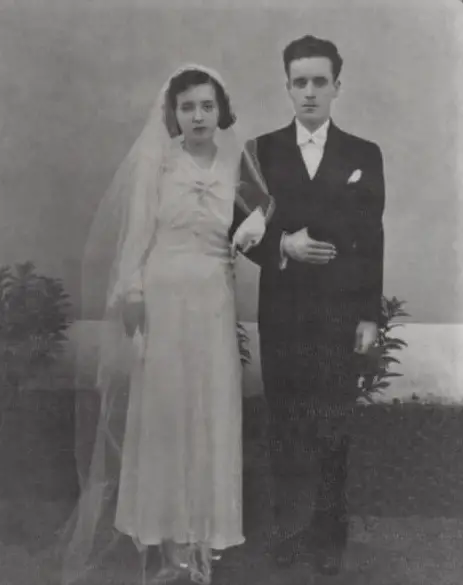
He returned to Shkodër as a teacher, never parted from his work, opened new sports fields, developed activities… and 1945, the first year of liberation, would find him together with his wife, also a teacher, in Lezhë, in Gjirokastër, in Central Albania, etc.
He was translating children’s literature and American school programs, no less; he sought to connect also with them, with the imperialists. He wanted to develop lessons for the deaf-mutes as well; such seemed the whole time to be becoming…!
He was arrested after two years. 22 months of interrogation, terrible tortures, agent, enemy, they hang him by his feet with wire together with a Catholic priest and lower them headfirst into sewage pits.
He envied the priest who could not endure the tortures and died; he was strong from sports. Thus fallen, the dead man dripped onto him. He is sentenced to 18 years in prison…
…he was honored with the title “Teacher of the People” by the President of the Republic, one year before his death, while the new sports palace in Shkodër bears his name.
THE GREAT CAKRANI FAMILY
“The Horsewoman of the Fine Arts”, Suhade Cakrani (1920 -1955)
The beautiful and tragic Suhadja, daughter of the great Cakrani family…!
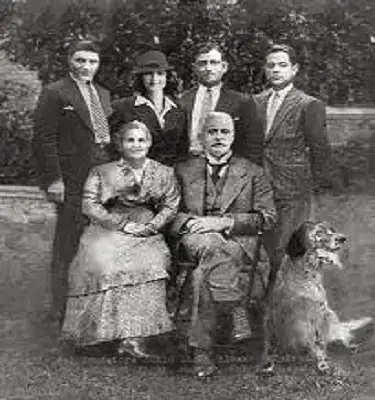
Their aristocratic, glorious gate seems to have written the entire history of 20th-century Albania, the grandeur and the struggle for the homeland’s independence and freedom, high humanism and defeat, the cruel persecution of the communist dictatorship, the flights across the world, the killings, the prisons, the internments, the barbaric contempt and madness, the deliberate forgetting… and….and the resurrection. The acts of this family’s drama are acts of the Albanian drama.
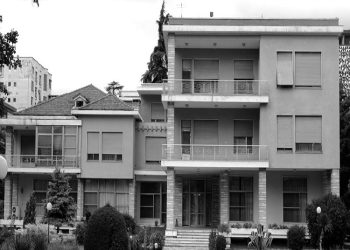
When Albania would declare independence in 1912, in the Cakrani mansions would stop its proclaimer, the founder of the modern Albanian state, Ismail Qemali, as he headed to Vlorë to establish his first government.
Hajredin bey Cakrani would be there as proclaimer and signatory of independence, while his brother, Bektash bey, would be appointed Minister of the Treasury, not to take from the government but to give; he would finance the administration with his own income, from his own wealth.
Two brothers who not only dreamed of a free and Western Albania, but devoted themselves to this ideal. We will find them united also at the Congress of Lushnjë, in 1920, Albania’s second independence.
And that same year they founded the first foundation “Cakrani Brothers”; the “Spanish Flu” had fallen across Europe and they came to the Albanians’ aid with help and support, mansions and food and medicine…!
Likewise, the sons of this great family full of history would also devote themselves to knowledge, higher education, studies at renowned universities, in France, the Sorbonne, Austria, Vienna, Italy, Bologna, Florence, Rome, Romania, Hungary, etc., to become, for the homeland that awaited them, its defenders, economists, agronomists, professors, jurists, diplomats, politicians, etc., and, if needed, again fighters with weapons in hand.
Hajredin Bey sent his only daughter, the beautiful Suhade, to study in Italy and where? In the magnificent Florence of Dante and the European Renaissance, Michelangelo and Machiavelli, the founders of various world schools…!
But what would she study? Medicine, finance, science? No, Fine Arts, just as she herself were. Because the homeland would also need art, culture, to become as beautiful as possible. Suhadja would be special even there, with the fervor of her homeland and the wisdom of her family. “The rebel of hair and ties” they called her, as she dared even in appearance.
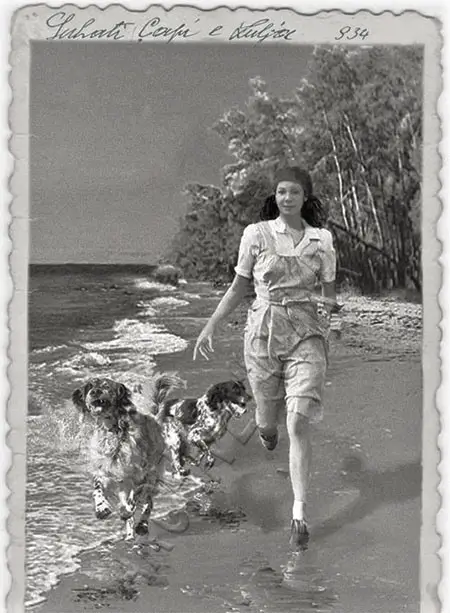
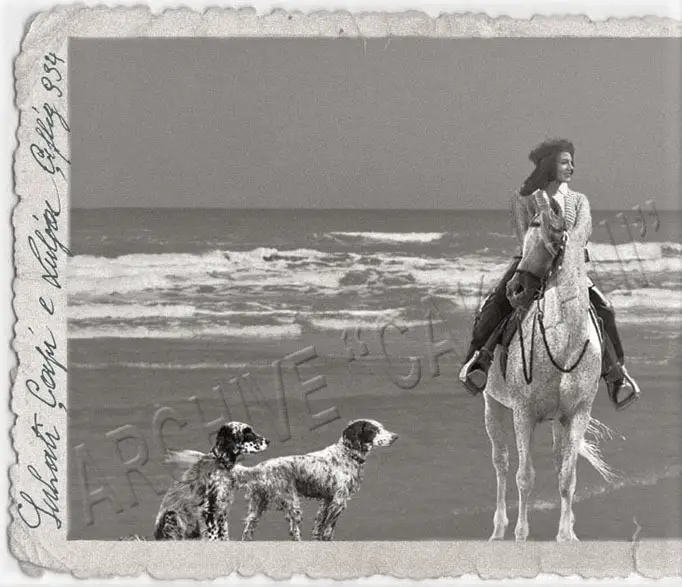
There are her images among friends, from behind the domes of Florentine churches; we see her also with her two brothers near the Eiffel Tower in Paris, but also with a dog, which she seemed to love, and also on horseback, beside the waves on the seashore, perhaps in Durrës, like a “film artist”, horsewoman of the fine arts.
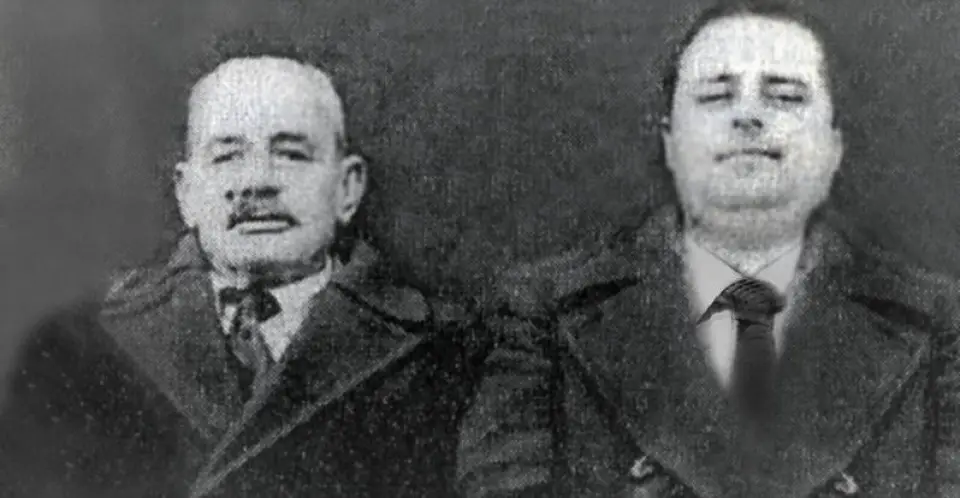
Her brother, Kadri, would be imprisoned as an opponent of King Zog, but even in prison, he would be so elegant, with his friends, with his fedora and tie and shoes that shone.
When the homeland was occupied by fascist Italy during the Second World War, Kadri Cakrani, as Commander of ‘Balli Kombëtar’ in Berat, would save 450 Jewish families from persecution, the greatest humanitarian act in the Balkans; he would also help the Italian soldiers left on the streets after the capitulation of fascist Italy. All this between two fires, that of the German army and that of the partisans.
While his sister Suhade, wanted to be beautiful, beautiful in spirit as a challenge to war. Not new models of weapons, but ‘mode culture’. She read books in Italian and French, as she wrote in a notebook, perhaps she kept a diary or had started a novel or made sketches, drawings from the war; nothing remains.
The victors, as soon as they took power, in the very first year, would execute Bektash at age 75, while his brother, Hajredin Bey, had died shortly before; they would destroy his grave, blow it up, the victors. Now they would fight with the dead.
Kadri and Kujtimi would flee, the first to the USA, the second to Italy. The communists’ homeland sought to kill them; the free democratic world decorated them for their heroic acts and humanism.
The regime was looking for the other sons of the Cakrani family. Hajdar is hanged in the middle of the city of Fier, by those who had not yet removed their partisan uniforms, or the enthusiasm of victory like the dust of war; they were even laughing now at their massacres, free.
In the hanging square, in the middle of the city of Fier, among the bewildered crowd appeared a woman’s ghost, like a Magdalene, she knelt before the hanged man, kissing his feet; it was his sister, Suhadja. And she would wander from one prison to another to help her brothers, faithful to them like a ballad.
In 1953, her mother also died. Alone, perhaps dark visions now swarmed her more madly, her dog’s barked, furious among police boots, and her horse had become wind with bloody saddle pads and on horseback, a moon-faced hanged man swayed at its feet, her black brother.
Two years later, in 1955, Suhade died in madness. She was only 35 years old. Together with her, the lessons of the Fine Arts seemed to be extinguished. Her face took on a final beauty, like a candle-colored painting, of the kind they would not let her make.
Are there any paintings of hers, writings? No, none are known. Even her grave is unknown. Thus others from the great Cakrani family perished, in internments, while the other brother, Vasfi, who had studied diplomacy at the Sorbonne, after three prisons, gave up his ghost in misery in an asylum…!
But the spirit does not die. After the fall of the communist empire, the destruction of its dictatorships, inevitably also in Albania, memory would be resurrected. Much would change. Even the changes that had been violently made to the past, to history…
Books would come also from the Cakrani family. There are memoirs by Kadri Cakrani, written in the USA, of that savior of hundreds of Jewish families; he also tells us about his war, which was not only his, but that of Albanians.
And further, as the head before him, the father, now appears a very valuable book, “Memories of a Signatory” by Hajredin Cakrani. How did they declare independence? Those signatures they cast that day were lines of chiromancy on the homeland’s palm; they became roads and paths, ups and downs of fate. That book seems to awaken national consciousness as well.
Meanwhile, in 2000, the “Cakrani Foundation” was also established. The nephew, Lawyer Kujtimi, is truly also a lawyer of collective memory, restorer of that fortress his ancestors built, likewise an advocate for the punishment of communism’s crimes, with the morality of the law.
“I believe what I do and do what I believe,” says Kujtimi. He seeks to free memory from violence and to serve the future…!
Meanwhile, the clinking of handcuffs is heard in the conscience of time.
And also the trot of a horse in the night. Could she be coming, the Horsewoman of the Fine Arts, the girl with hair likes wind? She is calling. She has a message to bring…! Memorie.al