From Nazmi Berisha (Dyzi)
Part Nine
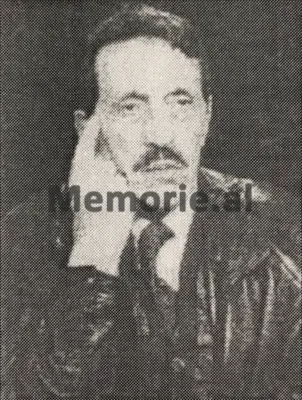
Memorie.al publishes the unknown story of Nazmi Berisha, originally from the village of Llap in the Municipality of Podujeva in Kosovo, who, enticed by the propaganda of the communist regime and by the programmes broadcast by Radio-Tirana about “socialist abundance,” as well as to escape the Ranković‑ite methods of the Titoist regime, decided in 1960 to flee and came to Albania, swimming across the Buna River in the great cold of that harsh winter. The rare testimonies of Nazmi Berisha, about how he was received in the motherland, where the soldiers and officers of the border and Shkodra district, after tying him with wire, sent him to the Internal Department, where for 24 hours they gave him no bread to eat, and then sent him to the small town of Shijak where the “Filtering Centre” for Kosovar emigrants was located. The entire adventure of the 20‑year‑old youth from Kosovo whom the State Security accused of: being an agent of the UDBA, sent on a secret mission by Čedo Topalović, the head of the UDBA for Kosovo, to meet with Rear Admiral of the War Fleet, Teme Sejko, and the inhuman tortures inflicted on him in the Internal Affairs Branches of Lushnja, Kruja, Tirana, etc., where they kept him isolated and demanded that he become a collaborator of the State Security, bringing forward his fellow countrymen from Kosovo as witnesses, and his refusal, which caused him to spend a full 20 years in the prisons of Enver Hoxha’s communist regime. For years Nazmi Berisha has lived in Sweden and the writings published by Memorie.al are selected from his book, ‘20 years in Enver Hoxha’s prisons’ published by “UEGEN” Publishing House, Berat, 1995.
Continued from the previous issue
Terror
In Tirana’s New Prison, the third time
The prison van moved slowly, noisily, and always raised question marks of suspicion. Hyseni and I rightly guessed that they had decided to liquidate us somewhere invisibly on the road. But nothing happened. It was more of a self‑terror. Nevertheless, in Lushnja, i.e., the prison van took the road, and two ordinary convicts had raped a woman and they knew very well where they were going, towards the New Prison in Tirana. Apart from our thoughts, which kept jostling throughout the journey, nothing else worth noting?
In Tirana’s new Prison (I for the third time there), we would stay three days. Regular check‑up. A room – a barracks with 100 political prisoners. It was indeed a temporary thing, certainly to move to another prison. I met Qamil Hajdini, the poet, and later got to know Muharrem Shala. He was a symbol of terror. If you wanted to learn how terror is planted, grown and harvested, it is enough to get to know this man, now aged, desperate, more tired, but never hopeless.
During the National Anti‑fascist Liberation War, Muharrem and his brother, Kadri, born in Peja and come to Albania, had been an important base, known even by Enver Hoxha and Mehmet Shehu, as patriots and partisans. Muharrem worked as a private tailor in Tirana, while Kadri was a small labourer. In the 1950s, the Party decided to liquidate the CIA bases in Albania. The State Security, for this purpose, worked with sick fantasy. Once, Halim Xhelo (Koçiu) explained everything to me, and I don’t hold a grudge against the Security, because it brought out of the mountain the “Resistance Group” and they went from house to house that were against the Enverist dictatorship and invited people to join them, promising that help from the West would soon come. Some joined, some did not denounce them, and thus many were caught in the sieve of the “Resistance Group”.
Muharrem and Kadri were arrested as if they had been members of the group, although they had never heard of it. Both were sentenced and were to serve in the famous prison of Gjirokastra. There were also 40 Kosovars in that prison, among them Ajvaz Bajrami, from Dimoshi i Llapit, who was the only second to survive alive. For the others, not even the grave was known. The horrors of that prison are indescribable. On one of God’s days, with his heart in his throat, Kadri Shala rose to the barred window and let out a shout:
“Oh people, I am Kadri Shala with my brother, Muharrem. I am imprisoned in your Castle of Gjirokastra. Tell people about this.” This call had succeeded. People heard. Some who knew them came out. So the family came for a visit. Afterwards both were sent to Vlora Prison. The family, of course, suffered for their daily bread and sold everything. One day, suddenly, the prison commander came to them, as if to solve great dilemmas.
“Choose, one of you will be released. I have an order and I am communicating it to you.” Both with one voice answered that they were convicted and would both serve the unjust sentence. Neither of the two was guilty. “Then you, Muharrem, work as a tailor in the prison,” the director proposed. Why? To shame him? Muharrem is horrified when he thinks it was a provocation. In prison everyone was equal. So, in the presence of the prisoners, Muharrem slapped the commander. Meanwhile, surprisingly, the commander turned out to be a mature man.
“Listen, Muharrem Shala, for this humiliation you have done me, I have the possibility to kill you on the spot and not even burn for it, indeed even be rewarded. But I know you well, I know that you have given much to the War, I know that you are patriots and brave men, so let my pride go to hell. What you did to me is forgiven.”
Muharrem, cornered by the unexpected, agreed to work as a tailor. It was indeed an event worth noting, two men of character.
And here I find Muharrem again in Tirana Prison in 1980. Again 10 years in prison for agitation and propaganda. Poor Kadri had not lasted long; he had died. However, he had left a message. “I am sorry to die without seeing Enver and Mehmet dead.” That was the soul’s cry of who knows how many prisoners. Before being arrested in 1979, Muharrem worked as a tailor in Tirana. He was waiting like us, to be sent to another prison.
Why did that man, that family fight, why?
Surely not to become victims of brutal communist terror. Nevertheless, that brave old man had hope. Hope that his relatives in Kosovo would know where he was, hope for another life, hope for freedom. After three days, we travelled in the same prison van towards Burrel. This could be understood even by intuition, though so beaten by the brutal terror of a decade, of a story, of a life, by the terror of the air, of the word, nevertheless with the long hope that it would thunder in the chest.
The last days
In Burrel Prison, the third and last time
How could I know that these were indeed the last days? I did not believe that the State Security would remain empty‑handed, no matter that small flakes of Western wind were beginning to blow. We were isolated from life and could not see the catastrophe into which the Albanian economy was plunging. After that victory in Ballsh, although like that of Pyrrhus, my mind could only dwell on possible traps. But anyway, I gave myself wings that I was not alone; I was with Hysen Bukoshi, and he had given proofs of bravery and loyalty.
I often thought that in Albanian prisons, those who served a double sentence were we Kosovars – innocent, desperate, disillusioned, and caught suddenly in the most challenging wheel in the world: patriotism.
We passed the check and the questions without harm, found old acquaintances (Jovica Cervenko, Hashim Toplica, Selim Xhakaj, and Idriz Zeqiri), asked about the younger ones, sniffed the conditions, the changes, and there one inevitably noticed the high policy of the state. A man, wherever he is, instinctively understands the state’s policy, its condition, its illnesses, its whirlpools, its winds, even from a handful, and is able to perform an autopsy on it.
I remember Fezli from Çaber of Mitrovica in Kosovo, sentenced to 10 years in the second prison, having fled illegally in the 1960s. His masterpiece had been in Ballsh prison: he was a rebel not easily digested – he put his thumb on the microphones that broadcast the voice of the reader of Enver Hoxha’s works. Wasn’t it he who had put him in prison without a shred of guilt, and now with all hypocrisy was tearing his ears with those written trinkets? Could I pass on the last request he left for Kosovo to inform his family? No one could think those days what might happen tomorrow, when the unexpected was the king of the day.
I hoped to meet the writer Kapllan Resuli one day. I knew he was in Burrel, but at that time discipline had been severely tightened, further limiting the “freedom” of prisoners; each room was now confined separately, the large room had been confined and turned into a kitchen, and inter‑room communication was made extremely difficult. Idriz Zeqiri had been put in contact with Kapllan Resuli through the barber, who had “transgressed” because of the money that came to Kapllan from his brother in the West. From Idriz I learned that Kapllan’s life was being threatened in the dungeon and by the tortures inflicted on him. Through the barber, Kapllan sent me some photos of his brothers and their children. He instructed me that as soon as I returned, I should carry out what needed to be done, i.e., my duties.
As soon as I returned! It was becoming a mania, a sickness. They don’t say for nothing that a man often falls into the lap of madness, especially in the last days. In another room was Sytki Hoxha. His order was that his bones be returned to Kosovo. At least he would be free as a dead man. He was immensely grieved, but a very strong man morally. On the other side was Tefik Dednica from Leshkoshiq, Prishtina district. He had come to Albania in 1957 and was sent to Çerma, then to Lushnja, and was employed there. However, a cousin of his, with whom he had fled together to Albania, had left from Fier to Yugoslavia.
Because of this, Tefik was imprisoned and accused that he had supposedly wanted to flee together with his cousin. Plus, he had stolen and raped. A certainly false accusation. 21 years in prison. Merciless torture. Would I be able, if released, to go to his family and tell them everything? I don’t know. I would hear this story too in my last days in Enver Hoxha’s prisons. One more friend. One more suffering. One unbearable pain.
In Çerma for the third and last time
My release was accompanied by a policeman with a Russian automatic and a pistol. Burrel – Durrës – Lushnja. We entered the Lushnja Branch together. The policeman gave the officer a sealed envelope and said a few words. It seemed to me that the envelope was my shroud. And I was moving inside it. Sarcasm came to the tip of my tongue, but by then we had learned to bury ideas and beautiful things.
Near evening they took me by a lorry to Çerma, to the same room where I had been five years earlier. So I could not enjoy release from prison, because this was my new internment. According to the order, the next morning I reported to the Internal Branch of Lushnja. The officer waiting for me was Zalo Mejdani from Lushnja. According to the rule, I was given 200 new lekë and ordered to start work the next day.
– “No, I want to go to the Yugoslav embassy in Tirana. I will request my return to Yugoslavia, of which I am a citizen.”
In fact, I had received a notice that from the Yugoslav side there would be no obstacles. I showed the family letter to the officer. Zalo Mejdani could not act on his own. He went into several offices and told me to come back whenever I wanted.
After a few days I went to the Yugoslav embassy, where I was given a visa with a ten‑day deadline. I was overjoyed, but this did not last long. A new worry swirled around me like a hawk. Where would I go, stream and brook? What would happen to me in Yugoslavia! I knew my father had done 1 year in prison because of me.
According to the rule, I went to the Ministry of Internal Affairs to legalise the visa, but they took it and never returned it. So another worry. Oh God! What is being done to the simple man like this? “We know when to let you go.” That was a threatening answer. So I took the road to Çerma. Neither in heaven nor on earth! I waited the ten days of calamity, but nothing. I cut off hope for my black fate. I tried to find strength within myself to do something, not to stay idle, not to be the prey of a new process, which surely lay completely invisible to me.
My life, naturally, and my visa were walking on the edge of a knife. Everything was in the hands of police officers and was conveyed through their thick, somewhat cynical smiles. My blind fate. But hope, was hope dying in me?
Towards the end of September, I was notified that I had to appear at the Ministry of Internal Affairs of Albania to receive the visa. My return to Yugoslavia had been approved. After anxiety, there are no crumbs of joy left. So, meanwhile, another anxiety began: would the Yugoslavs approve the Ministry’s ten‑day permit? Yes. They did not hinder me. An unlucky man is crushed like a fly, without a drop of mercy; like a fly he is treated even when he goes to offices. Oh God. Classic cry of wretched misery, of pain: the cry of a living hope. In an instant, cheerfulness returned to me. And I perceived people not as they were, but as I wanted them to be. And for me this cheerfulness, although paid dearly and like no one else, was something human, which somehow warmed my tortured, desperate and so badly wounded soul.
I returned to Çerma, where I was told that I would be allowed to leave on the last day. Oh God. What is happening? All the black hours for me have gone mad. I gathered my belongings and we decided to stay at the hotel in Lushnja to be near the Internal Branch. Somehow they wanted my deadline to pass. But by now I was used to the betrayals of the State Security. The Branch people had taken the visa, and although I could have left on foot, I still had to act cautiously. The prisons of Albania had gifted me 20 years of older age and maturity.
On 8 October 1980, I found a chance car that was travelling to Kukës. They bought me some clothes and sent me off. They cut my new suit. They gave me the visa and together with the driver, who was certainly one of their men, we went to Kukës at 12 o’clock at night. The driver told me he had to hand me over to the Kukës Branch. So it was done. The Branch sent me to a hotel. The next morning I reported to the Branch, always according to order. I had to wait for a man who would pick me up and take me to the border. Every minute felt like months. An unbearable wait. The civilian officer and his “Volga” did not delay long. He took me without delay to the border point. At the Albanian post‑block I stayed until 11 in the morning. Strict and thorough control. Then an officer accompanied me close to the border. A living procedure. A high fever of uncertainty and a new terror ran down my spine.
A strange suspension between my being and the space that around me tightened like pincers. The border – an invisible line, an unattainable will of security. The border of a common loss. The border – a terrifying, mortal fever. Endless questions. Now I was on the other side. I had crossed Golgotha. And hope was alive. /Memorie.al