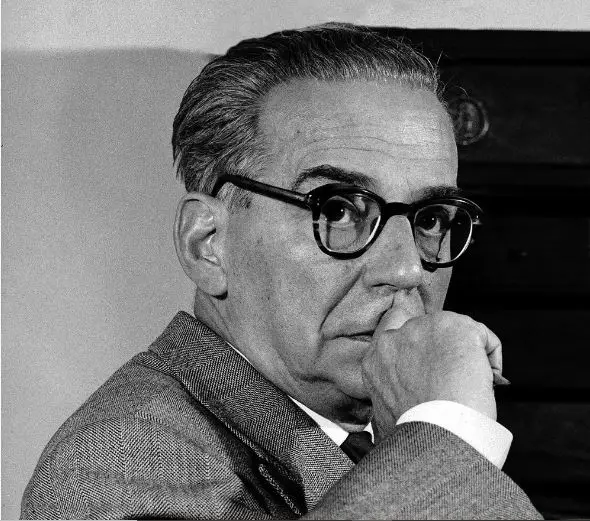
From Ivo Andrić
Part Two
Memorie.al / According to the secret supplementary part of the Treaty of Alliance between Bulgaria and Serbia of February 29, 1912, Serbia was recognized the right to take the former Turkish territory north and west of Mount Šar. In connection with this provision, and striving to secure an outlet to the sea for their state, Serbian troops entered Lezhë on November 15, 1912, and gradually occupied all of Northern Albania, down to Tirana and Durrës. In the London Times of November 25, Pašić’s declaration was published, stating that Serbia demands Durrës with its largest hinterland.
V – THE ITALIAN OCCUPATION OF ALBANIA AFTER THE WAR AND THE DEFINITIVE WITHDRAWAL AFTER THE FAILURE AT VLORË
After the end of the war, on the basis of a military decision of the Allies, Italian troops occupied the entire territory of Albania, even the northern part, which had been granted to us by the London Pact. Only Shkodër remained under the joint control of French and Italian troops. Due to the hostile attitude that Italy held at that time toward the state of Serbs, Croats, and Slovenes, we considered this Italian military occupation of Albania a greater danger to our existence.
A fierce struggle developed between us and Italy on Albanian soil. The Italians then initiated the Montenegrin and Macedonian issues, as well as the idea of a Greater Albania up to Kačanik. We carried out actions against them, sometimes covert, sometimes overt, buying Albanian chieftains with money and proclaiming the idea of an “independent Albania” and “the Balkans for the Balkan peoples.”
The discontent of the Albanian population, which we also supported, forced the Italians, at the beginning of 1920, to withdraw their troops from the interior of Albania and to stop only around Vlorë, from where, in June of that same year, they were forced to withdraw and to conclude an agreement with the government of Tirana for their evacuation from the entire Albanian territory, except for the island of Sazan.
The evacuation from Albania occurred, therefore, thanks to the organized resistance of the Albanians, but it should not be forgotten that Italy at that time was politically and militarily very weak. Even today there are Albanians who think that whenever they wanted they could drive the Italians out of Albania. This self-confidence is fatal for them, because they do not see that today’s fascist Italy is not what it was in 1920, under the parliamentary government of Nitti, Giolitti, and Facta.
VI – ALBANIA BEFORE THE CONFERENCE OF AMBASSADORS
Since the situation on the ground had been cleared with the evacuation of Italian troops from Albania, the Conference of Ambassadors, in November 1921, was able to decide on the recognition of Albania as an independent and sovereign state. Instead of earlier promises regarding Vlorë and a mandate over Albania, the Great Powers recognized only Italy’s special interest in preserving Albanian independence. Albania was also admitted to the League of Nations, in the hope that this would further secure its independence.
Before the Conference of Ambassadors, we tried in vain once more to gain the right to rectify the border toward Shkodër and toward the Drin, citing historical reasons for Shkodër and economic and communication reasons for the Drin. The French expert at the Conference, Laroche, consoled us thus: “The Royal Government erred in not accepting, at the time, the proposal for the partition of Albania. Pašić had agreed to it, but the Belgrade government refused.” In order not to let the Italians into Vlorë, we were forced to give up Shkodër and the borders up to the Drin.
Since we still supported the idea of not partitioning the Albanian territory as defined in 1913, as well as Albania’s independence, it might be assumed that this solution of the Conference of Ambassadors was satisfactory to us. However, that is not the case. The difficulties in our relations with Albania, as well as in our relations with Italy due to Albania, intensified further even after Albania was declared an independent state and a member of the League of Nations.
The Republic of Mirdita
While the Conference of Ambassadors was deciding on Albania’s borders and the organization of its independence, from mid-1921 we signed a cooperation agreement with the chieftains of Mirdita. It was envisaged to form a free state of Mirdita, which would be protected by the military forces of the Serb-Croat-Slovene Kingdom and whose external interests would be represented by the Belgrade government. The Tirana government suppressed this movement, and we were accused and condemned before the League of Nations.
VII – THE PACT OF ROME, PAŠIĆ, MUSSOLINI AND ALBANIA
The Pact of Rome of January 1924, by its spirit, imposed on Rome and Belgrade respect for Albania’s independence and the principle of non-interference in its internal affairs, as well as mutual notification of events in Albania. However, this did not prevent the Italian government, in June 1924, from aiding Fan Noli’s uprising against Ahmet Zogu, nor did it prevent our government, in December of the same year, from enabling Ahmet Zogu to enter Albania from our territory and seize power.
Neither Rome nor Belgrade could withstand the intrigues and demands of their Albanian “friends,” who sought help to retain power or to come to power, and who promised loyalty and cooperation, only to change their orientation at the first opportunity.
VIII – THE PACT OF TIRANA AND THE SITUATION IT CREATED
The late Pašić, giving instructions to our representatives working in Albania, used to say: “We want Albania to be independent, but weak and disorganized.” Time has shown that this could not last. A weak and disorganized Albania would inevitably seek help and protection wherever it could find them. A regime threatened by Italy turned to us, but a regime we wanted to overthrow sought protection from Italy.
A weak and disorganized Albania, in 1926, sought protection and help from Italy. Ahmet Zogu first obtained guarantees for his regime, and then, in 1927, agreed to conclude a Military Alliance for 20 years, received hundreds of millions of lire for public works, completely subordinated Albania to Italy economically and financially, and accepted many Italian instructors. Thus, a relationship was created that closely resembled a protectorate, the very thing we had fought against at the Peace Conference.
The greatest danger that came to us from Albania in recent years was military organization, military fortifications, and irredentist action. Everywhere we saw the danger from Italian action and that “offensive border” against which we had fought before the Allies in Paris, when they proposed that Italy be given a mandate over Albania.
It is interesting to note here that we alone have protested and fought against Italy’s interference in Albania and the Balkans. No other Balkan state supported us in this respect. The two Mediterranean naval powers, France and England, did not oppose the closure of the Adriatic Sea. Moreover, Austen Chamberlain, in his meeting with Mussolini in Livorno in 1926, gave his consent to the Pact of Tirana. And all French representatives in Tirana constantly advised King Zog not to come into conflict with the Italians.
IX – THE ITALO-YUGOSLAV PACT OF FRIENDSHIP OF MARCH 25, 1937
Italy and Yugoslavia, pursuing friendly policies toward each other, could come to an understanding regarding Albania on this basis: Italy has its vital interest in Vlorë; this part of the Albanian coast must not be endangered by us; we must understand and respect this interest. Yugoslavia’s vital interest is not to be endangered on Albania’s border with Southern Serbia, nor with Kosovo (inhabited by Albanians), nor with Shkodër and Montenegro.
Undoubtedly, this was taken into account in the secret protocol of the Pact of Friendship when it was foreseen that further fortification in the areas of Librazhd and Milot would be stopped. As far as the economic-financial action in Albania is concerned, we have no special means to invest, nor do we wish to invest.
Thus, the Italians remain without competition and without objection from us, provided they remain within the limits of the other secret obligation they undertook toward us two years ago, namely that politically, economically, or financially they will not seek any special advantages that would directly or indirectly compromise the independence of the Albanian state.
In this way, the Pact of Friendship of March 25, 1937, created a tolerable *modus vivendi* between us and Italy on Albanian soil, where in previous years we had had so many conflicts and disagreements. It is another question how well this appeasement would withstand the trials of a more serious and more complicated situation in the Mediterranean or the Balkans.
X – PRESERVATION OR CHANGE OF THE STATUS QUO
Albania’s independence has been reduced but not extinguished. The independence of a state towards the outside world is always a relative notion. Depending on circumstances, this independence is either more complete or reduced. For Albania today, it cannot be said that its internal and external policy is independent of Italy. Yet, in the international community, Albania is considered an independent state. From an international legal perspective, the Albanian coast is not Italian, but is under the sovereignty of a Balkan state.
Italy has not yet set foot in the Balkans. It has its sovereignty over a part of Zara’s territory, but this no longer offers it room for further development. Italy exercises its influence in Albania, but it does not have freedom of action as in its own territory. The Albanians, however, resist its interference, cause it difficulties, and slow it down.
“The Balkans for the Balkan Peoples”
Serbia’s traditional policy is “the Balkans for the Balkan peoples.” This principle, in its time, was used in the war against the Ottoman Empire and the Austro-Hungarian Monarchy. Yugoslavia used it successfully against the provisions of the London Pact, which would have brought Italy into Dalmatia and Albania.
In applying this principle, we have always seen the best guarantee for peace in the Balkans, for cooperation among Balkan peoples, and for their normal development. The presence of a great power in the Balkans is an open door to intrigue and conquest.
Italy’s Expansion
Is it possible that Italy, having become the sovereign master of Central and Southern Albania, would remain only in that narrow coastal strip? We did not believe this 20 years ago, when the Great Powers gifted Vlorë with its hinterland to Italy. Even less can we believe it today, when Italy is showing such dynamism and daring in its foreign policy?
A Dangerous Precedent
The taking of a part of Balkan territory by a non-Balkan great power, without any ethnic basis, is a dangerous precedent for all Balkan peoples, including us. Other great powers, from other directions, might come forward with similar claims.
Italy’s case in Albania is particularly dangerous for us, because the London Pact, which for the first time recognized southern Albania to Italy, also recognized northern Dalmatia to Italy. The precedent of reviving the provisions of the London Pact in one sector of the Balkans opens the door to reviving other provisions as well.
The Partition of Albania
When evaluating this whole issue, we must bear in mind that we must by all means try to avoid any conflict, whether covert or open, with Italy. We must also avoid the occupation of all of Albania by Italy, because in that way we would be endangered in our most sensitive places – at the Bay of Kotor and in Kosovo.
Taking into account all the above, the partition of Albania could only be considered by us as a necessary and unavoidable evil, which we could not resist, and as a great loss from which we must derive as much benefit as possible, meaning that we must choose the lesser of two evils.
Our Compensations
These compensations are to be found in the material elaborated 20 years ago, when the question of Albania’s partition was raised. The maximum we demanded at that time was a border extending along the Mat and Black Drin rivers, which would give us the strategic security of Montenegro and Kosovo. We should also secure the valleys and lakes of Ohrid and Prespa, including Pogradec and the Slavic villages of Mali i Thatë, as well as those between Prespa and Korçë.
The acquisition of Shkodër, in this case, would have great moral and economic importance. It would enable us to carry out major hydrotechnical works and obtain fertile land for feeding Montenegro. Northern Albania, within the framework of Yugoslavia, would allow the creation of new communication links between northern and southern Serbia with the Adriatic.
With the partition of Albania, the center of attraction for the Albanian minority in Kosovo would disappear, and they would be easily assimilated in the new situation. We would eventually have an additional 200,000 to 300,000 Albanians, but these are mostly Catholics, whose relations with Muslim Albanians have never been good. The emigration of Albanians to Turkey would also take place under new circumstances, because there would be no stronger action to hinder it./ Memorie.al
Belgrade, January 30, 1939