From Elisabeta Ilnica
Memorie.al / The final break with China in 1977 can also be considered an almost total separation of Tirana from the socialist world and its transition to a new phase of the hitherto isolationist policy. Imposed by these internal and external developments of the Albanian state, precisely in this period, in the mid-1970s, we see a reactivation of the Albanian government’s efforts to normalize relations with Bonn, but raising as a precondition the reparations that the Federal Republic of Germany owed to Albania from the Second World War. And official Tirana was not asking for a small amount from Germany, but over 4 billion dollars in war damages.
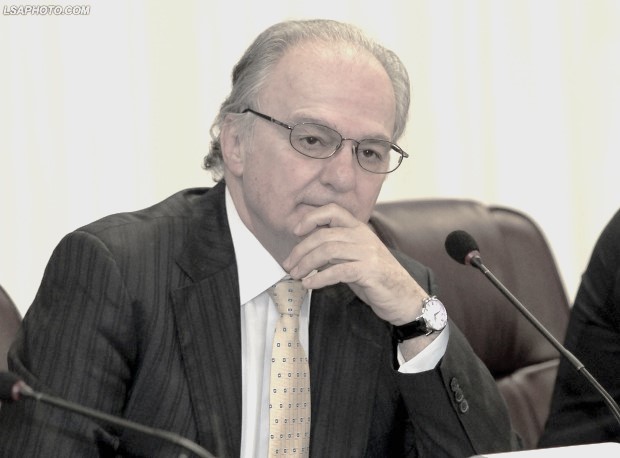
This “crazy” figure held the diplomatic relations of the two countries hostage not a little, but for a full 15 years. However, the staggering sum was not the only obstacle to establishing diplomatic relations, and the dragging out of the process cannot be justified by simple mathematics. What really happened behind the scenes of Tirana-Bonn diplomacy is best explained by the first ambassador to Germany, Dr. Shpëtim Çaushi. Some time ago, he published the book “Once Again on the German Chance” (Albania’s Relations with Germany 1944-1987. Second World War Reparations), published by the Institute of Diplomatic Studies and the European University of Tirana, within the framework of the 25th anniversary of German unification. On a personal level, the author has had to be connected to the topic for years, considering it a moral, intellectual and professional challenge, as a citizen and a diplomat.
Concrete help seems to have come from the notes that Dr. Çaushi kept during his activity as the first ambassador of Albania to the Federal Republic of Germany, especially during the period after the establishment of diplomatic relations with Bonn, in October 1987. For those of us who have read it, the book is a true scanner of the backstage of what the author rightly calls “the lost German chance”, even though Dr. Çaushi ultimately remains a professional ambassador and tries to say things with diplomacy.
But in his exclusive interview, the account comes differently; it is direct and with new details about the truths of the party negotiators who took the powers of diplomats, thus delaying diplomatic relations with Germany by a decade and a half…
Mr. Çaushi, in your book “Once Again on the German Chance” (Albania’s Relations with Germany 1944-1987. Second World War Reparations), you say that for about 15 years, official Tirana missed an opportunity to normalize relations with Germany. Why? Was it the system?
Because many countries of Eastern Europe, “satellites” of the Soviet Union, managed to establish diplomatic relations with the Federal Republic of Germany, about 15-20 years before Albania…! True, but even within the system we called “socialist”, Albania stood out in the negative sense of the word, due to the isolationist parameters it had applied over time in its foreign policy and generally in international relations, especially with Western countries.
Therefore, I would say that the self-isolation dimensions after the break with the countries of Eastern Europe, especially with China, deepened further, creating other communication difficulties with the outside world. Self-isolation was created as an “original” official worldview, which also gave rise to the application of the extremist concept of “absolute sovereignty”. This spoke of an extreme sectarianism, even within its own ideological doctrine.
But when diplomatic relations were established in 1987, were these difficulties still present? What were the reasons for the delays by official Tirana?
I had the fortune to be the first ambassador of Albania to the Federal Republic of Germany, with its capital Bonn at the time. Even in that period, the agenda for concretizing relations in various fields of mutual interest was extremely difficult. Tirana delayed official responses regarding efforts to realize agreements or draft agreements that had been prepared by both sides. This was caused because again every agreement passed through an ideological filter, was analysed, hesitated, and delayed… while European events moved on…!
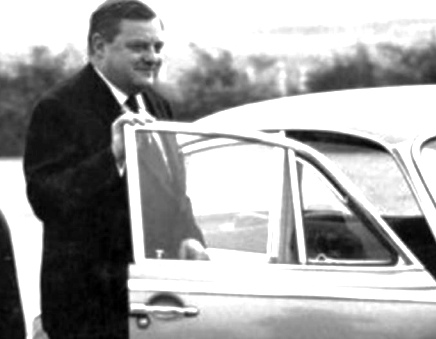
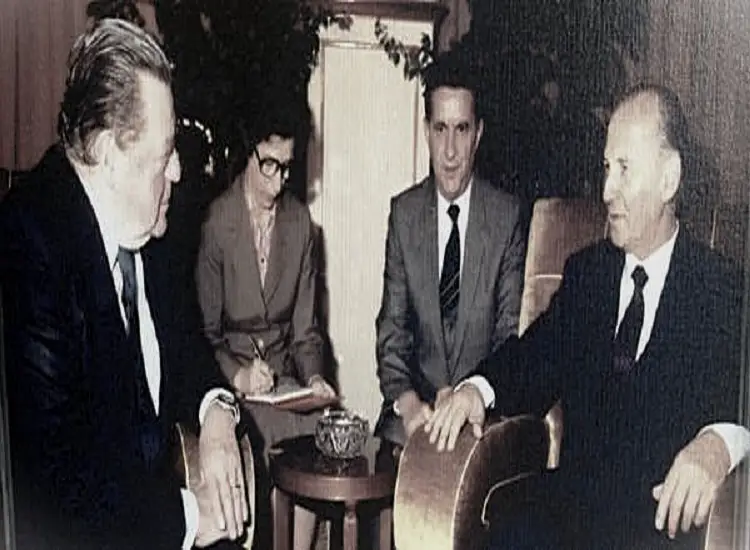
This delay came from the “Centre”, as we used it daily in our communication jargon, since it was still not free from isolationist complexes, feeling as if it would cede sovereignty in every agreement it had to sign with the German side. This further complicated the “problematic agenda”, which was reported to the Ministry of Foreign Affairs almost every day. Let me mention some of them: the issue of the State of Berlin, as the Albanian leadership continued to hesitate to recognize it as an administrative territory of the Federal Republic of Germany; the request of the Bavarian Prime Minister, Strauss, to Ramiz Alia for the release of Albanian clerics who were still rotting for years in the regime’s prisons; the “forgetfulness” to invite the Bavarian Prime Minister to the ceremony of establishing diplomatic relations in Tirana; our side’s rejection of “fond perdue” or what Germany could cultivate through international organizations towards our country, but which was rejected without any comment; the harshness and nervous, not at all diplomatic reactions of our negotiating delegations; the gravitation towards Moscow, as in the similarity of the prepared Albanian draft agreements with the Soviet ones presented to the Germans; the “absolute sovereignty” and extreme ideologization in Albania’s bilateral and international relations at that time; the diplomatic lapses of our delegation in talks and the enigmatic rejection of the offer from the German side regarding Genscher’s request to raise the level of talks and resolve more quickly the blocking issues in normalizing relations;
to the misunderstanding, in the best case, or unwillingness, in the worst case, to understand the German Ostpolitik, as a new political spirit that led to the inevitable overthrow of old European schemes. All these inconsistencies of stance on our part manifested over the long time frame of the talks between Tirana and Bonn were also present in the period after the establishment of these relations.
You said at the beginning of the interview that the SYSTEM was to blame. But when you say SYSTEM, it comes to my mind that the one who led the system when attempts for diplomatic relations with Germany began was Enver Hoxha, and after his death, Ramiz Alia. What stance did these two former leaders have in this process?
The truth is that Enver Hoxha agreed to establish relations with the FRG.
Since he agreed, did Enver Hoxha not have the authority to force the negotiators to quickly establish relations?
Enver Hoxha primarily sought to use relations with the Federal Republic of Germany to obtain war reparations, which were over 2 billion dollars estimated, of 1938, plus the percentages that brought this figure to around 4 billion or more dollars.
Who made these assessments, and is there room for subjectivism in these large figures for the time?
The assessments were exaggerated. It must be said that the preparation of the documentation regarding war damages was not precisely estimated, but this was not the only problem, because ultimately figures could be negotiated. The real problem was that the assessment was made at a late time, because the London Agreement and the Potsdam Agreement and other international agreements had their own time and legal parameters for accepting damages, as well as how much they should be accepted in calculations per capita and the intensity of engagement, etc.
When we remembered reparations, a lot of water had flowed under the bridge, time had passed, and it seems to me that this was part of the lost chance, because at every moment, in every meeting, in every effort made with the German side, the Albanian side was always not one step, but several steps late. The Albanian side demanded war reparations; the German side offered only loans.
And this bivalent ratio of conditions continued on and on, until there was no room for any compromise between the parties. That’s what happened with the “Brioni Formula”, when our side, after several years of rejections, remembered that it could be used as a compromise negotiating parameter. But even for this option, it was too late…!
Was there not a single moment when the two sides were close to an agreement?
There was a moment when Enver Hoxha, in a special conversation with Ramiz Alia, before the Bonn meeting, said that “let them call them loans, we will call them reparations. But let this remain in the archives of both sides and not be declared.” But this was not realized, of course…!
Enver Hoxha said it and it wasn’t achieved? How is that possible?
This idea was never transmitted to the Germans as such during the entire period of negotiations with them. It was not transmitted at the first meeting in Bonn, in April 1984. So it remains an enigma.
In what period did Enver Hoxha make this proposal?
A year before he died. On May 4, 1984, a meeting of the Secretariat of the Central Committee of the PPSH was held, where the negotiations for the first official Tirana-Bonn meeting would be analysed. This meeting was very special, as it was chaired by Enver Hoxha himself, after a very long absence from leading this important decision-making format of the PPSH Central Committee, due to his poor health. Prime Minister Adil Çarçani was also invited.
It is striking that at this important meeting, the Minister of Foreign Affairs, Reis Malile, was not present. Reading the minutes of this meeting carefully, you immediately note that its importance did not lie simply in analysing the progress of the talks or simply in officially accepting the fact that the Germans offered in the Bonn meeting the paradigm: “no reparations – establishment of diplomatic relations”.
This differentiated Enver Hoxha’s previous conclusion that “let them (the Germans) say loans, we will say reparations”. It was a new parameter, a practical withdrawal from the postulate of the main leader. In this meeting, Enver Hoxha made no comment about it. And this is another enigma…!
So what was the importance of this meeting?
In this meeting of the Central Committee Secretariat, Ramiz Alia aimed to obtain official confirmation, not only for this new and changed formula towards the German side, but also for the “expected” political consequences in terms of foreign relations that would follow after establishing these relations with Bonn, especially with some “offers” coming from Washington and London to normalize bilateral relations with them.
Would a second step be taken after Bonn? How would they cope with the “syndrome of opening up to the outside world”, after an era of political closure with the Western world, especially with the United States of America? These concerns, not directly expressed, are clearly read in the information and comments made by Ramiz Alia himself in this meeting regarding the Bonn negotiations.
In fact, what was Ramiz Alia really aiming for in this Secretariat meeting?
It was clear that Alia was trying to formally take Hoxha’s pulse in this Secretariat meeting. This leads one to think that Alia had the inner conviction of Hoxha’s imminent departure from the political scene, due to his deteriorating health, so he was in a hurry to “snatch a political legalization” for these taboo topics of our country’s previous foreign policy.
According to the information given at the Secretariat meeting by Ramiz Alia, the German side had proposed to our side in Bonn that a communiqué be drafted for the establishment of diplomatic relations between the two countries and at the same time a protocol be signed stating: “immediately after the establishment of these relations, the Albanian side continues to raise the issue of war reparations, while the German side undertakes to discuss this matter, presenting its own views.” Alia concluded that this was a certain concession on the part of the Germans to continue the talks.
What stance did Enver Hoxha take at that high party meeting?
Regarding the German proposal to establish diplomatic relations, with each side maintaining its own positions on the issue of reparations, by signing a separate protocol, there was no comment from Enver Hoxha and the other participants. It seems that this formula had been discussed and accepted in a previous and separate meeting between Hoxha and Alia.
It was left that talks would continue to reach a conclusion, but the Albanian side should continue to clarify some ideas put forward by the German side regarding Albania’s economic benefit. A year before his death, Enver Hoxha agreed to finally legalize the “credentials” of the official talks with the Germans and the Bonn meeting. Sofokli Lazri, Ramiz Alia’s closest assistant, was formally reconfirmed as head of this mission in future meetings with the German side.
Can we imply that with Lazri’s reconfirmation there was a sidestepping of the Foreign Minister in negotiations with Germany, when in fact he should have been the chief negotiator?
The message was clear at that meeting. The Foreign Minister, Reis Malile, was definitively excluded from official access to the “German issue”. Likewise, the structures of Albanian diplomacy. Everything remained in the hands of the narrow leadership of the PPSH Central Committee and of Ramiz Alia’s “closest assistant”. / Memorie.al