From Idriz Lamaj
Memorie.al / Perhaps like many others, I too often browse through the letters of my friends and collaborators who are no longer in this life. As I browse through them, for a moment memories unfold, and it seems to me that some of them might serve our history. Then, I return to the awareness of today’s serious situation in the ethnic homeland, caused by the bungling of Albanian politics, and I say to myself: “Well, what can my memories of others, or the letters of dead people, serve in this gloomy time?” Without being an ominous bringer of pessimism, thinking as always for a better future, I return to my obligations towards my friends and as a cold observer of time, without any pretension of historical service, when given the opportunity to publish, I write what I have in mind, always supported by their writings and letters. This principle is also followed in this book about Xhafer Deva. I knew Xhafer Deva in person; we exchanged visits and had extensive correspondence.
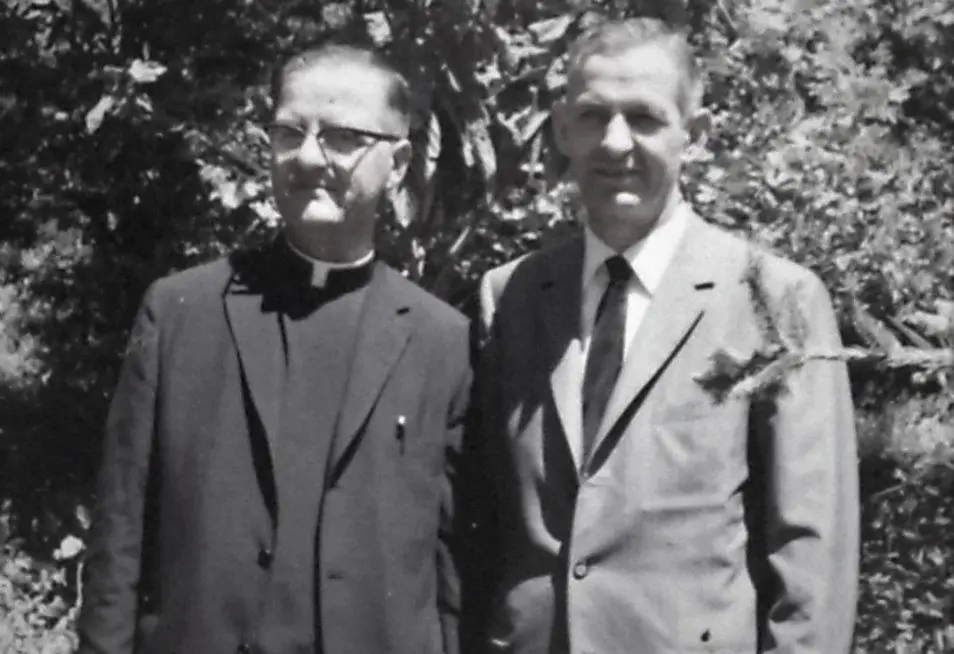
I spent vacation days in his house and inherited all of Xhafer Deva’s correspondence with Rexhep Krasniqi, his closest friend, for over 40 years. After many years, I spoke on the phone with the daughter and son-in-law of Mrs. Deva. During the conversation, taking advantage of the old friendship, I asked about his letters and was informed that all of them were with Qefali Hamdia, a family friend. In June of last year (2001), I went to Kenosha, Wisconsin, as a guest of Qefali Hamdia, to view Xhafer Deva’s correspondence, which Mrs. Deva had sent him years earlier, when she, due to old age, was closing her house to go to her daughter and son-in-law’s home, Mrs. Burgl Dagmar and Rev. Dennis Logie.
After reading the main part of the letters, in those languages I understood, I took with me more than a thousand pages of his correspondence, covering a period of over 30 years, 1945 – 1978. Xhafer Deva spoke and wrote seven to eight languages. His correspondence is in: Albanian, English, German, Italian, French, Turkish, and Serbian. The letters and writings of Xhafer Deva, with the exception of those in old Turkish script and Serbian in Cyrillic, are mostly typewritten, well-preserved, and arranged alphabetically according to the persons he corresponded with.
It also includes his family letters. He carefully kept a copy of every letter he sent and every letter he received. I express my most sincere thanks to Mrs. Oswalda Deva, her daughter Burgl, son-in-law Dennis Logie, and Mr. Qefali Hamdia and his family for the trust they gave me. With special gratitude, I recall here the help given to me by the brothers – Captain Nue Gjomarkaj and Nikoll Gjomarkaj, in the preparation of one of the most important chapters of this book. Captain Ndou, besides making available the material on Xhafer Deva’s relations with the ‘Independent National Bloc’ and the sending of paratroopers to Albania and Kosovo, also examined with me each document of that period, and we formulated the text in the form of a conversation; while Nikolla deciphered the letters, transcribed and translated from Italian the materials unpublished to this day, which were published in this chapter.
Xhafer Deva in the light of his own letters
Before the capitulation of Italy, I was in Albania three times. Kosovo was liberated, but not incorporated with Albania. The Minister of Liberated Lands was the late Ekrem Vlora. We were guests of Fuad Dibra. I met many “leaders” of that time, such as Mit’hat Frashëri (chairman of the ‘Balli Kombëtar’), Mustafa Kruja (prime minister), etc. While the so-called “Italophiles and fascists” were trying to secure food for the people. The Ballists were following the policy of the Allies; hopes were that the Allies would land in Albania, etc. The communists, under the direction of the Yugoslavs, were active and had secured, through them, the support of the English.
With the capitulation of Italy, the situation in Albania underwent a very important change. The Germans were aware that Italy would capitulate. They had taken appropriate measures. Within hours, Albania was occupied. There were two German divisions, not Italian. However, someone was interested in making an agreement with the Germans in Belgrade. An agreement that foresaw the incorporation of all of Kosovo with Albania, non-interference of the Germans in Albania’s internal affairs, Albania’s neutrality, and the securing of the Albanian currency through the transfer of gold to the National Bank in Tirana, conditions that gave the opportunity to hold the Assembly, elect the High Council, the Parliament, and the government, etc.
However, the ‘Balli Kombëtar’, convinced that the Allies would win the war (the whole world knew that Germany had lost the war with America’s entry into the war against it), maintained contact with the English missions, which supported the infiltration of the communists (see the book of the English Brigadier, ‘Trotsky’ Davies) and listened to the BBC (British Broadcasting Company). The fools of Kosovo (Deva refers to himself, I.L.) had brought a power into Albania. Thanks to this power and with some nationalist groups, not of the ‘Balli Kombëtar’, with the exception of the youth of Tirana, they somewhat managed to put the communists on the defensive and restore calm and security in Albania.
In June 1944, touched that the Kosovars had taken state power into their hands, they sought to take the government into their own hands. The ‘Kosovo Group’ had no choice but to withdraw to Kosovo. After our departure, the government was given to Fiqiri Dine. As we learn from the book of the German minister, Dr. Hermann Neubacher, the first step of Fiqiri Dine’s government was to present a plan to the German minister to supply Albania’s defense with 20 tanks, corresponding ammunition and armaments, etc., advised by the English mission at Abaz Kupi’s house in Krujë, which was not accepted by the Germans, under the pretext of a lack of Albanian personnel trained to use German tanks.
With the failure of this request, Fiqiri Dine had no choice but to resign the High Council. The mandate was entrusted to Ibrahim Biçaku, as he had the Germans’ trust. With Ibrahim Biçaku coming to head the government, the communists, encouraged by this change, revived and went on the offensive. Within a short time, the communists quickly took the cities of Albania. Ibrahim Biçaku couldn’t even escape. He hoped that his former employee, Enver Hoxha, would forgive his sins. Ibrahim Biçaku had a cigarette factory, and Enver Hoxha had been a cigarette seller in the Tirana branch. His fate was to have his life spared but be kept in prison. Thus ended black Albania, together with Ibrahim Biçaku. Mit’hat Frashëri, the great Anglophile, managed to escape with the help of the Germans from Shkodra to Italy, believing that the English would be waiting for him with flowers. He and some of his friends were given a tent in the mud in the Italian camps.”
In one letter, Shllaku asks Xhafer Deva about Anton Harapi and his withdrawal from the government. Deva answers on December 26, 1973: “I do not know the source of the information you have about the events after the capitulation of Italy on September 8, 1943, especially about the fate of the late, may he have light, Father Anton Harapi. I will try to explain chronologically the events of that time. The capitulation of Italy was well known to the Germans. German military and diplomatic movements were ongoing. My friend, Dr. Hermann Neubacher, the special envoy of the German Foreign Ministry for the Southeast, had arrived in Belgrade, and on September 4, I had to fly to Belgrade. His secretary met me at the Zemun airport, and we arrived in Dedinje, at the office of the German Army Headquarters, ‘Southeast’.
After he explained the reason for the meeting, the problems were laid out for discussion. There a program was drawn up, including the conditions of the German presence towards an Albanian government soon to be created in Tirana, with the German side guaranteeing: independence, neutrality, the unification of Albanian lands with Albania of 1913, the annulment of all laws imposed during the Italian occupation; the monetary issue, i.e., non-interference of the German army in the affairs of the Albanian government, etc. The creation of an Assembly, later named the Asamble, was also foreseen.
Without wasting time, I set off for Mitrovica and continued the road to Prizren (by car). There I held a meeting with the aim of creating the organization of all Albanian lands, named the Second League of Prizren. On the night of September 8, I arrived in Shkodra. There the capitulation of Italy was learned. I continued the road to Tirana together with Dr. Neubacher’s secretary, Dr. Stärker. In Tirana, a meeting was held composed of 22 men, led by Ibrahim Biçaku (son of Aqif Pasha), at the Tirana Municipality. Ekrem Libohova’s government was in power, without any power in hand. Within two days of this meeting, an Executive Committee was formed, with the task: to accept the government’s resignation, strengthen and normalize state administrative life, prepare a National Constituent Assembly, etc., etc. Ministers were appointed for each ministry. I was charged with the duty of Minister of Internal Affairs.
Within a very short time, the Assembly was held. The representatives of Kosovo were elected by free votes in Kosovo. In Albania, there was no possibility to hold elections. Thus, delegates for each sub-prefecture were appointed by a commission chaired by Lef Nosi. The Assembly was held, and all the points noted above were fulfilled. The Chairman of the Assembly was to be Idhomene Kosturi. Unfortunately, on that very day, the communists killed Idhomene. Thus, from the two vice-chairmen, Mr. Rexhep Krasniqi and Mark Gjomarkaj, Mr. Marku left the chairmanship to Rexhep.
The members of the Regency Council were elected on the spot, and with the exception of the late Father Anton, all took the oath. Father Anton Harapi could not take the oath without receiving the Pope’s consent. The Assembly was transformed into a Parliament, and on the first day of the opening of Parliament, Father Anton also took the oath. Through the German Ambassador in Rome, the Pope’s consent arrived quite quickly. The first session of the High Council was held, and on this occasion it was decided that the Statute of Lushnjë would be accepted as the Constitution of the Albanian State. According to the Statute of Lushnjë, the presidency rotates, also accepted by Mehdi Bey, who was elected chairman by his comrades.
However, Father Anton Harapi made his remark that he could not sign a death sentence, which was gladly accepted by Mehdi Frashëri. Fuad Dibra died, one of the members of the High Council. This was also approved by Mehdi Bey. Lef Nosi, as a wise and prudent man, had no ambition to become chairman. However, Mehdi Bey not only held the presidency but constantly interfered in the government’s competences. Father Anton Harapi did not like Mehdi Bey’s behavior at all. Out of respect for the Father, and at the same time friendship with him, knowing his troubles. So one day he called me, he wanted to see me separately.
On this occasion, he told me: ‘Xhafer, I can’t anymore! Can you speak with Dr. Neubacher, who was in Tirana, for me to fly with him to Austria? I answered: Father, I will take care of it, and so it was done. Dr. Neubacher had a special airplane at his disposal. One night, it was the end of June; the Father departed with Neubacher and arrived in Belgrade. After a few days, the Father had left for Hall and Schwaz, in Austria. In these two small Austrian towns, the Father had spent several years in his youth. The Father also knew German well.
Unfortunately for him, even there the Father was not very comfortable. Certainly, he suffered spiritually. Without expecting or thinking, one day we were in Prizren when the Father came to my office (we, i.e., the ‘Kosovo Group’ in the government, had resigned and withdrawn to Prizren). He asked for help to secure transport to Shkodra. He set off in my car. Dr. Neubacher, in his book (Sonder-Auftrag SüdOst) mentions Father Anton Harapi’s flight, his stay at his house in Belgrade, and his return to Prizren. In the end, he says: ‘The Father, after a few weeks, returned to Albania, where death awaited him. No revolution can extinguish the light of this man. The eternal light he served will shine upon him forever’!
Thus, dear Mr. Shllaku, the very bitter truth stands, and not as the corrupt mouths comment. I’m ending it here for today. During his oath in Parliament, the Father spoke these words, addressing the officers of the Albanian army: ‘Where are you, officers, men who wear epaulets? Don’t you know that your epaulets are your coffins? Now is the time’! In his file, there are two of my letters showing that I pressured him to write about February 4th and the ‘Kosova’ Regiment. I was impressed by his silence regarding the accusations about the February 4th massacre and the alleged crimes he had committed. Xhafer Deva remained silent, and in the greatest calm, he seemed to attach no importance to those accusations. He constantly said: ‘Rexhepi knows everything, those are slander, and we should not deal with the communists ‘lies.’ In a letter to Krasniqi (December 8, 1971), Xhafer Deva writes:
‘Idrizi insists that these are no longer slander but accusations. He is not distinguishing between slander and accusation and thinks that my silence reinforces the accusation. He says: “You absolutely must give your version and explain the circumstances of the events for which you are accused, at least as much as you know and as much as you remember.” Poor Idrizi does not know the intrigues woven against us by sides, the nationalists and the communists! He does not know that I have even been accused of killing those two Ballists, I don’t recall their names (referring to Qeramudin Sulo and Besnik Çano), while all of Albania knew that they were robbed by the sons of Babë Myslim and executed by them, or by those others whom the Germans shot when I wasn’t even in Tirana. Idrizi doesn’t know much about that time…, etc.’ I did not manage to convince Deva to write more, although two or three times he mentioned in his letters: ‘One day we will sit together and talk about these matters.’
- REXHEP KRASNIQI WRITES ABOUT FEBRUARY 4, 1944
After Xhafer Deva’s death, at my insistence, Dr. Rexhep Krasniqi wrote something about February 4th, in the book we prepared for Deva: ‘A furious campaign against Kosovo’! Immediately after the breakdown of the ‘Mukje Agreement’, August 1943, the Communist Party of Albania, certainly pushed by its Yugoslav organizers, starts a harsh propaganda and fratricidal campaign, especially against members of the ‘Balli Kombëtar’. At the same time, the communists organize a widespread campaign of whispers and their press against Kosovo and Kosovars, with the calculated aim of discrediting the idea of ethnic Albania, with which the ‘Balli Kombëtar’ had gained a plus among the people.
This campaign reached a crescendo after the formation of the new government and the military and propaganda losses suffered by the Bolshevik movement in Albania, losses in which Kosovo’s political and intellectual personalities, as well as the ‘Kosova’ Regiment, had played a role of great importance. All kinds of dirty slanders were put into circulation, such as that the Kosovars are an ignorant mass that would endanger the balance of the composition of the Albanian state population, that they are killers, kill our innocent youth, dishonor our daughters, plunder merchants and peasants, and a thousand other evils.
In connection with what was said above, we note here an ugly event that happened in Tirana in early 1944, which was used by communist propaganda to spread such slanders against Kosovars. Two public security officers, who were not Kosovars, had abused their duty by taking two female communist partisans out of prison and dishonoring them. Within hours, by the personal order of Minister Xhafer Deva, after an on-the-spot investigation by a military court, the officers in question were sentenced to death and executed the next morning in the park of today’s ‘Skanderbeg Square’. The then residents of Tirana are witnesses to this event, their names and places of origin.
Also regarding the cleansing action carried out on February 4, 1944, against communist partisans who daily terrorized the residents of Tirana and other regions with brutal assassinations, looting actions of commercial warehouses and state food and goods depots. Communist propaganda, year after year, fills the world with howling and hypocritical accusations against Kosovars and especially against Xhafer Deva. Undoubtedly, the action in question was carried out with the consent of the Ministry of Interior, headed by Xhafer Deva, but the truth is that the ‘Kosova’ Regiment, that night, only performed the duty of ordinary city guards and did not participate in the actions that cost the lives of several communists and their known terrorists.
Everyone knows that these actions, in reality, were carried out by a group of fighters who were not in government service and were led by Mr. Xhelal Staravecka, a former Albanian officer who was among the most active leaders of the communist partisans, on a par with comrades Mehmet-Enver, as confirmed by Dushan Mugosha, one of the Yugoslav organizers of the Communist Party, in his memoirs titled: ‘When I was in Albania’. In September 1943, after the capitulation of fascist Italy, Staravecka, a man with pathological ambitions, for reasons that can only be speculated, switched to the side of the new Tirana government.
In his defection, perhaps to explain the reasons that drove him to leave the communist movement, he published a series of pamphlets, in which he exposed the brutal methods and acts of terrible torture of communist partisans against captured Italian soldiers and against young Albanians forcibly recruited by the party.’ (Xh. Deva – Life and Activity, N.Y. 1980, pp. 85-86). Krasniqi continues in his writing about the deep psychological effect of communist propaganda against Kosovars on a part of the Albanian youth and population in Albania. He accuses the communist government of Tirana also for the massacre of Tivar. According to Krasniqi, nearly 2000 Kosovars passed handcuffed through the territory of Albania (Kukës-Shkodra), being spat upon and called ‘despicable traitors’, and finally executed by the Serbo-Montenegrin forces in Tivar. Memorie.al