First part
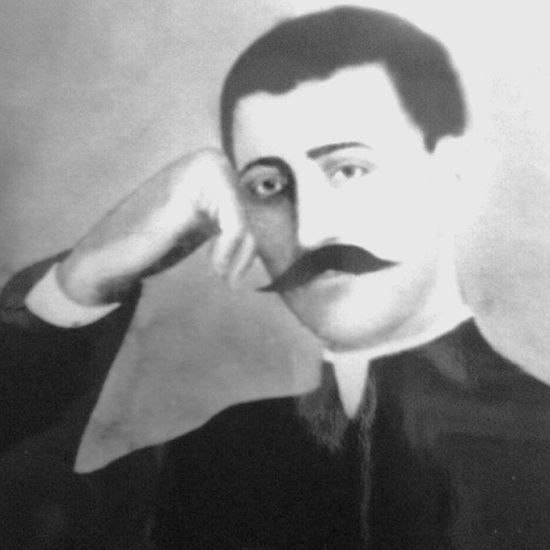
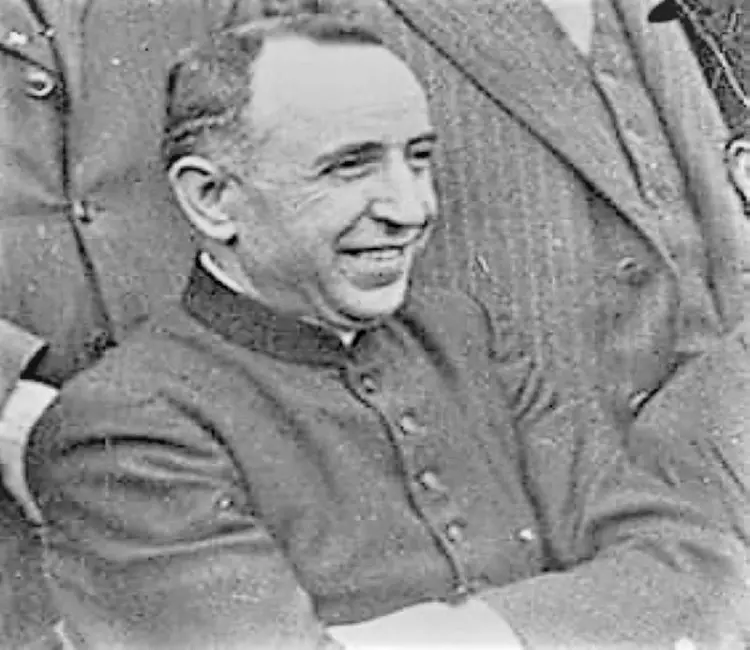
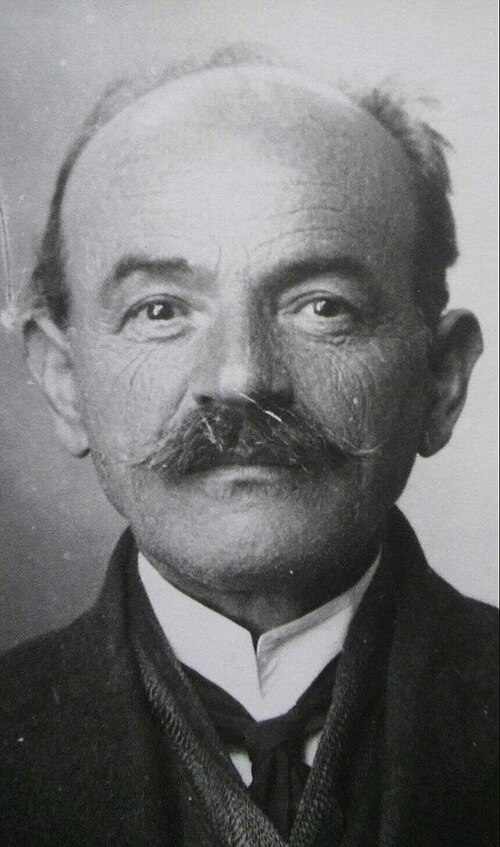
Memorie.al / We have very little information about the childhood of Dom Zef Ramaj. Dom Zef was born on January 8, 1882, in Stubllë e Epërme (Viti municipality) and died on December 25, 1914, in Skopje. His parents were father Pal and mother Çila; they had six sons and two daughters. Zef was their fifth child. In the year Dom Zef Ramaj was born, Stublla e Epërme had 24 houses and 149 souls (inhabitants), the majority Albanian Catholics, except for 2 houses that were Crypto-Catholics with 10 souls. At this time, Stublla belonged to the parish of Cërngora – Letnica, or as it was called; Montenegro di Scopia. Zef must have attended his first years of school in Prizren. He then attended another nine years in Shkodra: 5 years at the ‘Normal’ school and another 4 years at the Xavierian College, studying philosophy and theology, until the year 1905.
The request of Monsignor Troksi, that the candidates of the Diocese of Skopje be educated and study in Innsbruck, was answered positively by Austro-Hungary. Other students from all Albanian lands also studied at this university. One of them was Zef Ramaj.
On September 26, 1905, together with four other Albanians, under the escort of Dom Nikollë Ashta, he arrived in Innsbruck. The travel and accommodation expenses had been paid by Austria. The students, apart from the clothes on their backs, had nothing else with them when they arrived in Innsbruck.
The place Dom Zef Ramaj comes from is marked as “Albania”. Among the Albanian students who had studied there are also Martin Berisha from Peja, Françesk Karma from Tivar, Shtjefën Kurti from Prizren, Marjan Glasnović from Janjeva, Lazër Shantoja from Shkodra, etc. Here we will also note some of the documents found in the state archives that relate to the then-student, Zef Ramaj from Stublla.
On April 24, 1906, the rector of the boarding house, P. Michael Hofmann, informs about the four Albanian students: Berisha, Gjergji, Ramaj, and Karma. He says that they are progressing not only in the German language but also in their studies. The rector of the seminary in Innsbruck, P. Michael Hofmann S. J., on July 25, 1907, notifies that; Berisha, Karma, Ramaj and Gjergji had now finished their studies and had returned to Prizren, where they would be ordained as priests.
Furthermore, the rector speaks of the separation, which, as he says, was difficult for them, but he hopes they will not break ties and that there will be good relations between the newly returned and the Austro-Hungarian representatives in their homeland. The rector had paid the travel expenses for their return home, as well as for the necessary items for the first mass for the four candidates, and for other things that the Albanian students themselves had requested.
A document we obtained from the archive of the theological boarding house “Canisianum” in Innsbruck notes that from there Dom Zef Ramaj had gone to Prizren on July 8, 1907. Furthermore, it writes of him that; he “was very lively, noble”. According to the same source, we learn that Dom Zef was ordained a priest in Prizren in July 1907.
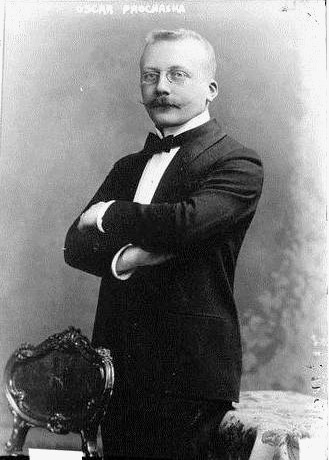
The Austrian consulate in Prizren, through vice-consul Prochaska, on July 29, 1907, notifies that Monsignor Troksi had ordained Dom Zef Ramaj from Stublla and Dom Martin Berisha from Peja, and also informs about the assignment of Dom Zef Ramaj as “Cooperator” in the parish of Skopje, i.e., assistant to the then-pastor (of Skopje), Dom Ndue Bytyqi.
According to Austrian sources, Dom Zef was initially appointed “cooperator” (assistant pastor) and later pastor of Skopje. He was also a teacher at the Albanian school near the Skopje parish, as well as at the Railway School (an elite school for the time, where even the children of foreign diplomats studied). The Albanian school (for males and females), near the Catholic Church in Skopje, had existed since before 1889.
Since 1893, at the request of Gjon Kajtazi, a teacher at this school, it had been financially supported by Austro-Hungary, with an annual sum of 500 francs. Teachers at this school were: Gjon Kajtazi, Nikollë Rrota, Mate Logoreci, a teacher for the Turkish language, Gaspër Beltoja, Gapsër Mikeli, Dom Zef Ramaj, two sisters, nuns from Zagreb, one of whom was Protegjena Bekes (Bekaj) from Stublla (Protegjena Bekaj is the paternal aunt of the author of these lines).
On January 31, 1911, the Austrian consulate in Skopje reports that a group of Orthodox from Macedonia, more precisely from Kumanova, had gone to Archbishop Lazër Mejda, to Dom Pashk Krasniqi, the pastor in Ferizaj, but also to Dom Zef Ramaj in Skopje, to tell him that they wished to convert to Catholicism and that they sought their support and help for this.
Let us clarify that this refers to Macedonian Orthodox believers, not the Catholic community of the Byzantine rite, which lives to this day in the territory of Macedonia (especially in the south of Macedonia, in Strumica).
In the report dated March 24, 1911, Consul Heimroth informs that an official had visited Dom Zef to find out whether behind the request of the Macedonian Orthodox for conversion to Catholicism there was any interest or material gain. On March 8, 1914, a very interesting letter had also been written in Italian, regarding the case of the conversion of 60 Macedonian Orthodox families to Catholicism.
On December 1, 1913, it was reported about the problems that Catholic believers in Skopje had, especially those on the Church Council. Thus, Rrok Prenk Berisha, a gunsmith, after being sentenced to large sums of money, was threatened by the local Serbian authorities to leave the place, otherwise they would imprison him.
They did this under the pretext of the supposed political activity and intrigues of Rrok Berisha. It should be said that Rrok Berisha (from a family of 14 members), a believer of Dom Zef, was at that time a prominent figure in Skopje.
Likewise, he also had friendship and cooperation with Alandro Kastrioti, the pretender to the Albanian throne at that time, who lived in Paris. According to the Austro-Hungarian consulate, with the penetration of Rrok Berisha and prominent people, the Serbian authorities wanted to weaken the Albanian Catholic element in Skopje.
The pastor Dom Zef Ramaj informs the consulate that Rrok Berisha, with his family of 14 members, would soon leave Skopje for Durrës. On April 3, 1914, the Austro-Hungarian consulate reports on the visit they had made to Dom Zef Ramaj; in fact, he was consulting with them about the new political situation. The consul also informs about Dom Zef’s interest in how Albanian Catholics should act regarding the issue of citizenship and military service, since his believers would face the request of the official authorities to declare whether they opted for Turkish or Serbian citizenship.
The consul explains to Dom Zef that the Peace Agreement between Serbia and Turkey, dated March 9, had not regulated the matters in question for Albanian Catholics, but only for Muslims (who are not obliged to perform Serbian military service). Dom Zef Ramaj reports that the majority of Albanian Catholics in Skopje, faced with these circumstances, are considering leaving their homeland.
On April 11, 1914, the Austrian consulate reports on the hijacking of the train on the Prizren-Skopje line. Dom Zef Ramaj (who was returning from Prizren) had also been on this train, and he testifies to the murder of one person. According to Dom Zef, the police inspector, Cerovic (well-known at the time), was also on the train. When Dom Zef asked him why he was on this train, Cerovic had replied: “by chance”.
Dom Zef reports that Albanians, more precisely Jusuf Tabi from Tetova and his men were blamed for the incident, and that the state authorities had sent 200 gendarmes to deal with the case. Since Dom Zef had traveled on this train, it was perfectly clear to the Austro-Hungarian consulate that had carried out the train hijacking. Later, this same Inspector Cerevic had threatened Dom Zef Ramaj and several other priests about many things, even demanding Dom Zef Ramaj’s removal from Skopje.
The Austro-Hungarian consul in Skopje announces that he had participated in the feast of Corpus Christi in Ferizaj. The Mass, by order of Bishop Lazër Mjeda, was led by Dom Zef Ramaj, concelebrating with Father Zadrima. The consul had participated in the Mass in official uniform, which he describes as very worthy, as was the participation and appearance of the Albanian Catholic population.
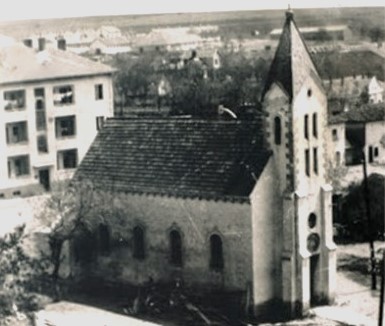
Dom Zef Ramaj served in Skopje from 1907 until December 25, 1914, when he passed away. He lived and worked in Skopje in a very difficult time, during the Ottoman Empire, with which he had not only administrative problems, especially in 1910, when local authorities wanted to build a road on the property of the Catholic Church. After the fall of the Ottoman Empire, problems continued with the Serbs during the Balkan Wars, when the situation of Albanians, especially Catholics in Skopje, where he served as priest and teacher, was extremely difficult.
The local Turkish authorities attempted to build a road in Skopje; the construction touched part of the churchyard. Dom Zef had expressed his concern and had also asked for help from the Austro-Hungarian consulate on this occasion.
On June 20, 1910, Dom Zef had also submitted a complaint to the Turkish authorities that the road should not be built as they had planned, because the road would also affect some 570 square meters of the Church, while the local Turkish authorities had not foreseen any compensation.
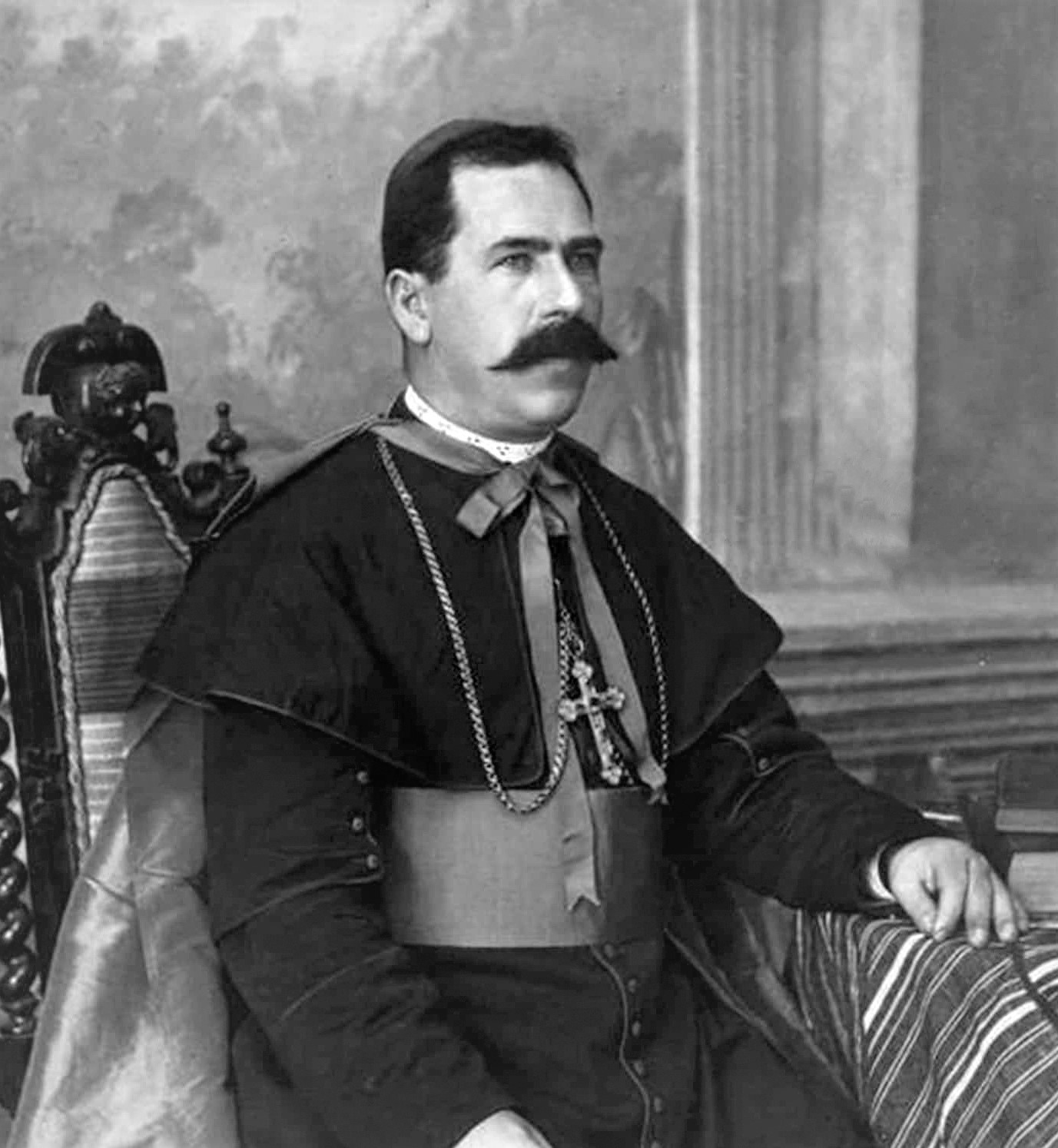
The Austro-Hungarian consulate considers compensation for the church property by the local Turkish authorities reasonable. The Archdiocese of Skopje was very fortunate with the appointment of Monsignor Mjeda at its head. He was a true spiritual leader in very difficult times for the people of the Archdiocese, such as the First and Second Balkan Wars, and the First World War.
The great joy at Mjeda’s appointment as head of the Archdiocese of Skopje-Prizren is also shown by a writing of Dom Zef Ramaj, published in “Elçija e Zemres s`Krishtit” in 1910, where, among other things, he writes this: “It had been a year and a half that we had remained without a Shepherd, without a Father, and indeed it was very difficult for us these days of orphanhood.
But the Blessed Lord comforted us greatly, by choosing for us as Archbishop a man who had [us] at heart, and who therefore could not help but be also in our hearts. Yes, the Blessed Lord comforted us by sending us as Archbishop Monsignor Lazër Mjeda. Only we know how much we desired to have a Shepherd, and how our hearts rejoiced when we heard that it would be Monsignor Lazër Mjeda, and with what desire we awaited him!
All the clergy with the entire population rejoiced when they heard that he would indeed come to us. The parish of Skopje had the good fortune to be the first to receive this Lord sent by God, to guide us, and this parish, thanking God for the honor, tried to receive him as well as it could.
From Sarajevo, the Illustrious Lord let us know by telegram the day he would arrive, and then, one day before his arrival, with special orders, word was given to every house, both Albanians and foreigners (all together there are 140 houses), that on the 4th of [the month] the new Archbishop Monsignor Lazër Mjeda would arrive, and that they were ordered to go out to receive him at the Railway Station. Indeed, the men went out; the women and children gathered in the churchyard.” / Memorie.al