By Sven Aurén
Translated by Adil N. Bicaku
Part Four
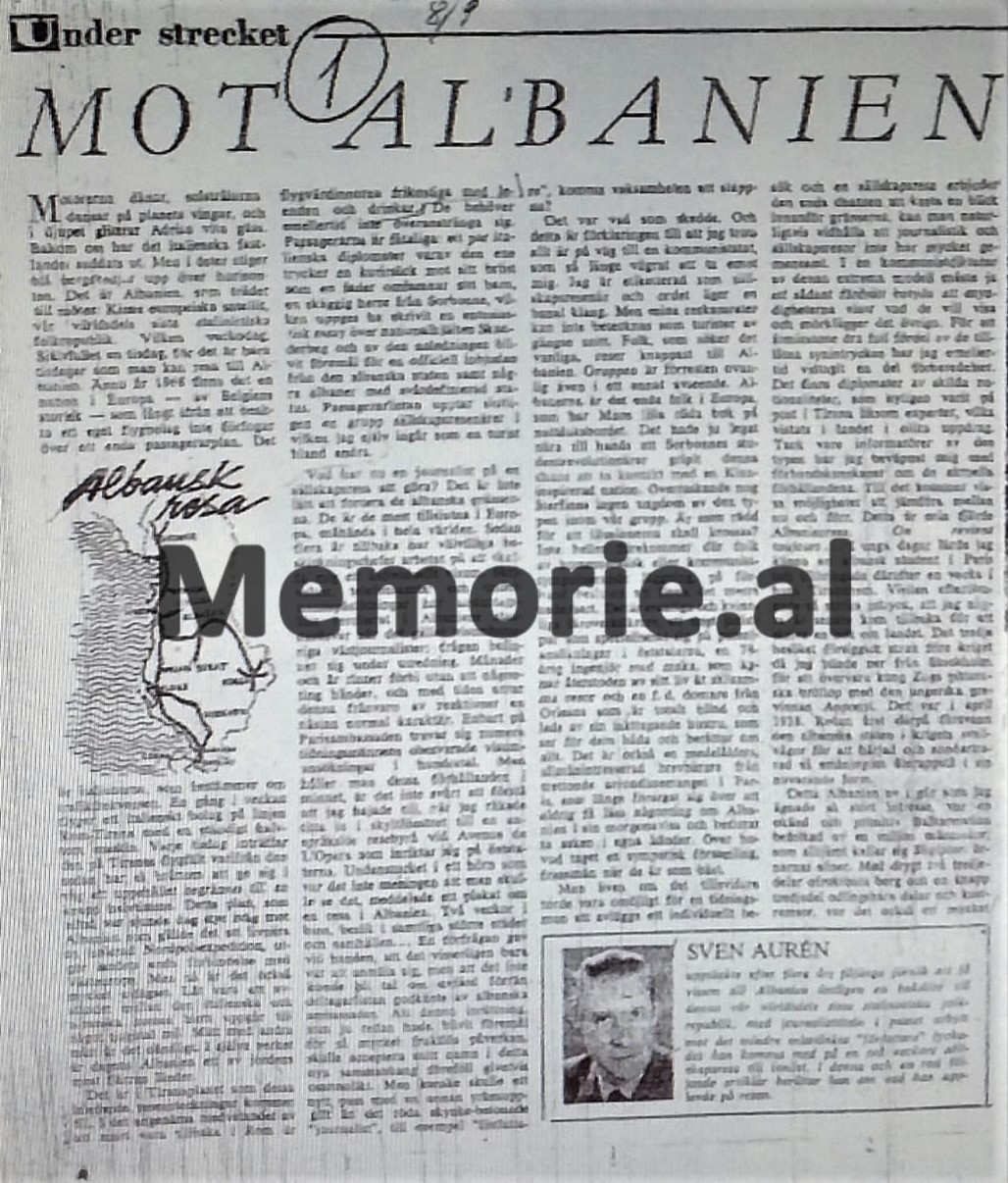
Memorie.al/ publishes a report by the well‑known Swedish journalist Sven Aurén, originally printed in the Stockholm newspaper Svenska Dagbladet, concerning his four visits to Albania, starting from the years 1935‑38 when he came for King Zog’s wedding and ending in September 1968, when he visited communist Albania for the last time.
Continued from the previous issue
MARXISM AND MINARETS
In today’s China, every morning when you put your head out of the hotel window, you witness rare sights, wherever you are in Peking, Shanghai, Canton, or any other city: in the streets and squares, everywhere you look, you see people doing gymnastics, moving like puppets as if Mao were pulling the strings from his Olympus. Albania’s master, Enver Hoxha, will not be outdone. In Tirana, Elbasan, Pogradec or Korça, the sight is the same, every morning at seven o’clock: compulsory collective morning gymnastics.
Like the Chinese, the Albanian must start his day with arms up and knees bent. Keeping fit is a civic duty, because the nation needs only the able‑bodied and productive. The useless are parasites. This applies not only to people but also to animals. Here too Hoxha has followed China’s example and banned dogs. According to the official reasoning, the existence of cats is justified because they catch mice, whereas dogs are of no use, not even for their own food. He who does not work…!
A year ago, an order was given that all dog owners should kill their animals. Through the iron discipline that the dictator exercises in the country, the mass extermination has been a total success. I have crossed Albania from north to south and from east to west: not a single dog bark.
But one finds China in many more essential respects than these. In Tirana they have followed the Cultural Revolution with keen interest. This intelligent Enver has understood the political benefits of maintaining a permanent revolutionary climate, provided he can control it. The masses are stirred to exaltation of feeling, so that together with their leader they wage an unceasing war against bureaucracy, apathy and hesitation. In a small state like Albania, with only one and a half million inhabitants, the difficulty is that there is not much population in the true sense of the word, and besides, it suffers greatly from a lack of educated people.
With Hoxha as initiator, the so‑called direct democracy debuted about a year ago, following the Chinese model at the capital’s university, where students began to put their teachers on trial and accuse them of being backward and lacking progressive spirit. However, the question of erecting barricades or occupying lecture halls was never raised, because the action died down as quickly as it had begun. Hoxha understood that the modest number of university teachers did not allow such follies.
For the same reason, it was also impossible to shake up the state administration employees. But since this Hoxha learns, and he will not abandon the ‘Cultural Revolution’ which Mao sees as necessary to keep communist doctrine pure, something had to be invented. What was easiest – and what he also decided to do – was religion. In my previous article I described the unbridled cult of the individual that the dictator organised throughout Albania, and how he, using only the name Enver, presents himself as a god to his people.
“You shall have no other god but me!” That could be the leitmotif of the new Cultural Revolution, which he ordered almost a year ago and which is directed against everything related to religious beliefs. In Albania, an estimated 70 percent are Muslim, 20 percent Orthodox and 10 percent Catholic. The aim is 100 percent Enver‑worshippers. With this goal in mind, Muhammad and Christ are portrayed as primitive God‑worshippers of a bygone age. Believing in them keeps the people in reactionary backwardness. A true communist state uproots these prejudices, and that has happened.
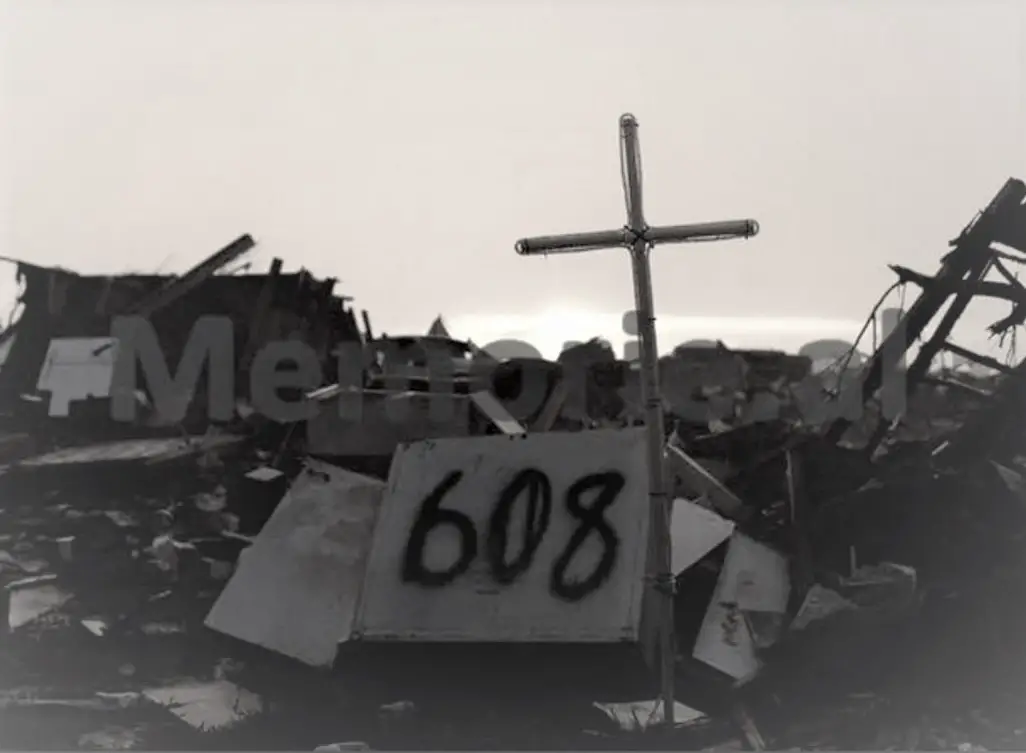
Uprooting is the word. It has been carried out so radically that even China could not show the same result. Albania claims to be the only absolutely atheist state in the world. The practice of religion, of any kind whatsoever, is strictly forbidden. No priest is allowed to attend a burial, and crosses have been removed from Christian cemeteries. You see them here and there, in piles against walls. The Bible has been placed on the list of forbidden books. Churches are either closed or made “useful”.
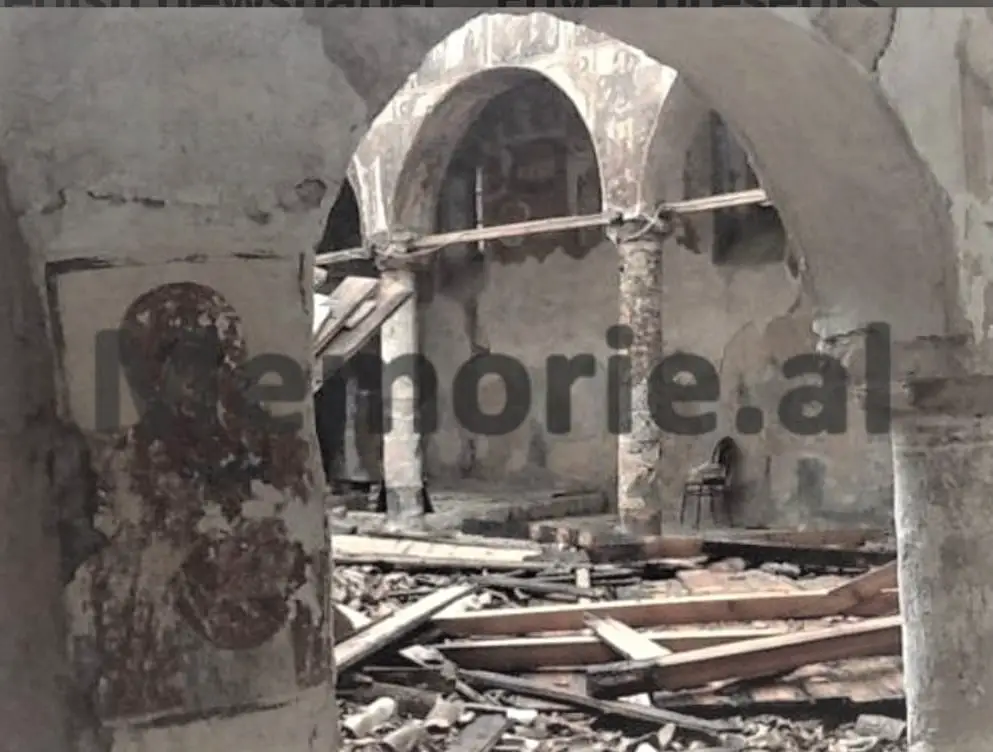
In Tirana, an Orthodox church is used as a dance hall, and the altar has been turned into a café. I saw in Korça a large church with two bell towers, whose windows were painted brown. The doors were padlocked. In the church of Fier, the windows were likewise painted, the doors permanently closed, and besides, the entrance had been turned into a dump for old car parts. The church in Vlorë was used as a grocery shop.
Our guide – an elderly Albanian who had spent fifteen years of his life as a barber in Lyon, had been an active member of the French Communist Party, and was now back in his homeland – naturally became the target of difficult questions from the travelling group. He answered them in his own special way. What does a Christian believer who feels the need for spiritual stimulus do? “He goes to the cinema.” What do the Albanian people say about the desecration of the country’s churches? “It is not a matter of desecration, because we do not consider them sacred. In the new Albania, there is no place for religious belief.”
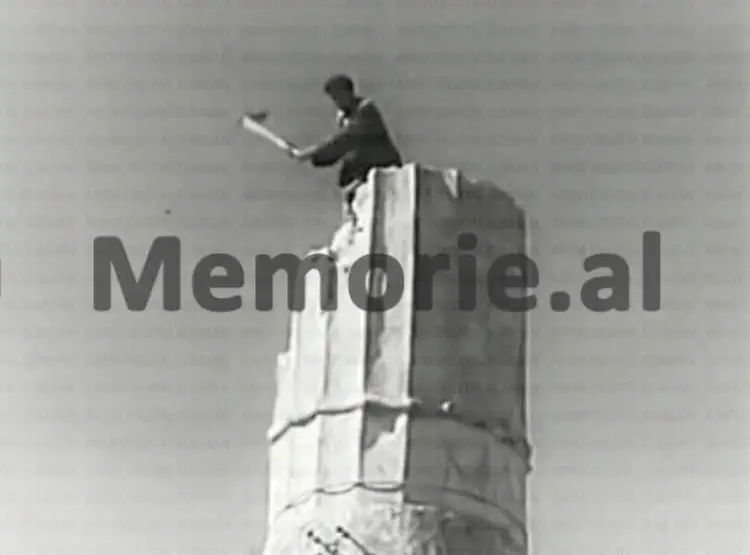
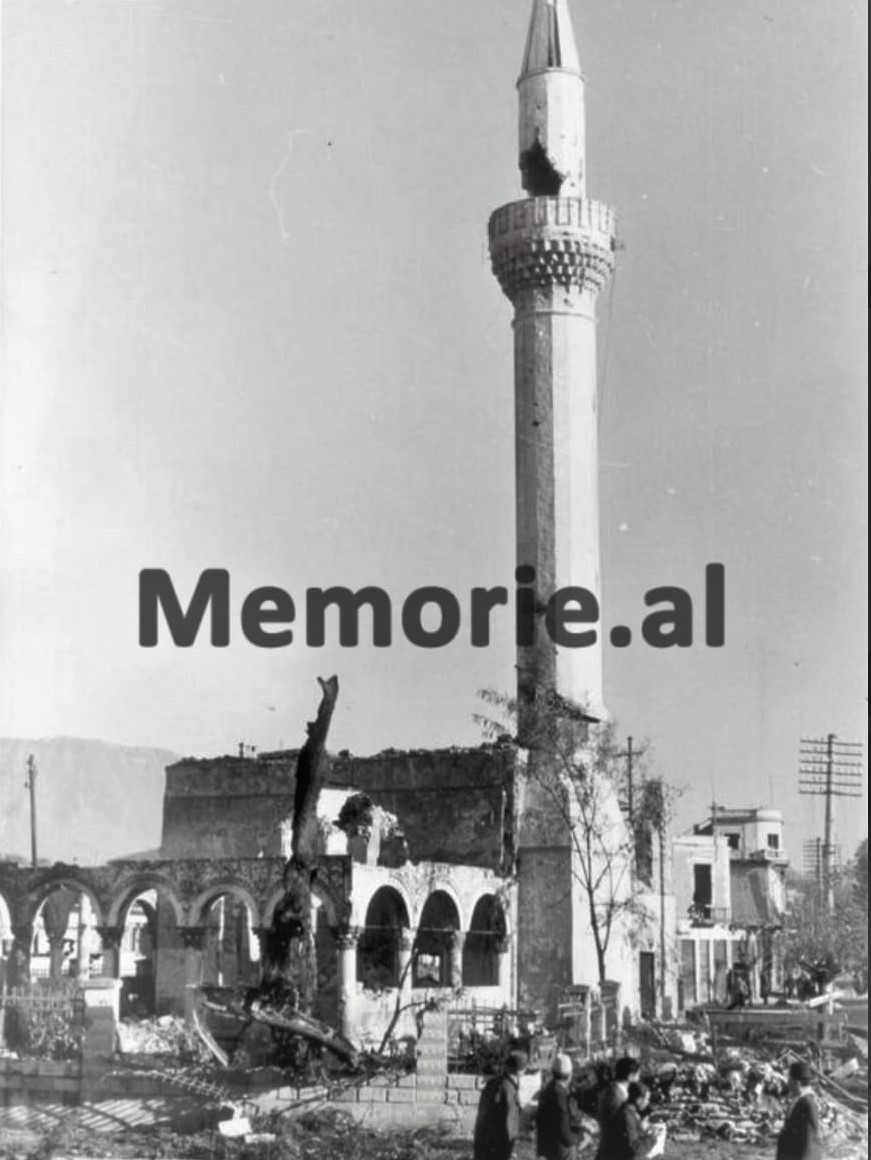
But after half a century under Turkish rule, Albania is above all a Muslim state. Everywhere you went before the war; in the towns you saw the slender, beautiful minarets, even in the simplest villages. With a few small exceptions – for example, the minaret of Tirana has been preserved as a historical monument – otherwise they have been torn down. Enver did not like them; they pointed an accusing finger towards the sky, reminding of a power other than his own. The mosques? Of the two in Elbasan, one has been turned into an electricity plant and the other served as a primitive lavatory.
The mosque in Shkodra was dynamited and is now a ruin. The mosque of Korça, dating from 1484, is mentioned in travel books as extraordinary. The ruins, leaning against the ruined minaret, look as if they could collapse at any moment. In that desolate garden, I saw an old man kneeling, his face turned towards Mecca. It was the hodja, who for decades had called the faithful to prayer from the minaret balcony. He proved very approachable, said he had been driven from his former property, and allowed himself to be photographed – incidentally, the only willing Albanian I could speak to during my journey. As a foreigner you are always accompanied in the towns by a string of curious onlookers and policemen, who regularly keep a certain distance.
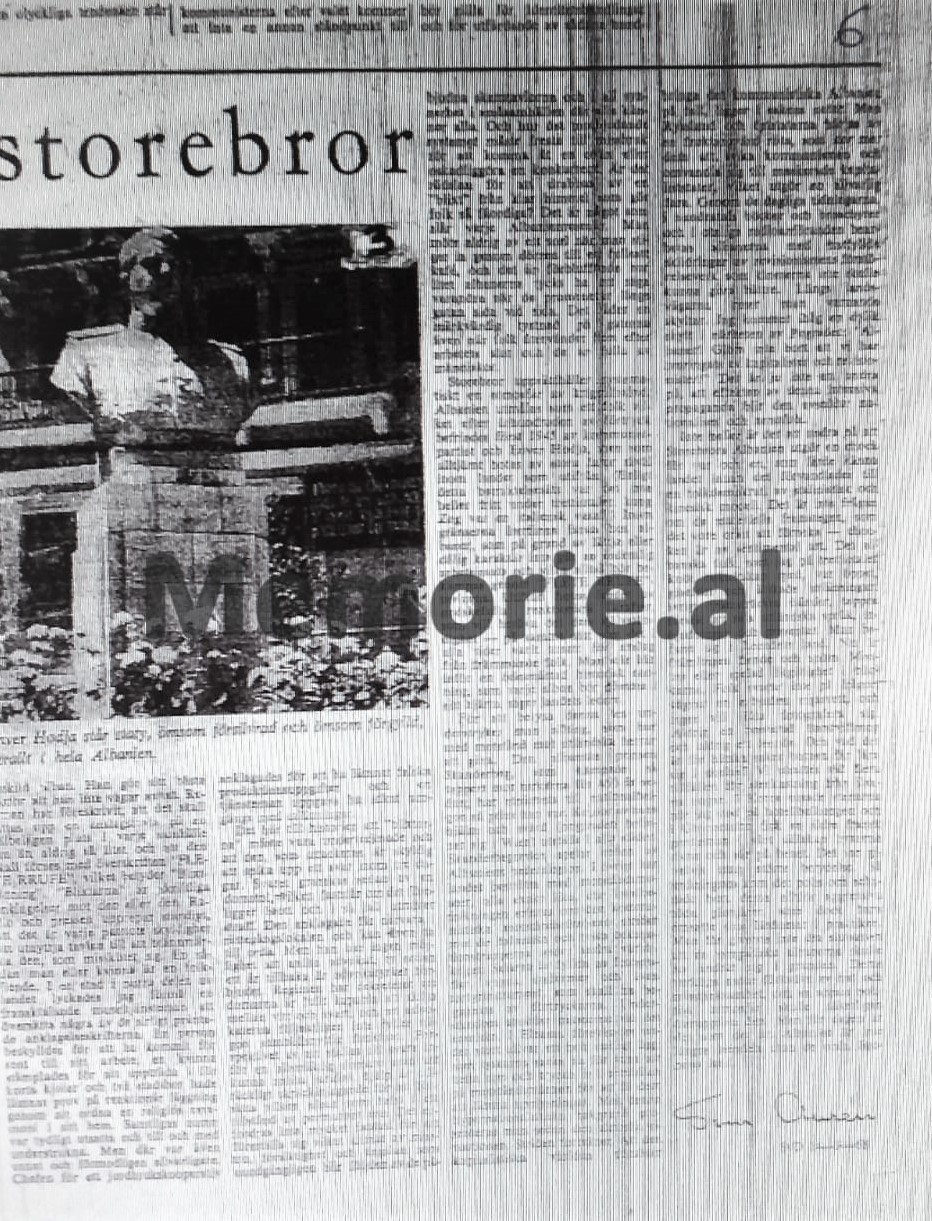
When the crowd approached the mosque, he suddenly ran away like hunted prey, and that made me regret having spoken to and photographed that kind man. Perhaps he too has been forcibly subjected to what is now called the production process. Speaking of the production process: I have also seen a productive mosque. It is located in picturesque Gjirokastra, not far from the silver‑shining bust that Enver has allowed to be erected for himself. Its shape is elegant, and the minaret has not been destroyed. A few months ago, it was turned into a tailor’s workshop. The clatter of a long row of sewing machines penetrates through the windows with their centuries‑old bars, and on the painted walls hangs dresses and men’s clothes.
There were many Christian and Muslim monasteries in Albania. Most of the latter belonged to the well‑known Bektashi sect, which was a powerful factor in Turkey before Kemal Atatürk banned it. In the interwar period, the Bektashi community found refuge among the Albanians and played a major role until very recently. The representatives of the Cultural Revolution have driven the monks out of the fifty‑odd monasteries they possessed and have turned the premises into workers’ dwellings. One of the most notable, which stood on a hill near Gjirokastra – before the war I ate a charming and unforgettable lunch there with its head, Dervish Baba Selimi – now…
During our stay in Gjirokastra, I begged the guides to let me relive old memories by visiting the *teqe*.
Impossible. Our interpreter explained that the building was a military barracks, and naturally everything military was secret. I want to know what has happened to the Christian and Muslim clergy and the monks: “They are working.” Further clarification was impossible to obtain, and what I can add to the answers remains an enigma! Are they slaves in concentration camps, forced into agricultural cooperatives and factories?
Or…! Considering the hodja of Korça, perhaps some have been left to the mercy of fate and a life of penury. But as with many other things in this state, perhaps it is much better not to know anything.
Another question that forces itself upon you is this: how do the people react to this immediate compulsion to switch from a religious heritage to an atheist one? Looks become uncertain and malicious at these questions, and no one gives any answer. That may be understandable, and the matter is facilitated by the fact that Albanians have always shown a very broad liberal tendency in religious matters. The country’s history has no example of religious fanaticism or doctrinal conflicts. But still. What do people think when they are forced to bury a family member under the sign of the red star – that is, without a hodja, priest or religious ceremony, a prosaic hole in the ground and nothing else?
It would not be right to present the Chinese influence as entirely negative. When Albania broke with Russia six years ago, the state risked being completely paralysed in the industrial sector. The Russians supplied both machinery and entire factories, and also made available specialists who ensured everything worked. There was no qualified Albanian personnel to take over when the specialists left, but China rushed to fill the gap and the danger of paralysis was averted.
Chinese experts have since increased in number, and you see them here and there. They go out in groups of six or seven and seem to have no kind of human contact with ordinary Albanians. In hotels they eat in a reserved mess, where you see them sitting apart with their mechanical smiles. By now they are controlling not only the Russian machines but also the Chinese ones, because China has given considerable aid and enabled new industries to be opened. But their greatest help seems to have been in agriculture. Albania is a mountainous country, and agriculture is concentrated in the valleys.
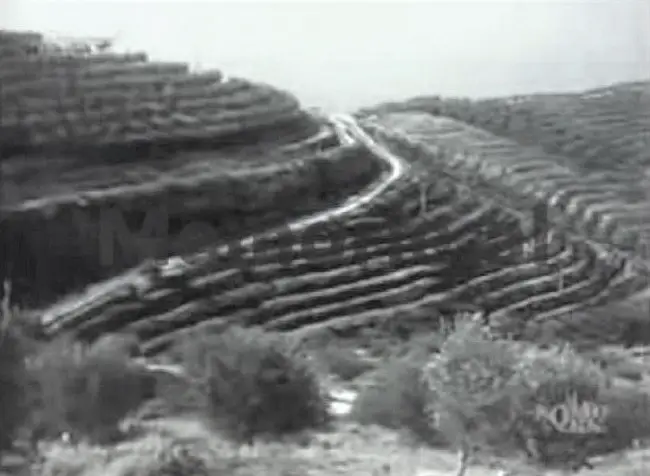
At Peking’s request, Hoxha has now launched the slogan: “We shall triumph over the mountains!” To some extent this has already happened, following the Chinese model. The model is terraces. On narrow terraces rising endlessly, one above the other, the mountains have taken on the appearance of stairways to heaven – they have planted trees, potatoes, even grain. This is a type of agriculture that demands a great deal and puts the practitioner under terrible pressure. The result is worthy of honour. The terraces along Lake Ohrid are magnificent. You feel as if you were in China. In many other mountain areas too, the Albanians have succeeded brilliantly, thanks to the Chinese model.
That there must always be some other state that pays is the eternal tragedy of poor Albania. But from Enver Hoxha’s point of view, it is much better that the state is financed by Peking than by Moscow. The Albanian regime has the character of a family enterprise hungry for power, with a tyrant at its head. This is a type of regime that to some extent recalls Mao’s and, above all, Stalin’s, and would now be unimaginable both in Russia and in the Eastern states. But if it were now under Russia’s protection, it would not be able to stay in power. China raises no objection – on the contrary.
Since Albania is always forced to be someone’s satellite, it is not at all bad to have a financier on the other side of the globe. One feels freer. And China? Do you want to know what profit China gets from this business? Three advantages immediately catch the eye: In Tirana, the Chinese have a printing press for their propaganda in Europe, which simplifies transport problems. They also use the exceptionally powerful radio station to conduct anti‑revisionist propaganda in the Eastern states, which cannot be done from Peking. And last but not least: the very existence of something so absurd and intensely anti‑European as a Chinese satellite on the shores of the Adriatic is in itself a triumph. /Memorie.al