

By SAMI REPISHTI
Part Thirty
Sami Repishti: – In Albania, the communist crime of the past has not been documented or punished; there has been no “spiritual cleansing”, no conscious confession and denunciation of ordinary communist criminals! –
‘Under the Shadow of Rozafa’
Memorie.al / During the 1930s and 1940s of the last century, with the unstoppable fascist and communist downpour descending upon Europe, sooner or later over the whole world, “fate” also seized the Albanian people by the throat. Like all young people, I too found myself at a crossroads where a stance had to be taken, even at the risk of life. Back then I said “no” to dictatorship, I took the road that had no end, a sailor on a wide, shoreless sea. The rebellious act that almost killed me simultaneously liberated me. I am an eyewitness to life in the fascist and communist hell in Albania, not as a “politician”, a “personality” of Albanian macro-politics, but as a student, as a young man who became aware of my role, in that time and in that place, out of love for the homeland and the desire for freedom; simply, as a young man with a pronounced sensitivity, loyal to myself, to a life with dignity.
Continues from the previous issue
One workday, the construction site was visited by a representative of the Professional Construction Unions. She was a “comrade” with whom I had worked before imprisonment in the Reconstruction Section. I remember her surprise when she saw me after ten years of separation. At first she looked at me attentively, as if wanting to make sure it wasn’t a mistake. I recognized her immediately and smiled. I remembered all the conversations I had had with her before, and especially her sweet nature, her constant smile. In those times, she was deeply aware of her lack of education and limited ability to work in an office. But she had the trust of the “Party”, a privilege she never abused, with me.
Kind-hearted by nature, she showed it with an expression of pity for the state I had fallen into. She approached me and, to the astonishment of others, gave me her hand, asked about my health, about my work, always smiling, without taking her eyes off me. I answered in a companionable tone, without complaining, without giving an impression of dissatisfaction. She inquired about the working conditions at the site, and left. How “communist” was this “comrade”? “She’s a fanatic,” they told me, which in everyday language meant “dangerous,” because she reports everything she sees and hears. Then why did she act so humanely towards me? Was it her inner nature? Communism seemed not to have destroyed her nature. When she met an acquaintance with good memories, her true nature came to the surface, as a “bourgeois weakness”. The Trade Union comrade was not inhuman; she was not a “communist”.
On the way home, I remembered the face of my cousin, executed by the Nazis. With a pronounced sensitivity to injustice, of a rare intelligence, endowed with a calm and steadfast courage, he would have expressed his discontent, especially with the public crimes and Yugoslav interference. It is possible that his opposition would have irritated the Shkodra “leadership”. Consequently, he would have been eliminated. Today, he is listed among the “Martyrs of the Homeland”, his parents are “parents of martyrs”, and his virtues are raised to the heavens whenever communist propaganda deems it reasonable to remind a population tired of slogans, of the “sacrifices of the people and the Party”! Even this noble victim, this youth mercilessly extinguished in Nazi camps, was part of the great “lie” that poisoned our isolated country. My cousin was being executed again, this time by his former “comrades”, who in the conditions created would have approved of his killing…!
XXIX
New Year 1958! In my family, the beginning of the New Year was celebrated together, with the great joy of my presence, and with hope for better days. Before everyone else, I felt happy. I looked around at my mother, brother, sisters, nephews and nieces who were talking, singing and enjoying the food and fruit on the table… once a year. The small radio broadcast appropriate music. It was warm in the room, and everyone was relaxed. But more than the others, my mother showed a special satisfaction. She was living as if in a dream, with the whole family together. Before her was the food and everyone was celebrating. As if she couldn’t believe her eyes! Midnight! The radio gave the signal of the awaited moment.
Everyone stood up and we began the congratulations and embraces. Even I couldn’t believe that I was part of this evening full of joy. I embraced my mother with all my soul, while she shed tears of joy. Everyone wished me “a better job” for the coming year. I smiled. No one dared to say to me “next year, in freedom”, although everyone wished it. Fear had entered the very marrow of our spines, paralyzing an entire population. That evening I enjoyed myself, I spoke with everyone, and had fun with the little ones. Spoiling such an atmosphere would have been a crime.
The next day, after a joyful night, I rested at home. I read, but understood little. My mind and heart were in constant motion. I felt closed in, and I wanted to get out of that room that was taking my breath away. I needed fresh air, to survive! In the difficult atmosphere, created by the political, economic and social condition of the country, on the verge of a warning crisis of catastrophe, the spirit of compromise had surrounded the country. Perhaps even worse. It was an atmosphere that knew and greeted crime and the criminal, oppression and the oppressor, the madman and the madness. It was an atmosphere where violence, injustice, lies and hypocrisy were applauded.
The mass shootings of innocents, tens of thousands of prisoners, and countless families in exile camps, had not sufficed to awaken from heavy sleep the conscience of a crowd numbed by the incurable drug of indifference and of selfish, shameful individualism. Oh insensitive crowd! Where would the light of our future be, if we did not carry with us the memories of past centuries, and the torches of life-giving light that fearlessly tore through the black cloth of darkness that often, for centuries on end, enveloped unfortunate humanity? Only the high-mindedness we feel in being brothers and sisters of those human beings suffices to give our life taste and meaning. We must survive! Even when we cover our faces in fear whenever we want to cry, still we must survive, if for nothing else then at least to sing the eternal glory of Prometheus in chains…!
Around me, it seemed people lived without worrying about what was happening in our country. Crushed by daily slave labor, confused by the constant fear of arrest, torture and persecution that had torn apart the fabric of Albanian society as I knew it, the “citizens” had been weakened, their hearts had failed them, their time had died, and they found no other way but to unconditionally surrender their common fate into the hands of the “leaders” – a state of affairs inconceivable just a few years earlier. From this forced “social contract”, the “leaders” drew the conclusion that the general interest was best served, and the affairs of the “State”, this modern monster, were carried out properly, whenever their whims were followed, their orders were implemented, which ended up in the further deepening of this sick condition.
Putting the “Party” above the law, and daily politics above both, the communist “leaders” had succeeded in establishing their absolute rule and in raising the institution of tyranny. The fear of being “different” from others, the fear of criticism, of punishment, the fear of complete destruction, were the best allies for the flourishing of tyranny. The gap between those who surrendered and those who forced others to surrender, grew every day more and more, so much so that the abyss threatened to devour both sides. Only death would immortalize the painful memories of the one, and for the other, there would be only damnation…!
For quite some time my eyesight had weakened. The eye doctor was in Tirana. I was forbidden to circulate outside the city of Shkodra, and I was forced to obtain permission from the Police. With the accompanying letter and the internal “passport” that bore the letter “D” (i dyshimtë – suspect) stamped in black ink on the first page, I set off for the capital. The journey lasted four hours. The document control police forced us to stop five times. Whenever they saw my “passport”, with the “D” marking, the police officers’ attitude changed, as if they had discovered an exotic animal. A small “interrogation” would begin: “Where do you come from?! Where are you going? What work do you do? Why are you going to Tirana? Where will you stay? How many days? Will you meet anyone there? Do you have permission from your workplace?” …and so on, and so on. I answered all questions calmly.
Others stared at me. Strange curiosity! No one spoke to me, and the journey to the capital continued without exchanging a single word. The doctor examined my eyes, thought for a moment, and addressed me without malice: “You should have come earlier,” he said. “Why did you wait so long”? – “I was in prison,” I replied. “Ten years”! He immediately turned to me, put his hand on my shoulder and, added in a voice that showed he was moved: “You need glasses…! I believe your eyes have no disease. Myopia and he smiled. I thanked him for the service, offered to pay, but he refused. I thanked him again, shook his hand and wished him a good day. Unable to return to Shkodra that night, I was forced to seek shelter in a hotel.
Every clerk asked for the “passport”. The letter “D” was the signal for refusal. “No room”! Was the answer. As night approached, I reluctantly headed towards the house of a relative. He was shocked when he saw me at the door. I explained that the hotels were full, and so I needed shelter. He accepted me! During dinner, the conversation was very formal. No event of the day was mentioned. Everyone’s health became the center of the conversation. I immediately understood the atmosphere of fear that reigned in that house. The Radio-Tirana broadcast was not listened to. The lady of the house informed me that “the bed is ready”! “You must be tired,” she said with a forced smile. I thanked her, wished “good night”! and got into bed.
I was overwhelmed by everything I witnessed around me, and especially by an invisible wall of isolation that surrounded me, in every corner I went. Despite my contained anger, a feeling of pity for these frightened creatures overcame me. How does one get through life in this state? Where was the spirit of resistance of these individuals, who lived in fear? Where was the hope of a powerful, spontaneous movement that would shake such an oppressive regime from its roots? Fear, the strongest weapon of a dictatorship conscious of its own acts, was proving to be the best tool for creating a state that a few open minds had foreseen: universal sleep! The next morning, I got up early. The others went to work. Outside, the sun shone beautifully.
I decided to take the afternoon bus and walk a bit through the streets of Tirana, which I hadn’t seen for many years. I visited the stadium and the “City of Students”. From the stands, the maintenance of the football field looked good. The view brought sports matches to my mind. The roar of the fans that once reached the sky echoed in my ears, bringing back beautiful memories of the carefree days of youth. In the distance, the “Leaders’ Block” could be seen. I knew that the “little Kremlin,” as we called it back then, existed, and that circulation of the population in that area was strictly forbidden. The leadership and the people were separated by a fence of police and civilian informers, whose duty was to ensure the absolute comfort of a dictator who did not sleep from the burden of conscience for the crimes committed…! Around me, passersby seemed to be rushing, each to their own work. I did not see any gathered groups, or citizens taking a stroll, at that afternoon hour.
There was a constant movement that reminded me of large urban centers. Tirana had grown in population, and this crowd gave the city liveliness. But it was a joyless liveliness. The faces of the majority were frowning, or at least serious, and signs of joy and satisfaction were not at all visible in that crowd clearly preoccupied with the worries of the day. A little further away, groups of students were heading with quick steps towards the university building. Amidst this hurrying population, I was the only passerby walking slowly, carefully observing almost every move of the others. I had a great desire to understand this society which, in my own country, was foreign to me.
The company courier informed the construction site management about a meeting at the center, and attendance was mandatory for everyone. In the noisy, smoke-filled hall, the director took the podium. Without any preamble, he began to explain the importance of the meeting. As usual, with a thuggish vocabulary, he shouted: – “You scoundrels”! (We were all “reactionaries”!) “Do you know who is going to visit our country?! The highest leader of the Soviet Union, the most powerful man in the world… do you understand”?! And addressing a worker who wasn’t paying attention, he said: – “Hey you, by God, why aren’t you listening?! Do you know who is coming?! He is the successor of Great Stalin. He honors our country as if Stalin himself were coming…! Do you understand”?!
Raising his voice again: “Do you understand”?! No one spoke! In that surreal atmosphere, I didn’t know whether to laugh at the director’s behavior, or to weep over our slave-like condition. The director continued: – “Tomorrow, you will come here again. We will inform you about the organization, the time, the place, and other things. Don’t forget to dress in your best clothes… to show our dear guest that we are happy in socialism…”! The director spoke. Everyone listened without any questions. Finally, we dispersed. I also headed home, but a great fear seized me, that the Sigurimi (Secret Police) might arrest “suspects”, under the pretext of “security measures”. The thought that I might spend a few days in prison tormented me, but I had no way out! This incident heightened the sense of insecurity and the urgent need to plan my escape, as soon as possible. The idea both enthused and frightened me simultaneously.
That evening, after dinner, I sank into thought. I was silent, and my poor mother was very worried by my withdrawal. She was afraid that one day I would run away, and risk her second internment. But she had never said it, and tried to remain calm. Every day, she told me in detail about the sufferings of others, of neighbors, of her friends. Then she would end with an expression: “like the others” or, “the world has its troubles”, “some more, some less” or; “we are not alone, what we can do now, it’s got us… God will make it right”…! My poor mother! That night she was very frightened when I didn’t answer, and in my silence she correctly understood my fear. Words were stuck in my throat. Then I saw tears begin to roll down her cheeks, wrinkled by age.
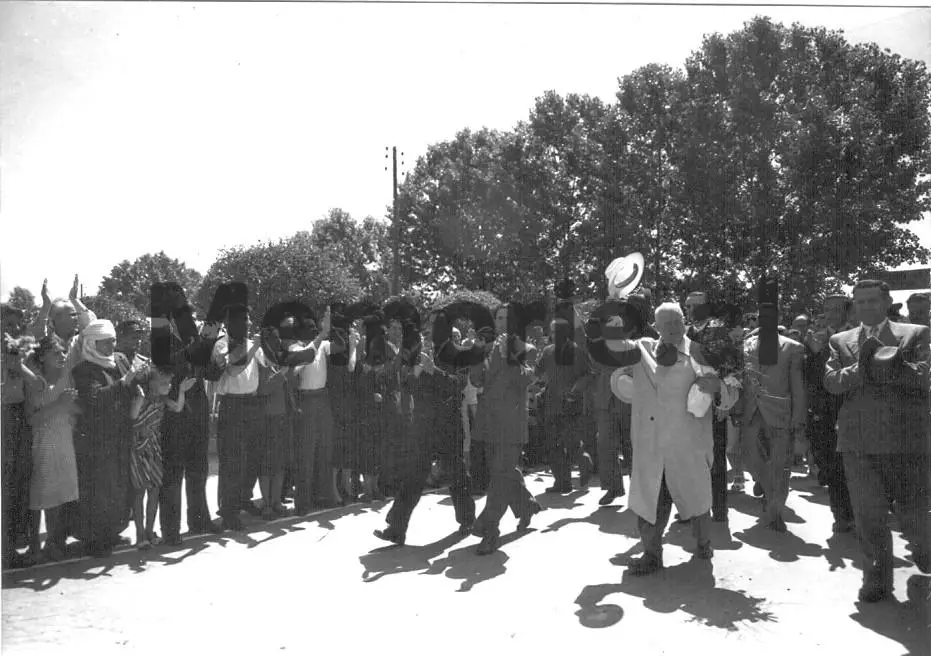
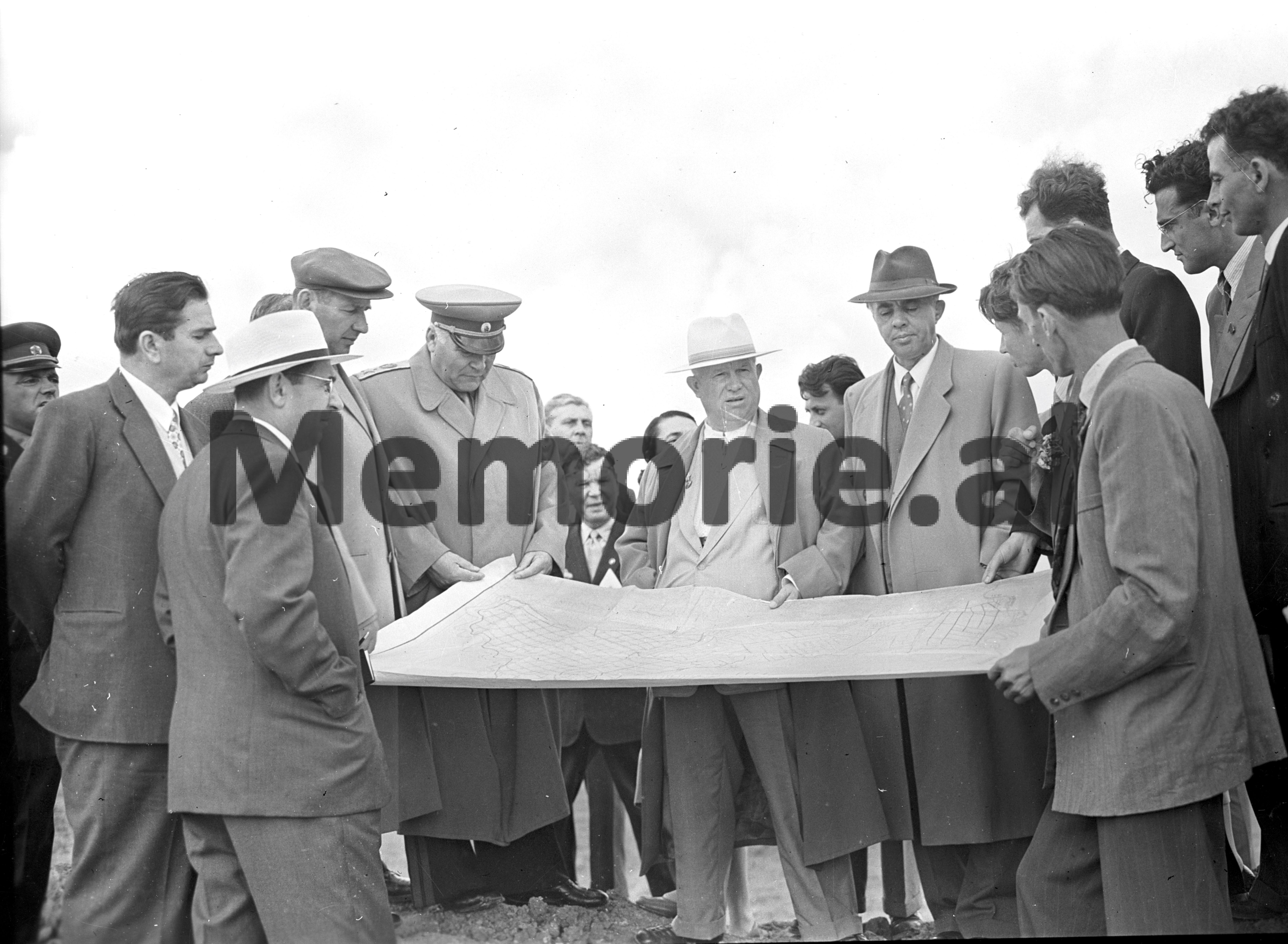
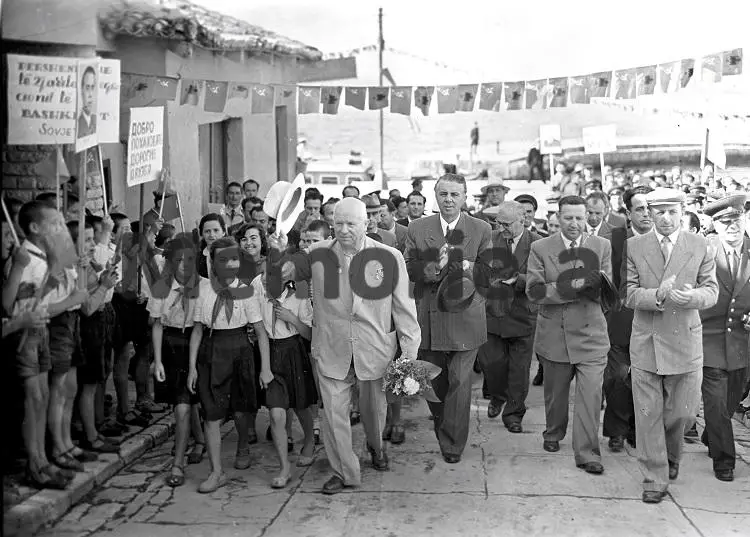
I tried, I embraced her, and I tried to convince her that I was very tired from work. But she didn’t believe it. Dear mother, she understood me very well! On the day of Khrushchev’s visit to Shkodra, we gathered in the company yard. According to orders, we were all dressed in our best. But the director, who checked more than three hundred lined-up workers, did not seem satisfied. Most had clean, but old, clothes. The director thought for a moment, then ordered: three hundred new overcoats to be taken from the warehouse. Within an hour, we had all received one. But it was a hot day in May, and the long garment made us sweat excessively. We asked for permission to take them off, with the instruction that when the leaders’ column approached, we would put the new overcoats back on.
Lined up on both sides of the road, three hundred construction workers, we carried over our shoulders overcoats with rubber lining, made for rainy days. This whole absurd scene was unbelievable! Side by side with us was the population in short-sleeved shirts for comfort, and next to them, we, three hundred vertical corpses, covered in long overcoats. I don’t know what the “dear visitor” must have thought of us, but we stood motionless the whole time, applauding and chanting: “Long lives the Soviet Union”! That day, for the first and only time, I saw the dictator of my country. Elegantly dressed, with a “borsalino” hat, he sat beside Khrushchev and the driver, in a large limousine. He neither spoke nor smiled. With one raised arm, he gave orders to his companions. His coldness and lethargy left a bad impression on me, perhaps because I was looking at him with infinite hatred and boundless contempt…!
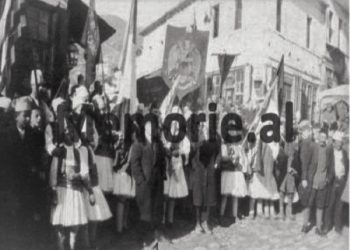
The column ended at the City Prefecture…! After a short break, the Soviet leadership and the Albanian one walked to the main square. Hundreds of highlanders and villagers, men and women, dressed in characteristic national costumes, created a decoration both attractive and miserable. On the orders of their companions, the puppets of the official theater applauded, shouted certain slogans, stood like statues in rows, and waited for the solemn moment of the leaders’ passage, who didn’t even notice them…! In the central square, the Soviet leader spoke about the beauty of our country, the suitable climate, and the possibilities for agricultural development, especially fruit growing. He also spoke against “American imperialism”.
Applause, again applause! In the large halls of the Prefecture, a magnificent “lunch” was laid out for five hundred selected participants, with food in excessive quantities. One participant recounted that Khrushchev, seeing the roasted meats on the table, had commented: “So you have abundance here! Albania turns out to be a rich country…”! Everyone agreed! Immediately after the ceremony, the workers returned to the site and handed back the new overcoats…! This experience would have passed without any particular impression, had it not been for the foreign news agency reports and their interpretations regarding the purpose of Khrushchev’s visit to Albania, especially his visit to Vlora, where a naval base was located.
Albania was undoubtedly showing itself to be a full participant in a strategic scheme that far exceeded its borders. Albania, just as during the Italian occupation of the country, and the “unification” with Yugoslavia later, had tied its fate to that of external powers, and this time, with a superpower very far from its borders. Its fate was being decided in the capital of a foreign country that did not inspire trust. It was said that its borders were now better protected. As a member of a large military bloc, the country had sacrificed its sovereignty and freedom of action, for the sake of “building socialism” under the umbrella of an aggressive atomic superpower aiming for world domination…!
On Sunday, alone again, I decided to visit the Rozafa Fortress. From the high towers where the rare beauty of nature is admired, the peaceful lake, the Buna and Drin rivers flowing separately until they merge, the picturesque bridges, the winding roads, the travelers coming and going incessantly, and the view of the city of Teuta spreading over the wide plain up to the surrounding hills, and especially the heavy shadow of old Tarabosh rising as if to protect the city from every enemy – all together create an impression not easily forgotten. Inside the fortress, almost everything was destroyed! The miserable state reflected the times this legendary fortress had gone through. The ruins seemed to mourn a better past that would never return. The forgotten Rozafa broke my spirit.
The memory of the historical events witnessed by the fortress for more than thirty centuries, the walls of this fortress that withstood times and invading armies, filled me with pride. Nevertheless, the misery I was experiencing in Albania was so deeply embedded in my mind and heart that the glorious memories passed before me like a spring and temporary breeze that did not dispel the scorching heat of burning August…! Inside Rozafa, it seemed to me that the voice of the ancient inhabitants, who left their traces in this royal and centuries-old seat, ceaselessly asked every visitor who broke the suffocating silence of so many centuries: “Passerby! Who are you? Where do you come from and where are you going? Whom do you seek? Speak, oh rebellious creature”!
“What do you seek from these lifeless, yet eternal, rocks”? In the great silence that surrounded me, and aware of my own smallness before the majesty of the place I was in, and of the many centuries of time, I answered: “I am your lost son, oh legendary Rozafa, a temporary passerby, but alive, full of will, and burned by the desire to forge my future with my own hands…! I, the fragile human, built you. You served me! And I am the one who gives meaning to your eternal building, although aware of the end that awaits me,… and perhaps even oblivion! I am the one who sings to you with the lahuta (lute), oh legendary ruin, I am the one who writes elegies for you, and your rocks smeared with the blood of the stubborn human who refuses submission at the cost of life, I am the one who passes your name from generation to generation, and builds your glory upon the memory of generations that have no end… even though my life fades like dew before the sun, before your permanence, oh dead matter, monument keeping eternal silence…”!
How much my country has changed! How many carefully nurtured illusions have fallen to the ground! And what importance did all these memories of marches, victories, and heroisms of the past have for me, before the general bloodshed, the concrete sufferings of myself, my family, and my elderly mother who went to bed hungry because her two sons could not secure daily bread for themselves and for her?! What importance did the legendary fortress have today, before a present that crushed and annihilated? Down below, in the city, lived a population that enjoyed nothing but inherited values, and risked degenerating from fear and unbearable poverty.
It was so close to moral degeneration that threatened the country, it risked falling into an abyss with no return! It seemed as if the beauty of the city and its inhabitants had withered under the scorching fire of the dictatorship that burned and burned, mindlessly and soullessly. Shkodra has never been the beautiful, fairytale Venice. But my city has been the cradle of a centuries-old history, the dwelling place of a noble population, generation after generation, and the center of activities dedicated to goodness and beauty, which kept high the nobility of its inhabitants.
And today, I see my comrades in the bricklayer brigades at the workplace, these “reactionary” proletarians, hypocritically hymned by the dictator’s scribblers who made every effort to avoid manual labor; I listen to their spine-chilling stories, I understand their constant fear, and I read in their eyes that, in moments of deep despair, they rise towards heaven, and with a sigh that breaks my heart, repeat the most characteristic sayings of the city’s inhabitants in difficult days: “Help, oh God”! and “Do not make it worse for me, oh God”! Down there, in my city, a history and a people who wrote it with blood, sweat and pen, seem to be living the hours of final agony…! Memorie.al