From Visar Zhiti
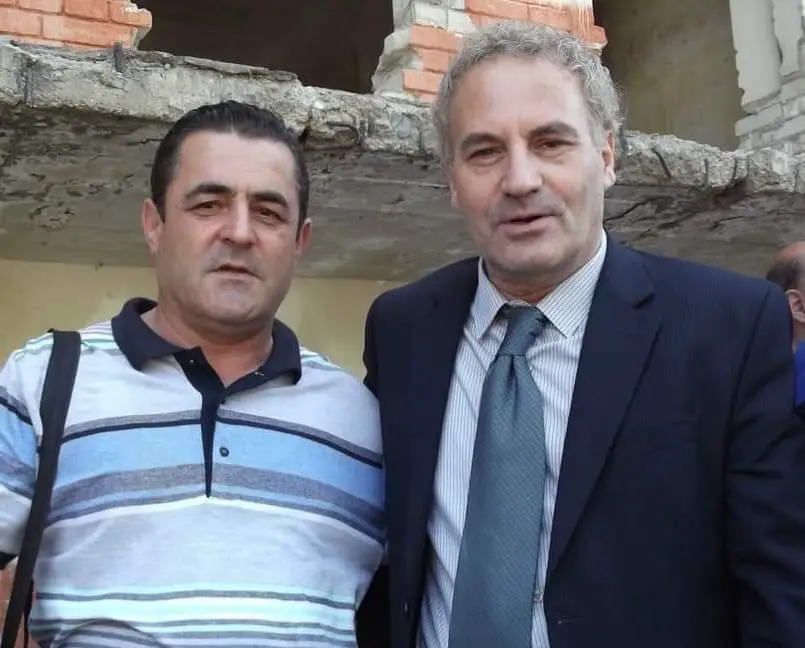
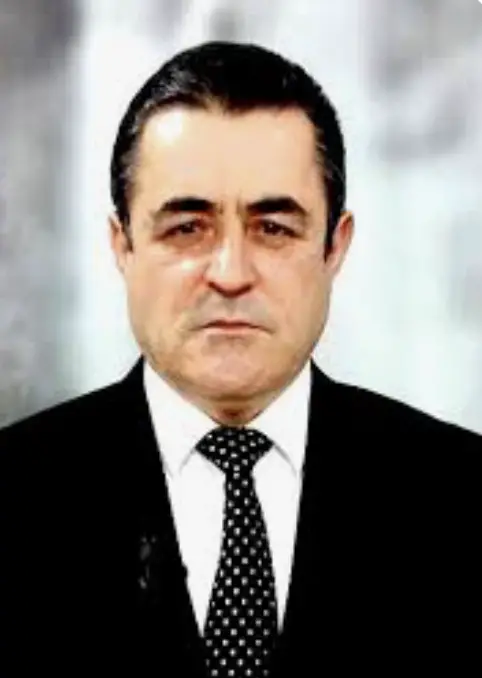
Memorie.al / Nebil Çika, the well‑known journalist, tireless activist for the cause of political persecutees, idealist of the Albanian right, author of books, worthy friend, has suddenly passed away. This devastating news, released by his family, has spread today everywhere in the media and social networks at home and in the Albanian diaspora around the world, saddening all those who knew and loved him, who read and heard him as a unique, courageous, just and wise voice. Meanwhile he remains as he was, also a devoted family man, a loving and caring parent, a loyal friend, as simple and dignified as he was, who fought also for the dignity of others…!
He bore the name of his ancestor, the distinguished journalist of the 1920s‑1930s of the last century, Nebil Çika the Elder, the persecution of the family by the communist dictatorship, Albanian patriotism, traditional conservatism, the continuation as a promise of Nebil Çika the Younger, love for his beautiful country and birthplace, Borsh of Saranda, the virtues of the South, kindness and loyalty, etc. His untimely departure is filled only with his deeds and his image, an emblem of resistance and of the dream for a democratic, free and Euro‑Atlantic Albania. He has now opened a path and will continue to lead with the ideal…
TESTIMONY AND ACCUSATION AT ONCE, MEMORY AND JUSTICE…
– Foreword by Visar Zhiti –
The book of conversations, aimed at revealing the crimes of communism in Albania, by the well‑known journalist Nebil Çika, is doubly moving, but above all important; it is completely unique in the series of memory books that are filling the serious gap in our libraries, testifying to the fates of the Albanian people and consequently of the country under dictatorship. Meanwhile, it (re)brings phenomena of human resistance, moral strength, something of the spiritual journey of Albania from the terrifying abyssal hells towards the dawn of freedom. To live to tell, but also to tell to live.
THE CLARIFICATION OF THE CRIME
The word “clarification” (zbardhje) reminds one of white, of cleanliness and somehow of forgetfulness, why not also of the innocent whitening of the day. But when you add the word “crime”, it immediately darkens as if in a blink of an eye and is splattered with blood. Whereas the compound “clarification of the crime” shows that the mission of another day has begun, the time to know the crimes as phenomena, but also the criminal as responsible.
The author chose conversation as a means of exposition, that ancient, irreplaceable institution of man, where as you confess to another – who is not always of today – you also confess to yourself, you have done a kind of liberation, catharsis, you are judged and you have judged. A trial. The author has summoned those who were brought before the trials of the dictatorship, who were condemned and suffered in hell, they come from there, from prisons and internments, their relatives or acquaintances, from those who opposed and sacrificed.
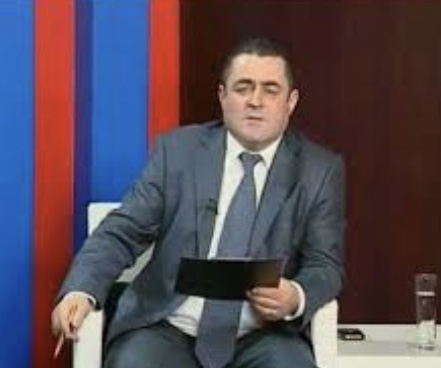
Narration feeds memory and with it begins not only stories but also history. Direct conversations, courageous, without any obstacle, except for sighs of pain often and more often. Taken from a television show, as if ghostly, conceived by the author of this book, which attracted and shocked thousands of viewers. But so that the characters killed by the dictatorship would not be missing, Nebil Çika goes deeper, with the conscience of the journalist. He researches, asks about them, investigates the truths, why the crime happened, where they killed them, how, to what extent was the wound – personal, state, national, secret, indoctrinated, bandit‑like – but nevertheless crime always remains crime and there is no justification, nor does doctrine help you. But where are the graves of the unburied, in what harmful oblivions? And what are the murderers doing? Have they repented or are they preparing for the next murder, in other forms?
Albania has now begun the path of rebuilding, consequently also of discovering truths and protecting them. Its people are becoming able to judge in conditions of freedom, to punish evil with justice, so that peace with history may be made as soon as possible, in the name of the future. The book resembles another kind of inquiry, a counter‑inquiry, that seeks to bring morally to the dock those who conducted criminal inquiries and exercised violence excessively, the aggravators of the class struggle – which meant the non‑interruption of civil war during the totalitarian rule of the self‑proclaimed communists. This process goes all the way to the dictator, with whom it should have begun.
And murderers and smiling, said Shakespeare. Having real characters, convicts, former internees, prisoners, rebels, researchers, historians, witnesses, but also those who cannot come – characters in absentia, shot, hanged, buried alive – with heavy, abrupt dialogues, with places of sentences, tortures, surrounded by barbed wire, Spaç, Burrel, Tepelena, Qafë‑Bari, with names of murderers, the work resembles a drama, a tragedy, as much medieval as it is contemporary, of many voices, a choir of mourning.
It is needed by national memory, no matter how mixed it may be. It is testimony and accusation at once. It helps in understanding the past, even though it does not leave the present in peace, so that the present may have its proper role, responsibilities, recognition of the truth, without which there can be no historical experience and genuine appeal to the future. The appeal for justice continues, begun in further collective awareness in the search for the origin of evil, to create as much civic culture as possible, from that which has been missing, which was shattered in dictatorship – yes, culture to be able to reproach and to mend and to calm souls. It makes us aware of the particular and the general, which seem to be bound by the same shackle. The book, just like Albanian society today, aims at unshackling.
ONE NAME, TWO JOURNALISTS…!
When we take this book in our hands, we naturally ask with surprise: who is the author, Nebil Çika? Was he shot? How, there are two? Who wrote it, the Elder or the Younger, the dead or the living, the one killed under dictatorship or the one resurrected in democracy?
Nebil Çika the Elder was a publicist and philosopher, a well‑known journalist of the 1930s, director of several media outlets, of the newspapers “Arbëria”, “Minerva”, etc. He was also a correspondent for Reuters and the New York Times in Tirana. A democrat, a nationalist. Together with Branko Merxhan, Ismet Toto, Vangjel Koça, etc., they are known as the founders of “Neo‑Albanianism”. On 17 November 1944, when history records that the capital was being “liberated”, the occupier was leaving destroying whatever he left behind, the victors were coming with cruelty, striking whatever they found ahead. Without any trial, they shot, among other high intellectuals, Nebil Çika.
But this would not be the last for the Çika family from Borsh of Saranda, landowners and merchants, well‑known activists of patriotism and democracy. The descendant Sorkadh Çika, a teacher in Konispol, five years later was arrested and sentenced to 15 years in prison as an opponent of the communist dictatorship. But honour, the ideal, the name had to be preserved. Albanians believe that the name carries our desires and our fate. The child who would be given the name of the ancestor Nebil Çika would be looked at with wonder at school, with spite by the communists, with timid admiration by others for the courage of the parents who baptised him with a name of a man killed by the red rulers. They, the name‑givers, had surpassed custom; this was an attitude, opposition and a secret hope for change. A fallen era was being invoked, an unfinished mission. This terrified the beasts of the dictatorship.
Nebil Çika the Younger, whose maternal grandfather Hysni Merkaj had also been shot as a well‑known commander of the Balli Kombëtar, would grow up persecuted also because of his Name. So his name was heavy like the iron equipment of a gladiator on the body of a tender youth – the broken sword inside his flesh, the half‑shield, the cracked helmet. He was not supposed to be educated, no…!
But the clock of the old time stopped, while drops of blood fell from it as in the anguished paintings of Dalí. The Berlin Wall fell, the communist empire fell, and even little Albania took the road to great freedom, to Europe. In the new and liberated newspapers, a serious young man was knocking. He had just finished university studies in Albanian language and literature and had decided to become a journalist. When he said the name Nebil Çika, those who knew something hesitated for a moment, opened their eyes, shuddered. Nebil Çika… the one who was shot…! A ghost had come…?!
He is the descendant…! They have resurrected his name. Is that so…? Yes, yes, it is Nebil Çika of democracy. As names die and are resurrected. His articles, chronicles, reports, reportages, comments, analyses, editorial opinions, interviews would number in the thousands. But always with an unwavering stance, just and patriotic, engaged as a citizen.
Both Çikas with the same name, Nebil, have a meeting point in the clash of times. The Elder worried about the future, but they left him without it. Here is one of his messages from 1942: “I only want to invite readers to think together with me about the fundamental problem of our future as a national being, regardless of external contingencies…”!
Whereas the Younger is forced to return to the past, in the name of the future. 80 years later he says: “…The mission is the clarification of the crimes of communism and bringing the values of these figures of Albanian history, so it is also a revision of Albanian history through the testimonies of the protagonists…”!
The future seemed hindered. As if they would not let it come. The past behind a wall that they would not let leave. But one must write even after murder. With the myth of resurrection. Such a spirit also infuses this book by Nebil Çika. It is the first, let us open it…!
Tirana, 21 May 2013
Ten years have passed. Nebil Çika has now passed away into eternity; his word, his messages remain behind as an important guide…! Memorie.al