

What were you doing in the early 1990s?
Memorie.al/ publishes a piece by the Scottish author Kay, about the war in Bosnia. I was a little girl, playing with Barbie and My Little Pony on the carpet of my living room, while my mother was ironing. The television was often in the background, and I barely remember the news coverage of the war in a place called Bosnia.
The images of smoke, soldiers and weapons flashed across the screen, painting an extremely sad and troubled picture. Of course, my knowledge of such a serious conflict at a young age was limited, but I understood that bad things were happening there and that it must have been a terrible place.
What I didn’t know was the distance of a three‑hour flight from my home in Scotland – from that beautiful, peaceful country where children like me lived, who maintained an indifferent stance toward this war. Displacement, disorientation and terrible death prevailed in that country, as their lives collided with violence and changed forever.
My curiosity about Bosnia and Herzegovina, and my desire to challenge the perception of a war for this destination, began when I trained to be a tour guide in Eastern Europe and Croatia.
It was then that I realised how little I knew about this tragic and troubling recent history, making me eager to learn and see more of this region, especially Bosnia and Herzegovina. This opportunity arose during my days off in Croatia, when I set off on a day trip to Mostar.
I felt an immediate connection and love for this country, which inspired me to return two years later, this time on a one‑week tour with Balkan Road Trip.
On this visit, my appreciation of the destruction caused by the ‘Yugoslav Wars’ was illustrated through confronting stories told to me directly by the people who survived that war. Their experiences are heart‑wrenching, shocking and incomprehensible to people like me, who have been fortunate enough to grow up in a country free from the fear of extreme violence and war.
Now I want to share the survivors’ stories, to create a wider awareness and understanding of the recent war and the incredible suffering of these people.
These are their stories …
* * *
This is Amela from Mostar, who was 9 years old when the war started
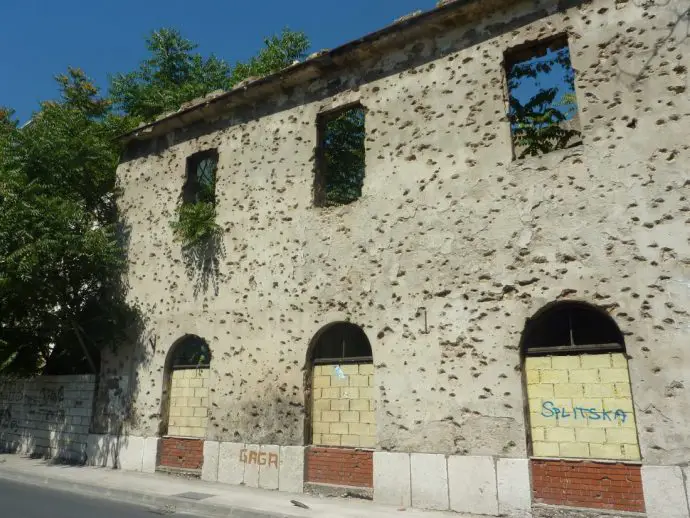
The picturesque old town of Mostar, and especially its iconic bridge, were destroyed during the offensive by Serbian forces, which began in the city in 1992. As my group followed Amela on our walking tour of Mostar, she tells of her suffering during a time with insufficient food and water, and of course no chocolate like all children. Instead, for four years her city was destroyed and surrounded by army tanks. She remembers the last night she spent in her home with her family, before fleeing to a safer place. Serbian forces were surrounding the city, and they had been advised by friends and neighbours that they would not survive the next day if they did not leave. They had to crawl carefully through the darkness on a single path, without making a sound, to remain hidden and unidentified by the snipers all around.
Amela, for a reason she cannot explain now – she was a child – ignored her parents’ instructions and began to crawl in the opposite direction from them, heading toward the snipers’ path.
Her parents could not call out to her or draw attention to save their little girl from being killed instantly, for fear of revealing their presence to the military forces, because any small noise would guarantee a death sentence for everyone.
Fortunately, Amela’s mother managed to grab her onto her shoulder, covering her eyes.
With visible sadness, Amela remembers the look in her mother’s eyes – a look that would stay with her forever.
Her mother gestured with her hands, urging her daughter to turn back and crawl again to a safe place.
She did, and it saved her life.
* * *
Mustafa from Sarajevo
He was in his early teens during the three‑year siege of his city.
Mustafa was my tour guide on the one‑week Bosnian adventure of the Balkan trip, and he told us an extremely sad story of his life during the war.
I could not believe it when he told us that the children and young people of Sarajevo, even though at war, wanted the normality of education and attended school throughout the 3–5 year siege of the city.
With a hint of nostalgia in his voice and a small smile, he described the ‘rule of three’ when walking from home to school and back, through the sniper‑filled streets.
He and his friends would argue about who would be the third to run across the road, based on the snipers’ actions: watch the first person, aim at the second, shoot the third.
When I was that age, my friends and I argued about the lack of opportunity to listen to music and the impossibility of watching films. Mustafa told us that he dreamed of being able to sleep in his bed for just one night.
Instead, he and his family sheltered in a confined space in his dark basement, sitting for hours under terror, listening to the noise of explosions outside. He said he thought he would go mad.
He also told us about the five‑year‑old twins who lived near them (neighbours). They were blown to pieces during a shell attack while playing in the garden.
He considers himself very lucky that he did not lose any member of his immediate family during the war, and now he speaks proudly about his country, sharing his knowledge and experience, asking the world not to forget this massacre carried out in his country.
* * *
This is Hasan, a resident of Srebrenica and a survivor of the massacre
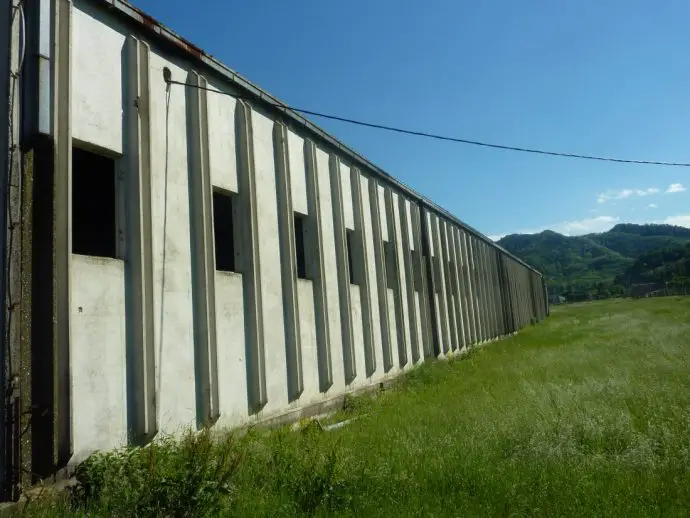
I met Hasan on my visit to Srebrenica – the ‘United Nations Safe Haven’ that fell into the hands of Serbian Forces in July 1995. The rebel forces then began an ethnic cleansing campaign, which resulted in the systematic massacre of over 8,000 men and boys, all belonging to the Muslim population.
Hasan is a tour guide at the Srebrenica burial ground and memorial museum. He readily recounts the catastrophic story of loss and the terror he went through, reliving it for the purpose of education and remembrance.
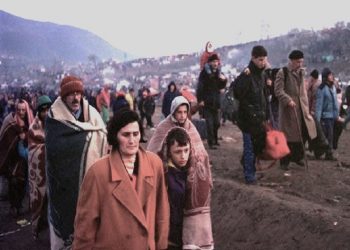
He told of the day Srebrenica fell, as Ratko Mladić – General of the Bosnian Serb Army – and his troops advanced toward the Dutch United Nations Military Base. Outside were around 25,000 refugees praying for shelter and safety within the church walls, which was denied to them, leaving them outside terrified?
The refugees had lost hope, even though General Morillon of the United Nations had made efforts and the security and survival of this area had been declared ‘safe’. He made efforts to prevent the massacre and to negotiate with the Serbian forces.
During his visit, the desperate refugees, fearing his departure – that he would leave the ruined city and that they might suffer a Serb attack – destroyed the General’s car.
“Do not be afraid; I will stay with you,” he publicly promised them.
Less than six months later, that feeling of security and hope was shattered, because on 12 July of that year, Srebrenica was taken over by Serbian Forces, on a day that would be remembered in history as the ‘Fall of Srebrenica’.
A subsequent reign of fear, terror, rape and killing destroyed the masses during and after that day.
Eyewitness testimony during war trials details horrific acts committed by Serbian forces near the United Nations Base, including the slitting and beheading of women (including pregnant women), children and infants.
Men and boys of military age were separated from their mothers and wives, pale and frightened as they awaited their fate.
Thousands of men fled into the forest, in a desperate attempt to escape to Tuzla – a safe area in the mountains.
Among these men was Hasan, together with his twin brother and father. On this journey, their group was ambushed by Serbian forces, causing the group to scatter, separating Hasan from his relatives.
Hasan survived the ambush and eventually reached Tuzla, where he waited for days to be reunited with his twin and his father – which never happened.
He never saw them again.
Their remains were found in a mass grave more than ten years later.
* * *
Fadila from Srebrenica
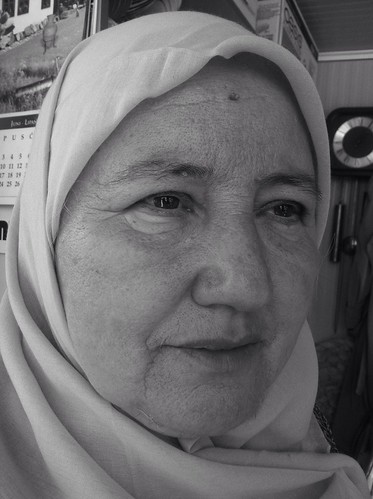
This is Fadila from Srebrenica, whose husband and son were taken from her during the massacre.
I first noticed Fadila as she made her way to her souvenir stand, outside the Srebrenica Memorial Museum. She had a warm, gentle face and smiled softly as we stood near her.
I immediately recognised her heartbroken face when it appeared on the screen during the documentary video we watched inside the Memorial Museum.
She tells the camera that her husband and only son were killed during the massacre, and she cries as she describes the face of her seventeen‑year‑old son – with a round face, like hers, and features similar to hers.
I tried to imagine this woman, who was once a mother and a wife, and whose family was taken from her in the same place where she now sells souvenirs to make a living.
Even worse, her stand faces the cemetery where the remains of victims exhumed from mass graves are buried.
Her husband and son have not been found yet.
Why did I want to write this post?
There is of course reasoning behind my desire to share such sad and violent stories.
“So that we do not forget.” To remember the cause and consequences of war. Only through widespread awareness can we try to prevent repetition in the future.
I also think it is so important to step out of our comfort zones and protected lives, to take a look, even for a moment, at the troubled and sullied lives of others.
When we are consumed by the trivialities of our daily lives, stories like these should bring us back to reality and question the limits of our strength and emotional endurance.
I simply cannot understand how these people have found the strength within themselves to move forward and continue living, after the things they have seen and suffered during that time.
I will never forget the courage and spirit of the people I met in Bosnia, especially the survivors who shared their stories with me.
What was most admirable was that they never once showed any anger toward the military forces that carried out this massacre; on the contrary, they are rational, forgiving and positive about the future. Years have passed since that time, yet their sadness and trauma remain, their presence masked by a warm smile and forgiving heart.
When I asked my guide Mustafa how people have managed to be so resilient and forgiving, he replied:
“We will never forget, but we must move forward.”
Why did this happen … ?
I would like to give a special thank you to Amela, Mustafa, Hasan and Fadila for sharing their stories with me and for allowing me to write about them.
Finally, I would like to mention that the actions of these armies and extremists reflect how many innocent people were killed on all sides during this war, regardless of the race or religion they belonged to.