– Perikli Jorgoni, the man who built his own pedestal –
Memorie.al / It happen in life that you feel guilty even unintentionally. I realize I made a big mistake in not sitting down once to write something about Professor Perikli Jorgoni while he was alive. Today, tomorrow, until he suddenly left this world. I mentioned him a few times in interviews as a teacher at the “Skënderbej” Military High School, from which so many poets and writers emerged, and that was it. However, just like me, criticism in general was sparing with him. And he was a poet, translator, and important critic in Albanian letters. Above all, he was benevolent towards the creativity of others. His simplicity was proverbial, which is why I didn’t understand why he one day mentioned a saying of Victor Hugo to me: “Great men make their own pedestal, the future raises their statue”!
The old school textbooks, especially those of history and literature, were illustrated with some sketched portraits of philosophers, writers, or prominent historians of every era. Ever since then, the broad forehead of the Greek thinker Socrates has stuck in my mind, the main character of his disciple Plato who, with the apology he wrote, opposed both those who mocked him, like Aristophanes, and those who criticized him as a moralist, like Xenophon.
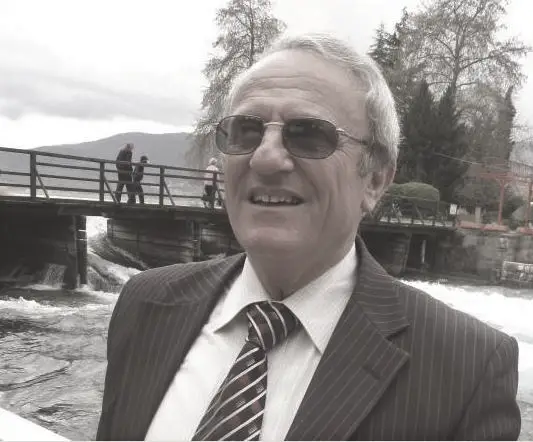
Perikliu also had a broad forehead, so he had a Socratic appearance. But he resembled him also in the depth of his thoughts, broad culture, and particularly in the conviction formulated by Plato that people should follow such ideals in life where goodness, beauty, honesty, and justice should be the sublime foundations of the earthly existence of their spirit.
He held no false authority with us, his students. And just like Socrates once, he blended with us. He played, especially soccer in the afternoons, joked, loved us as if we were his friends, and explained the lesson with all the power of his mind and lungs. He didn’t limit himself only to what was in the curriculum. He found ways and means to arouse our curiosity to seek out extracurricular books ourselves. In explaining, he was a magician who captivated you. Precisely for these qualities, we loved and respected him very much.
Later, after the ’90s, we often saw each other at poetry meetings, especially those so beautifully organized by the late Zyhdi Morava and Milianov Kallupi, and I noticed that he hadn’t changed at all. He had remained the same, a man full of youthful impulses, and everywhere he became the center of conversations. Around 2002, a group of writers and artists went to Tropoja. It was an unforgettable journey, amidst a fairytale nature and such hospitable people.
The events of ’97 had also severely damaged the city of “Bajram Curri”. Cultural institutions were also affected. But surprisingly, amidst that “Waterloo,” a young evangelical missionary girl from Korça had set up a library. When we learned this, we decided that we, the newcomers, would also donate some of our books. There I introduced Elida (that was the girl’s name) to my teacher. She had heard of him but had never met him. Perikliu, as was his habit, made a charming joke at which all of us there laughed, and nothing more.
While having morning coffee at the city’s Hotel-Tourism, I also gave Perikliu some of my books. A few days later, I read in a newspaper his critical piece about my work, which he began with the words, “I didn’t intend right now to write about the stories of my former student, because I needed to deal with works that must go to press, with Rilke, Lermontov, and Shakespeare,” but he apparently felt ashamed for having been inattentive to the creativity of his former student who, he had made him feel he was before a talented writer.
Come on, come on, I said to myself, – he left the giants of world literature for me. I felt pleasure and thanked him with all my heart, but also told myself: “Slow down, man, don’t fly from the praise”! However, Perikliu didn’t stop there. He calls me on the phone one day and says:
– “On Monday at eight o’clock you will be in front of Radio Tirana, where I will wait for you, because you will give an interview for about an hour and a half about your work.”
Together with him, we met the poet-editor Demir Gjergji, also departed prematurely from life, and everything went well. Perikliu, who stayed with me in the studio the whole time, watched me intently and with emotion. Then he also took the floor himself, and he shared his own thoughts. I expressed my gratitude, but also felt pleased by his benevolence and support.
Not long passed, and at the door of my office in the Durrës courthouse, he appeared together with that girl we met in Tropoja. I was somewhat flustered, as I couldn’t understand what connected them, but when we went to a café, they clarified things.
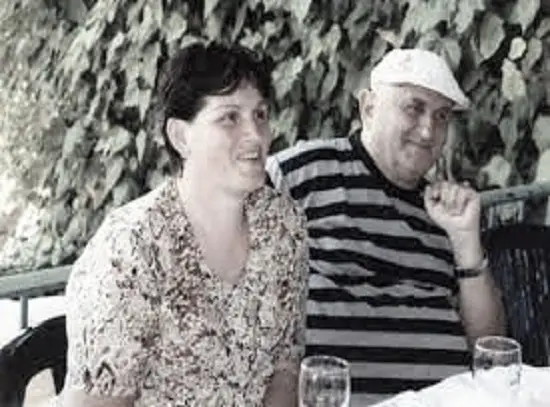
They had decided to spend their lives as spouses. A certain age difference wasn’t even noticeable, before the liveliness, agility, and inexhaustible humor of Perikliu. They hadn’t forgotten that I had introduced them, which in their eyes gave me a special status. They told me they wanted my help once more, to find them an apartment entrance (unit) by the coast, because from now on, they wanted to live here.
– “I want to be calm, not to say solitary, to engage in creative work and especially translations.” – Perikliu told me, whom, however events had unfolded, I still saw as the Socrates of those books, notwithstanding that Socrates left no written book.
The truth was that I hadn’t sorted out my own housing situation, as I was left with a chicken coop, where I am to this day, but I promised him I would do something. There are many good people in this world. So it turned out with Abdulla Mushaqi (“Honorary Citizen of Durrës”), who at that time had a construction company. I told him how things stood with me and that I was looking for an apartment for my teacher who, for the time being, didn’t even have the money to pay. I guaranteed him that he would pay in installments and that his word should be trusted.
– “He was your teacher!? That’s enough not to doubt him. Come with me,” Abdullai told us. He put us in his car and stopped at the newly finished building by the seaside, there by the “Dajlani” Bridge. They liked that apartment, which after some time they paid for completely. In fact, on the day he settled the obligation to Dulla, he came with his wife and insisted on treating me to lunch, something I couldn’t escape, even though I tried several times begging to leave it for another time.
Now that Perikliu became a resident of Durrës, our meetings became more frequent. In every activity I organized as chairman of the Durrës district branch of the Writers’ League, he came and always discussed. You enjoyed listening to him speak fluently and with such sound logic. Just as courageously, he also knew how to criticize. But even in such cases, the creators were grateful to him.
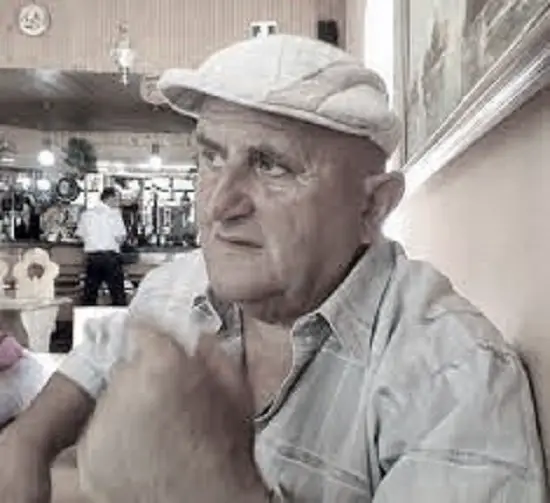
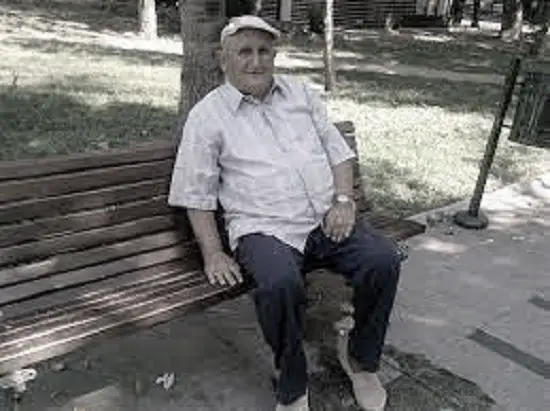
When we moved to offices near the Seaport, where we were more free and undisturbed, he increased his visits. I could see him from the window when he came with a quick step. Dressed very simply. So much so that I never saw him preening in a suit and tie. In summer, he wore a pair of three-quarter pants, a T-shirt or thin shirt, sports shoes or even a pair of slippers, and always with a cap on his head.
Sometimes, when I introduced him to someone who hadn’t known him closely, a noticeable discrepancy was created between my tirade full of superlatives about his worth and his external appearance. He would sit before me and ask with those laughing eyes:
– “Well, have you written anything new, because you can’t stay still”?
I would hand him a poem, story, or critical piece and suggest we go read it at the club, but he, while wrapping them up, would add:
– “I’ll take it with me, because it’s not read at the club. Tomorrow I’ll come and tell you my impressions.”
It was his habit to read alone, because it was understood that way he concentrated more. I would wait for him impatiently because I knew he never erred in his judgment. When it came to publishing a book, he would tell me he would write the preface. I was glad, because no one could write it more professionally than him, but I also felt I was taking up his precious time. He accepted only a coffee and a few sheets of paper. Countless are the newspapers where he published his benevolent and encouraging writings, dedicated to creativity, especially of new talents.
He was connected to several publishing houses, but they paid him very little for a painstaking job. With his impeccable translations, he brought masterpieces from world literature by Shakespeare, Shelley, Sorescu, Sappho, Zweig, Cavafy, Dan Brown, but it happened that he didn’t even have money for the bus ticket. But he never complained. Just as it was his habit not to talk about himself or his own work. He was particularly drawn to the poetry of Rainer Maria Rilke as a form of understanding the mysteries of both life and death.
He loved Lasgushi, Ismaili, Dritëroi, Fatosi, Xhevahiri, Visari, and repeated that Latin expression “O Nations, protect your great people, because through them the world will know you”! And like him, his wife Elida, they tirelessly interested themselves and found opportunities to organize activities to commemorate and honor figures of prominent patriotic intellectuals, both here and in Kosovo and Macedonia.
For all he did, no one spoke or wrote. That didn’t impress him at all. Even when he wanted to engage me, he would recommend someone else to me.
– “Read this,” he would tell me, “because it’s very interesting. And if you can, write something.”
He knew that I also did this with great zeal, but he never once suggested that I write something about him.
I asked him once:
– Why are you so in love with Rilke?
He laughed and replied:
– “And why are you so in love with Pushkin and Yesenin? A person is drawn to those similar to him.”
He was right: this poet who aimed to express the inexpressible and who, through abstractions, sought to enter the interior of mysteries and enigmas, loved solitude. This meditative solitude was also sought by Perikliu, who had left noisy Tirana for the seaside.
– “He differed from you,” he continued further, “because his parents sent him to military school, but he left quickly. Whereas you continued it to the end and became an officer,” Perikliu expressed. But I want to say that he loved nature greatly and the peace he found in it, just as I love it. But he also loved people very much, just as I love them. I also think like him: that people are the greatest value of this world, and therefore of poetry. Isolation brings deepening within oneself, and this in turn leads you to love for people.
After seeing what impression his words had left on me, he would go further:
– “He showed more attention to musicality and poetic sound, especially through symbols. I can say he was a symbolist, which was also conditioned by the time he lived in. But unlike many of them, like Stéphane Mallarmé and Maurice Maeterlinck, he sings of life. In fact, his saying is very well known: To be on earth is a miracle. Moreover, he didn’t fall into Baudelaire’s trap, who, long before him, considered the world a ‘forest of symbols’. And above all, he never denied reason. That’s why I prefer this poet who had the courage, through the eyes of a character, to see God as created by man, so much so that he asks Him: ‘And what will become of you, O God, if I die?'”
But his tragedy happened completely unexpectedly, so much so that it didn’t give Perikliu time to ask God or leave us two last words. On a television screen, I read: “At the Fllaka overpass, at 8:40 PM, the corpse of a man is found.” They didn’t know his name, but later they added that his name was Perikli Jorgoni. I couldn’t believe my eyes. How could he, the Socrates of my imagination, leave like this?! And how was it possible that the journalists didn’t know who that man hit by the car was?!
That silent and modest colossus, who with his departure from this world that he loved so much, left behind such a great void in our literature. A lump formed in my throat when I remembered that the house where he had lived for ten consecutive years and where he was going that night, I had chosen for him. If only he had been inside Durrës, I thought, he wouldn’t have had to go down there after returning from Tirana and nothing would have happened. But he was fascinated by the sea waves and inspired by their musical whisper.
The next day, when I went to the National Theater in Tirana, where homage was to be paid to my professor, the writer and poet Vasil Premçi, gave me some sheets, which contained two of Perikliu’s last poems. I read them and was amazed when I noticed that the one dedicated to his father, the esteemed Dr. Jorgji, which spoke of three Arberesh (Italo-Albanian) who had come one night with their sick son, suffering, to his home, and after medical help, he hadn’t let them leave, was so heartfelt and so aesthetically accomplished that it satisfied the soul.
But it seemed it was also the credo of a man who loved people so much, and with those beautiful verses, he had no need to speak either with God or with us here on earth. In that poem written by the sea, he had said it all, just as those of us who knew him were convinced that all his honest and intensive work and life were the best poetry he left us.
In writing the verses, evoking the moment when the father of the little boy wanted to give a silver bracelet as a reward:
“The doctor was touched in his heart, he spoke clearly and calmly:
– Everything, O noble man, should not be paid with gold,
For the stream sweeps the world away, if pushed by money,
Which becomes like a madman, when greed seizes you?
You keep the bracelet, for it has more value,
Than the effort of one night with frost and wind.
When your son marries, place it right on his hand
Among the graceful flowers full of charm and with crown.
If you remember me, alive or dissolved in the earth,
You raise a toast, to greet me.”
Perikliu left us due to a car accident, just like Albert Camus over half a century ago. Whenever I glanced at the road from my office window, I waited in vain to see him coming with that quick step and laughing eyes, dressed very simply, with a cap on that Socratic head of his, but which also strangely reminded me of Camus’ “Myth of Sisyphus”. After all, he remained such, while doing a painstaking job for which he was so little rewarded. Nevertheless, the pedestal he built for he waits. / Memorie.al