By Sokol Parruca
Part Seven
– Rare testimonies of the well-known jurist Sokol Parruca, regarding Shkodra’s football icons over the years, such as Halepiani, Hasa, Rragami, Rakiqi, Bizi, Dani, Zhega, etc.; artists like Vasija, Tërshana, Aliaj, Ljarja, etc.; as well as other emblematic characters of that city. –
Memorie.al / It is difficult to write about the former footballers of the “Vllaznia” team of Shkodra over the years without being a researcher or a football specialist, but I am laying out my impressions of those I knew, touched, and saw – the youth coaches – without claiming to say everything they deserve. Undeniably, I judge it impossible not to mention Ernest Halepiani. I was about 9 years old; I don’t remember which neighborhood friend I went with for the first time to the “Pioneer Park,” near the former “January 11” school, to begin training in the sport of football. There, the children’s coach was a short man with fine curly hair and a face that shone with kindness.
Continuing from the previous issue…
THE RE-EDUCATION CAMP (PRISON) OF TOROVICA
When I finished university, I was pleased to be assigned to Lezha, as it was close to Shkodra and I could go there whenever I wanted. The Prosecutor’s Office of Lezha also had jurisdiction over the Torovica Re-education Camp. Mostly young people convicted of ordinary crimes were held there.
In total, there were about 1,500 people. Many were from Shkodra, whom I knew well; I was linked to some of them by a long-standing friendship dating back to childhood. We had shared the games and mischiefs of that age together. I knew them as quick-witted, brave boys who were difficult to put “in line,” possessing independent personalities that could not tolerate orders, coercion, obligation, or insults.
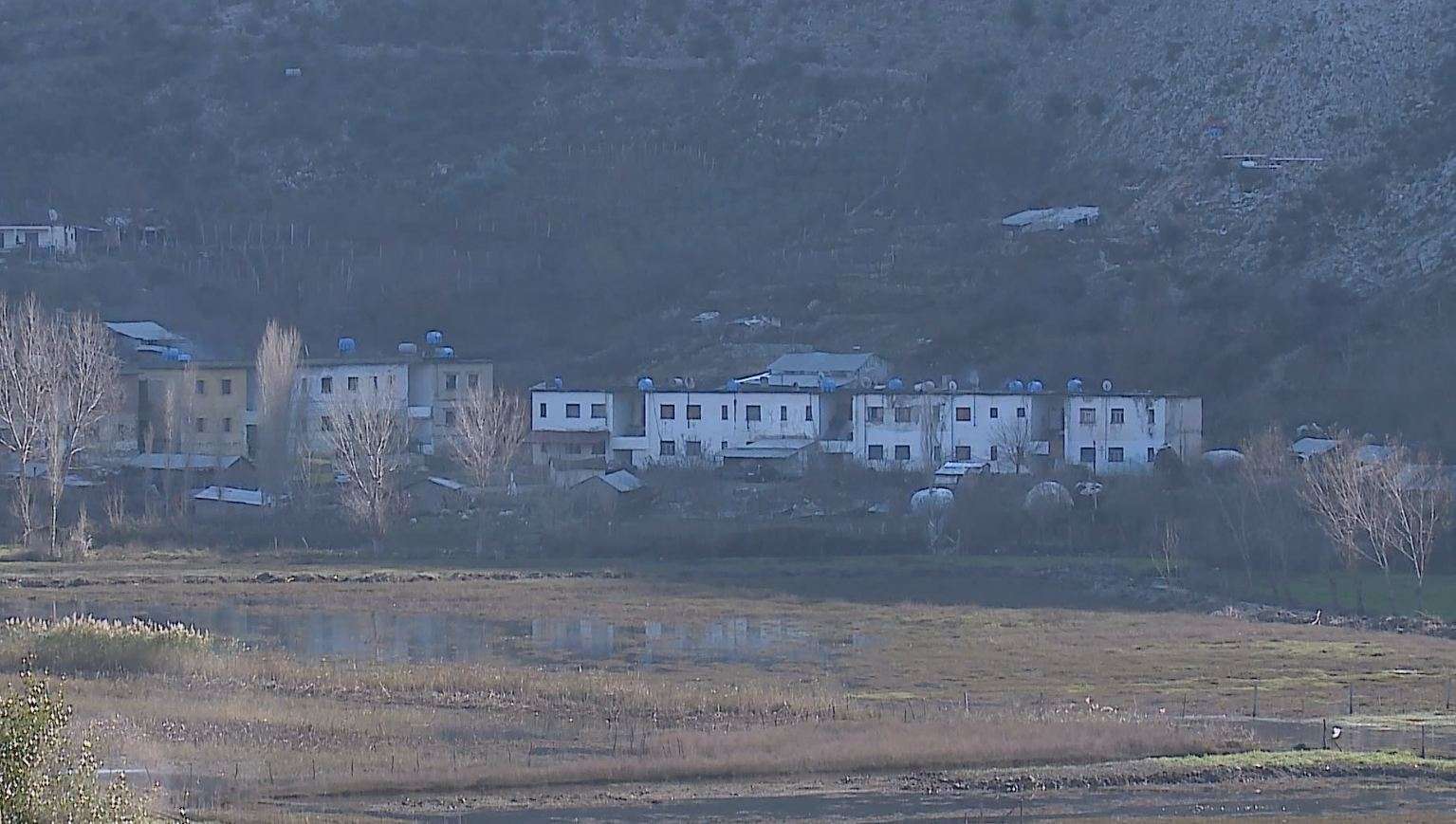
Therefore, most of them had ended up in prison for criminal offenses such as violent opposition to police officers, assault due to duty, wounding, etc. The camp was located opposite the village of Torovica, at the foot of the mountain, with buildings constructed specifically for this purpose.
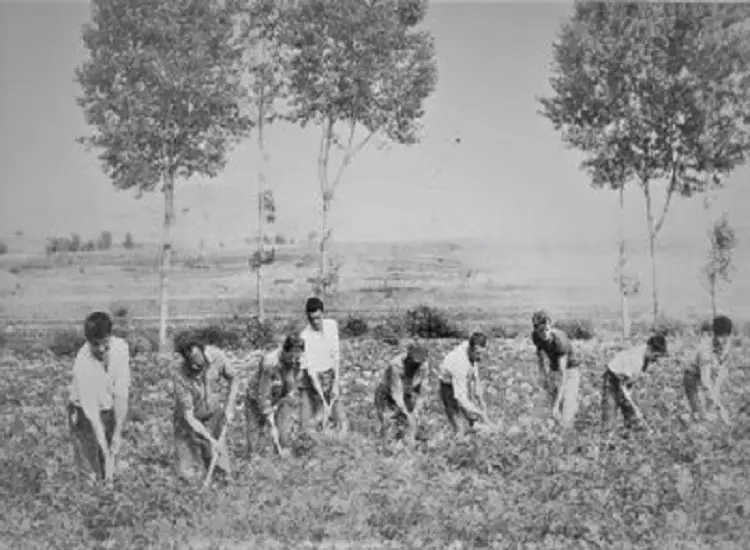
A vast field of the Lezha Agricultural Enterprise separated the highway from the camp, where wheat, corn, and sunflowers were planted, along with specific plots of watermelon and cantaloupe, whose sweetness was famous throughout the country.
During my first days in Lezha, I had to deal with settling into my office sleeping quarters, getting to know my colleagues, and the duties I would perform. Immediately in those days, I set off for the Torovica Re-education Camp. Along the way, fragments of memories that kept me strongly tied to them swirled in my mind.
As I approached the camp, I saw wires everywhere – barbed wires, a large perimeter of wire, and a smaller perimeter inside the camp of wire. I felt sick at heart because my friends were right there, forced to push through days, weeks, months, and years within that enclosure.
After meeting the director and the personnel, I told them I would go inside. As soon as I entered, the division into groups caught my eye. There is a “rule” in the camp: there are certain groups of “tough guys,” the untouchables who commanded. In Torovica, it was the Shkodrans who “made the law.”
I immediately spotted their group. It seemed to me as if they wanted to avoid me, hiding behind one another so I wouldn’t see them, but I knew them so well that it was enough to see the top of their hair or one side of their profile to recognize them.
I went straight toward them, calling them by name from a distance, followed by kisses, hugs, handshakes, and conversations full of longing. I made it a habit to go to the camp once every ten days. And my first visit would be to the “birucat” (solitary confinement cells) – the isolation rooms, isolation within isolation.
These cells were in very poor condition, specifically devised as a measure of torture for those who violated the internal regulations of the camp, forcing them to stay for 30 days as disciplinary punishment. As a rule, those who ended up there most often were the Shkodrans, so no matter what I did, I would glance at the cells or they had learned to call out to me themselves.
I would hear Bepini, Kujtimi, T., etc., calling me. And they would be released immediately. One day, around 1976 or 1977, five Shkodrans severely wounded a fellow convict who played the role of the “përgjegjës” (overseer/trustee) when they went out into the field to work.
Frroku had been a sector manager of the Lezha Agricultural Enterprise before being convicted and was accustomed to discipline, demanding the same from his fellow suffering convicts. They had become so irritated with him that the five Shkodrans beat him badly, until they left him like a sack, covered in blood, wounded and maimed.
They were taken as defendants and accused of “grievous wounding in collaboration,” which meant each would be sentenced to a minimum of five additional years of imprisonment. Until then, in my duty as a prosecutor, the law and its implementation were the basic principles I felt within myself.
But when faced with this case, I became disoriented; my reasoning grew dark, I was transformed, and only one thought dominated me: How can I help my childhood friends?! I could not allow them to be sentenced to another five, seven, or ten years, which meant they would wither away their youth and lives in prison.
Thus, I saw a more powerful principle rising within me and taking the lead over the enforcement of the law; quite suddenly and without wavering, the principle of sacrificing for the friendship of my childhood prevailed.
Friendship at that age is something entirely different; you are still small, unable to have the consciousness of choosing friends. They simply fall to your lot, and you can never be severed from them, regardless of the direction each one’s later life takes. In a word, they are your blood, they are your brothers, and they are in your heart.
A few days later, the trial was to take place. The charge was grievous wounding in collaboration. I was the prosecutor of the case. Two days before the trial, I went to the camp. I gathered the five accused convicts. They stood before me with heads bowed. They understood they were in a tight spot, and they had also put me in a difficult position.
I told them that one of them must take the responsibility, to declare that he had committed the criminal act alone, without the help of collaborators. Then, I knew what I would do: change the qualification of the criminal offense from “grievous wounding” to “light wounding,” and I would request a sentence of 9 months of imprisonment.
I told them this and fell silent for a moment, waiting for their reaction. All at once, they spoke: “Me, me, me, me, me…!” What solidarity. They don’t say for nothing that character reveals itself in prison. I felt good that they were ready to take the burden off their friend and keep it for themselves. I had to decide on one of them.
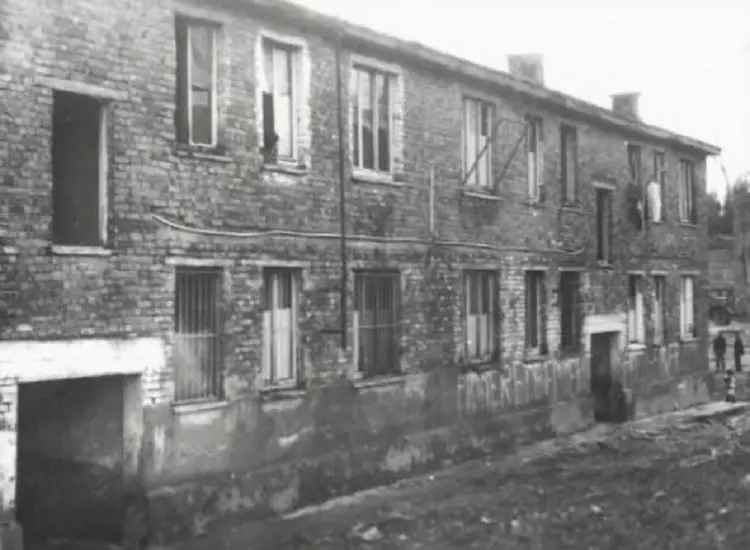
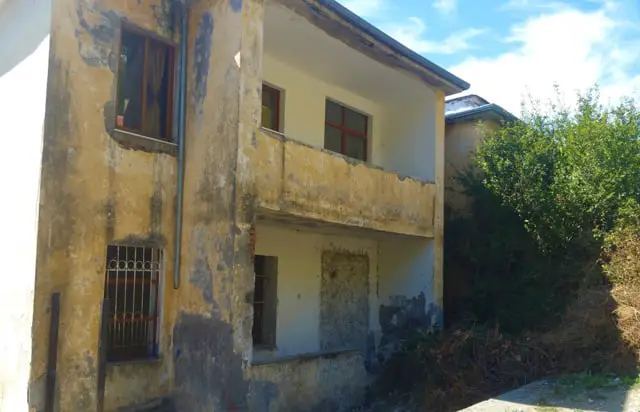
My eye stopped on the brother of Agim Arifi and Ferit. We had been in the same neighborhood, living on the first floor of the building near the “Internal Branch,” at Tano Banushi’s. He had only a few months left until release. He had been convicted of desertion from the army, so his position was lighter than the others; thus, there were procedural openings to favor him.
-“You take it upon yourself,” – I told him.
The trial took place two days later. As soon as the session began, right then and there, I had to make a change in my stance; I tried to wear the mask of the prosecutor with all the pomposity that this function gave me. I experienced once again a feigned seriousness—furrowed brow, my vocal cords took on their range, giving myself an authoritative tone.
The trial was going as I had predicted. Everyone was playing their role perfectly, as if it were a theater troupe with professional actors. In conclusion, I stood up to deliver the pretenca (prosecutor’s closing argument). I requested innocence for the four accused and a sentence of 9 months for Arifi. The court decided accordingly.
As soon as I finished, I took a deep breath and calmed down somewhat. I allowed myself to return to my previous state, where I could laugh at myself and my ridiculous pose I had to take moments before. However, I noticed that within myself I was feeling various emotions, each with its own emotional coloring.
The fact that I helped my friends brought relief, pleasure, and a spiritual obligation; while the other – that I abused my duty, desecrated the profession, and betrayed trust – made me feel ashamed. This whole state was a matter of opposition between shifting emotions, which I understood very well.
Nonetheless, I was convinced that I had done the right thing, and if I were in the same situation again, I would act the same way. At the same time, recognizing this weakness for old friendship within myself, I was becoming convinced that I was not the right type to be a prosecutor.
In the morning, the office telephone rang:
-“It’s Thoma, Comrade Prosecutor, the director of the Torovica Re-education Camp. I need you to come here because the convict Ndoc Liqejza, whom you know well, has been on a hunger strike for three days and his health is deteriorating. Yesterday, three other convicts from Shkodra joined him.”
I indeed knew Ndoc well. He had been a good and loyal friend since childhood. I knew his character, his temperament; he was brave and determined. It was as clear as light to me that this stance, his harshness, was premeditated – that his rebellious behavior had an internal drive. it came from the lack of freedom, the restrictions on everything he was forced not to have as a convict.
I had met him many times; I knew what he wanted and what he thought. I understood perfectly. In fact, Ndoc had told me that he was often overcome by the desire to run like a madman, to escape this isolation that had gripped him and wouldn’t let him breathe – to leave the sorrows and suffering, to go somewhere, it didn’t matter where, just to inhale the free air outside this wire enclosure and let his sick soul be satiated with freedom and joy.
My first feeling was one of grief and pity. More likely, this came from the awareness that I was unable to heal his soul as he suffered. I could give him everything; I could fulfill every condition within the camp managers’ power, but he did not suffer physically from the poor conditions of the prison.
His powerful body was able to withstand any physical suffering; his sensitive soul was suffering, but his soul was deep down unreachable, no matter how much one tried to reach somewhere, at least to calm it somewhat.
Immersed in these thoughts, I didn’t even realize I was at the camp. I met the director, who explained the situation in detail.
-“Let’s call them here to your office,” I said.
They brought them in. Ndoc had lost his strength and vitality; it seemed the days without eating or drinking had done their work. Tired, he could barely stand. While I began to speak to him, Ndoc did not react; his gaze was fixed elsewhere. Meanwhile, his face was hardened and remained as if frozen. Finally, Ndoc’s sharp and determined voice was heard:
-“I don’t want to talk, nor do I want to meet you!”
For a moment I remained surprised. I wasn’t distinguishing my old friend from the others, but then again, I was right to be, though I didn’t feel good about it. Was I not also a prosecutor, a representative of the dictatorship, just like all the others?! But nonetheless, his tone hurt me. It didn’t matter where this icy stance came from, but such a stance sounded almost like ingratitude for what I had done for him.
Though his behavior angered me, and though I had come there determined to convince him to give up the hunger strike, an internal voice spoke to me. I told myself that I should be calm, patient – that I would be the most villainous man if I hurt this man with words, this convict, this friend with whom I had shared the years of childhood and who was now the most unfortunate creature in these moments, ready to sacrifice himself. So, what was to be done?
I pushed the chair closer to him; I went right up to him. – “Well then, Ndoc…”, – I began to speak. I didn’t even know what to say to him, I just talked and talked endlessly, being very moralistic…, blah, blah…! I articulated the words as if I were holding a discussion in the “education forms.”
It seemed the director liked this, and he approved with gestures every now and then, waiting impatiently for their effect. In this long monologue I had to hold, only Ndoc managed to understand me. Surprised, he began to look at me, and my gaze stopped and lingered long on Ndoc. We didn’t take our eyes off each other. It was like that game of eyes: whoever lowers their eyes loses.
And as I continued to speak, without breaking the gaze from Ndoc, I noticed he was flushing; the veins in his neck began to swell so much it seemed they would burst, while I myself felt a heat like a fire from within, though I couldn’t see myself.
Surely my face must have turned flame-red, but because I was a bit dark-skinned, it didn’t show. My voice, little by little, was fading out, until after a few seconds, both at once – Ndoc and I – burst into a loud, screaming, endless laughter that echoed so strongly that the walls of that office could not contain it without it spreading through the corridors and who knows how far…!
For a moment, I saw that the other three convicts were also laughing, instinctively. The only one, who was silent, surprised by what was happening inside this office and somewhat offended, was the director. Then, as I calmed down a bit, I put my arm around the director, hugged him, and said: – “It makes no sense to talk to them like this and moralize, because I have been like them, I am like them.”
After this, an inspection by the Ministry of Internal Affairs – the organ on which the camps and prisons depended at the time – considered it a serious violation that I had entered inside the second perimeter, where only the convicts stay. For others, especially for us prosecutors, it was strictly forbidden, as there was a risk of being taken hostage by the convicts.
And as they were criticizing the director for allowing this violation, my words froze them into silence: – “Who would take me hostage, the prosecutor? My friends?! I have them all as friends!” Memorie.al