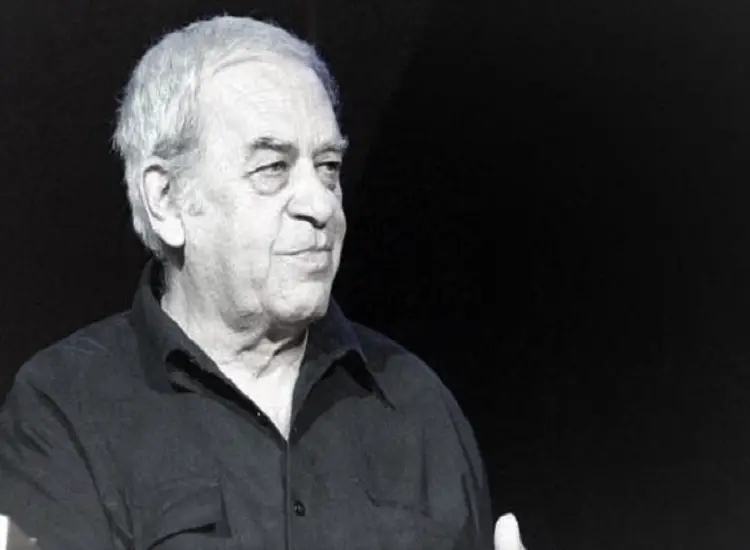


By Sokol Parruca
Part Five
Rare testimonies of the well-known jurist Sokol Parruca regarding Shkodra’s football icons over the years – such as Halepiani, Hasa, Rragami, Rakiqi, Bizi, Dani, Zhega, etc. – and artists like Vasija, Tërshana, Aliaj, Ljarja, as well as other emblematic characters of that city.
Memorie.al / It is difficult to write about the former players of the “Vllaznia” team of Shkodra over the years without being a researcher or a football specialist, but I am putting down my impressions of those I knew, touched, and saw… undoubtedly, I judge it impossible not to mention Ernest Halepiani. I was about 9 years old when I first went to the “Pioneers’ Park”… The coach for the children was a short man with fine curly hair and a face that shone with kindness.
ZAKINOJA (Zakino Kantozi)
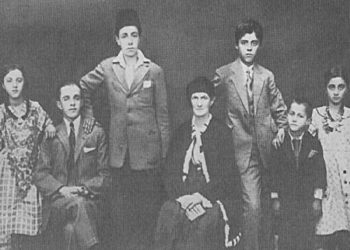
It was the beginning of 1960 when a group of boys, not yet fully grown, found ourselves in the same neighborhood near the former “Republika” Cinema, growing up together to share our childhood years. One of us was Zakino, the eldest son of Mimiko Kantozi – a Jewish family that had come to Shkodra who knows how long ago, but who had adapted so well to Shkodran customs that Zakino was truly one of us.
He was somewhat taller and sturdier, fair-faced with dark features; his large, almond-shaped black eyes and long eyelashes gave him an exquisite look, like a child from a postcard. He was not only the most handsome among us but also the most well-bred and wise. He hung out with us “troublemakers,” but he knew how to tactfully avoid getting mixed up in our age-appropriate mischief. He was mature for his age, a true gentleman even before he was a man.
Whenever his kind grandmother came down the stairs to give him a slice of bread to eat, he would always offer it to us first to take a bite, without us having to ask – as was the custom among us then. And so, many times the grandmother would go up and down the stairs with a slice of bread in her hand, always with a smile, seeing that we would finish the bread together, bite by bite, mouth to mouth. Zakino felt full and happy this way, and so did we. There was so much closeness and love in that morsel of bread.
One day, when one of our friends was being beaten alone by three boys from another neighborhood, and as his strength was failing him, Zakino arrived. Like a lion, he jumped in to defend our friend, pushing them back and chasing them away. In the end, as the friend looked at Zakino with admiration and surprise – since Zakino never argued with anyone, let alone fought – Zakino had a thin stream of blood running from the corner of his lip, as if to say that a friend is defended even with blood.
We spent our childhood and adolescence in this loving circle, until one summer day, we received the devastating news: the best, the most beautiful, the wisest among us, our Zakino, had passed away. It happened during a holiday in Razëm; on a night of thunder and lightning, a bolt of lightning struck and stopped Zakino’s pure heart. I remember we all gathered in silence, unable to utter a word; words had given way to tears, and tears spoke their own language – the language of the soul.
There is no pain like losing a friend before they turn twenty. Later, Zakino’s family moved to Tirana, as did mine. We happened to be neighbors in “New Tirana” (Tirana e Re). One day, I ran face-to-face with Zakino’s grandmother near the “Agimi” apartments. She was loaded down with vegetables and groceries. As soon as she saw me, she dropped her bags – or they fell, I don’t know – and she reached out her arms toward me. I rushed to her. She embraced me, held me tight, and burst into tears. I didn’t hear a sobbing voice, but I felt the scream of a suffering soul, the heavy thumping of a heart ready to burst from the weight of this grief.
We stood there for a while in this duel of pain until she let me go. I tried to take her arm to accompany her, but she signaled me to leave her. I crossed the road and stopped at the corner of the bridge; I couldn’t move my feet. I turned and followed the silhouette of that mother with my eyes as she dragged her steps heavily, nearly collapsing under the weight of the longing for her lost son.
FREDERIK RRESHPJA
Ah… and this anniversary of your birth passed in solitude! You, the magnificent one, condemned to silence. While the entire Prime Ministry, and specifically the Ministry of Culture, should have declared this “FREDERIK’S DAY,” organizing diverse events in honor of the great lyricist, Frederik Rreshpja.
Today we should be wishing you a happy birthday. You left us just as you turned 67, at the peak of your magnificent lyrical art. Others are showered with praise, but you were our greatest poet. We saw you off in silence, in poverty and misery – oh God, you who left us treasures of lyrics! We did not give you the place you deserved; we did not value you enough; we did not love you enough!
But the generations to come will know how to restore your majestic figure. When others are forgotten as mediocre poets, your name will rise, and your lyrics will be cherished from generation to generation.
I wandered for a long time at the book fair, asking everyone. I saw all the stands, all the publishers; I asked directors and publishers, my friends, but my eyes never caught a book by Frederik Rreshpja. Everyone shrugged as if surprised and tried to avoid me because I was irritated. I saw “poetasters” sitting there all day, self-satisfied, giving autographs, but the greatest poet, Frederik, was nowhere to be found – forgotten. He, the only one whom poetry followed from behind as he hurriedly embroidered his pearl-like lyrics.
I felt your departure with pain, Rrik, but you did well, brother! You weren’t meant for here; you belonged to space, to paradise, to kindness – to another world where geniuses are sheltered and valued…
Pogradec raised a bust to its lyricist… but when will my city, our Shkodra, raise a monument to its son, the great Albanian lyricist, Frederik Rreshpja?
ON AHMET PREMÇI’S POETRY VOLUME, “UDHË NË PASQYRË” (ROAD IN THE MIRROR)
Nearly a quarter-century ago, I met you on your first day of work in the same office as me. You were a young man of obvious sincerity. We met under a “good moon,” and in the days that followed, we weren’t just colleagues sharing an office and long hours, but also our breaks and free time.
We became friends. We discussed literature so much, reciting Esenin, Pushkin, Goethe, Burns, Hugo, and others. You knew the classics of world literature well, as well as modern authors. Do you remember the day when you shyly told me you had written something long ago? You pulled out a notebook where verses were neatly arranged from when you were a child, showing how they grew along with you, page after page.
This volume being presented today has the scent and spirit of that notebook. In those early days of your work, I taught you criminal legislative technique, while you taught me a new spirit of communication, for you are a master of communicating with people. I saw you worry about the problems of friends, yet I never saw you troubled by your own woes.
You were special and knew how to create correct relationships even with the detainees. I saw how you communicated with such intelligence and humanity; they didn’t see an investigator or a prosecutor in you, but a human being who knew how to extend a hand of warmth even in those dark, cold cells of despair. You never insulted, never used violence to get a confession, but you were a master at gathering evidence through facts and scientific means. You turned it into an art. This kindness came from within because, at heart, you were a poet.
KARLO RADOJA
My dear Karlo!
I read the book you just gave me in one breath. To be honest, I was somewhat surprised; I didn’t know you had this gift. I knew you were a talented musician and a loyal friend, but I never imagined you could write so beautifully. Things written with truth possess an inherent beauty; your book gave me special pleasure and is a valuable contribution to our fellow Shkodrans. To me, it is excellent memoir literature – an ideal balance between reality and art. Well done, Karlo, for this aesthetics of truth, for this alchemy of human relationships.
ON SHPRESA KAPISYZI RAMA’S POETRY BOOK, “63”
I just finished reading the latest volume of poetry, “63.” I went through the lines with delight as my mind flew back years to when you were a well-read teenage girl, asking many questions. Time forced you to be silent, only to explode years later in thousands of colorful, fragrant verses.
It is useless to try and count the 63 rings of a freshly cut tree. You should instead count the petals of a flower emerging from a bud, because you remained a bud that leaves verses with the scent of untouched meadow flowers. Your entire creativity is in motion toward the new. I wrote what I felt after reading you with pleasure, my friend, and I congratulate you on the verses poured from the depths of a soul that remains as sensitive as when I first met you… a girl who asked and searched… with her gaze far off!/Memorie.al