Part Twenty-Four
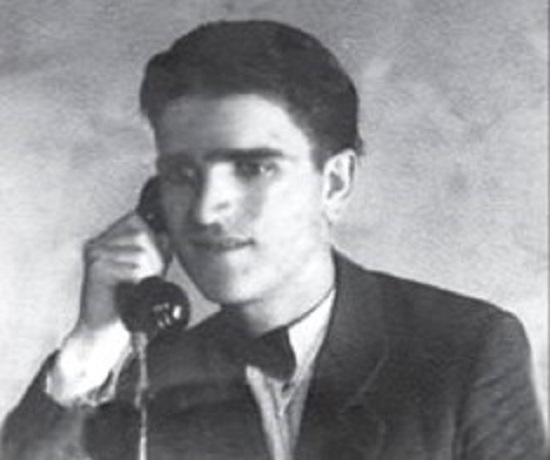
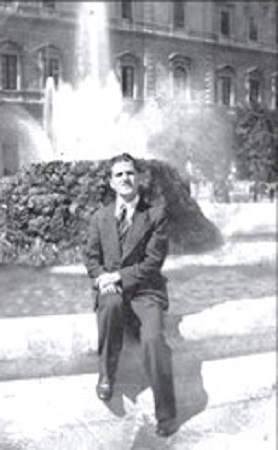
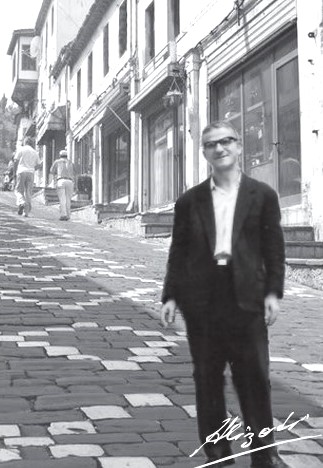
Extracts from the book: ‘ALIZOT EMIRI – The Man, the Bookseller, and Noble Spirit’
A FEW WORDS AS AN INTRODUCTION
Memorie.al / Whenever we, Alizot’s children, told “Zote’s” (Alizot’s) stories in joyful social gatherings, we were often asked: “Have you written them down? No? What a pity, they will be lost! Who should do it?” And we felt increasingly guilty. If it had to be done, we were the ones to do it. But could we write them?! “Not everyone who knows how to read and write can write books,” Zote used to say whenever he held a poorly written book. As we discussed this “obligation” – the Book – among ourselves, we naturally felt our inability to fulfill it. It wasn’t a job for us! By Zote’s “yardstick,” we were incapable of writing this book.
Continued from the previous issue..
VEJSEL HAS DIED
Dr. Vejsel had died in Tirana. It must have been around 1955. Zote heard the news and sought out Hoxha Hyqmet. He instructed him to give the announcement at 12:00, when he chanted from the top of the minaret at the mosque in “Qafa e Pazarit.”
The Hoxha went up the minaret, performed his daily rite, chanting as he circled the top. Then, he gave the announcement Zote had told him:
-“Dr. Vejsel has died! Dr. Vejsel has died!”
– “Who did you say?” shouted the people from the street below, who hadn’t heard clearly. The Hoxha repeated it. Down below, they heard “Dr. Vasil.” The news spread instantly through the city:
“Dr. Vasil has died!”
People rushed to pay their final respects. He deserved it. It was a great loss for Gjirokastra and the entire South. He had saved hundreds of lives. In fact, he had saved Zote himself from death, removing two ribs and part of a lung due to an infection caused by a tooth. And Zote, as everyone knew, would do exactly this if he were alive. He had no obligation to announce Dr. Vejsel’s death, but he did it thinking people would get confused – and they did.
People were shocked; they didn’t have time to analyze how it was possible for a Hoxha to announce the death of a Christian from the top of a mosque. Even if they had analyzed it, they would have justified it by saying the good Hoxha made an exception for the Doctor, because Dr. Vasil was special and had helped everyone. Who knows, perhaps the Hoxha himself had been operated on by Dr. Vasil!
The hour came for Dr. Vasil to head home from the hospital for lunch in the “Varosh” neighborhood. As soon as he stepped out of the ambulance, he bumped into people heading to offer their condolences. Some threw their arms around his neck out of joy upon seeing him alive.
- “What’s going on?” the doctor asked, bewildered.
They told him. It became clear that people had confused “Vejsel” with “Vasil” as the Hoxha shouted from above, but no one knew who had sent the Hoxha up there.
“Surely it was him, Alizot!” the doctor thought immediately, and later learned he wasn’t mistaken.
In the afternoon, he went to the bookstore. On the way, everyone greeted him with even more affection than before. They had suffered a shock as if for a family member, but thank God, it wasn’t true; their Doctor was safe and sound.
He entered the bookstore, followed as usual by others. He looked at Zote suspiciously. As soon as Zote saw him, he cried out:
– “What was this shock, what was this calamity that fell upon our heads today, Doctor? May those who don’t love you take your ill fortune instead! Wait, let me come out and hug you, for I can’t believe you’re alive!” He moved to come out from behind the counter. “You have no idea what we went through today, because you didn’t know you were dead. But if you had known, you would have seen for yourself!”
– “Slow down, slow down Alizot, lest you break a hand or a rib, for there’s no telling how the illness might turn and the Hoxha will have to climb the minaret again!” the doctor cut his momentum. “But come; let’s go have a drink now.”
– “Of course, we have a reason. Today you won’t put your hand in your pocket, Doctor. Nooo, the pleasure is ours that you’ve been resurrected. One of us will pay – whoever is happiest – for what we endured was no small thing. May it be a thing of the past, hopefully?” Zote continued in his typical fashion. They walked out laughing, joined by the laughter of all the passersby on the street.
THE ANTENNAS
The first televisions had come out. They were manufactured in Durrës. Ibrahim secured an authorization in Përmet. Together, we gathered the money with great difficulty – through loans and social lotteries – and bought a television for our parents in Gjirokastra. It was among the first in the neighborhood. In those early days, the house turned into a cinema. Neighbors came to watch movies. Sometimes they would fall asleep and someone would snore. They were good neighbors. Their snoring didn’t bother us.
The main problem of the day was the TV antenna. The transmission network hadn’t been built yet. The signal was weak. The screens were full of “snow” (static/interference). The state itself produced crippled televisions so they couldn’t receive any foreign stations except Tirana. Everyone made individual efforts with contraptions called “kanoçe” (cans) to catch foreign stations. Antennas were placed between the ceiling and the roof to keep them hidden, or you’d face trouble with the Authorities. But the “snow” wouldn’t leave us – the “snow” tracking the antennas and the “snow” on the screen.
It was exactly during this time that Zote was heading home from the bookstore. He walked down “Qafa e Pazarit” and noticed the old biology teacher following at a distance. Zote knew how curious he was, so he turned right into the shop of Jorgo, the radio technician. They were friends. He told Jorgo he had ducked in just to catch the teacher’s attention.
– “Back me up, Jorgo, we’re going to do a test to comb the gold out of the professor’s chests where he’s hidden it,” Zote “assigned” the task.
– “So, what are you doing? How’s it going?” the teacher asked as he opened the door, led by curiosity.
– “Nothing, Professor,” Zote said, “We’re just talking with Jorgo about TV antennas. How’s yours doing?”
– “Oh, don’t ask, but tell me, for we are all interested in those wretched antennas,” the teacher replied impatiently.
– “As I was saying, Jorgo – before I left the story halfway,” Zote continued, “I’ve saved myself once and for all. I came to my senses. I’m not climbing roofs anymore; we were lucky we didn’t get ourselves killed. I don’t know why we didn’t do this before! They were right there in the house and we weren’t using them. At least let them do some work, I said to myself; otherwise they’ll go to waste! But even you, Jorgo, you hadn’t mentioned this to me, or did you not know yourself? I don’t know how it crossed my mind! But I’m telling you, just a spoon and a fork tied to the antenna behind the ground floor. A miracle! I don’t dare tell anyone else, or we’ll be in trouble.”
– “And how does the TV receive now?” Jorgo interrupted, acting as if he was at fault for not knowing this “original solution,” whiles the professor was all ears.
– “It’s a beauty to behold! It brings the people alive right into the room, I tell you, you have no idea,” Zote said with enthusiasm.
– “What is this? What have you done, you rogue Zote, you wicked man who can’t stay still – what have you concocted now?” the teacher asked curiously.
– “Actually, it’s very interesting, Alizot,” Jorgo added fuel to the fire, “it’s known that gold is a good conductor of electricity, but I didn’t know it could do this job.”
– “Perhaps it’s not known by the world because it’s too expensive, and the world isn’t crazy enough to use gold for antennas. They must have solved it differently, I suppose,” Zote said.
– “But what is it? You’re killing me! Say it plainly, Zote, so I can understand too!” the teacher demanded.
– “Why, haven’t you figured it out yet?” Zote asked in feigned surprise and lowered his voice. “I used a golden spoon and fork for the antenna. That’s it! And I haven’t told you anything, remember that!” Then he turned to the technician: “Where did this devil find us in this conversation? But I’m not worried about him!”
Meanwhile, the teacher was pacing, trying to say something.
– “Tell me, would silver spoons and forks work the same way? What do you think?” he asked the technician.
– “I don’t think so,” Jorgo said, following Zote’s lead to open the old teacher’s “chests.”
– “Could it be done with thin gold threads?” the teacher asked after a moment.
– “I believe so,” Jorgo replied, “but I can’t do it for you. I don’t get involved in these things, I’d get in trouble and so would you. We have children to rise!”
– “I didn’t mean it that way. I just want to know, and then I’ll do it myself, as you know I’m handy with such things,” the teacher said with gratitude and seriousness.
They parted, but they never found out how the teacher’s experiments went. He didn’t smile for quite a while whenever they crossed paths.
THE TV SCREEN
A scientific article had appeared in the magazine “YLLI.” It was a short piece about the electrical scheme of a television, the high voltage in its internal circuits, and the danger of the screen exploding – a low but possible probability.
I was small and don’t remember the exact content, but I remember that reading this article was followed by a justified concern. Not because Gjirokastrians are overly protective of their “behinds,” as is perhaps unfairly said of them, but because the magazine was the most serious of the time.
I listened to the discussions adults had in the bookstore, which were full of imagination, excessive worry, mockery, and characteristic humor.
– “Listen, we understand about the high voltage – don’t put your hands in there – but what about the screen?”
– “Wait a minute, the probability of the screen exploding is very low, let’s not dramatize.”
– “Easy for you to say, but how do I know I’m not the one in that probability? If it explodes, where will you hide? That screen will turn into lila (shreds/tiny pieces)! You’ve got all your children lined up in front of the TV like targets at a shooting range.”
– “Let’s ask so-and-so, he knows something about these things.”
– “Don’t mention that liar! Not only can he not be tolerated, he’s ‘green’ all over.”
– “What should we do, my wife asked me last night? Don’t you dare turn it on, I told her, and we’ll wait until someone else’s explodes first so we aren’t the first victims.”
– “What do you say, Alizot? Don’t you have this worry like us?” they finally asked Zote.
– “Not at all!” Zote said, leaving everyone open-mouthed.
– “Why, doesn’t yours explode, Alizot?” one of the alarmed discussants asked mockingly.
– “Oh, mine explodes just as much as anyone else’s, they’re the same televisions, but it doesn’t cause me any harm,” Zote replied calmly.
– “Stay right there,” the interlocutor said, “That ‘harm’ part is what we’re discussing. Tell us, why doesn’t it harm you? Or even if it hits you, is it not a calamity?”
– “You’re right about that, but I solved it for the others at home and in doing so, I’ll save myself too.”
– “How did you do it, Alizot? For heaven’s sake, tell us!”
– “I sensed the danger from the start,” Alizot began. “I was thinking of putting a protector in front of the screen to catch the glass shards without blocking the view. What to use, what to use… I was leaning against the small kitchen window when-zap! It hit me. I found it, I said to myself. The metal grill of the window! I measured it. Perfect! I took it off and put it in front of the TV. We are safe now, I tell you. We’ve found peace because whenever they showed war movies with swords and spears, our blood would run cold-it looked like they were going to pierce our screen! There goes the screen, I’d say to myself every time a man on the screen pointed his pistol toward us.”
– “Doesn’t that grill block the view a bit, Alizot?” someone asked doubtfully.
– “At first it annoyed us, to tell the truth, but then we got used to it.”
– “And when a guest comes, what do you do?” another asked.
– “When a guest comes, we take the grill off, of course. But we put the guest right in front of it-we respect them-and the rest of us sit to the side, to leave the guest in peace.”
– “But… what if it explodes?” they asked again.
– “Ah, if it explodes that day, let it take the guest in full bloom, for there’s nothing else we can do. It’s not our fault-we gave him all the respect he deserved!” Zote replied calmly.
They laughed with Zote, but not everyone did. A few days later, word reached Zote at the bookstore: “So-and-so had a fight with his son, who was shocked to see his father tearing the metal grill off the small window at home. They were at each other’s throats. The son could be heard shouting:
‘Why? Did you go and listen to Alizot? See to it that God doesn’t take your mind and you go tell Zote, because you’ve exposed us for all of Gjirokastra to see!'”/Memorie.al