By Gani Vila
Part One
– The Greek Genocide and the Silence of Albanian Governments for Over 100 Years! –
Memorie.al / The obligation I feel to write about these planned anti-human crimes, committed in those years by the regular army of the Greek state, does not stem simply from the fact that I am from that region, nor from the fact that among the 375 people massacred from July 2 to July 10, 1914, in the village of Panarit in Korçë, 25 members of my own family were burned alive by the Greek army in Rrape Vila’s house. Rather, I am mostly disturbed by the anti-national and anti-human stance of the Albanian state itself and all its previous governments, from the time the Greek genocide occurred until today.
Although more than a century has passed, they have not only failed to denounce the Greek state’s genocide in international organizations, but they have also failed to accurately reflect it in Albanian history. They lack accurate or even approximate statistics of the population massacred by the Greek army in the villages and towns where this genocide was carried out; they lack a commemorative date, a place to lay flowers, or a spot to light a candle and mourn. Graves and tombstones are missing from our stony land, and thus, there is no sign of respect for the souls of our massacred ancestors!
These are the reasons I have written, am writing, and will continue to write until my sacred state restores the honor, dignity, and rights of our ancestors who were barbarically massacred on our land, in our homes and hearths. The genocide committed by the Greek state against our people in the years 1913–1914 and onward, though it is the most painful history of our nation, has been left orphaned by the state. It has been preserved and passed down through generations only by the memory of individuals, families, tribes, and the regions that experienced these anti-human Greek crimes.
Similarly, we must highly value and respect the writings of authors in Albanian and foreign newspapers of that time, as well as books that reflected this period in the United States and Europe. They provided extraordinary assistance by documenting, in intimate detail, the macabre events carried out by the Greek state. This information and these statistics are, fortunately, our only evidence; however, it is a great tragedy for the Albanian nation that they have not been studied, researched, verified, and reflected with the necessary depth and truth in the ‘History of the Albanian People’ and in global genocide statistics.
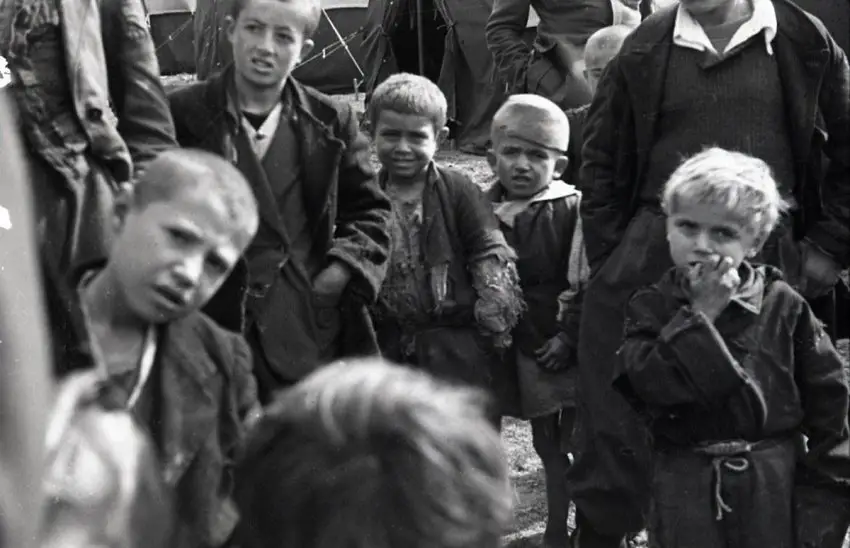
The massacring of the civilian population by the Greek army in the towns and villages of south-eastern Albania in 1913–1914 – in Përmet, Leskovik, Kolonjë, Korçë, Tepelenë, Memaliaj, Skrapar, Berat, Gjirokastër, Sarandë, Delvinë, etc. – regardless of religion (Muslims and Christians alike), targeting the elderly, men, women, youth, children, and infants, was done in the most macabre and anti-human manner ever seen or heard of in world history.
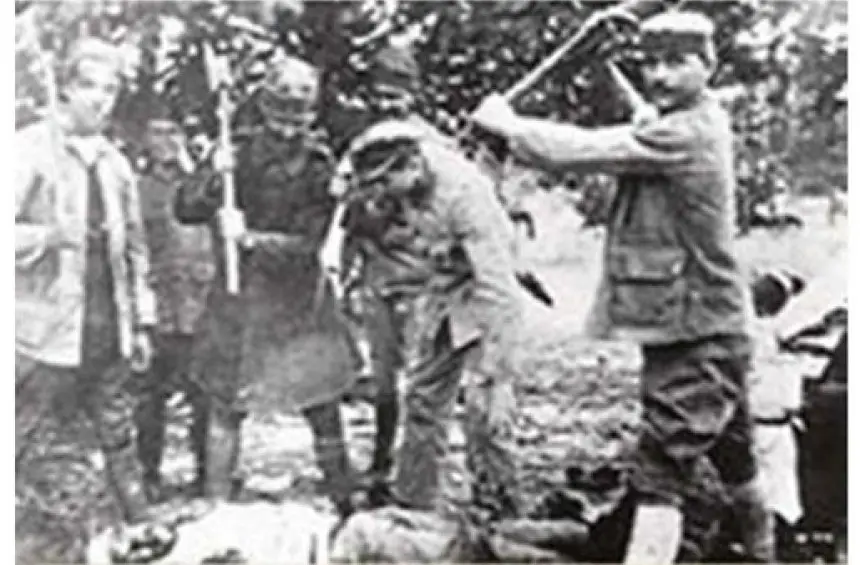
They cut open the bellies of pregnant mothers with bayonets and knives and mocked them in front of their living, unborn children…! They decapitated children and adults with axes; they used knives and cleavers to rip open bellies while the victims were still alive, telling them they would hang them with their own intestines. They severed limbs while people were still alive, burned them, and threw them into wells while they were still breathing, continuing even with psychological torture. Greek soldiers would tie the men with chains and ropes, and before their very eyes, they would dishonor their mothers, brides, and underage daughters, who would then perish.
They burned thousands upon thousands of houses in villages and towns, barbarically stole all the wealth of the region from people’s homes, and looted vast numbers of livestock and agricultural products – damages and thefts exceeding hundreds of millions of dollars. All these deportations and massacres carried out in the southeastern villages and towns of Albania, based on UN General Assembly Resolution 260-A (which entered into force on January 12, 1951), are classified as genocide for ethnic cleansing.
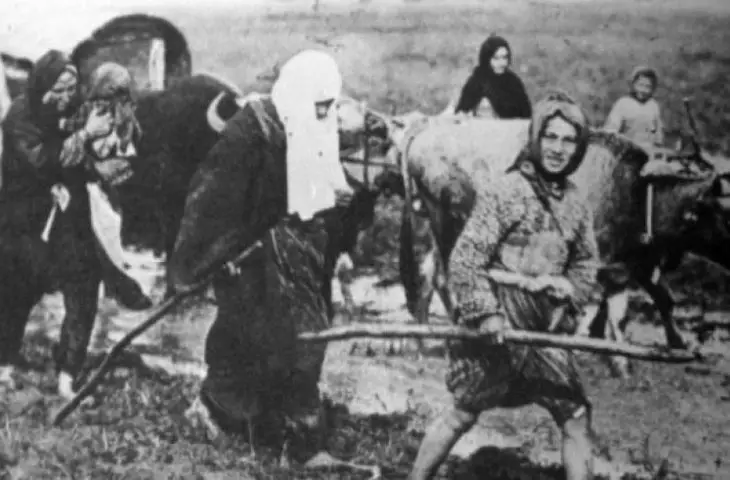
Although the population of Southeast Albania suffered incalculable losses in those years – around 50,000 people killed or displaced, and material damage in the hundreds of millions of dollars – they survived in these regions for decades, continually experiencing the pain of terror and the poverty caused by these crimes. Above all, they suffer from the unusual indifference of the Albanian state.
It is unbelievable, but there are villages in these areas today, such as Panarit in Korçë, that are completely forgotten, having never had – and still not having – a paved road. A century has passed, and although we live in the age of globalization, the Albanian people of this region still manage and preserve the criminal events of those years in their memory, while the Albanian state continues to remain silent, killing the national memory every day.
All the long-lived Albanian regimes following the Greek crimes of 1913–1914 – the Zogists, the Enverists, and surprisingly even those after the 1990s – have never taken the issue I am writing about into consideration. It was not fully and correctly reflected in the History of Albania during the communist regime, and even the republication of the ‘History of the Albanian People’ in the days of democracy is a mere photocopy of the few pages written in the existing text.
Generation after generation of Albanian historians, when writing or speaking about the internal situation of Albania in those years, spin and struggle around Prince Wied, Haxhi Qamili, Essad Pasha, and their offspring. Even those historians who have studied the international stance of that period have written thousands of pages on the difficult situation Albania faced between partition and existence, especially regarding our neighbors.
But it is a strange fact that no Albanian historian who studied that period – both the internal and external situations – has written anything about the Greek army’s genocide, which aimed to achieve ethnic cleansing against the Albanian population by barbarically displacing and killing the civilians of Southeast Albania.
The only exception has been the talented writer and journalist Blendi Fevziu, who, on the 100th anniversary of the Greek massacres in Panarit, Korçë, dedicated an episode of “Opinion” to them with courage and professionalism. He deserves public thanks. Invited to that show was one of Albania’s most successful historians, Professor Pëllumb Xhufi, who stated during the discussion that even he did not know the reasons why the Albanian state remains silent about these crimes and offered a self-criticism for not having written about this period himself. This declaration by the prominent historian speaks volumes.
There are historians and professors in Albanian universities who, after the year 2000, have dug through British and French archives, writing more accurately (or copying books) about “Northern Epirus” to earn a few pennies, yet they haven’t written a single word about the Greek genocide committed in Albania in those years. By writing about “Northern Epirus,” they have deliberately manipulated the genocide the Greek army committed in these areas, as their intellectual background should have been sufficient to classify these massacres at least as crimes against humanity.
Recently, many others like me have written articles and books reflecting the history of their ancestral villages in Southeast Albania, which is commendable. However, I must emphasize: the classification of the crimes committed by the regular Greek army in Southeast Albania should not be referred to as a “massacre” as it is treated by contemporary authors; for instance, one should not simply write “The Panarit Massacre.”
Naming it this way avoids identifying the subject of the crime: the Greeks. You don’t always have to stick to tradition; the rules of history writing belong to historians, but the issue I am writing about, though ignored for 100 years, is “tempered” in our people’s memory. To make this clearer, I refer to my village, Panarit, where unfortunately the Greek genocide was on a larger scale than in any other area or village.
When articles or books are written by historians or intellectuals titled “The Panarit Massacre,” “The Hormova Massacre,” or “The Përmet Massacre,” they are often understood as massacres among Albanians. Unintentionally, one falls prey to the devilish propaganda the Greeks have planted for a hundred years – that Albanians killed one another. We should not spare words; we must write them correctly: The Massacre of the Greeks in Panarit, or the Massacre the Greeks committed in Hormovë, etc.
While the crimes were realized through displacement and massacre, these specific cases fulfill the criteria of the crime committed by the Greeks in Southeast Albania in 1913–1914, which, as mentioned above, is classified as “Genocide” for ethnic cleansing.
The reflection of Greek crimes against the civilians of Southeast Albania up until the 1920s by Albanian and foreign authors always condemned and clearly cited Greece’s crimes, such as Kosta Papa’s book “Greek Barbarities in Albania” or various articles like “The Massacres of Greek Andartes in Këlcyrë and Hormovë.”
Under these conditions, the Greek government was very careful about the crimes it committed, especially after the Paris Peace Conference, when the Greek dream of “Northern Epirus” ended. To avoid international law, they began to manipulate the crimes against Albanians and falsify history, intensifying intelligence work among Albanians, especially with paid historians and threats.
They formed information networks that still exist in the arteries of the Albanian state. Consequently, the state has not documented these crimes and has surrendered to the manipulations of Albanian historians linked to the perpetrators and the Greek state. This is proven by the fact that no state institution or historian has yet created a formal file on this Greek genocide, not even for a thesis or diploma. These “Albanian” pro-Greek historians reached their goal! During the communist regime, speaking of these crimes was forbidden – a taboo created by Enver Hoxha’s regime.
In fact, when the crimes were mentioned to communist officials, they would whisper to the population to keep their mouths shut and forget these crimes, using phrases like: “a lid has been put on those crimes” or “let’s not peel the layer off the pie.” Here is the thread of the mess tangled by historian-spies.
Years pass, and the names and souls of over 50,000 Albanians massacred by the Greek army are forgotten. They continue to suffer from the serial neglect of their grandsons and great-grandsons that have been in power in Albania. We thought democracy would set things right, but it did not! Even after a quarter-century of democracy, Enver Hoxha’s “lid” found a new “pot” – the “Rama Pot” – which, if opened, smells of betrayal.
The former Minister of Foreign Affairs, Mr. Ditmir Bushati, during his visit to Greece in 2016, stated that Albanians and Greeks should resolve their disputes starting from World War II, referring essentially to the Cham issue. He did his duty by speaking of the Chams, but he was incorrect to set World War II as the starting point for improving relations. This was an irresponsible statement, more dangerous than the silence of previous ministers, as ill-thought-out state declarations harm our people’s interests.
But what happened? While all Albanians expected a reaction from the government to correct Mr. Bushati’s statement, Prime Minister Edi Rama himself, at the PDIU Congress in 2016, hungry for electoral votes, presented himself as the savior of the Chams. Yet, in that same “home” of the Chams, he betrayed them and all Albanians by repeating that problems with the Greeks should be looked at starting from 1945, sealing another betrayal by the government that tramples on the blood of our ancestors.
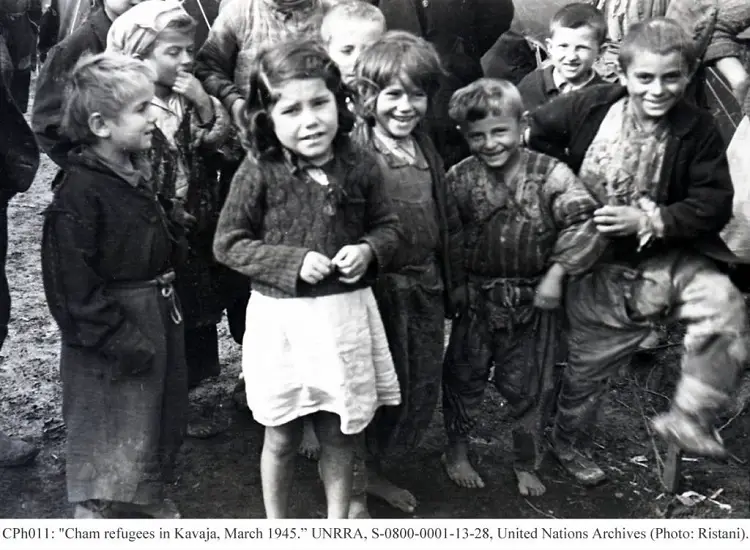
The Chams should indeed demand that the Greek state take responsibility for the genocide and return their stolen properties. They are Albanian citizens, and when dealing with grave crimes like genocide, the state must prepare the file and represent its people in international bodies. Why do the Chams need their own party? They are just like the people of Panarit, Dardha, Dukagjin, etc. – they are Albanians, and the state has constitutional obligations to protect them.
But the Chams have not only suffered from the Greeks; they have paid the toll for 72 years to Albanian governments that viewed them as second-class citizens during communism – imprisoning, interning, and controlling them. After 1990, they believed in democracy but fell into the “trap” of parties – this time an electoral trap for votes. They were lied to and made “shareholders” in the “Party Industry,” which has become the most profitable economic industry for its owners in Albania.
How did the Chams fall into this trap? Who benefits from seeing the Chams as different from the rest of the Albanian population? No one but the Greeks. The Chams have suffered enough; let them join any Albanian party they wish, and let us all work together to make the state function, as the “Cham Issue” is a national Albanian issue. The genocide against the Chams must be pursued by the Albanian state, not just a Cham party. The state must be the author of the file and the advocate in The Hague; otherwise, the state is a “Rrumpallë” (a mess)! /Memorie.al
Director of the Albanian-American Television
Michigan, USA