
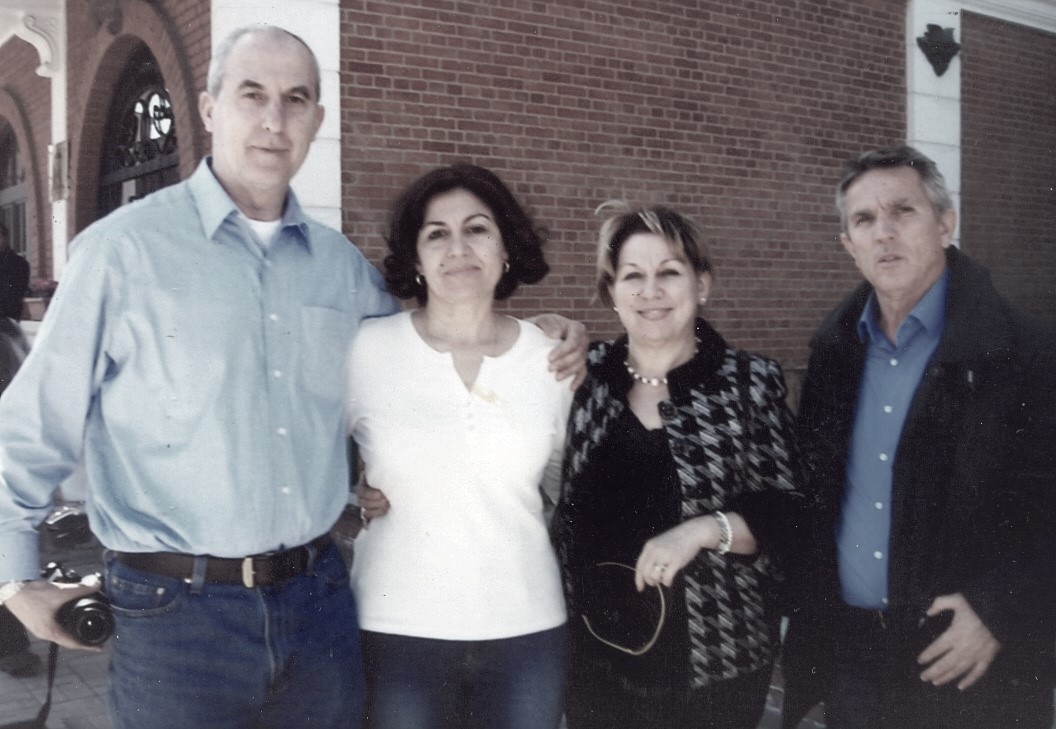
Memorie.al / Having a resemblance to an actress, artist, singer, or a famous character from the world of art, cinema, and spectacle, etc., in pre-1990s Albania, was considered a great “privilege” in terms of recognition, friendships, and even love stories for the girls and the generation of the 70s. Being a “doppelganger” of Claudia Cardinale, Sophia Loren, Brigitte Bardot, or Rosanna Podestà added “points,” especially in the eyes of Western culture admirers. And such cases were not few. But to hold the exact same name and surname as an Italian television showgirl was, and certainly remains, something unique and extremely rare.
Who was Loreta Goxhi, the name that would accompany Lola, the charming girl from “Durrës Street,” not only through her adolescence but also in her student life, marriage, and even during travels and passport controls across the famous states of Europe…?! Why did she keep her real name a secret, what were her attempts to communicate with the Italian actress, and why was she refused?
But that’s not all: How did the news spread that Raffaella Carrà was Albanian and expected to visit Tirana to meet her relatives? What is the story of men who married or had relationships with Italian women and vice versa – relationships kept hidden for half a century? Anna Oxa, the famous Italian singer who publicly stated she is an Albanian from Kruja, is one of them.
“Lola,” as she was known
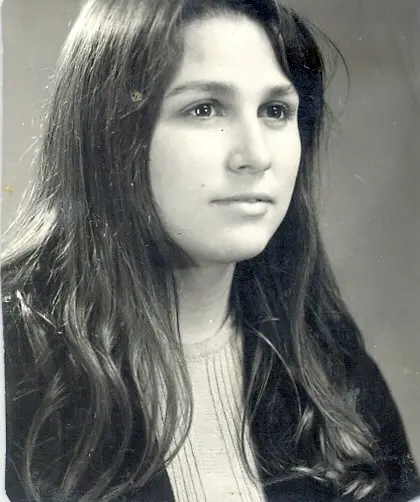
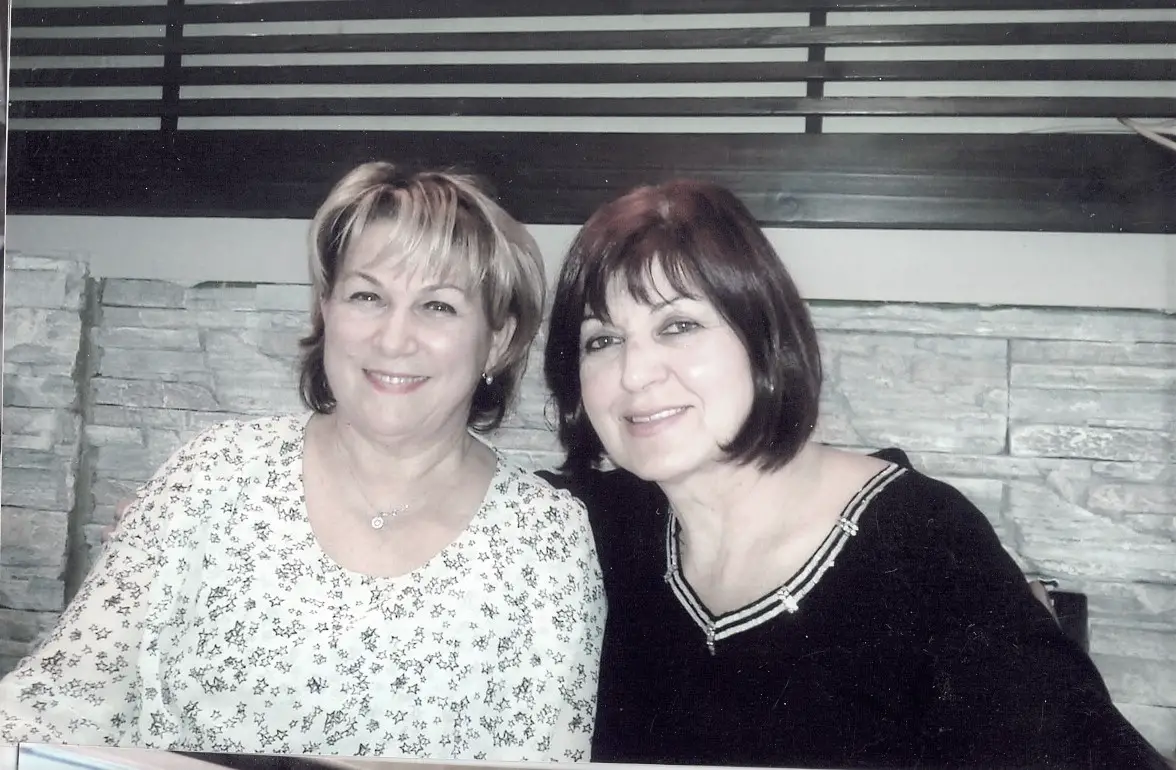
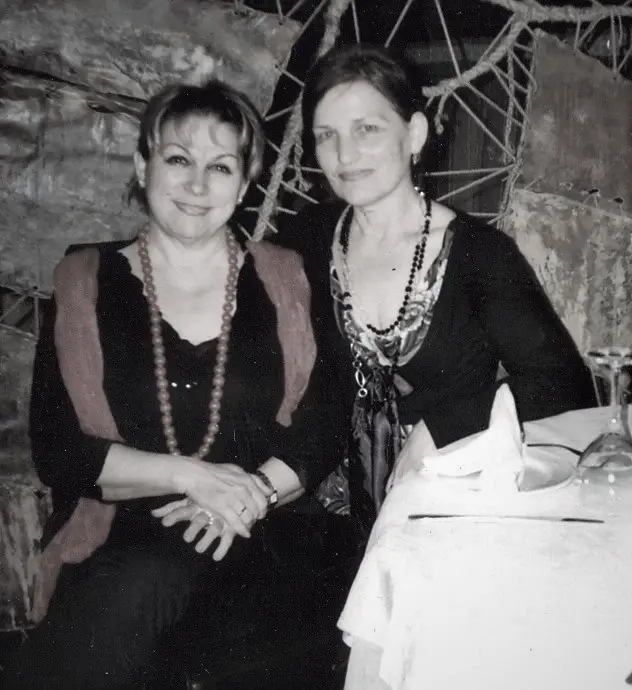
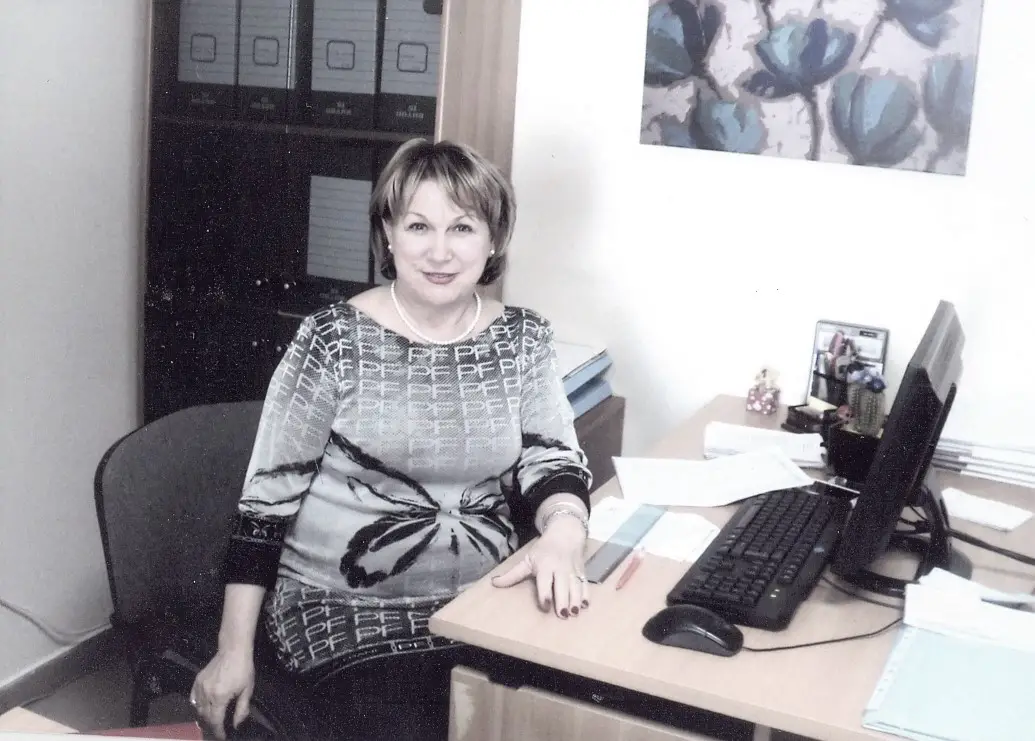
“Lola” – that is how she was known, called, and even today, simply “Lola.” But her real name is Loreta, Loreta Goxhi. In all documents, it appears as such: Loreta Goxhi, born in Tirana on December 27, 1954, sister to two brothers, Astrit and Arben Goxhi, and for many years a resident of “Durrës Street.”
“I kept my real name, Loreta, a ‘secret’ because I was afraid; I feared that a foreign name, or being the child of a family with foreign roots, would have a negative impact in those years when the ‘class struggle’ was fierce. I was shy; I didn’t even tell anyone that I had the same name as the Italian singer, Loretta Goggi,” Lola begins her story.
Loreta Goxhi… did your name attract attention?
“In my adolescence, few linked my name with that of the Italian singer. The first one I remember was Gavrosh Lëvonja, the Mathematics teacher at the Economic High School. From the first moment, as he was taking the roll call, as soon as he encountered my name, he stopped, raised his head, looked at the class, and said: ‘Loreta Goxhi, stand up.’
I stood up, and he continued: ‘Who are you? Do you know you have the name of a great Italian television artist?’ ‘Yes,’ I replied, ‘I know her; I’ve seen her on Canzonissima.’ Gavrosh was not only a unique teacher but a man of culture, a well-known athlete, and he spoke slowly. He would call on me systematically during lessons, just for the desire to pronounce the name, Loreta Goxhi. He told me these years later. He gave me very good grades, even in cases when I didn’t deserve them.
‘For the great name you have, you deserve a high grade,’ he would say before the class. Anyone who knows Gavrosh knows how charismatic and unique he was. I have another case: at the end of military training (zbor), I was handing in my weapon. The employee taking it asked for my name. ‘Loreta Goxhi,’ I told him, which was followed by laughter from the other students. ‘Why are you mocking me?’ he said, and after closing the warehouse, he complained to the principal. She called me in, and after verifying the name, she closed the matter.”
Was this name a coincidence?
“I believe so. It was given to me by my father, who passed away very young when I was little. During the 70s, when we followed Italian television (RAI), the musical broadcasts on Saturday nights, or Lelio Luttazzi’s Hit-Parade on the radio – a song show every Monday and Friday at lunch, very popular with the youth of those years – we discussed the name Loreta Goxhi among ourselves because of the similarity of the surname to our family’s.
I remember talking with my cousins, especially Diana and Nora Goxhi, the former basketball player and wife of the late famous footballer Arben Minga. Regardless, I couldn’t hide it; even in my youth, school, and neighborhood on ‘Durrës Street,’ I was known as Lola, but neighbors, friends, and relatives knew I was Loreta Goxhi.
In many cases, as if to show off, they would introduce me: ‘This is Loreta Goxhi,’ or ‘I am the brother,’ or ‘We are the cousins of Loreta Goxhi,’ they would say. I kept the surname Goxhi for many years in memory of my father, but I was forced to change it after the 90s, using Bega, my husband’s surname.”
Why forced?
“When Albanians were given the opportunity for free movement abroad, as soon as I stepped on Italian soil, during routine document checks at airports or anywhere, the police would stop for a moment, look at me, then at the passport, wondering if I was the real singer or something else. Driven by the curiosity the name and surname sparked, they would start endless questions: where are you from, what is your relation to Loretta Goggi, etc.
Seeing it as a systematic obstacle, to the point of annoyance – not only in Italy but also in Spain, Germany, and France – when traveling with my husband, the stops, prolonged questions, and delays began to cause me constant stress, so I was forced to change my surname.”
How did you meet your husband?
“He also knew me and called me Lola. It was quite by chance…! While we were sitting at Cafe ‘Flora,’ at one point, my real name suddenly came up. A friend of mine, Mamica, jokingly said: ‘Doctor, do you know you are in love with Loreta Goxhi?’ My husband, like everyone else, fell silent and, surprised, asked me: ‘Why, is that your real name?’ Later, when we got married, there was a moment during the ceremony before our witnesses and friends when the official read: ‘You, Loreta Goxhi, accept as your husband…’ are creating a unique situation because the name sounded so different.”
“When my husband, a dentist by profession, accompanied groups of Italian tourists, as soon as I was introduced, they would be shocked, looking at me with curiosity and asking: ‘We also have a famous singer in Italy with this name, are you related?’ Even at work, there was a finance chief from Shkodra, very cultured, who wouldn’t call me Lola, but Loreta. ‘What a beautiful name,’ he would say carefully, so as not to reveal in public that he was referring to Loretta Goggi.”
Did you ever truly think you were related to Italy’s Goggi?
“Everything was sparked after my uncle Petrit returned from Istanbul in 1995, where he had gone to meet relatives left behind from migrations across generations. When he arrived, he told us that a branch of our surname had moved to Italy long ago, and one of those who inherited it was related to the family of a famous Italian artist, citing the name Loreta Goxhi.
It was information passed down through generations, without anyone being able to verify this branch created by one of our great-grandfathers around the 1920s when he lived there. It was a surprise for us, given our fantasies over the years regarding the similarity of the surname. The only alternative for concrete verification remained Loretta Goggi herself.”
Did you try to meet her?
“Yes, especially after my uncle’s return and his story. If such a connection truly exists, it comes from her grandfather, who might have been the son of an Albanian, from ties many years ago. In Italian, the surname is written with two ‘g’s (Goggi), but it is pronounced as in Albanian, ‘Goxhi.’
We attempted and requested to meet her, but there was a lack of desire on the part of her family and relatives, although her sister Daniela’s stance was slightly different. In the following years, we made no further attempts, and everything ended there, extinguishing every illusion.
Time has taken its toll, and I don’t want to judge their stance. Perhaps one day it might happen, but the coming generations are little interested in the family tree, also due to the fact that many have left Albania years ago, families have separated, thus losing the sense of heritage and origin.”
Do you like Loretta Goggi?
“Yes, very much. Driven by curiosity, I have read about her life. A woman of personality, a multi-dimensional artist, intelligent, with a career built on merit. I still listen to her songs and repertoire today. We have a small age difference. Every time I see her, I have a different feeling.
I often listen to her repertoire in the car or at home; it’s as if it connects me and brings me back to my adolescence; it even accompanies me when I am engaged in intense work. In particular, the song ‘Maledetta Primavera’. Her beautiful voice creates a special, very nostalgic emotion. I am very curious: if I were to meet her one day, how would she react!”
Anna Oxa, a true Albanian
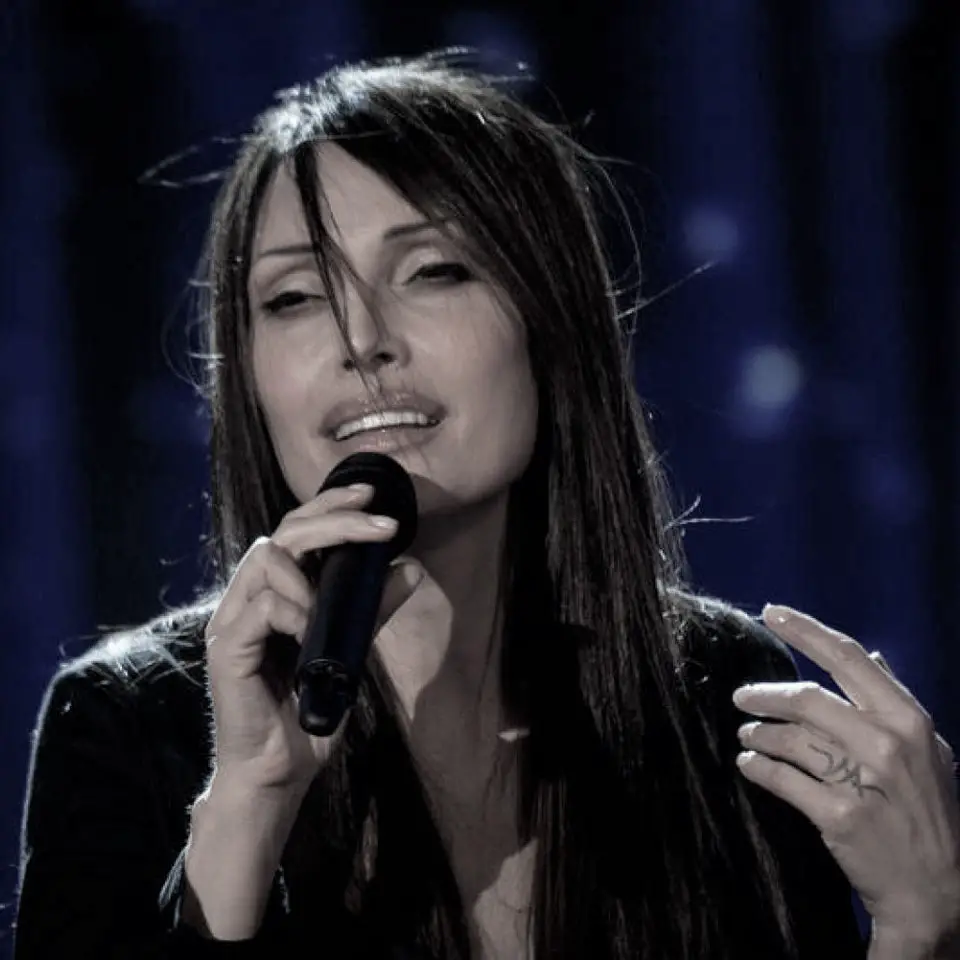
One who is truly Albanian, and declares it without hesitation, is Anna Oxa (Hoxha), born in Bari on April 28, 1961, to an Albanian father named Qazim from Kruja and an Italian mother. A graduate of the “Giuseppe de Nittis” Art Lyceum in Bari, where she spent her childhood and adolescence. She began her career as a singer very young in city piano bars, and at age 15, recorded her first song, “Fiorellin del prato”.
In 1978, she debuted with the album “Oxana”. She has won the Sanremo Festival twice: in 1989, in a duet with Fausto Leali with “Ti lascerò”, and in 1999 with “Senza pietà”. Anna Oxa has come to Albania several times, participating in various shows and events.
Is Raffaella Carrà from Tirana?!
Raffaella Carrà (a stage name, as her real name was Raffaella Maria Roberta Pelloni) was born in Bologna on June 18, 1943. Besides being an artist, showgirl, and absolute protagonist of Italian television spectacles, her fame came suddenly to 1980s Albania. Since there were several families in Tirana with the surname Karaj, provoked by whispered information, it spread widely in the capital that the Karaj family was closely related to Raffaella Carrà and that she was of Albanian origin.
A sensational situation was created for the citizens of the capital, and this news was at the center of evening conversations, not only in families but everywhere. Months passed, and when it was expected (according to the rumors) that Raffaella Carrà would land at Rinas, between fantasy and truth, the news began to fade, and within a short time, everything fell silent.
Who is Loretta Goggi?
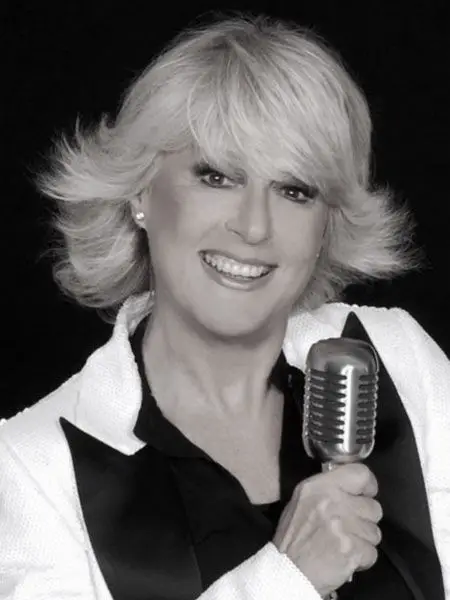
Loretta Goggi was born in Rome on September 29, 1950. She is the second of three daughters of a family originally from Circello (Benevento) – an actress, singer, moderator, showgirl, dancer, and impersonator. Her younger sister, Daniela, followed in her footsteps but without achieving the same fame. From a young age, Loretta studied music, encouraged by the passion transmitted by her father.
Discovered by Corrado in the late 50s when she was only ten, she won the radio contest “Disco magico” and in the early 60s recorded her first song. She debuted as an actress in 1959 on RAI in the program “Sotto processo”. One of her most famous songs is “Maledetta Primavera”./Memorie.al