
Memorie.al / Throughout my entire journalistic body of work dedicated to the unresolved national issue, published both in the daily press and in books, I have consistently expressed a civic concern regarding the unforgivable silence or apathy characterizing our intellectuals. Therefore, whenever I come across an analytical article or a book by any author concerning this problem, I not only read it with great interest but also sit down to write about it. This has allowed me, beyond showing respect and sympathy, to expand my circle of good friends.
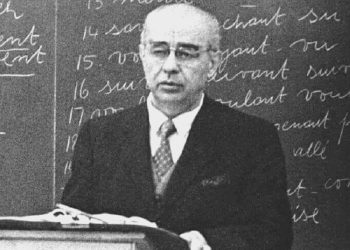
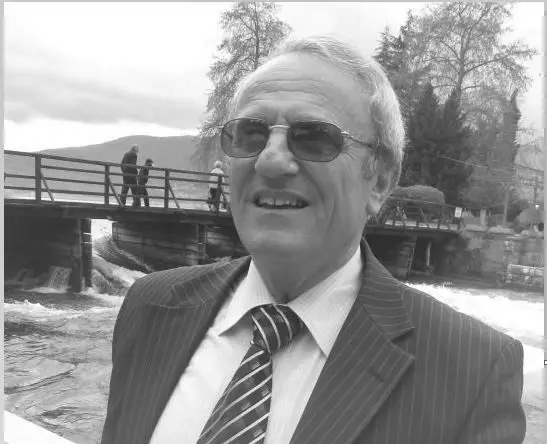
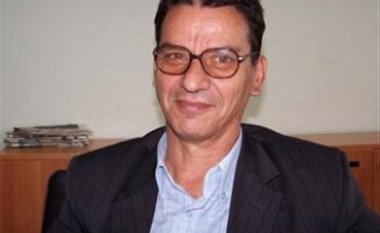
This is seemingly happening now with Mr. Hysni Shaqiri – an educator, fighter, and former deputy in North Macedonia – after reading his political-patriotic reflections titled “The Unfinished National Ideal.” While Hysni’s portrait is presented briefly at the end of the book, given the time-tested postulate that we find the writer within the pages of his books, I feel I have a complete picture of this intellectual: his manly character, his culture, his love for our Nation, and especially his courage to express thoughts without any compromise with anyone.
He is a missionary who has not fallen, like many others, into the quagmire of what the Polish sociologist-philosopher Zygmunt Bauman – who disagreed with communist theories and practices – called the decadence of intellectuals. In these reflections, he has used the subtitle: “Toward the West, toward inspiration, toward the strengthening of state-formation,” which, alongside the necessity of efforts for unification, contains everything he addresses in this voluminous twenty-three-chapter book. He has unfolded these, as Zenel Anxhaku says: “…with a pure Albanian language, clear for all social classes, with deductions, analyses, and messages for everyone.”
The author has chosen to draw parallels between history and politics, between the past and today’s reality, between the heroic resistance of our Renaissance figures and the coma we have fallen into, between the annexationist aims of neighbors and the unceasing efforts for Albanian freedom and independence, between the hypocrisy of our politicians and the pure ideals of the people, and between the charter of rights for self-determination and the cunning of international diplomacy that has left us fragmented. He is not merely an observer of the desperate, almost tragic fate of our nation, but also suggests the paths to be taken toward becoming a single state, like all others in Europe and beyond.
Hysni Shaqiri does not deny what has been achieved, such as the expulsion of Serbian tyranny from Kosovo after the heroic war of the KLA (UÇK) and NATO forces, and the results achieved by the Albanian people in North Macedonia after engaging in armed struggle against blatant discrimination. Naturally, it was Serbia that played with the Albanians in the most treacherous and criminal manner. It was its annexationist, de-nationalizing, depopulating, and subjugating policy that turned into academic doctrine, leading to unprecedented genocide, such as that of 1998–1999.
Hysni recalls the damages and injustices inflicted upon us by those famous Congresses, where the Great Powers played with our borders as they pleased. However, he does not forget to emphasize especially the years 1941 – ’48 – the period following the founding of the Communist Party of Albania by Yugoslav emissaries and their influence resulting from servile submission in the name of communist ideology, according to which “everything would be settled after its global victory.”
It was Enver Hoxha himself at the head of that party who cursed the decisions of Mukje, who remained silent about the shameful massacre of Tivar, who sent partisan units to subdue Kosovar nationalists, who called Tito “our savior,” and who asked him for the unification of Albania as the Seventh Republic of Yugoslavia!
It was this same Enver-monster who imprisoned, interned, or handed back into the bloody hands of the UDB agents all Albanians from across the border that could not endure Titoist tyranny and came to the motherland. As the author writes: “Just by looking at and analyzing no more than thirty years back from 1912, there would be no reason at all to sign a cooperation contract with Serbian communists during the Second World War.”
For Hysni, even after the dissolution of Yugoslavia, a substantial fact remains: the Albanian territories in North Macedonia, the Preševo Valley, and Montenegro were not liberated from Slavic-Orthodox occupation. He also states that Kosovo’s dependence on international whims, the opposition’s submissive stance on concessions to Serbia, or sitting in negotiations with it, is a great mistake.
In the great matter of the nation, according to him, all political forces must have one, and only one, unwavering stance. Party interests and power-grabbing must never prevail over the general long-term interest. For him, the position of Albanian politics and the ambiguities accompanying it remain reprehensible and quite harmful. Theories of concessions, territory exchanges, or the “Open Balkan” where the Serbs emerge as winners, are entirely contrary to Kosovo’s perspective. To him, and to anyone with a mind, it is nonsensical to create those Serbian associations full of devilry within the sovereign Kosovar state.
He applauds the courage of Prime Minister Albin Kurti and says without hesitation that those leaders who follow the wrong policies of foreigners and encourage the youth to abandon their homeland are scoundrels and rascals. Regarding the role of leaders, he does not shrink from saying: “Whether Albanians have had the opportunity in their history to have a leadership with high and nationally inviolable consciousness, with morally and politically proven human values, is a matter that remains to be seen. As a special case, we can never boast, because even when we had the opportunities, we ruined ourselves through external scenarios.”
The author’s thought is that the key to success in both Kosovo and Albania is independent and dignified politics, which primarily comes from increasing the country’s economic level and preserving inherited values, without which “our Motherland will not see bright days.”
He expresses regret seeing that “unfortunately, the same structures continue to remain in power, having lied to the majority as sophisticated demagogues all this time.” To secure their seats, they hate and exclude anyone who criticizes or presents progressive ideas. For Hysni, the Albanian people – who are neither African nor Asian, but European – must first be liberated from the internal enemy and then defeat the external one.
In every chapter, he does not hide his conviction that the primary factor for progress remains the serious effort for the unification of Albanian territories, and silence on this issue is national treason. The internal clashes that have cost us so much must end, as they serve Great-Serbian accusations that we Albanians lack state-forming capabilities.
He sees as quite dangerous the thesis that our national issue will be resolved within integration processes, as according to him, the European Union accepts states, not a people dispersed across other states. In the chapter dedicated to unification according to International Law, the author harshly criticizes those short-sighted people who, posing as “moderates,” accept the absurd theory of dividing the nation into two states.
In this direction, hostile propaganda also works, calling Albanians a worthless people and even newcomers, spreading the idea in North Macedonia, for instance, that in current conditions, the spirit of “brotherhood-unity” takes priority and national feelings are not necessary at all.
Seen this way, he advises the necessity of awakening from lethargy and the contribution of our two Academies of Sciences, or even the holding of a Nationwide Assembly. According to him, unless these problems are solved, there are neither good relations with neighbors nor peace with them. Foreigners, too, must see it this way; otherwise there will be neither political stability nor sustainable economic development as an Albanian people and nation.
Furthermore, Hysni treats the multi-ethnic society, specifically in North Macedonia – a place where there is no equality for all ethnicities, especially for Albanians, calling them foreigners, which he defines as a historical error. It is a place where there is no lack of treacherous will to not implement any agreement, starting from the First Assembly in the Prohor Pčinski Monastery on August 2, 1944, up to the Ohrid Agreement.
The book deals with the need to separate power from crime, etc., but what must be emphasized is the call especially to intellectuals to state their word without fear, to sensitize both politics and the masses: “Any people that forget its past cannot have a bright future if it is not dedicated to correcting the injustices of the past.”
Concluding, Hysni Shaqiri arrives at the conclusion that: “Athens, with the attributes of the state in the time of Hellenism, was not formed by democracy, because it existed through its own power, but by public figures as its leaders with progressive ideas, at a moment when Athens faced economic and political crisis five centuries before the New Era” – namely, wise men like Solon and his peers.
It was Solon whose advice the King of Sardis (Croesus) did not heed, rejoicing in his wealth, until standing before the woodpile where he was nearly burned, he cried out: “Solon! Solon! Solon!” Therefore, this book is also an appeal to listen to our wise ones before it is too late, for there will be no King to forgive us! / Memorie.al