By Pëllumb Kulla
Part one
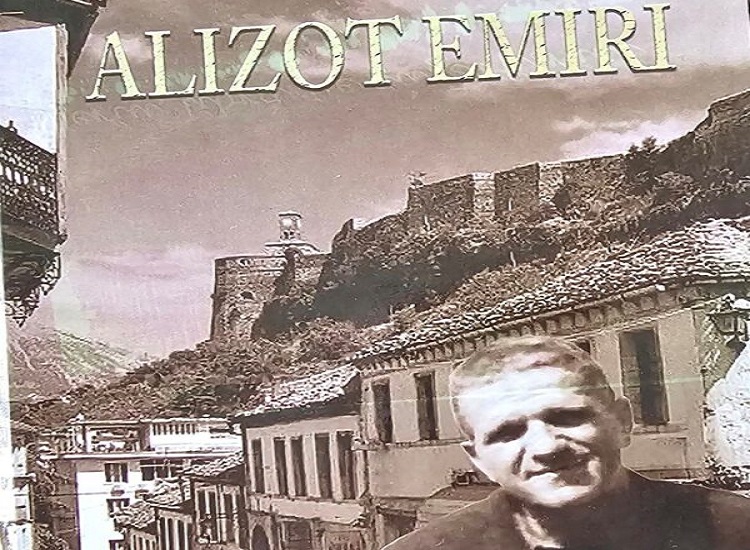
Foreword to the book: “ALIZOT EMIRI – The Man, a Library, and Noble Wit”
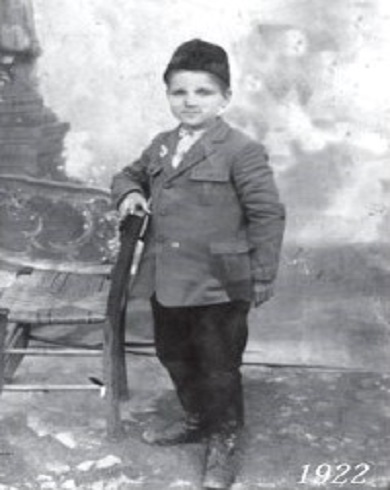
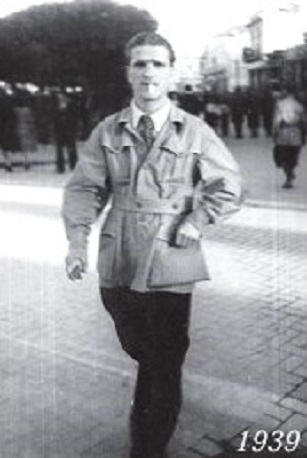
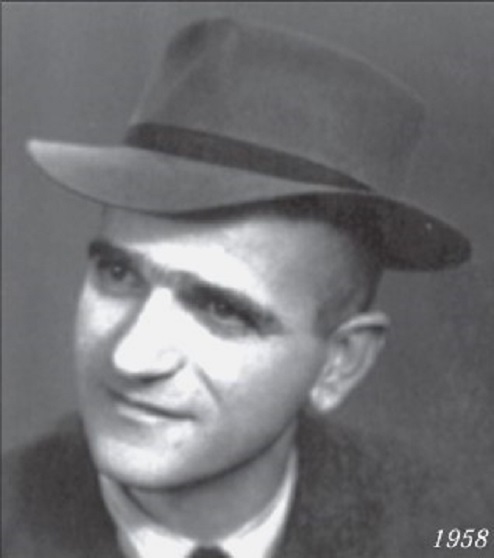
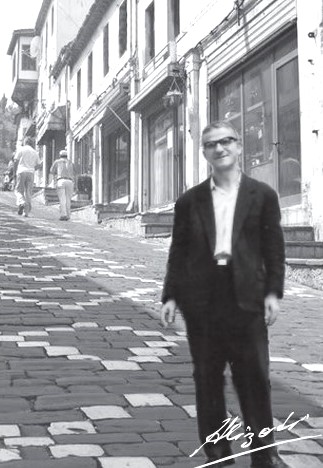
Memorie.al/ The book before us is a rare testament of love. It is, quite literally, a monument dedicated to a father. The children of the Emiri family – now compassionate parents themselves – have undertaken a beautiful endeavor: searching, collecting, and selecting an extensive array of memories, descriptions, anecdotes, and photographs to create an original portrait of their father, Alizot Emiri. They have come to realize that their father was not merely a parent, an ordinary family member, or just another loving father like millions of others. Their father was a public figure, an emblem of a unique kind, whom not only his children distinguish and memorialize in books.
The reason for this uniqueness – which has already been noted by the most prominent pens in Albanian literature and journalism – is that Alizot Emiri, this kind and beloved man from Gjirokastra, achieved fame without being a man of power, a legendary hero, a renowned cleric, a wealthy mogul, or a famous artist or athlete.
No, not at all! Alizot Emiri was a typical citizen who bore every economic hardship; a humble subject who silently despised and resisted all the military and ideological occupations that have so ravaged our lands.
The greatness of this figure, to which these beautiful pages are dedicated, lies in his closeness to the world of books. Yes – a bookseller, though this time we shall not use the adjective “simple.”
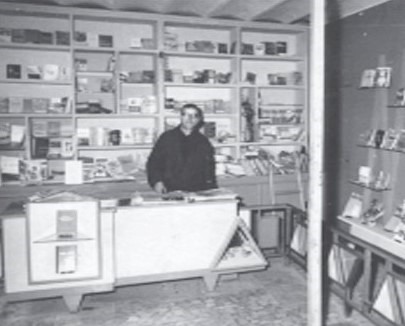
Alizot Emiri was a spreader, a promoter, and a profound, conscious connoisseur of the culture that radiated from his tiny shop and its crowded shelves. It was a quiet shop, like many others tucked side-by-side along the cobblestone street leading to the “Qafa e Pazarit” in the picturesque city of Gjirokastra.
The sons of the man at the heart of this book, my old friends, sent me the manuscript. In a unique tone, echoing the very essence of the material you are about to dive into, they asked me to be the book’s first reader – a request I accepted with great pleasure and emotion. I felt privileged and deeply honored to be the one to “cut the ribbon” of this work.
Even for me, who had never met him, their father was by no means a stranger. Yet, he was never as familiar or as dear to me as he is now, after reading these pages in a single breath. Besides being a chronicle of a man dedicated to the spread of knowledge, morality, and manners, what makes this book even more captivating is that we are dealing with a master of humor.
Here we encounter a sharp-witted man whom nature, life, suffering, and reading equipped with an even sharper mind. His sayings, jokes, and “tricks” long ago crossed the borders of the “Stone City.”
His figurative, almost poetic speech, and the barbs with which he targeted officials, writers, friends, and family members alike, seemed to balance the hell of his hardships with the paradise of a smile throughout the years.
This is an archive – a joyful memorial. Alizot is the model of a “wit on the fly.” He never delayed a stinging retort, for he knew that a late answer loses its value.
He radiated a broad culture derived from his vast contacts. Having spent years connected to the world, particularly Italy – mastering the Italian language and being an avid reader of their publications – he was naturally steps ahead of other booksellers, many translators, and even, without exaggeration, a number of writers.
His culture and taste came naturally, also because he was part of a very sophisticated social circle consisting of writers, artists, doctors, journalists, and politicians. He held a worthy and respected place in their midst.
Often, superficial judgments might classify types like our “joker” as lighthearted or merely “funny.” In reality, within the pages of this book, you will find him in harrowing episodes. These are fierce clashes with the typical evils of this nation. It speaks of Alizot’s undeserved imprisonment. It tells of his struggle for daily bread, the injection of work ethics into his children, and his “despotic” insistence on their academic success.
All of this is told sometimes with humor, sometimes with parables and sharp subtexts – things that his children, who spent decades in their father’s “school,” caught instantly. The wide keyboard of Alizot’s emotions touched me deeply, especially the rare sensitivity of a father who kept his children up until midnight preparing cardboard boxes, only to have them carry the finished products to school the next morning.
His son recounts a night when, while working on his feet, he – an exhausted child – nodded off and was in danger of falling onto a sharp knife. Alizot was terrified and woke his son, scolding him for the danger. The boy admitted he had fallen asleep but, to lighten the mood, claimed he had been dreaming. He told his father he dreamt of restaurant food – delicious dishes cooked in olive oil.
But no laughter followed that dream. “I looked at Zote (Alizot),” his son, Shpëtim, recalls, “standing frozen with the clips and the box in his hands. Meanwhile, after the sleep, I was becoming more aware. I noticed the glass of Zote’s glasses was shimmering…! It wasn’t the reflection of the glass. My father’s eyes were moist! I sobered up instantly. I felt guilty…! I shouldn’t have told him that dream. It wasn’t his fault we were poor. After a moment, he called out: ‘Leave it now, come on, let’s go to sleep, we’re tired!'”
Alizot’s love for his family is boundless, giving the book special warmth. His children were often targets for his volley of wit – even more so his compassionate wife, Fetje. The children remember their mother working until midnight at a tailor shop. One night, after her shift, she entered the house breathless, complaining that a stranger had followed her through the alleys.
She vented to her husband, blaming him for not coming out to meet her. “Who was he?” Zote asked. “I don’t know, I didn’t see him.” – “And why didn’t you turn your head to recognize that rascal?! There, where there was light, you should have turned your head; once he saw your face, he wouldn’t have followed you anymore!”
Note the broad democratic environment in the Emiri family. The father had dropped this sharp phrase, and the children cite it with pride. I, the reader, had a doubt and rushed to see the photo album decorating the book.
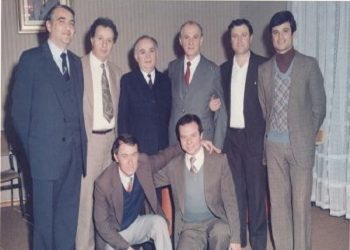
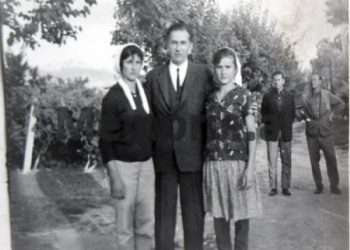
I was delighted. Alizot’s wife – though perhaps the traces of a life full of hardship did their work later – appeared to have been quite graceful in her youth. She welcomed her husband’s stings, as long as the laughter didn’t fade for the children. But I have no intention of spoiling the curiosity for others…! Let me speak a bit about the authors’ work…
The storytelling style is fluid and elegant, a style worthy of the figure it portrays. Congratulating the sons-as-authors, I insist on continuing to elevate the figure of Alizot Emiri. Within these pages, simplicity and a taste for selecting countless legends from the father’s treasury rub shoulders.
A breeze of self-irony blows throughout their narratives. A beautiful illustrative example is an episode when the father goes to the university corridors to inquire about one of his sons’ exam results and meets the son’s female classmates.
In their company, Alizot Emiri shines with his seasoned jokes and banter. From that moment until the end of his studies, the son was never without female company. Thanks to Father Zote! The other son seems to sigh when he writes: “Eh! Father never came to the corridors of my faculty!”
In several chapters, the warm narration of childhood games takes on the traits of a Tom Sawyer-esque narrative by Mark Twain. Games full of surprises, filled with fantasy and decorative embellishments that support the children’s tall tales. These chapters seem to stand alone because Zote rarely enters the stage, yet his presence is felt strongly.
It is precisely another of his merits that the little ones – sons and grandsons – displayed such a wealth of imagination. Also distinct are the episodes where the father’s insistence on raising his offspring with a sense of labor and proper respect for people who pour out effort and sweat becomes evident.
No one better than these sons with their amazing memories could have made this book what it is: a record of gratitude for the wonderful people of Gjirokastra – a city that seems to generously offer its stones for this monument they are building for their unforgettable parent.
“We have written some pages,” my author friends wrote in their beautiful letter accompanying the manuscript, “which, if stacked, is thick enough for a book. We even claim they are humorous…! Besides, the humor is not ours. We borrowed it. There will be no conflict over copyright. The author is no longer with us! From you, we expect no word of this trickery.” And, as you have seen, I have tried not to let the word out! “Hold on, dear friend, courage!” they tell me further down. “If you have no time to lose, we will help you.”
Modest to the extreme! But they were entirely wrong, and exactly what they truly believed happened: the first reader finished the book laughing, quoting it to friends who happened to be nearby during the reading. I bet this will happen to you too. And can that be called a waste of time?/Memorie.al