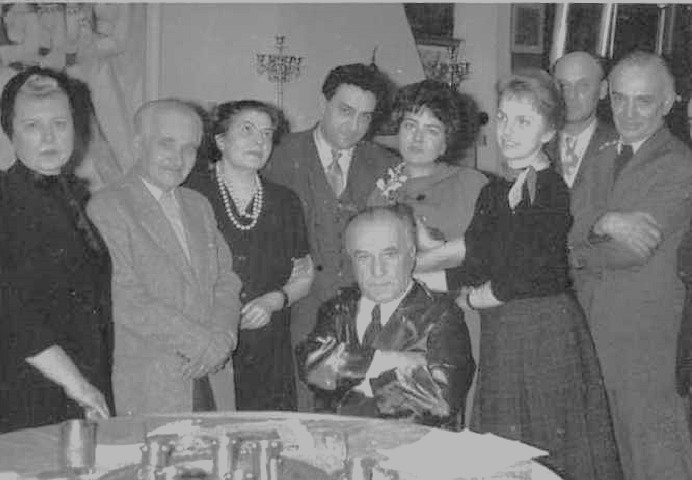
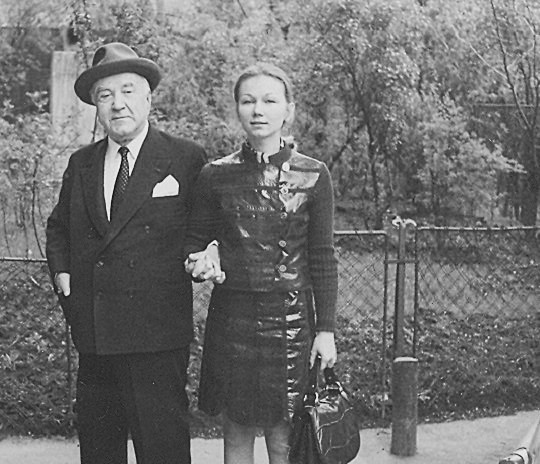
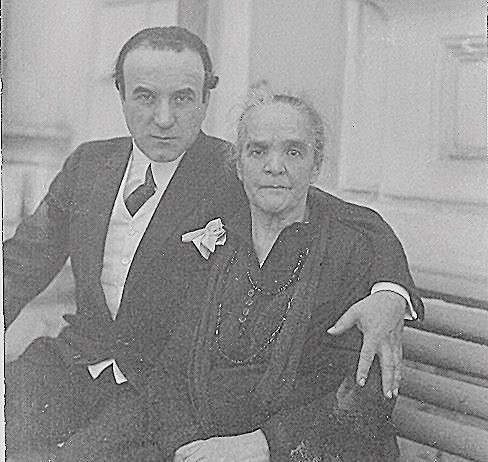
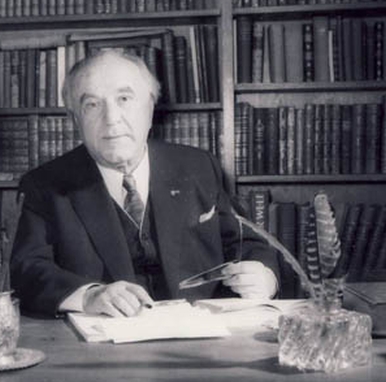
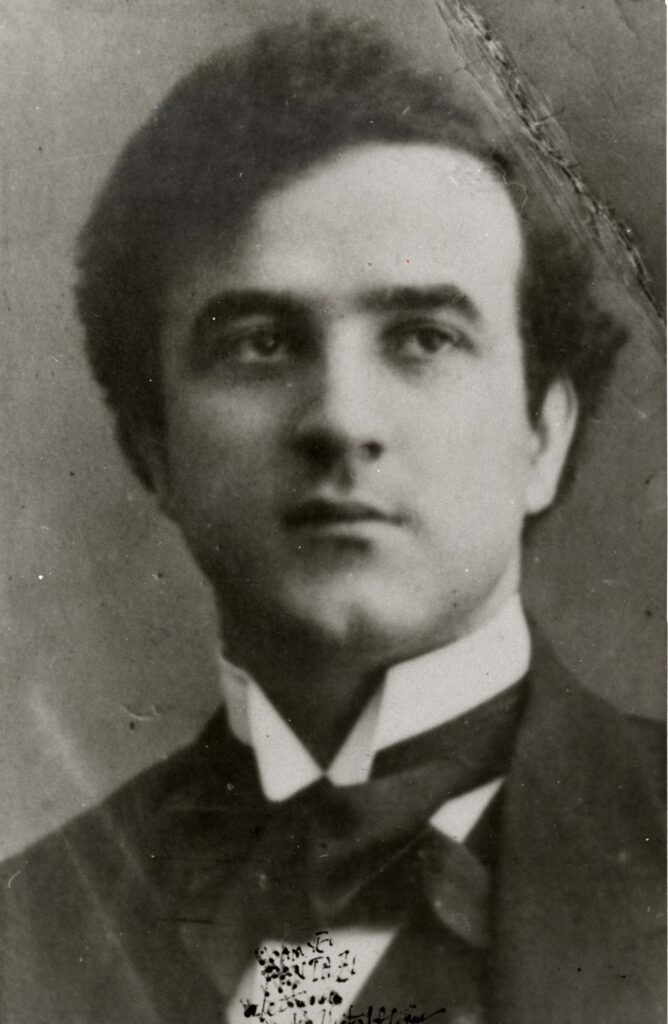
Memorie.al/ “The classic who was born in a barn (plevicë) on January 21, 1889, in the village of Boboshtica with red mulberries in the Korça district. His mother Marina did not manage to enter the house when labor pains seized her, and Viktor was born in a barn near his house, where it stands to this day…! ‘In the voice of every singer, the land of the birthplace speaks, no matter how far away it is and no matter how many scars have separated it from its warmth’! These are words of longing, words that come from the soul of an expatriate, whose eyes photograph his birthplace in every step he takes, whose mind is fixed on his birthplace, the land he comes from. Oh, the birthplace, the birthplace…! It remains in your memory until the day you close your eyes…!
These are words of longing and nostalgia that came from the heart, mind, and mouth of a distinguished person, who left behind a precious collection of literary artistic works. He was elected academician, minister, called a classic, received prizes, decorations, titles of honor, was the close friend of Stefan Zweig, the famous Austrian writer, and of the famous Albanian actor Aleksandër Moisiu, but amidst the glory and the pen, he never forgot to state his origin: From Boboshtica, from Albania…!
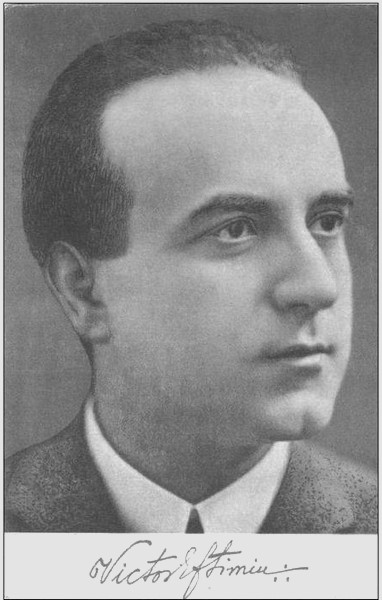
This is the academician, the classic, the writer, the dramatist, the poet, the essayist, the universal man of Romanian and Albanian letters, the former Minister of Education of Romania, the Aromanian, the Albanian, the Boboshtica native, Viktor Eftimiu…! But let us shed light and eternity upon the work of Viktor Eftimiu…!
Who is Viktor Eftimiu?
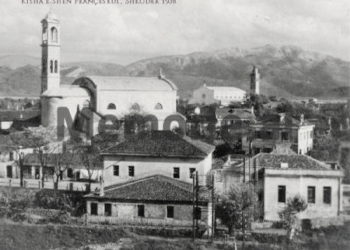
The classic that was born in a barn on January 21, 1889, in the village of Boboshtica with red mulberries in the Korça district. His mother Marina did not manage to enter the house when labor pains seized her, and Viktor was born in a barn near his house, where it stands to this day…!
Viktor was born to indigenous Boboshtica parents. He is one of the children of Gjergo Çavo and Marina, the daughter of Ikonom (Ekonomu), the only teacher (mësonjësit) of the village in the 19th century. His grandfather Ikonomi would greatly influence Viktor’s upbringing and education, and for Viktor, his grandfather would remain his eternal teacher and guide.
This is how Viktor expressed himself about Grandpa Ikonomi: “He was a tall man, with a white beard, smart and fair, a finished artisan who narrated beautifully. The more years passed, the more I understood what meaning the blood and lessons inherited from Grandpa Ikonomi had for me. He instilled in me the feeling of love for my native village, Boboshtica,” – which Viktor never forgot.
Another person who played a major role in Viktor’s formation, also helping him financially and to emigrate to Romania, was Viktor’s older brother, Stilian Çavo, a man of broad culture, master of 5 foreign languages, and creator of two pieces: a Greek tragedy “Heros,” and “Martel,” a medieval drama, which were performed by the Bucharest Theatre troupe. Immigrating to Romania, the center where he lived and developed his diverse activity would be Bucharest…!
Viktor Eftimiu, with his golden pen, his marvelous style, and his enlightened mind, bestowed upon Romanian culture, Romanian letters, and also Albanian letters, 60 thousand verses, over 150 books, with poetry and poems, dramas, comedies, novels, novellas, stories, children’s books, portraits and memoirs, aphorisms, essays, and critical articles about the world of the stage, all thanks to his innate talent, tireless work, and admirable will.
Faithful until the end of his life to Romania, where he developed his powerful talent and activity. A voluminous book of poetry is “Ode to the Romanian Language.” On November 28, 1932, in honor of the Independence Day, an artistic troupe “Flaka,” in Constanța, Bucharest, performed the drama “The Black Rooster.”
The first Albanian translations of Viktor Eftimiu’s dramas and comedies are “Akimi,” “The Red Bride,” “The Black Rooster,” “Osman the Cobbler,” (a comedy about Albanian life), the novel “Two Candles,” the comedy “The Man Who Saw Death With His Own Eyes,” published in the middle of the last century in Tirana, and later staged by the Albanian National Theatre Troupe, and I had the chance to see it when I was studying in Tirana. Certainly, the Albanianization of these works was done with his permission, and some of them were translated by the late writer and publicist, the Boboshtica native Dionis Bubani.
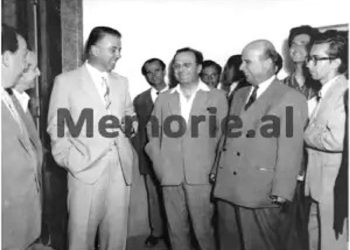
Or “The Titanic Waltz,” staged by the distinguished actors of our nation, Alfred Bualioti and Anton Qesari. Moreover, some of Viktor’s works in Albanian would be published simultaneously with Migjeni’s “Free Verses” (Vargjet e lira), Jakov Milaj’s “The Albanian Race” (Raca shqiptare), and Hamit Kokalari’s “Kosova—The Cradle of Albanianism” (Kosova-djepi i shqiptarisë). On July 1, 1971, Viktor would become an Honorary Member of the League of Writers and Artists of Albania, where the highly emotional writer, honored and respected in his homeland, would express how much he missed his country: “I am like a ripped-out oak root that takes the sod of earth with itself.”
Here is a poem the writer dedicates to his birthplace:
“I remember the horizon with the cherry blossoms
My homeland, and the sea, and the blue sky
Around them are now approaching
The same holidays
And the same winds are disappearing somewhere far away
There every evening
It falls soft and slow
Spreading its fiery crown like a flag
Over the mountains
And the forests are sighing
Calling gaspingly
The one who left and perhaps will never return!”
Here is how the writer sang of the beautiful feeling of love, which is a passion for each of us, the feeling that rejuvenates:
“A year seems a century to me at dawn
While the one who left
Hurried away
How sorry I am for every moment gone by
When we were not close, my soul
Why did we banish the hours and the joys?
The separations were too long
Oh, how empty our days are
You grant me, my love: HAPPINESS!
I feel remorse, pity for my youth
For every second we were not near.”
Viktor Eftimiu’s Return to the Homeland After 68 Years and the Boboshtica Hospitality
The great writer would return to his homeland, his native village, Boboshtica, after 68 years, at the age of 82. He was welcomed with enthusiasm, grandeur, love, warmth, gratitude, and respect, where the doors of the house were opened to him by his fellow villagers, his Boboshtica brothers, in the center of the village. The people of Boboshtica showed their values, their great soul and heart as Boboshtica natives, as Albanians, a fraternal spirit; even the baby in the cradle rejoiced at having the son of the village among them.
Children of different ages, dressed in the traditional Aromanian costumes of the area, had gathered the most beautiful and freshest flowers for the distinguished man, Viktor Eftimiu…! The village streets had been freshly swept and cleaned, just as they were in the memory of this famous man from Boboshtica. A carpet according to Aromanian tradition, which the people of Boboshtica call in popular jargon; “me rrotë” (with a wheel), a carpet that only the golden hands and enlightened mind of Boboshtica women know how to make, was laid out in the center of the village, right under the red mulberries.
This is how the writer expressed himself about his birthplace, Boboshtica: “The first alley that remains etched in my mind is a sunny and freshly swept alley, the road that comes from Korça to Boboshtica.” He was very popular and unconstrained in conversations with his Boboshtica people who had waited for him for so long…
The Writer’s Intervention for the Release of Aleksandër Moisiu and the Telegrams Sent to the French Government for the Release of Avni Rustemi
Viktor Eftimiu, although far from his birthplace, did his utmost to establish and maintain connections with his compatriots wherever they were. Thanks to his friendly connections, his influence in European and Balkan circles, and his credibility, in 1915, he intervened with great courage, without fearing any consequences that might befall him, for the release of the famous Albanian actor of global stature, Aleksandër Moisiu, who had been captured as a prisoner of war in France and placed in a concentration camp on the island of Brittany.
His life was in danger; the physical elimination or death of the famous actor was expected at any moment. Knowing the reputation Viktor Eftimiu held in high European and French circles, Aleksandër Moisiu’s future wife, Johanna Tervin, met with the famous Boboshtica man, telling him that; “You are the only person who can achieve the release of Aleksandër Moisiu,” putting a release plan on Viktor’s table, which he implemented precisely…! Viktor intervened at the French embassy in Bucharest, and the great actor was released by being exchanged for a French general captured by the Germans.
Later, when Avni Rustemi killed Esad Pasha Toptani in Paris, Viktor would send numerous telegrams and write in the European press for the release of Avni Rustemi. The great writer was also at the top of the list with 1800 compatriots from Korça, where next to his name was his birthplace, Boboshtica, in a message addressed to American President Wilson, urging him to intervene and prevent the chauvinistic massacre, where the independence of Albania was endangered!
In November 1972, Viktor Eftimiu came to Albania for the second time, to participate in the 60th anniversary of the Declaration of Independence in Vlora, but he could not participate in the celebrations due to a cerebral insult (insultë celebrale), after which he lost consciousness…! The famous Boboshtica man closed his eyes forever on November 27, 1972…! Romania lost the man who gave so much to Romanian culture, the man who brought fame to Romania with his letters, with his writings in the European and world press. Romania lost the famous man, the Aromanian originally from the village of Boboshtica in Korça.
Eftimiu is the pride, not only of the Romanians but also of the Albanians. The man who left a message for the next generation of artists: “A civilized state must pay its artists well.” And this is more than true. It is the artists, the writers, the people of letters who elevate the figure of a nation, who integrate a nation into the civilized world, who integrate the national identity into a foreign land! Rest in peace, your Homeland, your Boboshtica, will never forget you! / Memorie.al