Memorie.al / On November 26, 2012, the Cimbi family in Tirana permanently lost its beloved person, Emil; his collaborators, their irreplaceable friend; the young patients, the capable and tireless doctor; Albanian culture, a rare, polyhedral, and polyglot representative. We will always remember Prof. Emili as he was: an elegant and always noble man, in the full sense of the word; with a sincere smile that scorned any kind of authoritarianism. Within it were some pure, cheerful, and friendly sounds, the kind only children have, whom he treated with such love, both as a parent and a doctor.
His dedication to duty contained a “miraculous medicine” that melted every obstacle in human connections. He challenged all the knots and snags where the difficult solutions in medicine so often got stuck and interwoven. He was a follower of the possible, the positive, in the face of every challenge. He wasn’t just good, he was goodness itself. He wasn’t just capable, competent, but he was capability itself and modesty itself.
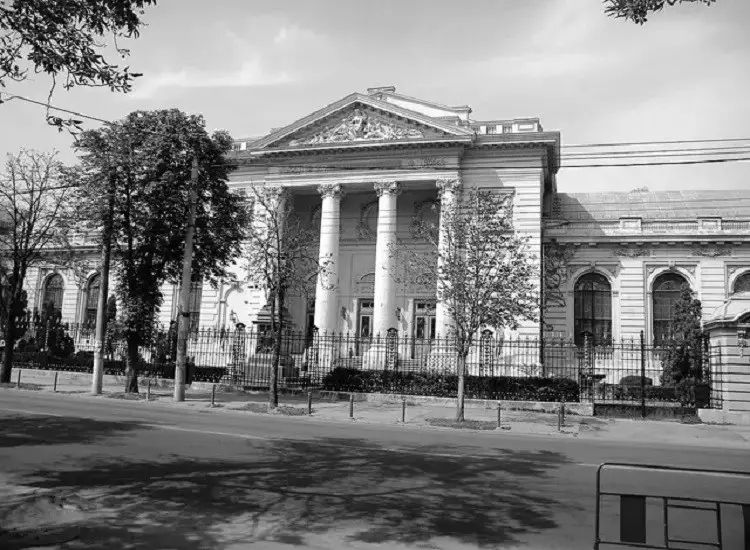
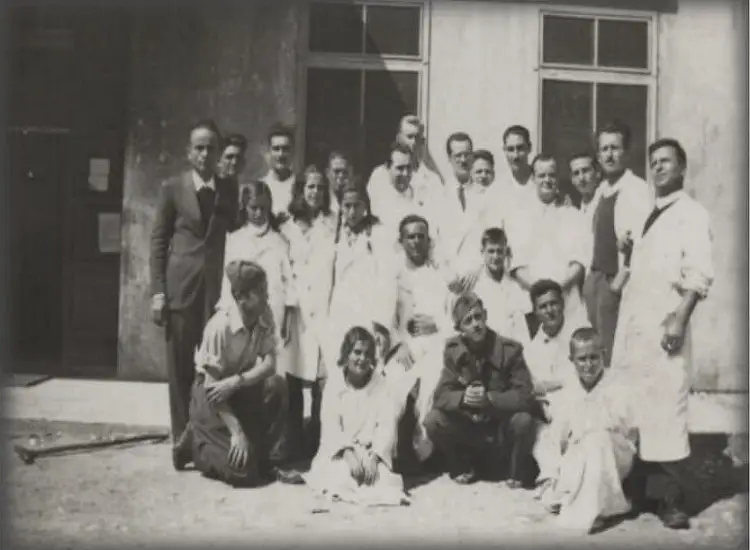
Prof. Dr. Emil Cimbi was born in Poliçan, Gjirokastër, on January 7, 1928. He received his first education in his birthplace, in the Greek language, while he started his secondary education at the Korça Lyceum, continued it at the Tirana Lyceum, and finished it at the renowned Shkodra Gymnasium. In 1948, immediately after receiving his maturity certificate, he was granted a scholarship to pursue higher studies at the Faculty of Medicine in Bucharest, Romania, which he completed brilliantly in 1953.
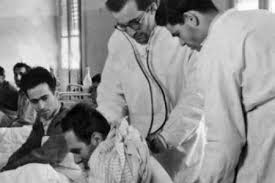
After finishing his higher studies, Dr. Emili returned to Albania and served as a doctor at the Tirana Civil General Hospital, in the Pediatrics ward, the head of which was Prof. Selaudin Bekteshi. From him, he took his first lessons in medical service to children, a field where he would later excel, becoming one of the most famous figures in Pediatrics in Albania. Throughout his life, Dr. Emili was distinguished by a high level of professionalism. He was also noted for the human values with which he served the small patients.
In 1958, Dr. Emil Cimbi was appointed to the position of Director of the Tirana Health Service Directorate, where he served for five consecutive years. With his deep knowledge in the field of prophylaxis and hygiene and his skill as an organizer, he qualified and strengthened the medical service in all health centers and ambulances of the capital. In 1963, at his request, he returned to the Tirana Children’s Hospital. With his will and persistence, he devoted himself wholeheartedly to studies in this field and quickly became a highly trained and known pediatrician in Albania. For the values he carried, Prof. Bekteshi, at that time the Director of Pediatrics, kept him as his closest colleague and collaborator in solving many complicated cases among young patients.
For his merits, in 1970, Dr. Emili was invited to be part of the staff of the newly opened Institute of Pedagogical Studies. He worked there for seven years with high professionalism, as a scientific collaborator in the field of students’ mental hygiene. His scientific publications and monographs in this field are numerous. The file of the National Library in Tirana best testifies to this. In those years, he made a valuable contribution to the field of pedagogy and psychology. He also published regularly in the educational and pedagogical press of the time, such as in the “Pedagogical Review” and the newspaper “Mësuesi” (The Teacher). Many of his publications were an important part of school textbooks.
In 1978, Dr. Emili was appointed General Director of the “Mother and Child” Consultations in Albania. With his tireless work, he turned this institution into an important national prophylactic-curative center for young mothers.
Dr. Emil Cimbi was a lecturer in the Pediatrics Department at the Faculty of Medicine of the University of Tirana for 15 years. There he made his invaluable contribution to the preparation and theoretical and practical training of young doctors who would later serve in that field of medicine. With his tireless research and study work, Dr. Emili earned important scientific titles, up to that of “Professor.” During his life, he was involved in various scientific associations. Among others, he was Vice President of the Psychologists Association of Albania, led by Academician Bedri Dedja, as well as Secretary of the “Medicine, Literature, Art” Association.
In his life, Dr. Emili was also a known and passionate literary man, a worthy member of the “Chekhov’s army.” Therefore, utilizing his literary inclinations, he was very active in this field of creativity. He was constantly present in the press of the time with his publications in various genres, such as: stories, poems, and long poems, which he later compiled into separate volumes.
Dr. Emili is also known as a talented translator. His translations from several world languages are numerous. He was aided in this by his good knowledge of six foreign languages (French, Romanian, Russian, Greek, Italian, Latin), making him a polyglot of his time.
After the democratic developments in Albania in 1990, thanks to the values he represented, he was invited to work in the diplomatic service. In 1992, he was appointed Cultural Attaché and Consul of Albania in Bucharest, Romania. Among other things, there he further mastered the art of medicine, diagnosis, and treatment of diseases. He expressed his love for that city and for Romanian culture without reservation throughout his life. Several works by Romanian authors were translated into the Albanian language by Professor Emili.
Dr. Emil Cimbi’s great love for medicine was inseparable from his love for culture. We were amazed by his vast and endless knowledge, which also came from his extensive reading. In a free conversation with him, personalities of Romanian culture and literature would pass as in a parade, such as Iliade, Stanescu Sorescu, Ana Baldiana, or Ion Caramitru; of Greek literature, such as Seferis or Elitis; Italian, such as Buzzati or Montale, and all classical French and Russian literature, but also American poets of the 20th century, from Thomas Eliot to Allen Ginsberg.
Dr. Cimbi chose pediatrics in medicine, and not by chance. Infant and child and maternal mortality constituted the most severe plague of our health system in the 1950s and 60s of the last century. A trained intellectual with open Western tendencies, he knew well that children’s health is the dominant battleground for the honor or shame of a country’s health system, and even its society, as it is the battle for the future. Their indicators, compared to developed countries, were catastrophically many times higher at the time when he and his colleagues started the challenging dream.
Whereas today, Albania has entered the single-digit list of this indicator, making the dream of Prof. Dr. Emil Cimbi and his distinguished medical colleagues, true revivalists, and a reality. They sacrificed a large part of their lives for the healthy life and future of the Albanian Nation. If, during this festive period of the Independence anniversary, we witness the honoring of the patriots who founded the first Albanian state on November 28, 1912, at the same time, we must honor all the distinguished doctors who took care of the health of the Albanian population, starting everything from almost scratch.
We say this unequivocally for Prof. Dr. Emil Cimbi as well. His fame and good name are not only composed of books, translations, monographs, journalism, psychological, and pedagogical studies, but first and foremost, by the human lives saved, the diseases cured, the healthy babies born, the happy mothers, and the elderly treated with high professional skill.
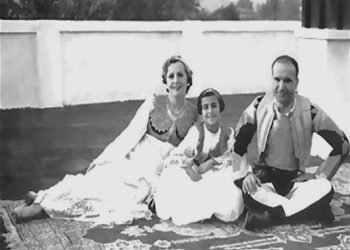
Dr. Emili was also an exemplary family man, an ideal husband, beside his wife, Engjëllushe, whom he loved and respected so much. Similarly, he was a compassionate and caring parent to his children, Mondi and Irena, devoting his whole life to them, so that they would become worthy of their family and Albanian society. Above all, he was a wonderful grandfather to his grandsons and granddaughters. He served them with the dedication of a doctor, teacher, and grandfather, from their birth and in their childhood. Dr. Emili put his boundless love for them into verses, creating wonderful poems for Fiona, Franga, Ralf, and Kristi, which are part of his latest publications. These verses, woven with love by grandfather Emili, will remain an indelible memory in their hearts. They are also the grandfather’s testament for them to follow in his footsteps and become people of value in our society, just as he was, until the end of his life.
Like all professionals and noble people, he applied the principle that: “he who gives, does not remember, does not mention, does not record, does not ask, does not claim.” It is the duty of those who receive and of society as a whole to honor and remember, to be grateful. And Prof. Dr. Emil Cimbi was one of those nobles who will be honored and remembered forever./Memorie.al