• Rreth Nesh
  • Kontakt
  • Albanian
  • English
Monday, November 30, 2026
Memorie.al
No Result
View All Result
  • Home
  • Dossier
  • Interview
  • Personage
  • Documentary
  • Photo Gallery
  • Art & Culture
  • Sport
  • Historical calendar
  • Others
  • Home
  • Dossier
  • Interview
  • Personage
  • Documentary
  • Photo Gallery
  • Art & Culture
  • Sport
  • Historical calendar
  • Others
No Result
View All Result
Memorie.al
No Result
View All Result
Home Dossier

“Yugoslavia was not Czechoslovakia, but its rapid response to the Russian threat and its regional ties like Romania and Albania made the Soviet intervention…”/ Reflections of analyst Milorad Lazic

“Kemi besim se Shkëlqesia e Juaj, do pranojë propozimit tonë kundër Izraelit, pasi…”/ Zbulohet letra e panjohur e ish-presidentit të Iranit, Seyed Ali Khamenei, dërguar Ramiz Alisë, më 13 tetor 1984
“Jugosllavia s’ishte Çekosllovakia, por përgjigja e saj e shpejtë ndaj kërcënimit rus dhe lidhjet e saj rajonale si Rumania dhe Shqipëria, e bënë ndërhyrjen sovjetike …”/ Refleksionet e analistit Milorad Laziç
“Hallkat që lidhin dy popujt tanë, s’mund t’i këpuste më, as shpata e shtypësve, as vjershat e poetit të imperializmit dhe agjentit italian, shovinistit At Gjergj Fishta …”/ Fjala e Enverit, Beograd 1946
“Jugosllavia s’ishte Çekosllovakia, por përgjigja e saj e shpejtë ndaj kërcënimit rus dhe lidhjet e saj rajonale si Rumania dhe Shqipëria, e bënë ndërhyrjen sovjetike …”/ Refleksionet e analistit Milorad Laziç

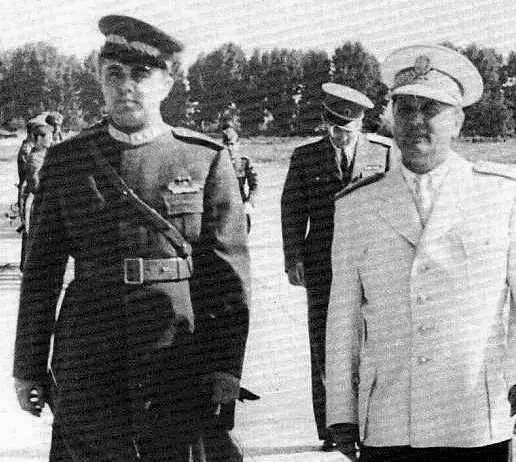
Memorie.al / It has been written several times that the improvement of relations between official Tirana led by Enver Hoxha and Josif Broz Tito’s Yugoslavia in the early 1970s was linked to the Russian threat, which was read as very eminent, especially after the events in Czechoslovakia in 1968, when Russian tanks invaded the streets of Prague through a military aggression. In a summary published on December 4, 2017 on the online page of the “Wilson Center,” this is now confirmed by Yugoslav diplomatic sources from the time of the 1971 crisis.

Albania’s role in these developments emerges indirectly and Enver Hoxha’s regime seems to have benefited at the time, following the rhythm of Yugoslav maneuvers that according to the writing in question managed to neutralize Soviet foreign policy in the region at that time. What is more important, it is not without basis to hypothesize that some of Enver Hoxha’s actions after this time, also on Albania’s internal scene, were inspired by the Yugoslav model of dealing with them.

The main documentary source for assessing whether Soviet military intervention in Yugoslavia was or was not real in 1971 are the diplomatic reports and memoirs of the former Yugoslav ambassador in Moscow, Veljko Mićunović.

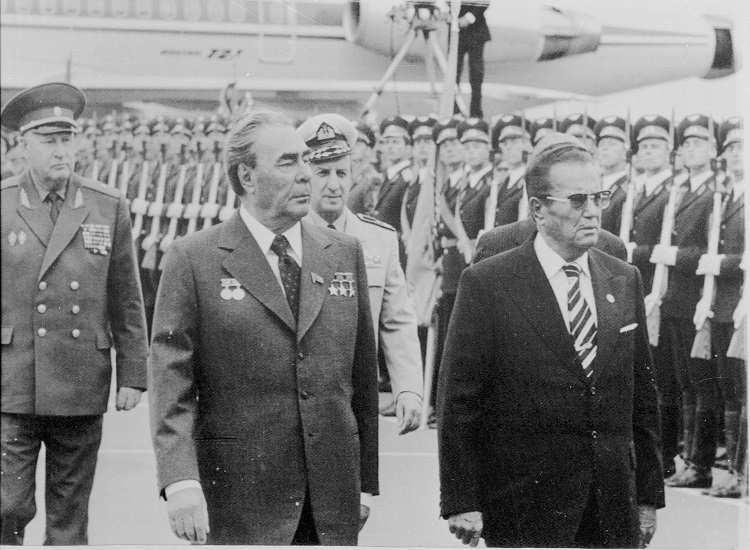
The latter reports on a telephone conversation between the Soviet leader, Leonid Brezhnev, and the head of Yugoslavia, Josip Broz Tito, held in April 1971. The summary of the content of the phone call was sent to the Yugoslav embassy in Moscow, by order of Tito, with the aim of informing the ambassador about the latest developments.

Gjithashtu mund të lexoni

“After asking about the health of our beloved leader, Enver Hoxha, comrade Park Gum Çol told us that…”/ Unknown report by Sul Baholli and Todo Manço, on their visit to North Korea, September 1964

“Given the fact that Ismail Qemali was the nephew of Ibrahim Pasha of Vlora and that he had close friendships with the great Napoleon, they intervened in the French consulate…”/ The unknown story of the Old Man of Vlora

From this telephone conversation, but also from a memorandum of Mićunović’s meeting with Brezhnev in August of that year, it results that the Soviets aimed to intervene in Yugoslav internal policy, even if perhaps not directly and with military force.

But how did this tension begin?

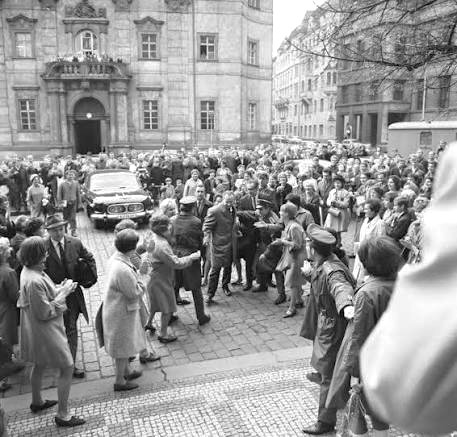
It was Tito’s visit to Prague, on August 9-10, 1968, that fed the conviction of the Soviet leaders that Czechoslovakia could follow the path of Yugoslavia, of socialism outside the Eastern Bloc.

It must be said that Brezhnev’s doctrine of limited sovereignty itself had produced anxiety among the Soviet satellites in Eastern Europe, but on the other hand it legitimized Soviet action in the direction of closing problems with the dependent states.

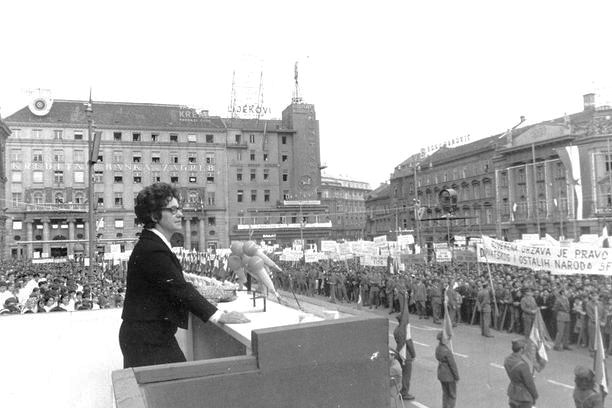
In any case, Soviet-Yugoslav relations worsened again, after a calm produced by the visit to Belgrade in 1969 of Andrey Gromyko, in the years 1970-1971. At this time in Yugoslavia several events occur that were read as moments of an internal crisis. Specifically, in April 1971, some unaligned Croatian students took control of the student organization of Zagreb.

Meanwhile a group of Croatian emigrants killed the Yugoslav ambassador in Stockholm and some suspicious evidence began to appear about connections between Croatian communists and Croatian organizations in emigration, which were seeking Soviet help. Likewise, Soviet diplomatic representatives in Yugoslavia began to make contacts with regional communist officials in Yugoslavia.

To address these issues, Tito convened in Brioni on April 28 an urgent meeting of the Presidium of the League of Communists of Yugoslavia and on its third day, on April 30, Brezhnev’s phone call comes.

The phone call is sent as a summary to Ambassador Mićunović, who had been informed about it by a member of the Soviet Politburo and there the conversation held between the two leaders is listed. Brezhnev characterizes the internal situation of Yugoslavia as “very important.”

According to the Soviet leader, there had been information that Yugoslav troops were moving toward Belgrade, but Tito cut him off briefly: “this is not true” and most importantly that “we have enough power to resolve these issue ourselves without anyone’s help.” To not allow any speculation, it is reported that Tito closed the phone call with a clear emphasis for the Soviet leader: “It is enough for you to know that we will resolve our concerns ourselves.”

The aforementioned August memorandum is drafted by the Yugoslav ambassador and is characterized as “Urgent.” There the climate of the conversation with Brezhnev is evident, comments are made on his positions and the subtext of the meeting is read.

There Mićunović reveals that the April 30 phone call was being made while the Soviet Politburo was gathered and waiting for its conclusion, which proves that Soviet policy toward Yugoslavia at that time had many scenarios in focus.

The ambassador writes that Brezhnev evaluates our internal situation as very weak. The irritation of the Soviet leader is related to the fact that from the Zagreb events until August, the Soviet Union had not expanded its presence in Yugoslavia, indeed according to the ambassador in question, “Russian influence in Yugoslavia was damaged.”

But why did the Soviet intervention fail?

According to the summary made by the “Wilson Center,” no additional documents are offered, but the situation after these events that are coming to light now is analyzed. First of all, Tito undertook several diplomatic actions that would have very favorable consequences for him.

First was the effort to revive the Non-Aligned Movement toward Africa, which also brought the Lusaka Summit. Likewise, as factors are ranked the establishment of contacts between Belgrade and Beijing, the stabilization of relations with Albania and the drafting of joint defense plans between Yugoslavia and Romania. Further still, Belgrade also looked toward Washington which culminated with Tito’s visit to the USA in 1971.

These fragmentary pieces offer a favorable point for observing Soviet foreign policy in the early 1970s and show the limits of the “Brezhnev” Doctrine.

Yugoslavia was not Czechoslovakia, but its rapid response to the Soviet threat and its regional connections (Romania and Albania) and global ones (the Non-Aligned Movement, China and the USA) made Soviet intervention impossible, concludes the author, Milorad Lazić.

It should be emphasized that these developments shed light on the real reasons for the improvement of relations between Albania and Yugoslavia in the 1970s, but they are reasons that should also be considered for the drafting of the 1974 Constitution.

In the material one can see how Tito reacted to the Zagreb student movement – which reminds us in form of the December student movement in Tirana – while it is not without importance the fact that; “after the events in Czechoslovakia, Yugoslavia adopted a new military doctrine, of total popular defense.” / Memorie.al
ShareTweetPinSendShareSend
Previous Post

"Given the fact that Ismail Qemali was the nephew of Ibrahim Pasha of Vlora and that he had close friendships with the great Napoleon, they intervened in the French consulate..."/ The unknown story of the Old Man of Vlora

Next Post

"After asking about the health of our beloved leader, Enver Hoxha, comrade Park Gum Çol told us that..."/ Unknown report by Sul Baholli and Todo Manço, on their visit to North Korea, September 1964

Artikuj të ngjashëm

“Enver Hoxha, for his personal interest, weakened Albania’s role at the Paris Peace Conference, as he did not mention Zog’s resistance in April 1939…”/ Reflections of the renowned analyst
Dossier

“After asking about the health of our beloved leader, Enver Hoxha, comrade Park Gum Çol told us that…”/ Unknown report by Sul Baholli and Todo Manço, on their visit to North Korea, September 1964

November 29, 2026
“Given the fact that Ismail Qemali was the nephew of Ibrahim Pasha of Vlora and that he had close friendships with the great Napoleon, they intervened in the French consulate…”/ The unknown story of the Old Man of Vlora
Dossier

“Given the fact that Ismail Qemali was the nephew of Ibrahim Pasha of Vlora and that he had close friendships with the great Napoleon, they intervened in the French consulate…”/ The unknown story of the Old Man of Vlora

November 29, 2026
“Many enemies have worked against our party, but if two or more traitors are discovered within the party, we never leave them unpunished, by…”/ Enver Hoxha’s conversation with the Chinese Red Guards, July 8, ’67
Dossier

“Many enemies have worked against our party, but if two or more traitors are discovered within the party, we never leave them unpunished, by…”/ Enver Hoxha’s conversation with the Chinese Red Guards, July 8, ’67

November 28, 2026
“In the document of the Act of Independence that was found in the chest of its signatory, Aristidh Ruci, in 1950, it is said…”/ The unknown story of the patriot who was known as the “Mind of Vlora”!
Dossier

Austria-Hungary was in favor of a powerful Albanian state, which would include all the lands inhabited by them, since in this way, Vienna wanted to prevent Serbia from reaching the Adriatic Sea.

November 28, 2026
“If we listened to the Soviets, Durrës and Vlora today would be their naval bases…”/ Mehmet Shehu’s secret meeting with Khalid Al Wazir at Zogu’s Villa in Durrës, August 1970, is revealed
Dossier

“In Alexandria and Port Said, the Russians will establish their military-naval bases and Egypt will allow them to use them against Albania…” / Secret meeting of Mehmet Shehu with Khalid Al Wazir, August 1, 1970

November 26, 2026
“In 1960, when the head of foreign relations in the Central Committee, Piro Bita, asked Enver Hoxha to congratulate Noli with a telegram on his 80th birthday, he…”/ Reflections of the famous historian
Dossier

“In 1960, when the head of foreign relations in the Central Committee, Piro Bita, asked Enver Hoxha to congratulate Noli with a telegram on his 80th birthday, he…”/ Reflections of the famous historian

November 26, 2026
Next Post
“Enver Hoxha, for his personal interest, weakened Albania’s role at the Paris Peace Conference, as he did not mention Zog’s resistance in April 1939…”/ Reflections of the renowned analyst

"After asking about the health of our beloved leader, Enver Hoxha, comrade Park Gum Çol told us that..."/ Unknown report by Sul Baholli and Todo Manço, on their visit to North Korea, September 1964

“Historia është versioni i ngjarjeve të kaluara për të cilat njerëzit kanë vendosur të bien dakord”
Napoleon Bonaparti

Publikimi ose shpërndarja e përmbajtjes së artikujve nga burime të tjera është e ndaluar reptësisht pa pëlqimin paraprak me shkrim nga Portali MEMORIE. Për të marrë dhe publikuar materialet e Portalit MEMORIE, dërgoni kërkesën tuaj tek [email protected]
NIPT: L92013011M

Na ndiqni

  • Rreth Nesh
  • Privacy

© Memorie.al 2024 • Ndalohet riprodhimi i paautorizuar i përmbajtjes së kësaj faqeje.

No Result
View All Result
  • Albanian
  • English
  • Home
  • Dossier
  • Interview
  • Personage
  • Documentary
  • Photo Gallery
  • Art & Culture
  • Sport
  • Historical calendar
  • Others