• Rreth Nesh
  • Kontakt
  • Albanian
  • English
Thursday, February 12, 2026
Memorie.al
No Result
View All Result
  • Home
  • Dossier
  • Interview
  • Personage
  • Documentary
  • Photo Gallery
  • Art & Culture
  • Sport
  • Historical calendar
  • Others
  • Home
  • Dossier
  • Interview
  • Personage
  • Documentary
  • Photo Gallery
  • Art & Culture
  • Sport
  • Historical calendar
  • Others
No Result
View All Result
Memorie.al
No Result
View All Result
Home Personage

“When the Italian doctors insisted that his eye surgery could not be performed without anesthesia, he told them…”! / The untold story of the Old Man of Butka, who “brought to their knees” even French generals and diplomats.

“Zai Fundo braktisi ideologjinë komuniste që i’a kalon edhe Satanait për nga ligësia’ dhe i shkruan Imzot Fan Nolit e del hapur kundër regjimit pervers…”/ Refleksione të ish-të dënuarit politik
Kalendari Historik 10 Gusht 2022
“Kryeministri, s’lë vend pa shkelur, por s’gjeti një herë kohë, të shkojë në atë djep të kulturës dhe historisë shqiptare, në shtëpinë muze të Vëllezërve Frashëri…”?! / Refleksionet e publicistit të njohur
“Në librin e tij ‘Gjashtë muaj histori të Shqipërisë’, koloneli francez Dekon, pranoi propozimet e Sali Butkës për shpalljen e Vetëqeverimit shqiptar të Korçës dhe…”/ Refleksionet e studjuesit dhe historianit të njohur
“Pasi më njoftuan se im vëlla kishte vdekur dhe unë u kërkova që të merrja trupin e tij për ta varrosur, ata më thanë se, ai nuk kishte mbaruar…” / Historia e trishtë e “kulakut” nga Butka e Kolonjës, në vitin 1972
“Kur mjekët italianë këmbëngulën që operimi i syrit të tij, s’mund të bëhej pa narkozë, ai u tha…”! / Historia e panjohur e Plakut të Butkës, që “uli në gjunjë” edhe gjeneralët e diplomatët francezë

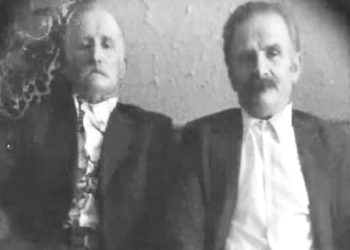
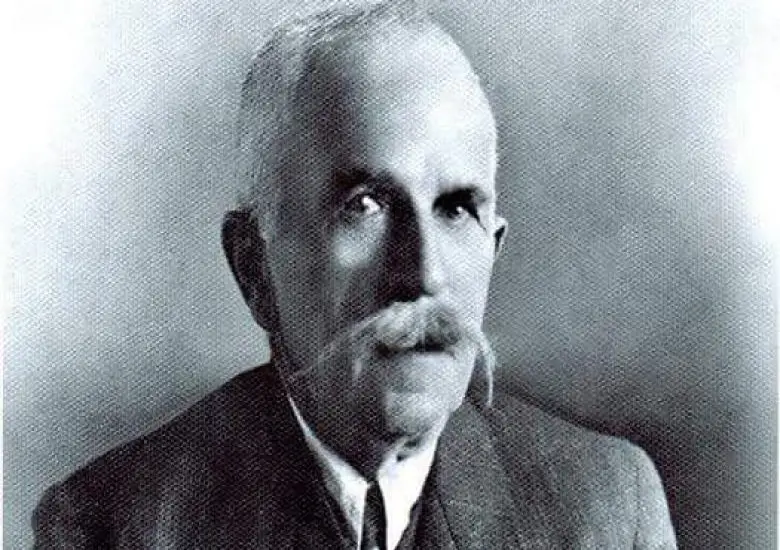
Memorie.al / He rest lonely, and perhaps forgotten, there in the Erseka cemetery, beneath the whistling winds of the Kolonja plateau and Mount Gramoz. He awaits an unspoken word for the renowned “Old Man” of Southeastern Albania, who, during the difficult years of World War I, brought foreign generals and diplomats to their knees. But that word was never spoken – neither in life nor in death – by any of the governments that followed: from Zog’s regime, naturally, he expected nothing, as he had turned his rifle against him; from the communists, he received only a few hollow titles of no use to anyone; and from the democrats, total oblivion.

On this anniversary of the start of World War I, in which Albania was one of the greatest victims, it is an honor to mention one of the Albanian heroes of this war: Sali Butka.

Who was Sali Butka?

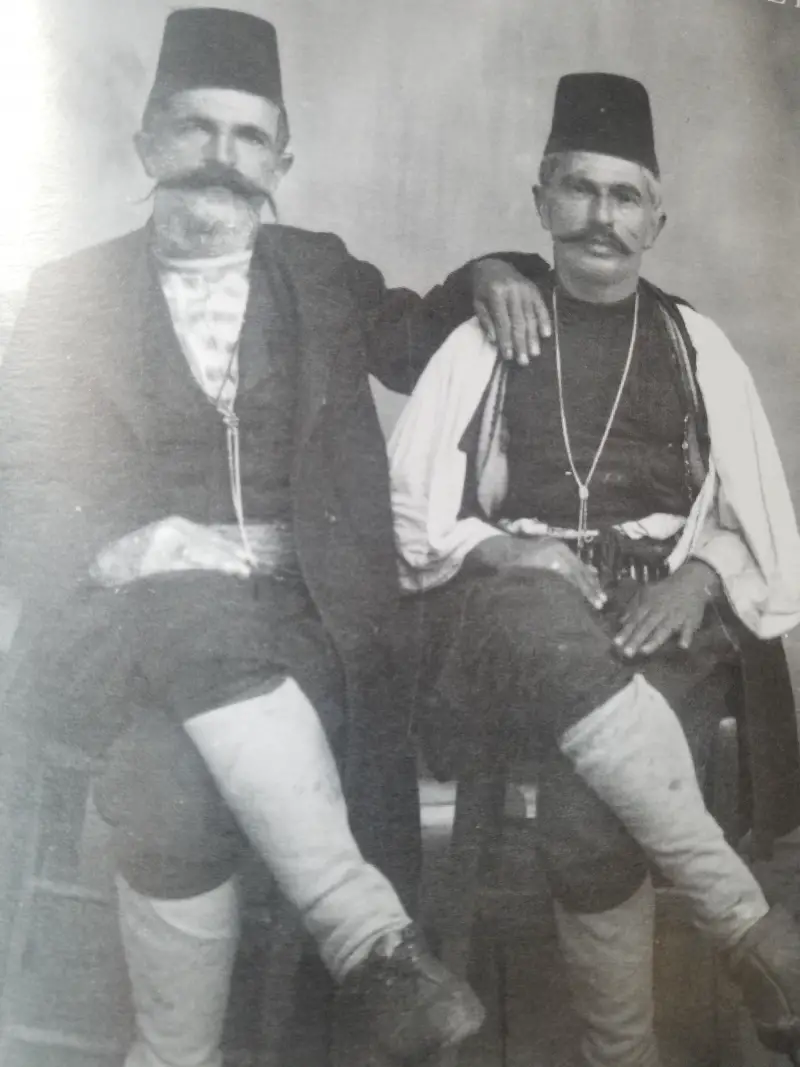
Sali Butka was born in the village of Butkë, Kolonja, in 1857, into a large family with early origins from Frashër, Përmet. Known by the surname Aliçkaj, they had migrated around 1630 to settle in Butkë. A large but simple family, they began to gain fame throughout the regions of Kolonja, Përmet, Korçë, and Skrapar when Tahir’s son, Sali, joined the guerrilla bands (çeta) formed at the beginning of the 20th century against the Ottoman Empire.

Gjithashtu mund të lexoni

“Father Zef Pllumi, the last among the true fathers of the Catholic Church, steadfast in his convictions – which he never betrayed nor denied, and for which he suffered the consequences… ” / Reflections on the famous friar

“The Romanian scholar T. Capidan believed that the crime might have been committed through an agreement between the Phanar and the Yildiz, as the murder of Naum Veqilharxhi occurred in…” / The unknown side of the famous patriot’s death.

In the First Bands for Freedom

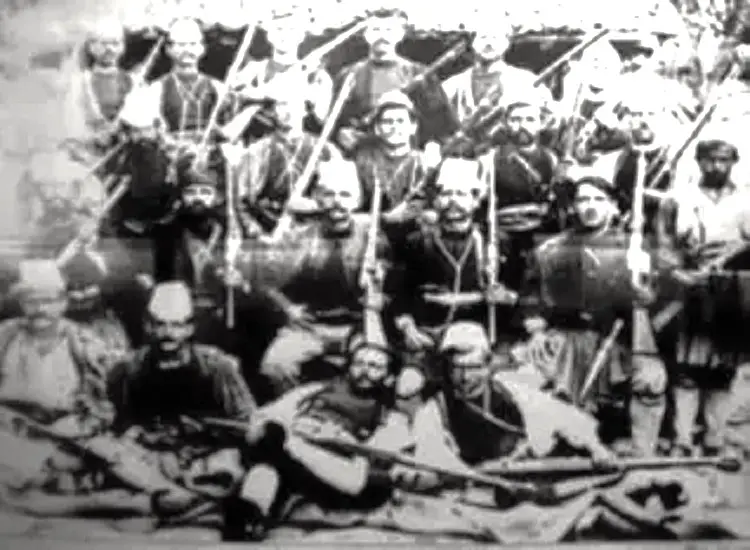
He was a member of the Monastir Committee “For the Freedom of Albania.” In December 1905, Bajo Topulli personally went to Sali Butka’s house, where the first national guerrilla band was formed, declaring the start of the armed uprising. Led by Sali Butka, this group included patriots such as Qani Starja, Qamil Panariti, Riza Veleishti, and others.

In 1907, Butka’s band, alongside those of Çerçiz Topulli and Mihal Grameno, organized the assassination of the Greek Despot, Photios, considered a major enemy of Albania. Following this, the Turkish government imprisoned Sali and burned his homes in Butkë. Later, the High Porte incited their local tool, Dajlan Bej Qafzezi, to murder Sali’s brother, Selman Butka.

In Vlora, Defending the Flag

Recognizing his immense contribution, Prime Minister Ismail Qemali summoned Sali Butka to Vlora and received him warmly. There, he met Isa Boletini, Luigj Gurakuqi, and Bajram Curri. He organized the defense of the new state against Greek military incursions. At the time, the newspaper “Liri e Shqipërisë” wrote: “Sali Butka has unsheathed his sword and is fighting the Greeks… showing bravery as in the time of Skanderbeg.”

With Rifle and Pen for the Motherland

From a young age, Sali read and distributed the works of the National Renaissance, bringing them from Monastir and Sofia. He collaborated with Petro Nini Luarasi, helping him establish the first Albanian school in Kolonja. Alongside Nasuf Bej Novosela, Sali protected Petro Nini from enemies who constantly threatened his life. It was during this time that he began writing patriotic poems, which transformed into folk songs still sung today.

The Two Great Wounds of 1914

The year 1914 brought two heavy tragedies to the “Old Man.” During the battle of Qafa e Martës against Greek forces, his close comrade Nasi Qafzezi was killed. The second blow was the death of his 23-year-old son, Ganiu, on July 2, 1914, in a clash with reactionary forces. Sali composed a lament for him: “The mountains of Gramoz weep for Gani Butka who was slain,” a song that remains a staple of gatherings in Southern Albania.

The Surgery without Anesthesia

When Greek massacres began in the south in 1914, Sali and thousands of refugees fled to Vlora. An old eye injury from Nikoliça had become unbearable. His friends urged him to go to Italy for surgery. He boarded a cargo ship to Bari, where Albanian immigrants helped him reach a renowned clinic.

When he entered the operating room, the doctor insisted on using anesthesia to put him to sleep. The “Old Man” refused.

“I don’t know what I might do while asleep,” he said. “What if I lose control or bellow like an ox in the middle of Italy and shame myself? Can you do it without medicine?”

The doctor insisted, but Sali was as stubborn as a mule. The surgery was postponed. After a second consultation, his request was granted. The operation was performed without anesthesia. They placed the removed eyeball in his hand. Not a single sound escaped his lips; only beads of sweat rolled down his face, pale from pain. The following day, the newspaper “Corriere della Puglia” ran a front-page headline about the Albanian who underwent surgery without anesthesia.

“No one would have submitted voluntarily to such a case; one must be Albanian, one must be brave and courageous to do such a thing,” the paper wrote. The event drew journalists and surgeons from across Italy.

The Clever Peasant and the French “Checkmate”

Sali Butka used a tactic similar to Kutuzov’s against Napoleon. In 1916, when the French were considering handing Korçë over to the Greeks, Sali surrounded the city. When a French representative came to negotiate and spy on his strength, Sali ordered his 5,000 men to move in a loop – appearing, disappearing behind a hill, and reappearing. The Frenchman calculated that Sali had at least 12,000 certain troops.

Convinced of Sali’s “massive” army, the French officer telegraphed Thessaloniki, and the message traveled all the way to Paris. The reply came back: “Korçë belongs to the Albanians.” Thus, the “Old Man” protected Southeastern Albania from Greek annexation.

The Ultimatum

In August 1919, during one of Albania’s most critical moments, the French again prepared to hand Korçë to the Greeks. Sali Butka gathered 1,500 volunteers in Gjergjevica. In September 1919, he issued a 14-point ultimatum to the French command:

Ultimatum in the Name of the Albanian People

“Commander, unaware to the French people and against our will, your diplomacy… has pronounced the death sentence of the Albanian people by handing Korçë to Greece… We find ourselves forced to warn you: hand over the city of Korçë and its surroundings within 48 hours…”

Gjergjevica, September 1919  – Commander-in-Chief Sali Butka

The Final Chapter

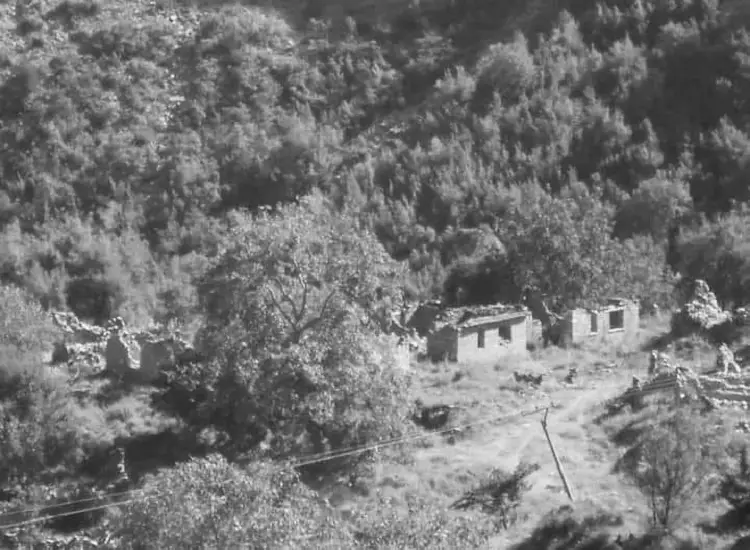
After his battles were over, Sali returned to Butkë to rebuild his homes from the ashes. He lived his final days quietly, remembering his sons left on the mountainsides. He was briefly arrested during the Fier Uprising under Zog’s regime but was released as he was by then just “a handful of bones.”

Before his death, he hired two stonemasons to carve his headstone with a sculpted eagle. He sent them back twice until the design was perfect. He died on October 20, 1938./Memorie.al
ShareTweetPinSendShareSend
Previous Post

“When we - the four children and our mother - visited him in Burrel Prison, Et’hem would ask us to remain silent, and especially not to write him anything, because...” / The rare testimony of the famous playwright’s brother.

Next Post

“I arrived first in Durrës, where we were welcomed by hundreds of sports fans and King Zog, who invited us to his villa. There, he rewarded me with two clips of gold Napoleons, while the others...” / The rare testimony of the former cycling champion.

Artikuj të ngjashëm

“Ali Xhunga, the chief investigator at the Church Prison in Shkodër, when he found out that no one came to my meeting and we had no food, he told me…”/ The sad testimony of the friar Celebrity
Personage

“Father Zef Pllumi, the last among the true fathers of the Catholic Church, steadfast in his convictions – which he never betrayed nor denied, and for which he suffered the consequences… ” / Reflections on the famous friar

February 11, 2026
“The Romanian scholar T. Capidan believed that the crime might have been committed through an agreement between the Phanar and the Yildiz, as the murder of Naum Veqilharxhi occurred in…” / The unknown side of the famous patriot’s death.
Personage

“The Romanian scholar T. Capidan believed that the crime might have been committed through an agreement between the Phanar and the Yildiz, as the murder of Naum Veqilharxhi occurred in…” / The unknown side of the famous patriot’s death.

February 10, 2026
“In his book ‘Six Months of History of Albania’, the French Colonel Dekon accepted Sali Butka’s proposals for the proclamation of the Albanian Self-Government of Korça and…”/ Reflections of the renowned researcher and historian
Personage

“Safet Butka, while serving as the Inspector of Education in Tirana between 1935 and 1937, provided the capital’s schools with photographs of National Awakening patriots, such as Koto Hoxhi and…” / The unknown history of the “pioneer” of education.

February 9, 2026
“Ervis Gega and her family entered the German embassy in July 1990 by bribing the policemen and…” / The article from the well-known German magazine “Der Spiegel” about the director of the Bonn Classical Philharmonic.
Personage

“Ervis Gega and her family entered the German embassy in July 1990 by bribing the policemen and…” / The article from the well-known German magazine “Der Spiegel” about the director of the Bonn Classical Philharmonic.

February 7, 2026
“In August 1914, the rebels, under the leadership of Haxhi Demiri and the Shehu of Çorush, after burning down Aziz Vrioni’s palace in Berat and evicting the women from their homes…” / The untold history of the famous Pasha from Berat.
Personage

“In August 1914, the rebels, under the leadership of Haxhi Demiri and the Shehu of Çorush, after burning down Aziz Vrioni’s palace in Berat and evicting the women from their homes…” / The untold history of the famous Pasha from Berat.

February 7, 2026
“We don’t care how much Lenin wrote, but what he did for Albania and…”/ The unknown story of the rebel deputy, participant in the October Revolution, who was anathematized as an aventurist, because he did not marry, and Enver sentenced him to death
Personage

“It was Enver Hoxha at the head of the APC (Albanian Communist Party), who cursed ‘Mukje’, who remained silent about the Tivar massacre, who sent partisan units to…” / Reflections on the book ‘The Unfinished National Ideal’ by Hysni Shaqiri.

February 6, 2026
Next Post
“I arrived first in Durrës, where we were welcomed by hundreds of sports fans and King Zog, who invited us to his villa. There, he rewarded me with two clips of gold Napoleons, while the others…” / The rare testimony of the former cycling champion.

“I arrived first in Durrës, where we were welcomed by hundreds of sports fans and King Zog, who invited us to his villa. There, he rewarded me with two clips of gold Napoleons, while the others...” / The rare testimony of the former cycling champion.

“Historia është versioni i ngjarjeve të kaluara për të cilat njerëzit kanë vendosur të bien dakord”
Napoleon Bonaparti

Publikimi ose shpërndarja e përmbajtjes së artikujve nga burime të tjera është e ndaluar reptësisht pa pëlqimin paraprak me shkrim nga Portali MEMORIE. Për të marrë dhe publikuar materialet e Portalit MEMORIE, dërgoni kërkesën tuaj tek [email protected]
NIPT: L92013011M

Na ndiqni

  • Rreth Nesh
  • Privacy

© Memorie.al 2024 • Ndalohet riprodhimi i paautorizuar i përmbajtjes së kësaj faqeje.

No Result
View All Result
  • Albanian
  • English
  • Home
  • Dossier
  • Interview
  • Personage
  • Documentary
  • Photo Gallery
  • Art & Culture
  • Sport
  • Historical calendar
  • Others