BY BEN ANDONI
Memorie.al / Not a few citizens of the former Federation now feel nostalgia for Yugoslavia, as they consider that they lived happier and more securely, while many others believe that Yugoslavia was an artificial creation, Slavic media is cited. But few of them can guess what Yugoslavia’s fate would have been, as the public has had little chance to know the true plan of Josip Broz Tito. Some historians believe that Tito wanted an even larger Yugoslavia than has been said, and more powerful, which would not be just a regional power, but one on a global scale.
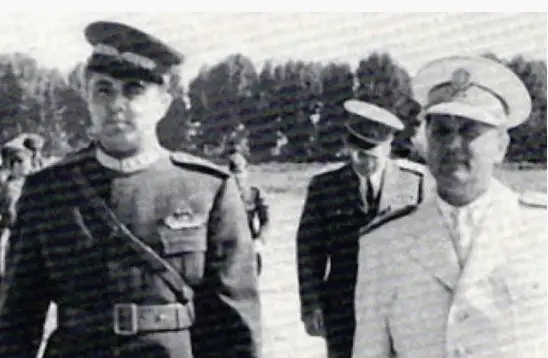
The Balkan Federation, Belgrade’s scheme to include Albania into Yugoslavia, and even Bulgaria, May now seems ridiculous, but at the time it almost became a reality. The efforts had started early, even before the war, while at the extraordinary plenum of Berat, Enver Hoxha would be put with his back against the wall by Yugoslav emissaries and their supposed supporters over his position regarding the Balli Kombëtar, but which in fact aimed at another goal…!
It was a time when the Yugoslav emissaries were overdoing it, but the efforts to fully bring the Albanian Communist Party and Hoxha under their thumb were becoming cynically real. Meanwhile, the slogans for the Balkan Confederation were taking hold in the rhetoric of the Serbian leadership and served as a tactic for the final goal: the inclusion of Albania into Yugoslavia. Meanwhile, until late, they would play with Hoxha using the card of Kosovo and its self-determination.
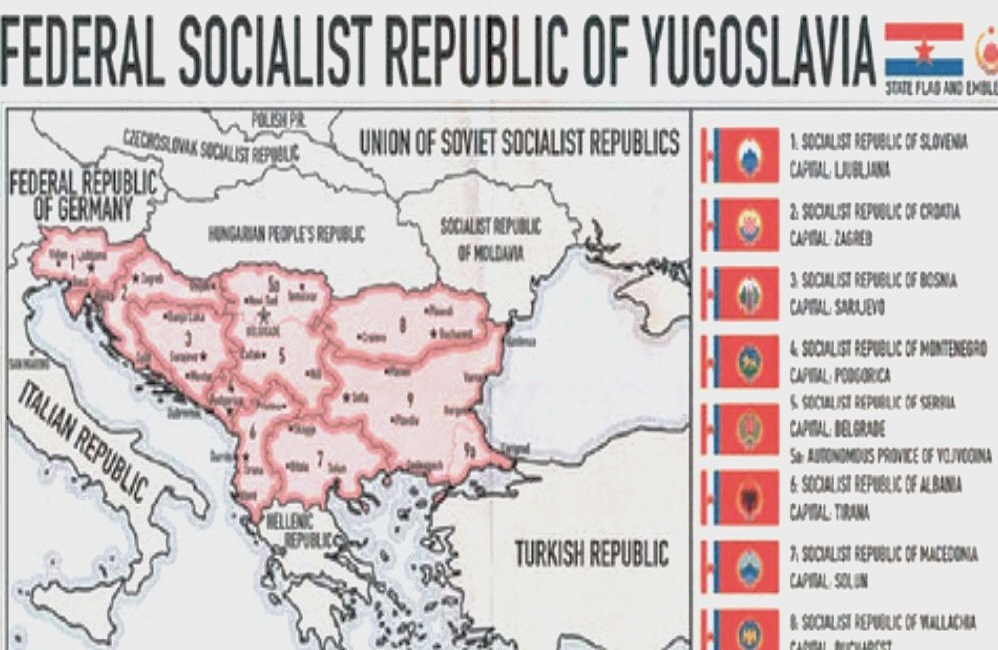
Historian Sabrina Ramet told the Serbian press Blic that Yugoslavia under Tito sought to create an integral Yugoslavia, which would include the area around Yugoslavia’s border: Greece, Thrace, Albania, Bulgaria, but at least also a part of Austrian Carinthia, as well as the entire Italian province of Friuli Venezia Giulia.
Among the supporters of Yugoslav irredentism were even monarchists and republicans from the era before the creation of Yugoslavia in 1918. Sabrina Ramet also refers to the statement of the politician Svetozar Pribićević, who asserted that Yugoslavia should stretch “from the Soča River to Thessaloniki”.
Perhaps the strangest things in this map are the territories listed as part of Yugoslavia, which include both Bulgaria and Albania. However, the Serbian historian states that: the Zveno political movement in Bulgaria supported the idea of including Bulgaria and Albania into the common state of the South Slavs. The Zveno movement participated in the coup d’état in Bulgaria in 1934.
They sought an alliance with France, as well as the inclusion of Bulgaria into Yugoslavia. Even the British government during World War II supported the idea of creating a Greater Yugoslavia in response to Bulgaria’s adherence to the Axis Powers. After World War II, Tito’s Yugoslavia announced that it held rights to Trieste and all of Carinthia, including Austrian Carinthia.
“We saved Carinthia, but international conditions were such that we must leave it temporarily. Carinthia is ours and we will fight for it,” Tito sent a message to his administration. But in fact, Yugoslav theories falter, since in the years 1944–1955, the Soviet factor settles in Albania, Bulgaria, Hungary, Romania, Yugoslavia, etc.
The USSR has on the ground, even in most countries, except Albania, Red Army units, while the countries liberated by them were almost administered by Soviet military commands. Meanwhile, in the former participant countries of the “Axis”, such as Bulgaria, Hungary, and Romania, in accordance with the international agreements of the allies, the Soviet representatives have a free hand for everything.
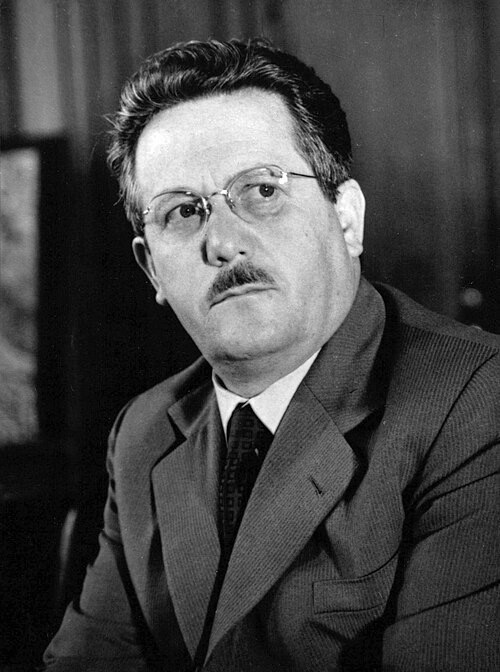
In a “Top Secret” document, document no. 1, dated January 10, 1944, titled “Promemorie”, so much is said in the West. Therefore, our line on this problem must remain negative. The ideologue of Yugoslav economic changes, Kardelj, in a report titled: “On the political situation in Yugoslavia”, would express: “As far as the perspective is concerned, we consider it necessary for Yugoslavia to be closely tied with Bulgaria and Albania.”
He explains the steps to be followed with Albania and why the moments for unification are not ripe, but speaks of the Pact for Reciprocal Aid, “which could be signed within a short time.” Time would pass and 1946 became the year of the formal creation of Yugoslav-Albanian cooperation, as the Treaty on Friendship, Cooperation, and Reciprocal Aid was signed for a 20-year term, adding here the possibility of automatic extension for five years, if it performed well. Albania during 1946 would sign 21 agreements, while the following year, 1947, was followed by other agreements.
Small Albania, crushed by war, would be caught between two calculations carefully crafted by the Yugoslavs: to go into confederation or union with Yugoslavia. Both were a big minus for the country. Fortunately, the year 1948 was coming, when relations between the Soviet Union and Yugoslavia would take their big break. Yugoslavia’s place in the communist world was taken by Bulgaria, while Albania had fully submitted to the communist control of the Eastern Bloc in Moscow.
Fortunately, history would help Albania, since the creation in September 1947 of the Information Bureau (Cominform), and in January 1949 the formation of the Comecon (Council for Mutual Economic Assistance), would announce new stages for the creation of the Soviet bloc and consequently a different course for Albania. Fortunately, a complete avoidance of the Slavic danger was now secured, along with Tito’s dream of making a Balkan confederation. / Memorie.al