Part Thirty-One
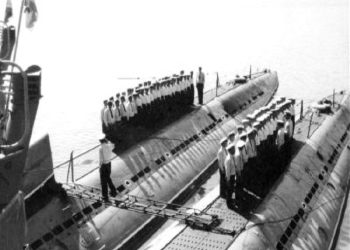
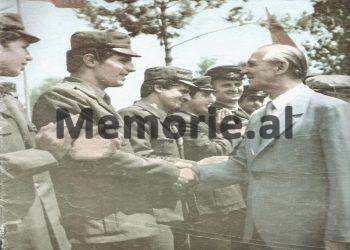
Memorie.al / The CIA have shown the great role that the Soviet Union had in communist Albania. In several “Top Secret” documents, but declassified for years, it is shown that the USSR built several important military bases, especially in the South of the country. There, the submarines that Moscow had on the island of Sazan and in the Bay of Vlora is shown in detail, and likewise the air bases, such as that of Rinas, Kuçova, etc. Then a panorama of political developments is given, where the dismissal of Defense Minister Beqir Balluku in the summer of 1974 from all functions in the army and party is mentioned. Likewise, a special place in the documents that the CIA has declassified are also those that speak about Albanian political emigrants in Yugoslavia, who are incorporated into the Committee of Prizren, initially headed by Apostol Tanefi and under the pressures of the UDB (Yugoslav State Security), which recruits them with coercive measures, such as return to Albania, etc.
Continues from the previous issue
October 18, 1967
Philby and the CIA; The Failure in Albania, Work of a Red Spy
Harold “Kim” Philby, the Soviet spy who penetrated deep into the heart of British intelligence services, was placed in a new assignment in Washington in October 1949, to begin the most destructive phase of his career as a double agent, which brought about the destruction of all Western efforts to overthrow the communist regime in Albania.
Philby went to the United States as a liaison officer between British intelligence and the CIA. He was placed at the center of Western intelligence, at a time when relations between Britain and the USA were stronger than ever.
Philby was considered at the time as Britain’s most brilliant operative, and with this status he became the organizer of the CIA’s anti-Soviet operations. It is impossible to calculate the damage he caused during two years in Washington, but the British weekly “Sunday Times” has gathered together the story of the greatest catastrophe credited to Philby, which was the effort in Albania.
Philby betrayed the British and American attempt to overthrow Soviet influence in Albania’s government through the incitement of armed uprisings, at the time of the greatest tensions of the Cold War. This matter remained for 17 years one of the greatest secrets of the Cold War, as such a thing suited both sides.
For the West, the Albanian matter was a catastrophe that cost the lives of more than 150 agents, while for Russia it was a taste of what could happen in other parts of its delicate empire. Until 1949, the Balkans was the weakest sector of the Soviet empire. The communists in Greece were being defeated, while communist Yugoslavia was also breaking with Russia. Albania was unstable. It had been directed by Yugoslav communists since the end of the War, but by now the cooling with Tito had forced Russia to bring here its technicians and advisers.
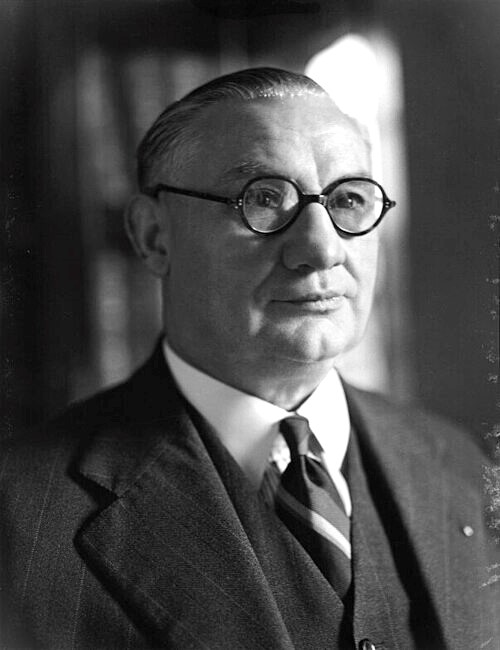
Therefore British intelligence and the State Department had the common idea of exploiting nationalism in Albania to overthrow Russian influence, taking advantage at the same time of the grave condition of the people. Ernest Bevin, the British Minister of Defense, opposed the idea, but was persuaded to allow an experimental attempt at subversion: A clandestine joint operation between Britain and the USA for the infiltration of guerrilla fighters to encourage anti-Soviet uprisings.
The man who would coordinate the actions between Britain and the USA would naturally be the liaison officer in Washington, Kim Philby. His experience as a directing officer of the Turkey station, which at that time was the largest and most active, made his consultancy even more valuable. The operation was planned in the best possible way.
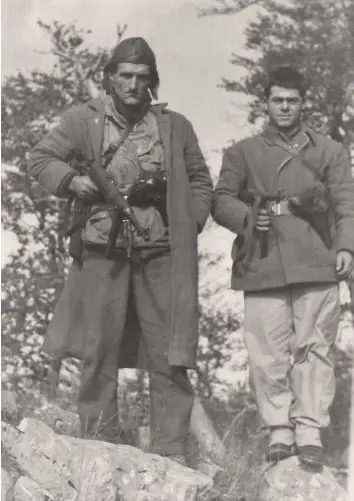
One of the first steps was the formation in 1949 in Italy of the Committee for “Free Albania,” as a front for organizing and recruiting guerrillas. After the creation of guerrilla groups, they began to be sent first in small groups, then larger ones, within the territory of Albania from the mountainous border areas. But everything turned out to be a catastrophe.
Within a month, about 150 guerrillas, about half of the entire force raised, were killed or captured by security forces, together with a number of local residents who proved so ignorant as to welcome and help them. About 150 survivors barely managed to cross into Greece, embarrassing the Greek government, until British intelligence managed to persuade the ministry to accept the returned Albanians.
With their arrival in London, a strange welcome party was also organized. It is not clear whether the British ministry knew the truth of the refugees, while the fighters were presented as “our good friends in Greece.” The consequences of the defeat were felt for years. About a year after the operation, the Americans were convinced that there had been betrayal, while British intelligence seems not to have accepted the evidence of exposure. The operation brought discredit to efforts for “positive intervention” in the communist countries of Europe, both in the eyes of the British and the Americans.
Coals and Other Fuels in Albania
April 1955
Before the Second World War, Albania’s economy was mainly agricultural and had no industrial activity or exploitation of natural resources. Until the end of 1947 there were no railways. Electricity production was small and distribution limited. Albanians lit themselves with kerosene while to heat themselves they used wood from the forests.
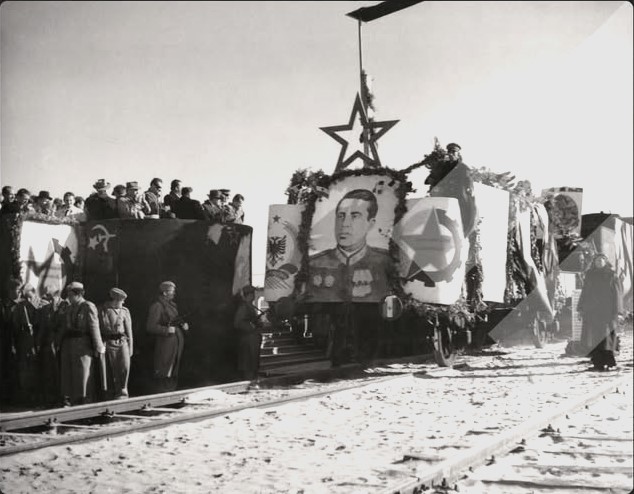
Since the liberation of Albania by the USSR, great changes have occurred in its economy, with the aim of strengthening the economic base of the country and increasing industrial and agricultural production. In November 1947, the first public railway was opened with a length of 30 km from Durrës to Peqin. In 1949 this was extended to the capital Tirana, reaching 60 km. Then an industrial railway was built from the port of Vlora to Selenica, for transporting asphalt to the coast.
The first five-year plan 1951-1955 required the increase of coal production, the increase of railways, the construction of several small thermal power plants and several hydroelectric plants, including the one with a capacity of 20,000 kilowatts on the Mat River. Likewise, the extraction of oil and the production of chromium and copper would increase. In 1954, coal-wood production constituted 17.5 percent of the energy sources produced in Albania.
Oil was the main source with 42.7 percent of energy, and after it came firewood with 39 percent of the country’s energy. For coal production, the deposits of the Memaliaj mine in the Tepelena area are mainly known, where four seams have superior quality coal, or good quality brown coal.
Before the Second World War, coal production was very small and did not exceed 4,000 tons per year. But recently production has reached over 300,000 tons in 1954 and is planned to reach 400,000 tons in 1955. The coal mines are all in active production located near consumption centers.
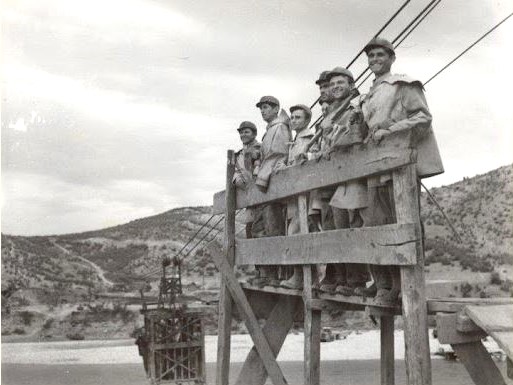
Before World War II, the mines had no electric lighting, but under the care of its “liberators,” Albania has increased electricity production and its distribution as well as introduced modern Soviet equipment in the mines. The improvement of technique and production is expected to continue and has also brought an increase in the number of workers in the mines.
Most of the coal-wood in Albania is of low quality, with the exception of the Memaliaj mine which has little sulfur and ash, and high calorific value. It resembles bituminous coal and is equal in quality to the best coals produced in the countries of the Soviet bloc. Albania does not export coal. It began importing coal after the Second World War, exchanging it for oil and other minerals with Poland.
The 1949 agreement is not believed to have exceeded 3,000 tons. Albania consumes its own coal, mainly in mineral refineries, thermal power plants, or railway locomotives. Most of the imported coal is believed to be consumed in the ports of Durrës and Vlora by ships, and their nearby railway points.
Locomotives and small factories consume the rest. Several thermal power plants in Albania. The growth of Albania’s demand for energy and fuels is expected to be met by domestic coal and wood, supplemented by some coal imports. Production is expected to increase, as set out in the five-year plan. But despite the modernization brought by the Soviets, Albania remains dependent on them and the entire coal industry is weak against foreign influences.
The CIA has devoted space to the judicial processes that took place during the communist regime. According to a declassified document, every judge consulted with the party secretary before giving the verdict. On the other hand, the role of the lawyer was minimal.
September 1953
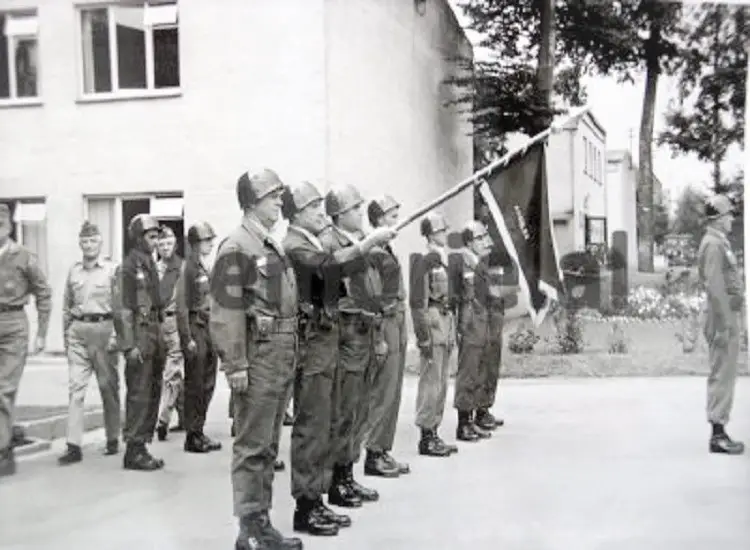
Conditions of Service in the Security Brigade
Recruits and officers of the Security Brigade sign up for three years of service. Voluntary registrations are few and very few soldiers remain in the brigade after completing the service period. Members of the troops receive twenty days of leave per year, while permanent officers receive one month of leave from the battalion command, which requires approval from the Brigade command.
An officer’s salary is 4,500 lekë per month, the company commander receives 5,000 lekë per month, while the battalion commander 6,200 lekë. The troops’ food is suitable and almost the same for all. When there is no tea for breakfast, it is replaced with yogurt or marmalade. Every member of the Brigade receives 25 clothing coupons every three months, both for officers and simple soldiers. Until recently the Brigade used British uniforms in winter and Soviet ones in summer.
When the weather is dry the brigade uses light rubber shoes, which were replaced with new ones whenever they wore out. Every soldier receives a straw mattress and three blankets, without sheets. Officers had sleeping rooms separate from the soldiers. Daily schedule: Wake up at 05:00, washing and making beds until 05:30, political information and criticism of soldiers 05:30-05:45, breakfast 05:45-06:00.
At 06:00 training began, which was done either in the field or according to the following program: 2 hours target shooting, 2 hours tactical training, 2 hours guerrilla warfare tactics, 2 hours mountain assault maneuvers. The rest of the time varied depending on the case or one of the subjects was extended to 4 hours. Lunch and rest last from 12:00 to 14:00. Political lesson 14:00 to 16:00, after this there were 20 minutes of time for cleaning weapons. All training was done according to Soviet methods.
Usually from 16:00 to 18:00 officers spoke regarding the day’s training and received lessons from the commander. Brigade units were inspected weekly by the battalion commander, while the Brigade command inspected once a month. The company has sixty registered soldiers and officers, armed with German and Soviet automatic weapons. Every soldier has two Soviet hand grenades. The reserves of weapons and ammunition in the depot are low.
June 1952
“Bashkimi” Newspaper: Embezzlements and Negligence of Authorities
In a study of crimes in 1951 compared to 1950, it was shown that the figures were declining in Tirana, except for crimes against state property committed secretly or openly, as well as those of fraud, abuse of trust, or forgery of invoices. Considerable negligence was noticed in the enterprises connected with the Executive Committee in Tirana, which for almost a year had not exercised the necessary supervision over state finances.
Although some improvements have been made, the directors of local and national sectors do not show the proper care for state property. They think only of fulfilling the plan and preventing thefts and consider it a secondary issue. There is a need for much organizational work and awareness-raising for the sense of responsibility among officials.
There is negligence in the weighing of goods and the carrying out of inventories. In the NTUS store in Pezë of Tirana, a deficit of 70,180 lekë was noticed in two months, as the sellers did not keep accounts and had no sense of responsibility. The same thing happened in the Kërraba mine where the director Ismail Dibra has already been sued, for the deficit of 22,000 lekë.
When he was questioned he said he had paid to the finances 50,000 lekë that were missing in the accounts, but Sulejman Uruçi had no data for this amount. Also in the sales of the Stalin textile combine, the sales official Shefqet Picari has stolen 156,000 lekë, which shows the lack of responsibility but also of audits by the Ministry of Trade.
February 1954
Ministry of Justice
The Albanian Minister of Justice is Bilbil Klosi, the head of personnel is Irfan Delli, and the legal section is directed by Kozma Toçi, with inspectors Londo Shori, Irkli Noçka, and Laver Grapshi. The most powerful body is the Supreme Court which reviews the decisions of the district courts and consists of the president and two members appointed by the government. The district courts have more work and personnel, such as secretaries and bailiffs.
They judge criminal cases such as murder, theft, and robbery, brought by the prosecution, as well as civil cases such as division of property, divorce, or injustice against the person. The chairman and judges are chosen by the people from the list of the Minister of Justice. Judges and prosecutors are not necessarily chosen according to criteria, and many of them have only finished elementary school. District prosecutors are appointed by the Tirana office, which also examines their decisions.
Prosecutors file charges against the accused and judges usually follow the prosecution’s requests, especially in cases of political accusations of deviation, cabotage, or crimes against the state. Usually trials are public except in rare cases according to government decision. In criminal cases, the defense of the accused and witnesses are notified when they must appear.
Although the defense lawyer must defend the rights of the accused, this happens only in insignificant cases. In serious cases, lawyers are advised on how far they should go with their defense. Other factors that influence are the social class of the accused, party membership, or whether he has completed military service. / Memorie.al
Continues in the next issue