By Skënder Buçpapaj
Part One
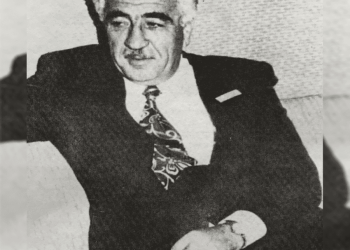
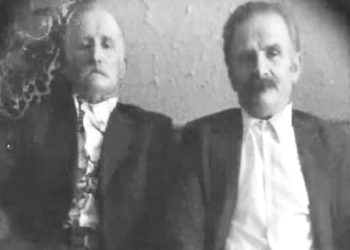
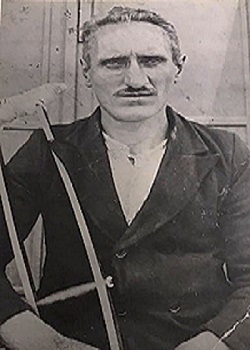
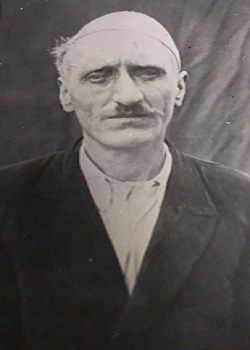
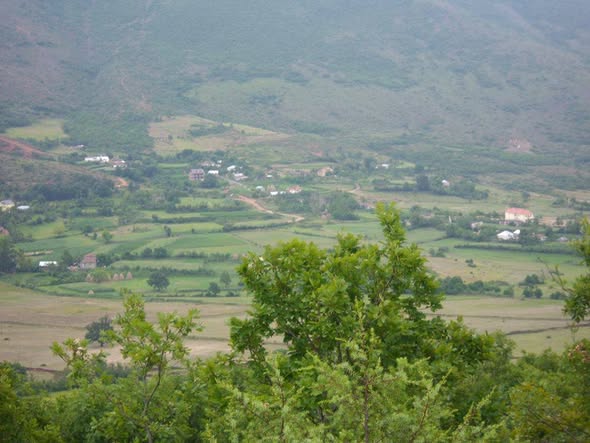
Memorie.al / The story of my father is the story of a man who never reconciled with communism and who confronted class struggle, differentiation, and the consequences of absurd collectivization and total nationalization of the economy until his last breath. Mehmet Bubrrec Buçpapaj was born in 1914 in the village of Tplâ, Tropoja, into a family that, two generations earlier, had descended from the “Kapuçprush” neighborhood of Upper Bujan. He was proud of his origin from Bujan of Krasniqe and to show this affiliation, he always signed as ‘M. Bujaku’. From a young age, he showed a thirst for knowledge. Although self-taught, he became one of the most learned men in the region. At the age of eight, he went down to Shkodra with his father to enroll as a boarding student. He passed the exams successfully and was registered in the third grade. He fell ill with the flu and his father was forced to take him back. His dream of continuing his studies in schools was not realized, but he never gave up on knowledge.
My father taught reading and writing to his younger brothers: Ali, Xhemajl, and Halil, to his aunt’s son Sejdi Braha (Doçi), his cousin Ali Ibishi (Buçpapaj), his fellow villager Qazim Zeqa (Malaj), and his nephew from Iballa, Ibrahim Dauti. Xhemajl, Sejdi, Ali Ibishi, Ibrahim Dauti (from Iballa), and Qazim Zeqa became among the top leading cadres in Tropoja and always preserved the calligraphy of their first teacher.
He was only thirteen when his grandfather, Bubrrec Alia, was imprisoned. He and another highlander had undertaken to collect taxes for all of Tropoja. They failed to collect the taxes regularly, the partner denounced that it was his fault, and the grandfather was imprisoned.
My father went to the sub-prefecture center in Tropoja to learn about the fate of Bubrrec Alia. They told him that he had been sent to Kukës prison. Zenun Coli, a lawyer and official of the sub-prefecture, felt sorry for him and decided to help him. He gave him a letter for the best lawyer in Kukës, with whom he had completed his studies. He advised him to follow the telephone poles so that he could go straight to the city of Kukës. The lawyer immediately agreed to take on the case. My father was overjoyed when he convinced his grandfather to cooperate as closely as possible with the lawyer. The accusation of the denouncer was dismissed, and thus Bubrrec Alia was found innocent.
My grandfather was a patriot. In the Battle of Qafa e Morinës in 1909, he was wounded in the leg but survived. In this battle, his cousin, Ali Jakup Buçpapaj (Papuça), was killed at the mouth of a Turkish cannon. Even today, songs are sung about him in the Highlands and Kosovo. A few years earlier in April 1881, Smajl Hysen Buçpapaj had been torn apart by Turkish cannon shells, together with his fellow villager Mic Sokoli. This moment has also been immortalized in folk song.
My grandfather had been a student at the Medrese in Skopje, where he learned Ottoman Turkish, but had to interrupt his studies because his father died prematurely and, as the only son of the house, he had to take care of the family, properties, and inherited wealth. My grandfather was an educated man. He knew Ottoman Turkish from the Skopje Medrese, which he also taught to my father, Mehmet, who had a penchant for everything. From a very young age, my father stood out for his talent as a master builder, but also as a simple designer of buildings. He became sought after in the construction of new towers throughout the Highlands. During this time, he formed close and lasting friendships with masters such as Hasan Uka from Luzha, Shaban Syla from Babina, Ali Haxhia from Luzha, Zeqir Halili from Viçidol, and others. Before even going to the army, he undertook and successfully completed the construction of the shrine (tyrbe) of Sheh Ali in Tplâ. He completed his military service in Shkodra in 1934. He was a soldier who stood out for his physical preparation, as well as theoretical training, and this is confirmed by the decorations and rewards he received from the Ministry of Defense of the Kingdom (or as it was called at that time: the National Army).
At that time, there were few young people in the country who could read and write, and even fewer with the quality of my father, who excelled in mastering military doctrine. My father was also a distinguished marksman, a sniper as they say today, even the best of his time in the Royal Army. His superiors wanted to keep him in the army, offering him the necessary training to become an officer, but my father refused them because of the need to return home, to his family, but his ties with Shkodra would never be severed.
There he got to know the skilled merchants of that time. My father, being a man of culture, even among the most cultured in the Highlands of Gjakova for the time, during his military period in Shkodra, and also afterwards during the years of trade with this city, had bought almost all the publications issued by dozens of Shkodra’s printing presses, remarkably creating a library with books by well-known authors, including those of Gjergj Fishta. In Shkodra, he also learned Italian, enough to read and communicate. Based on these, he became a man well-versed in the market economy and trade, and Shkodra gave him this opportunity.
My father most often mentioned Man Tepelia, one of the most renowned merchants of Shkodra at that time. He established connections with these merchants and, as soon as he finished his compulsory military service, together with his fellow villagers Rexhep Selimi (Mehmetaj) and Bekë Sylejmani (Ponari), they opened a private shop in the village. He and Beka were of the same age and maintained a close companionship throughout their lives. Their trade was successful. One of them, in rotation, stayed in the shop. The other two sent goods by horse caravans to Shkodra and brought goods from there. Their customers came from various villages, from both sides of the Drin River.
According to tradition, starting from the League of Prizren and onwards, our family was among the first in the Highlands to be involved in formations fighting for freedom. Our house became a shelter for fighters, such as Fadil Hoxha, Chief of the General Staff of the National Liberation Army of Kosovo, Emin Duraku, Hajdar Dushi, Xheladin Hana, and others. In the memoirs of Fadil Hoxha; “When Spring Delays”, there is a character named Bubrrec, but Fadili placed the events in another village of Tropoja, avoiding the risk that his character might suffer from Enver Hoxha’s regime.
My father had no respect for Fadil. He had met him in Tirana when, for one of his own predicaments, he had gone to meet Kolë Bibë Mirakaj, then Minister of Internal Affairs. Kola was from Iballa in Pukë, a neighbor of my grandmother’s people, as she was also from Iballa. My father said that Fadil shouted “Duçe-Jakomoni” until his voice gave out. I thought that my father simply had a grudge against Fadil because he spoke against the student demonstrations of spring 1981; hence he gave him overly negative colorings. But much later I read that Fadil had been an activist of the Fascist Party.
But he showed respect for Hajdar Dushi, who had and read communist literature in the original German. They say he also drafted the Resolution of the Bujan Conference, which sanctioned that Kosovo would self-determine after the end of the war, “to unite with Albania”. He spoke without demagogy, saying that the communists would not allow private property, would collectivize agriculture, would ban religion, and would wage class struggle against any disagreement with communist ideology.
Our family had a tradition of fighting against invaders, starting from the League of Prizren, the battles of Plav-Gucia, and to this day, 23 sons of the Buçpapaj tribe have fallen fighting in Kosovo and have been declared martyrs. Thus, the opening of the chrome mine in Kam by the Italian invaders was considered by the highlanders as theft of our national wealth, so they organized an armed attack in which our uncle Fazli, together with our cousins Selim Braha and Halil Beli, etc., participated.
The fascist regime pursued them, and our uncle took to the mountains, while the family became involved in the anti-fascist resistance. The Italian fascists, on the eve of winter 1942-‘43, as revenge, decided to burn our tower, for its participation in the anti-fascist resistance and as a shelter for freedom fighters. They burned the livestock stable, while they filled the great house of the Buçpapajs’ barn with hay and corn straw, to set it on fire as well.
But Xhemajl Bubrreci, only 16 years old, together with Isa Selim Bajraktari (his cousin), began shooting at them. The Italians were forced to return fire and pursued both of them as far as Molla e Kuqe (Bujan), but without success. The great house was saved from arson, but the family was not safe, so they moved to Iballa in Pukë, to my father’s maternal uncles, until spring. With the formation of the first National Liberation councils, my father was elected secretary for Tplâ-Dushaj, while the chairman elected was Hoxhë Dusha.
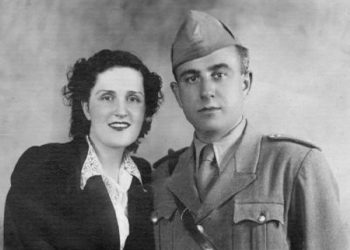
My father married my mother, Gylë Ismail Meshi, on January 1, 1944. The wedding procession, escorting the bride from the village of Kosturr in Has, took place in the village of Shëngjergj, on the bank of the Drin. The friend of the house, Din Zenel Bajrakari, was absent because he was a delegate at the meeting of the Bujan Conference; also absent was my father’s aunt’s son, Selim Braha, who was a guard at the house of Sali Mani, where the conference was held. They arrived on the second day of the wedding.
In 1944, our family was denounced for keeping and distributing partisan tracts. The Nazis, after searching the whole house and finding nothing, lined up young and old in front of the people. The village elder, Ahmet Alia (Ponari), guaranteed that the denunciation was false and saved our family from danger.
In 1945, my father was elected chairman of the National Liberation Council for the village of Tplâ-Dushaj. Here began the first clashes between my father and the communist regime. That year Fazli Bubrreci, my father’s elder brother, one of the first freedom fighters in Tropoja, squad commander in the 25th Assault Brigade, fell into prison in Shkodra. He was accompanied by a file from Yugoslavia, all in Serbian. My father obtained certifications from all of my uncle’s fellow fighters, and as a result, he was acquitted.
One of the first measures taken after the establishment of the communist regime was the surrender of all books by “reactionary” authors to the district center. So my father and his brother had to carry the books by horse and hand them over, according to the order, and the communists burned them. Most of these books, such as those by Fishta and the Catholic writers of the north, as well as many translations, had been declared banned by the communist regime. In the framework of nationalization, my father and his two partners were forced to close the private shop. The first state-owned shop was opened years later.
Meanwhile, my father, as a man of talent and courage, had opened the first wool processing workshop in Tropoja, which earned him a lot. He did the basic processing in Tplâ and then sent it to Shkodra, where he sold it at a higher price. Likewise, he had also opened the first milk processing workshop (for butter extraction) in the region, again generating income from both the customers and farmers. He had plans to expand his business, but the communist regime gradually restricted private property until its disappearance.
My father fell into deep disagreement with the regime when the power in the district center, after having declared his younger uncle, Halil Bubrrec, a partisan courier killed in the summer of 1944 in the mountains, a martyr, withdrew this title based on unfounded arguments. In those years, which are also called “the period of Koçi Xoxe”, it happened that highlanders were arrested in their homes and killed on the way to the district center under the pretext of attempting to escape. Even those who escaped the bullet were beaten until they needed hospitalization.
The most frequent accusations against highlanders at that time were for “hiding weapons”, “sheltering fugitives” from the regime, or because they “sent food and clothing to the mountains”. My father, in all cases, personally escorted all those arrested to the district center. Moreover, he vouched for them, arguing that they were completely innocent. The accusations were almost entirely unfounded, simply made for old vendettas.
In 1949, my father went as a volunteer in the final phase of draining the Maliq swamp. There he worked as a bricklayer in the canal, in cold water, and returned home ill, in such a state that no one recognized him or believed that it was indeed him, Mehmet Bubrreci. He became almost completely paralyzed in both legs. He narrowly escaped having one leg amputated. He was in the operating room, arguing with the doctors because he refused to undergo the operation with anesthesia, when news came that the treatment had been approved and the ordered UNRRA medications had arrived from the Civil Hospital in Tirana. The treatment would continue for a long time. Every year he spent at least a month in the hospital. Until late, the crutches he used during that period were kept at home. Later, for several more years, he moved with a cane.
During this period, not having much hope for a full recovery, he bought a sewing machine and decided to take up tailoring. In our house, until recently, there was the sewing machine that my father used only for a few years. During this time, my eldest uncle, Fazli, went to prison for the second time. This time he was accused of agitation and propaganda. In 1948, after the break with the Yugoslavs and the closure of the border with Kosovo, it became clear that Kosovo had remained part of Serbia.
My eldest uncle, Fazli, publicly accused Enver Hoxha of betraying Kosovo and the liberation struggle itself, because he and his three brothers, like most of the highlanders of Tropoja, had joined the ranks of the 25th Assault Brigade to liberate Kosovo from the Nazis and unite it with Albania. This concept was also expressed by the resolution of the Bujan Conference, but now, along with Kosovo, Gjakova, a city vital for the Highlands of Gjakova, had also remained with Serbia. My uncle, until he died, whenever he was upset, would sing the well-known song in the Highlands; “Alas, Gjakova is closed”!
For this, my uncle was sentenced to 15 years in political prison. He was targeted by the head of the Department, Kopi Niko, one of the greatest executioners of the communist dictatorship. My father again met all of my uncle’s fellow fighters and obtained their statements. He also met the witnesses and they changed their testimonies. My uncle was ultimately sentenced to only one year in prison. But he stayed two years in prison because the decision of the Supreme Court had remained among the prison secretary’s papers and only an inspection from above discovered the document for my uncle’s release.
My eldest uncle, Fazli Bubrreci, was treated utterly unjustly by the communist regime in the village and district until the end of his life, as a political prisoner sentenced to 15 years. In all our official biographies, my uncle was listed as sentenced to 15 years in political prison. Official circles in Tropoja considered that our family, with its post-war stances, had denied its own wartime contribution. Thus, in the history of the National Liberation War of Tropoja, completed in the 1980s, the role of our family in the National Liberation War was reduced only to my grandmother’s name, Shkurtë Isufi, as a mother who had hosted and escorted partisans. At a time when two uncles, Ali Bubrreci and Xhemajl Bubrreci, were receiving veteran pensions because documents confirmed they were voluntary participants in the National Liberation War.
This classification applied to all those who had participated in formations before May 24, 1944, the Congress of Përmet. After that date, all participants in these formations were no longer volunteers but were mobilized recruits, and participation in partisan formations was considered fulfillment of compulsory military service. This latter category included all participants in the 25th Assault Brigade, composed mainly of fighters from Tropoja and Has. This was extreme injustice towards our family, one of those flagrant distortions that have left Tropoja without its own local history.
In 1953, in Tplâ, the agricultural cooperative was established, the first in Tropoja and one of the first in the north of the country. A year earlier, the four brothers—Fazli, Mehmet, Ali, Xhemajl—had divided the inheritance. Because the land that fell to him was somewhat further away, my father did not receive a share of the house, so he began building his own house. The other three brothers were among the first to join the cooperative.
My mother, thanks to her physical health, her spiritual formation, and the perfect upbringing from the family she came from, the Meshs of Kosturr, would become my father’s strong right arm in all challenges. She bore with dignity the burden of the household and raising children, as well as the imprisonment of her brother Isuf Meshi, for 25 years in political prison. My father applied for a disability pension. He had to write letters up to the head of the country. As soon as he completed the pension documents, a fire broke out in the District Executive Committee and every document was burned, among them my father’s pension documents.
This, along with his background in the free market economy, influenced my father’s unwavering decision not to become a member of the agricultural cooperative, and this placed our entire family at the center of class struggle in the village, much more fiercely than against the kulaks, former kulaks, political prisoners, or former political prisoners of the village. These people joined the cooperative as soon as the first chance was given. And they were the most obedient to the party line. From the 1960s, Tplâ also became a place of internment.
Even towards the internees, the leadership of Tplâ held a noticeably milder stance than towards our family. I was young when the chairman of the cooperative, along with the leadership, came into our yard. My father came out, and I came out too. The chairman asked my father to join the cooperative and reminded him that he was the only one who had not done so in our village. My father opposed decisively: “I am a sick man, a disabled person without a pension, I have many children. The cooperative cannot support us”! / Memorie.al
To be continued in the next issue.