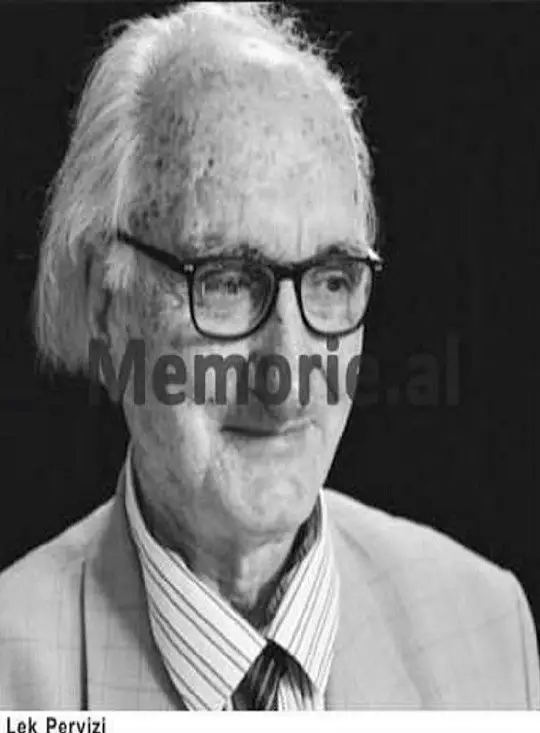
From Lek Pervizi
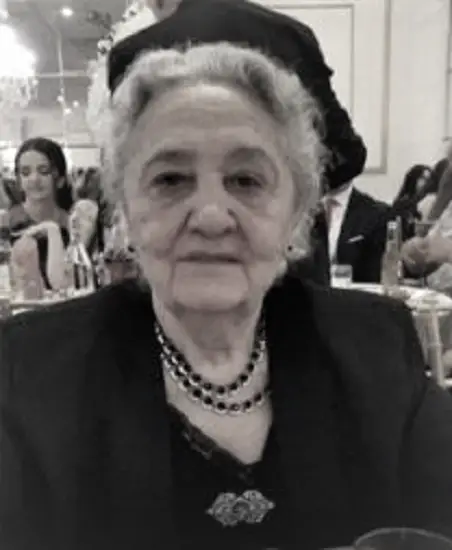
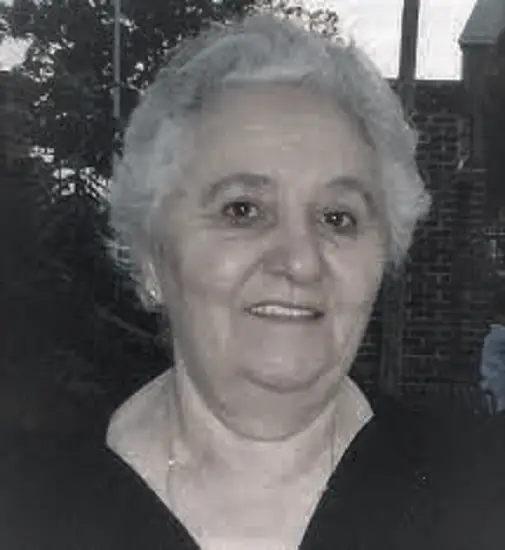
Memorie.al / It was only 6 years old, the age when she creates her first memories, when Albina Marashi (Pervizi) would see the most terrible memory in the eyes of her memory; that of the hanging of her father, Major Llesh Marashi, by the communists who had just come to power. From that moment on, her life would be a journey of suffering through internment camps, but also an act of resistance to savage communism. Albina Marashi, who married another political detainee, Genc Pervizi, son of Prenk Pervizi, while she was in exile. On January 6, 2020, in New York, Mrs. Albina Marashi Pervizi, a victim and heroine of the internment camps of the communist regime of Enver Hoxha, passed away.
Albina Marashi – Pervizi, was the penultimate daughter of Major Llesh Marashi, with three brothers and one younger sister. In May 1945, their family will be interned in Berat, where Albina will be only six years old. With the capture and arrest of Llesh Marashi, the Marashi family was released, so she, at a young age, would have been present at the hanging of her father, in the middle of the city of Shkodra, and suffered a great shock, and a trauma that would return to strength in the face of evil…!
From that moment on, hatred for those who had killed her father would arise in the girl’s soul. In those difficult conditions, the family stays in Shkodër, where she can continue school and finish high school with great difficulty.
In 1955, her two brothers would escape: Alfredi and Rudolfi, while the third Eduardi would end up in prison. So, again before turning 17, Albina, together with her mother, would start the second internment already at the “Liberation” Farm, in the district of Fier, while her sister, Xhina, would marry young among the Pistullorets of Shkodra.
As the daughter of an internee, Albina would be involved in the heavy and forced work of agriculture until 1958, while she would be engaged to Genc Pervizi, the second son of General Prenk Pervizi, (former Commander of the National Defense in 1943 -’44, escaped from Albania and living in Belgium) and would be transferred to Gradishte in Lushnje, where their marriage would take place at an extreme age.
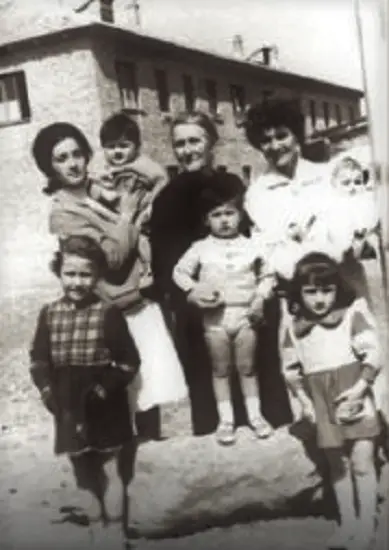
Man and woman faced the heavy work of agriculture, with great spiritual strength and high dignity. Although in an internment camp, she would be the mother of six children, two girls and four boys. Her husband, Genci, would continue in endless exile. After 10 years in prison, he would never be allowed to move from the camp and the famous mudflats of Gradishta in Lushnje where his family was interned.
Today, the description of that period seems like something normal, while the situation of the Pervizi family was extremely difficult. The bad treatment, the constant surveillance, the pressures of the Department of Internal Affairs, the extreme poverty. But they face this situation with determination and pride, never to be defeated by evil. From the end of the 70s, a series of arrests were made in Gradishte by the State Security and a climate of insecurity began to reign everywhere.
Genci’s mother, Ana, the wife of General Prenk Pervizi, the eldest son, the soldier Valetin Pervizi, (graduated in Italy as a soldier) also lived in Gradishte, while the third son, Leka, lived in exile in Pluk, near Lushnja.
In these conditions of terror and fear, Albina was given a trial in front of the people, exposing why she spoke on the field against the party and the state. This exposure was an open pressure on the men of the family, Genci and Valentini. It didn’t take long, her sister-in-law, Leka’s wife, Gjuliana, or Beba, as she was known by all the internees, was also unmasked. Both brave and proud women remained undefeated even in this case.
Albina was a woman with a big heart and a pure soul. Energetic, tireless, exemplary mother, sensible and sensitive even in those terribly difficult conditions, she raised her six children with care and sacrifice, with effort and dedication, with values and love.
With the strength of the arms and the pride of the stoic mountaineer, she never fought, neither in the concentration camps nor in the canals and swamps of Myzeqeso, where the internees were destined to be eternal slaves of work and submission.
Meanwhile, her life suffers endless trauma and drama. State Security agents kill the older brother, Alfred, in Paris. Meanwhile, the brother in prison, Eduard, has both legs cut off and released. After a while, he dies, and his nana also dies of despair. The dictatorship had carried out the massacre of the Marashi family in an exemplary manner.
When she was expected to enjoy a day of freedom after the fall of the Berlin Wall, her husband, Genci, also died in April 1989, after a life of 42 years in prison and exile. Here too, the macabre side of the dictatorship appears again and the communist wickedness reaches its peak, because Leka, the younger brother of Genc who lived in Plow, was barely given a few hours of leave except to come and go during the day, without giving him the opportunity to participate in brother’s funeral.
These circumstances, which we tell today simply as knowledge, hide the tragedy of a simple woman like Albina Pervizi – Marashi, they are witnessing the drama of all the internees and political prisoners of Albania, under the monstrous dictatorial communist regime of Enver Hoxha.
That terror that reigned everywhere, under which you were forced to live, work and raise uneducated children, under the dictates of the communists, who had set themselves the goal of destroying the most honorable families of Albania, treating them as slaves, as slaves, as serfs.
Albina Marashi Pervizi, was and remained a proud, energetic and stoic, courageous and indomitable girl and woman. With unparalleled determination, he became an example of endurance and facing suffering, surveillance and sacrifices.
Certainly a victim among thousands of victims, but certainly a heroine among heroines like many interned girls and women, among whom Albina stood out with her invincible spirit, like a true Nora Kelmendi.
Her children, the entire Pervizi family, preserve her respect, honor and memory, as a loving and self-sacrificing person, as an exemplary woman and mother, who will remain unforgettable in the history of this family./Memorie.al