

By Kastriot Dervishi
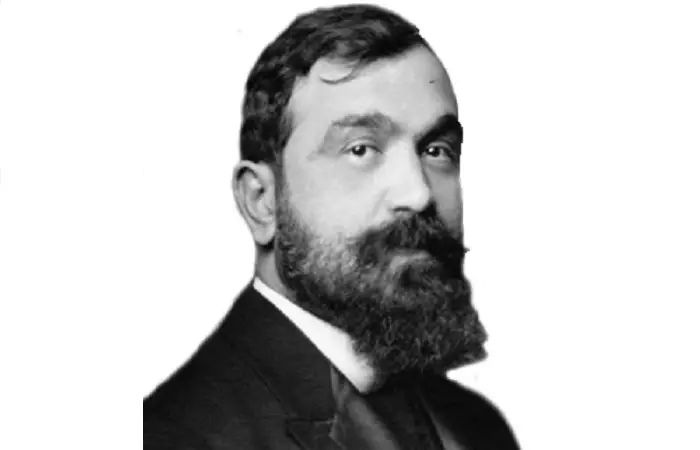
Memorie.al / Fan Noli is a figure who has mostly been evaluated for his failures, casting a shadow over his positive sides. His name can be summarized by his activity as a cleric, translator, writer, musician, and politician (minister, prime minister, deputy). The communist regime over the years evaluated and propagated Noli as a deputy and prime minister, including his 6-month governance, through hundreds of studies, conferences, school textbooks, etc., presenting him as the vanguard of the Albanian left, continued by Enver Hoxha’s dictatorship. It had to exploit him, regardless of the fact that relations had not been as friendly as they were advertised. I evaluate Noli as a completely original and unrepeatable writer and translator. Below I will briefly dwell on several stages of his life.
With an unfulfilled religious duty
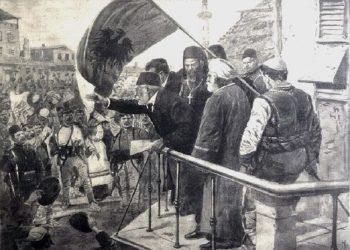
Noli began the process of Albanian Orthodox autocephaly when the Albanian state had not yet been created, in 1908. His action was courageous and found approval among compatriots in the USA, but Noli himself was unclear on how this process should proceed further. After coming to Albania in 1920, three years later, the ceremony of his consecration as bishop was held in Korçë. He did not continue his clerical mission toward the goal of creating a holy synod, because political ambition did not let him. It killed Noli’s patriotic duty and left him ultimately a simple priest outside his homeland.
Politician in the years 1920-1924
Fan Noli’s political activity in Albania was only in the years 1920-1924, thus equal to the time of his stay, whereas abroad his opposition political activity was in the years 1925-1931. It was a fact that he did not know Albania or the mentality of its people. Noli came to Albania in 1920, but his entry into Albanian territory was opposed by the Greek bishop, Jakov of Durrës (a strict opponent of the autocephaly of the Albanian Orthodox Church), who knew Noli’s religious intentions.
Jakov’s influence was so great that the Council of Ministers of the Albanian state was of the same mind as him. It was the energetic intervention of the Minister of Internal Affairs, Ahmet Zogu, which made it possible for Fan Noli to enter Albania. Moreover, a special pension was even assigned to him, which was removed on 2.3.1925 by the Constitutional Assembly. For this reason, his relationship with Ahmet Zogu in the years 1920-1922 was very friendly. In 1921, Noli was appointed deputy by the “Vatra” association and was accepted as an independent by the Albanian parliament.
Noli positioned himself in the Popular Party, together with Ahmet Zogu, Bedri Pejani, etc. Moreover, in Xhafer Ypi’s government, in December 1921, Noli was appointed Minister of Foreign Affairs, a duty he held until February 1922. In this duty, he did not have much time to show himself, because he chose to withdraw and move to the side of Ahmet Zogu’s opponents. Many factors may have influenced this, starting from the political enmity of this time between Faik Konica and Ahmet Zogu, the demand for rapid changes in the country, which was impossible under the conditions of Albania, etc.
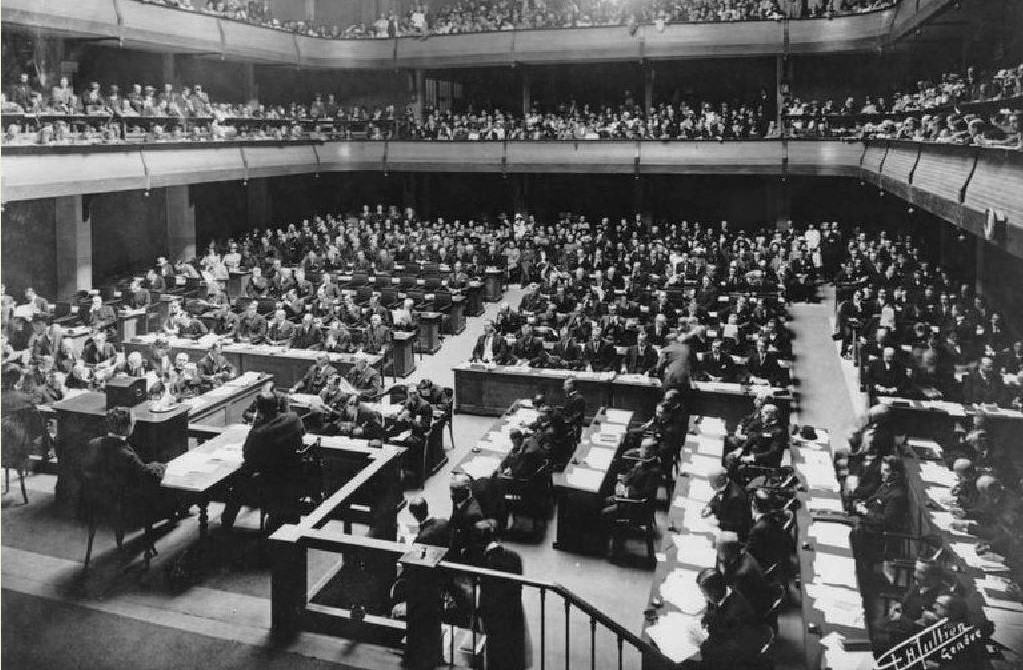
Meanwhile, in the missions to the League of Nations in Geneva (not as prime minister), Noli showed skill and a dignified presentation. He was also elected deputy in December 1923, thus registering two such mandates. In his parliamentary activity, he shone as an orator, remaining perhaps extraordinary and unrivaled, but not infrequently in his speeches there was no substance or argument, as they were covered by sarcasm and excessive spite.
An anarchist prime minister
Noli quickly became part of the opposition of the years 1922-1924. In Vlora, he was appointed head of a revolutionary committee and later, by lot, was appointed prime minister of a government that emerged from an armed coup, which surprisingly was called “democratic.” In June-December 1924, he witnessed the greatest failure of his life, leading with recklessness a government that brought anarchy and insecurity. Noli wanted to show a dictatorial character, but he did not have the means to demonstrate this. He showed this more in political processes for the condemnation of political opponents, which were not that they had any value for those who were not here.
The political currents of the government were in fierce war with each other. The country was not governed at all, while foreign relations were completely amateurish. The financial side was not good either. The only hope remained a foreign loan, which was not granted. His government was without legal basis. He also took the function of the remaining member of the High Council, Sotir Peci. Likewise, the government’s activity was not controlled by parliament; while Noli promised several times that he would hold general elections.
Even in the international arena, he remained isolated and poorly led. His government was not accepted by the superpower of the time, Great Britain, but due to contradictions over concessions, it could be recognized by the Italian government. Noli met Mussolini in October 1924, but the entire secret conversation he had held was known to all of Tirana, because he had told everyone. Losing Italy’s support, Noli made another mistake, starting the procedures for establishing diplomatic relations with the Soviet Union. With this action, he gained the enmity of all the great powers. As if this were not enough, he gave a highly mocking speech toward the powers at the League of Nations.
Leader of the revolutionaries in the years 1925-1931
He became the leader of the revolutionary opposition financed by the Soviet Union, called the National Revolutionary Committee, which was later radicalized into the National Liberation Committee (KÇN), staying in Vienna (1925-1927) and Berlin (1927-1931). He also visited the Soviet Union in 1927 at a time when the dictatorship there had deepened. Noli found strength and understood that the leadership he was giving to the revolutionaries, the numerous contradictions, etc., was a dead end with no future. For this reason, he abandoned this path. The hesitation began as early as 1930, when he arrived in the USA.
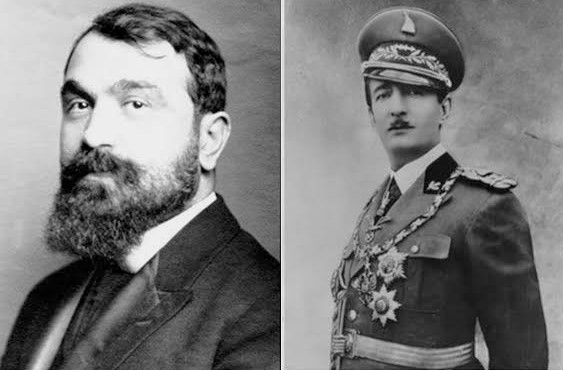
Noli’s relations with different people have not been unchanging. With Faik Konica, he was a great friend, they quarreled and became political enemies, but again became friends. The same situation with Ahmet Zogu. In 1934, Noli turned to King Zog for financial help, which was given. At this same time, King Zog had in plan to open the university and make Noli its first rector. Noli also evaluated the King with a statement in 1943.
Relations with the communist regime, with many unknowns
The relations of the communist regime with Fan Noli are interesting but little known. The regime needed Noli’s name as an anti-Zogist and revolutionary, but only up to this point. Noli initially supported Enver Hoxha’s regime through several statements. But soon he became hesitant and not at all a supporter of it. The condemnation by the Communist Party in 1947 of his former secretary, Sejfulla Malëshova, influenced this. Not that Noli intended to return to politics, but he did not even evaluate the possibility of a visit to Albania and did not speak anymore in favor of the regime. He did not criticize it publicly, but it seemed he did not line up in favor of it. Moreover, the Directorate of Political Intelligence of the State Security opened a file for Noli, classifying him as an opponent of the communist regime.
On 27.6.1958, the employees of the Albanian mission in New York met Fan Noli to find out his thoughts, but he did not give them any good opinion about the communist regime, as they expected. The employees described Noli as “smart, cunning, but a man of money.” With decision no. 378, dated 26.10.1958, the Political Bureau of the Central Committee of the Party of Labor of Albania invited Fan Noli to come to Albania on the occasion of the ceremonies of the “15th anniversary of the liberation of the homeland.” Noli did not respond to the invitation. Efforts continued.
On 8.1.1960, the head of foreign relations in the Central Committee, Piro Bita, asked Enver Hoxha to approve the sending of a congratulatory telegram on the occasion of the 80th anniversary of his birth, from the State University and the Writers’ Union, for which the Ministry of Foreign Affairs agreed. Enver Hoxha did not approve it. He left the note: “No, nothing should be done, because it does not stand in favor of the People’s Republic of Albania.”
I believe that if Noli had made the mistake of his life, to come to communist Albania, he would have been sentenced by the communist regime to death or would have died in prison. Today we would still be searching to find his remains. / Memorie.al