

By Sylë Ukshini
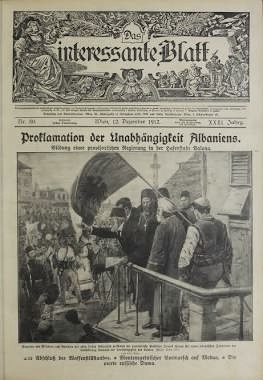
Memorie.al / On December 12, 1912, the illustrated magazine “Das Interessante Blatt,” published in Vienna, presented a draft of the Declaration of Independence of Albania. This is one of the earliest visual representations of the event in Europe. The magazine’s title is: “The Declaration of Independence of Albania.” The subtitle reads: “The Establishment of a Provisional Government in the Port City of Vlora.” During my research at the General Library of the University of Vienna in 2009, I had the opportunity to examine the collection of the Viennese illustrated magazine “Das Interessante Blatt,” an important media source that carefully reflected the political and social developments in Albania, particularly during and after the Declaration of Independence.
One of the most important materials in this collection is a highly valuable historical sketch published on December 12, 1912, only two weeks after the Albanian Independence Movement.
This sketch represents one of the earliest visual representations of this significant event in Europe and serves as important visual evidence of how the Austrian public and its surroundings perceived the establishment of the Albanian state. This reflects the interest of the time in the geopolitical role of Albania in the Balkans.
Draft Declaration
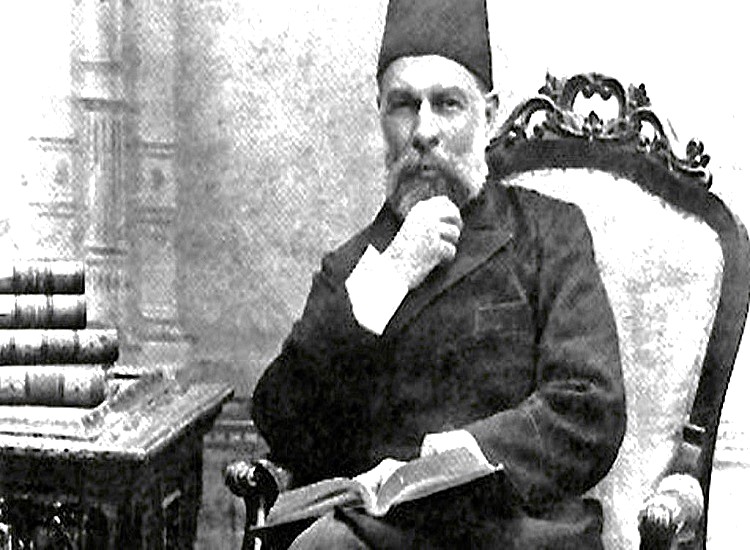
The sketch depicts the moment when the Declaration of Independence of Albania was adopted in Vlora on November 28, 1912. In the center of the composition, Ismail Qemali, with a white beard and European attire, is seen waving the Albanian flag – the flag of Skanderbeg – above the gathered crowd.
Around him are prominent figures of the time, representing various regions of the Albanian territory, dressed in traditional clothing, fezzes, and elements of Albanian culture. Also present are clerics, patriots, and delegates from the Assembly of Vlora, demonstrating the pluralism and national unity that characterized this historic moment.
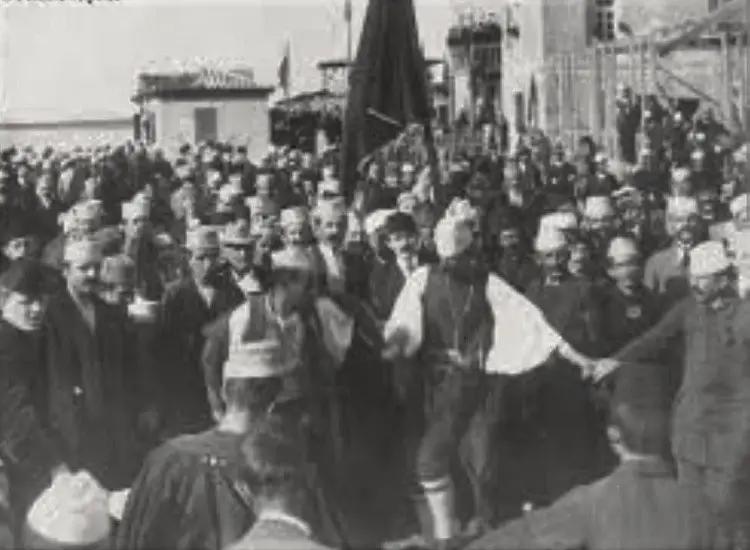
114 years have passed since Albania declared its independence. Below the tribunes, a large crowd cheers, waves flags, greets, and celebrates. The sketch reflects the joyous atmosphere of Independence Day: people with traditional hats, armed warriors, young and old citizens – all gathered to celebrate the birth of the Albanian state.
Front page of the newspaper “Das Interessante Blatt,” December 12, 1912.
In the background, the early 20th-century buildings of Vlora are visible: houses with low roofs, the mosque’s minaret, and the streets of the old coastal city.
The magazine’s title is: “The Declaration of Independence of Albania.” Its subtitle is: “The Establishment of a Provisional Government in the Port City of Vlora.”
The article states that Ismail Kemali, with the participation of representatives from various regions of Albania, declared the country’s independence and created the Albanian provisional government.
The Historical Value of the Sketch
This sketch has multiple values:
First, it is one of the first European visual documents of the declaration of independence, but it also shows the perception of Austria-Hungary, a power interested in the Albanian question.
The permanent preservation of the Declaration of Independence is a demand that is still expressed even on its 18th anniversary. The work, which reveals the importance the empire gave to developments in Albania and the Balkans, reflects the symbolism of national unity and the joyous atmosphere of that historic day.
Historically, this sketch proves, first, the continuous interest of Austrian public opinion and cultural institutions in the events in Albania, during a period when Austria-Hungary played an active role in the Albanian question and the political architecture of the Balkans.
Second, the visualization of the moment of the Declaration of Independence in a major imperial magazine shows that the Albanian question was not merely a local development, but an event of international importance observed by the important political and cultural centers of the time.
Third, by offering an external perspective on the historic ceremony in Vlora, the sketch documents not only the central figure Ismail Kemali and his collaborators but also the popular atmosphere that accompanied the act of independence.
Therefore, it constitutes a valuable source for examining how the iconography of independence and the birth of the Albanian state were reflected in the European media landscape of the early 20th century. / Memorie.al