
Memorie.al / Perhaps for the end-of-year holidays it would be better to have a topic related to the present containing optimistic and relaxing tones. That speaks of achievements, successes, or the like. That would be more pleasant to read! But, I recall that the following account, which speaks of a past not sufficiently discussed until now, might also awaken the reader’s interest. Since the note relates to the controversial period of the Second World War, I believe it would add curiosity about how the Albanians of these regions lived in those years.
So, it is the time of the establishment of the administration of the Albanian state throughout the Albanian regions in Macedonia, known as the “liberated lands,” the new administrative organization was also made, the Prefecture of Dibra was formed, under whose jurisdiction six sub-prefectures were included, such as: Struga, Kërçova, Gostivari, Reka, Tetova, with five municipalities and twenty-nine communes.
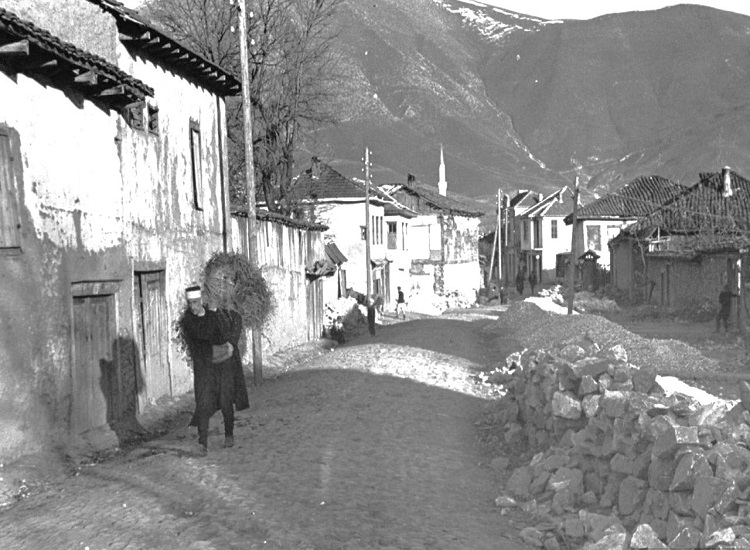
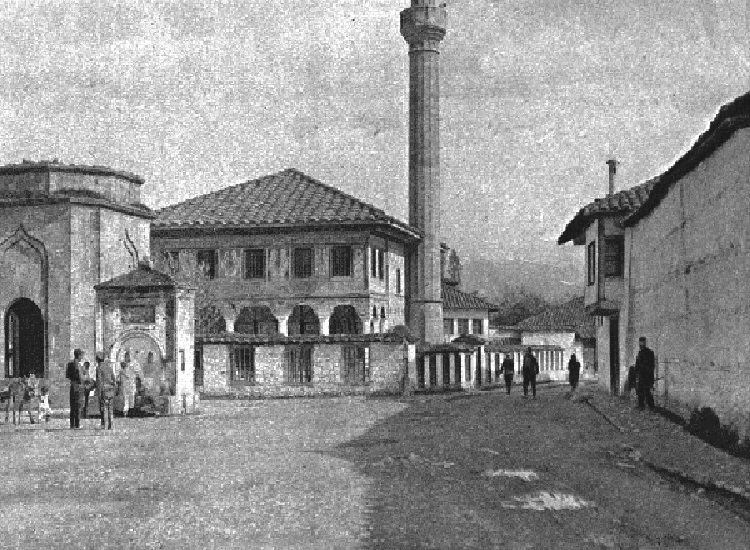
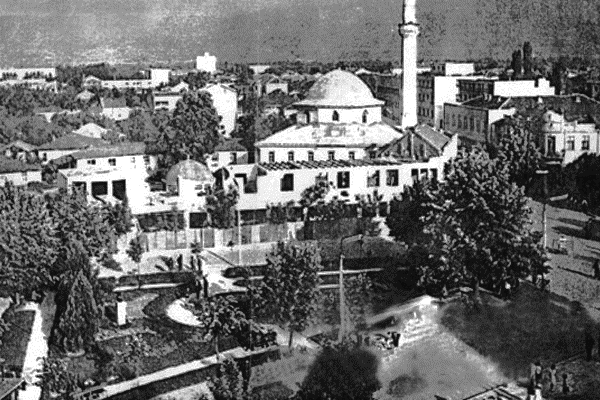
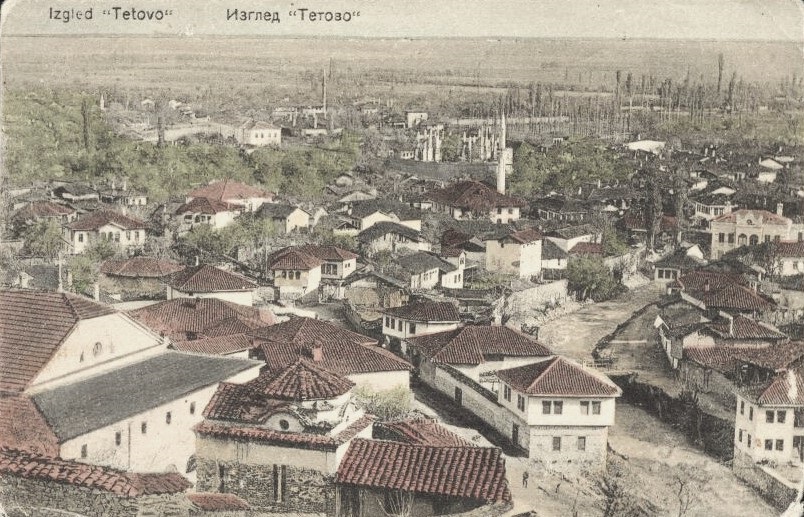
To be completely sincere to the end, I want to add that the occasion was information that was updated these days, from which it is learned that Tafil Boletini, in the capacity of the mayor of the Municipality of Tetova, had taken under institutional protection the Jews who were or were seeking shelter during the war in Tetova. But this is a topic in itself, for which the proper information is needed; we will bring images of how Tetova breathed during those years.
The real city
“But we, casual passers-by, are mainly interested in today’s Tetova. And today’s Tetova is the largest and most beautiful city that the Prefecture of Dibra has, and can be placed in the rank of Shkodra and Korça,” the author of the reportage emphasized.
“We have a gradation of impressions: Struga a village, – Kërçova a half-city, Tetova appears before us as a real city. Tetova, the Jewel city of Dibra,” it is said among other things in a reportage titled:
“Tetova, one of the most active centers against Pan-Turkism and Pan-Slavism” borrowed from the newspaper “Tomori” with author Vangjel Koça, of the month of October of the year 1941, which was published in Tirana.
The many journalistic emotions conveyed through a language somewhat different from the language of the Albanian standard, direct and indirect sentences, used as quotes, or rumored, undoubtedly also prompted interpretive inspiration.
“Within the city of Tetova there were 21,000 inhabitants. The district of Tetova consisted of 8 communes with over 40 villages. Earlier this sub-prefecture had 84,000 souls.
But one part was exterminated by the Serbian army, while the other part was forced to emigrate to foreign lands. Thus it remained with 62,000 inhabitants, of whom 50,000 are Albanian while 12,000 are Slavs.”
“The roads in the city are very good. (—) The water very good.” Tetova has very beautiful houses and shops. Very good hotels, which can be equaled even with some good hotels of Tirana.
Electric light is not lacking; moreover, Tetova has a large and strong Electric Power Plant, which gave light even to Skopje. Tetova also has tourist importance, especially for skiing. (—) Here in winter many athletes came from Yugoslavia for skiing.
If the reporter Vangjel Koça was interested in the Tetova of that time, surely we are interested in today’s Tetova. Therefore the content of this reportage became the reason to attach to this evocation a question that has preoccupied me for a long time, but, certainly not only me. How will the matter be handled with the road that leads to the Faculty of Arts of USHT in Reçica e Vogël and with the drinking water of the city of Tetova?
It has been eleven (11) years since work has connected me with Tetova, and today as always these two immediate needs for the city are by no means resolved. How many promises, how many votes, and how many disappointments have the citizens of the most university center in the country experienced, from all the Albanian parties that have competed and governed Tetova. To be amazed!
However, while further preserving the right of journalistic anterfile, I will return to the topic of this note by elaborating fragments from the content of the old reportage, which comprehensively and objectively describes the city at the foot of the Sharr rocks.
Tales and travel writers
Many foreign travel writers and researchers have visited Tetova, it is said in his reportage. The oldest travel writer who visited Tetova was the Arab Idris, as early as the 11th century. Evlia Çelebiu does not mention it, as he did not pass through here.
Among the European researchers who have written about Tetova are: Pouqueville, Ami Boué, Dr. Prof. Gisebach, Gabriel Louis – Jéry and Max Choublier (the latter has dealt extensively with the Bektashi Tekke of Tetova).
In the Albanian bibliography, Tetova appeared first of all in “Ditërrëfenjësi Kombiar” in the year 1900, by Lumo Skendo. This “Ditërrëfenjës…” contains a geographical description of Tetova and Gostivari, written by a Shefe Petriti.
Meanwhile, from a study done by the young Tetova intellectual, Shuaip Kamberi, by profession a lawyer and political Secretary of the Fascist Party in Tetova, it appears that this is a very ancient Illyrian city.
In his book “Albanians and Slavs,” the author Lumo Skendo writes that: “the city of Tetova and its entire kaza have generally been one of the most active centers of Albanian nationalist propaganda, where the will to fight against Pan-Turkish and Pan-Slavic tendencies appeared very quickly.”
This, on the occasion of the flag festival, would also be confirmed by the mayor Dr. Xhaferr Sulejmani, who among other things would declare: “(…) we have gathered to make known to all foreign occupiers that they have nothing to seek in Tetova, that this city has been and will be of Albania.”
“Djalëria” and “Besa”
Indeed here there is a more alive and more developed national feeling, despite thirty years of Yugoslav terrorism. This unextinguished Albanian patriotism, we find in the “Djalëria” of Tetova.
This djalëri is not very large in number, only 20–30 people, but they had founded the secret society “Besa,” who although uneducated, mostly craftsmen and merchants, did not spare themselves to oppose the efforts to give it a Slavic character, proving that Tetova has been and is Albanian.
The organization “Besa” had formed an armed detachment led by their commander Kasam Polaku. With the initiative of the organization “Besa,” the House of Youth is opened. This, with its first chairman, Hysein Xhaferi, put on stage the drama “The Flower of Memory” by Foqion Postoli, whose premiere was given on November 28, 1943, in the House of Youth–”Flag Day” in Tetova.
“The Djalëria of Tetova” showed us the desire to publish an Albanian newspaper in this city. Here there are three printing presses. During Serbian rule, two weekly Serbian newspapers were published: “Glas Pologa” (“The Voice of Pollog”) and “Tetovska Novina” (“The Newspaper of Tetova”). So, it deserves for an Albanian newspaper to come out here too, even a small one, weekly.
This Albanian newspaper would help in the mental and patriotic awakening of these regions of Dibra. The word is about the newspaper “Zani i Sharrit,” which gave a great contribution to the mental and patriotic awakening of the Albanians of the “liberated lands.”
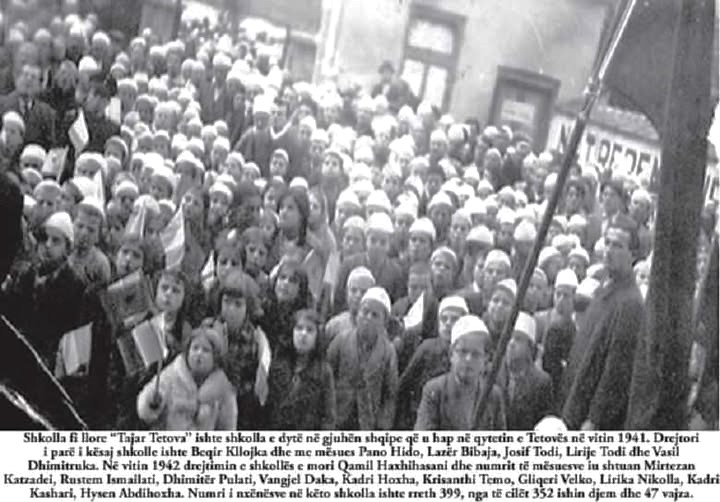
The city has four elementary schools and one gymnasium. In these schools the Serbs dominated, while the Albanians were very few. Out of 1000 students who should have attended schooling, due to Yugoslav obstacles, only 200 of them went to school.
Albanian girls went to school even less, only some 5 or 6 females studied in school. In the gymnasium of Tetova only some twenty Albanian students went, while a year earlier the first Albanian girl had entered, and she a 12-year-old from Gostivari. According to a statistic used in the reportage, illiteracy at that time in the sub-prefecture of Tetova exceeded 85%, among the Slavic population it did not exceed more than 20%.
The weapon in Washington
While in Struga we have the small grocer, in Kërçova the big grocer, here in Tetova we manage to have also the Albanian merchant. In this city the Albanian merchants have the colonial shop; the Slavic merchants have the manufactory. The main economic sources of this city are in the first place tobacco, in the second place beans and corn. The district of Tetova also produces very good fruits. Its apples are renowned.
The chestnuts are also very good. The field of Tetova is very fertile. Thus also notes a foreign traveler who visited this country here a century ago, Dr. Grisembach, Professor of Botany at the University of Göttingen, who finds the field of Tetova very fertile, with grains and rice, with many trees, a thing which shows that the climate of Tetova is like that of Lombardy.
The country also produces candles and soap, which were sent especially to Turkey. In the city, fine items of serm (silver) are also worked. The weapons of Tetova are known. A weapon of Tetova made in the last century (19th century) is today kept in the Museum of Washington, the chronicler recalled.
But today?
Such has been Tetova when it was Albania. But today…? Today, from the chronicle in question much is missing. And, above all, the city of two universities lacks a museum and a library above all. / Memorie.al