





By DASHNOR KALOÇI
Part Nine
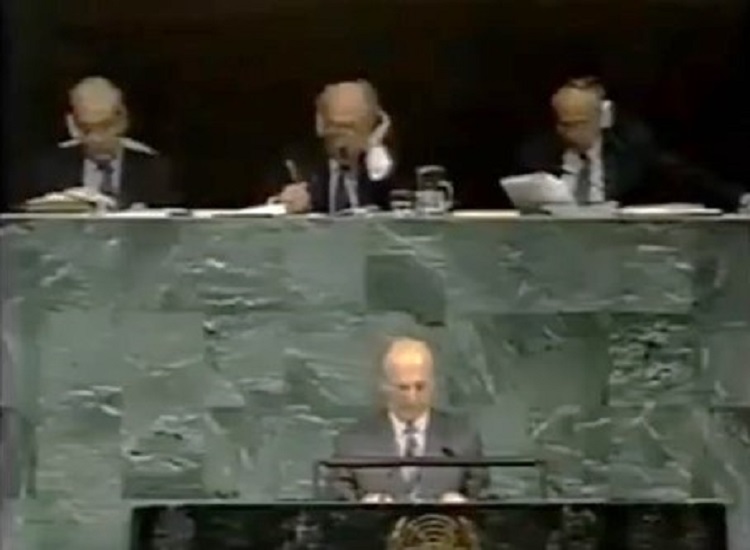
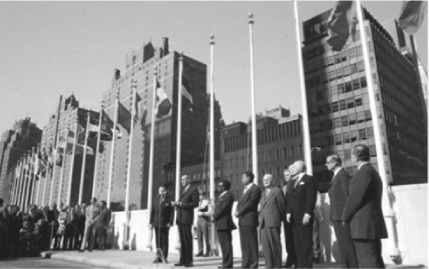
Memorie.al / Full 36 years ago, in the last week of September 1990, the head of communist Albania at that time, Ramiz Alia, who held the functions of chairman of the Presidium of the People’s Assembly, First Secretary of the Central Committee of the PPSh (Party of Labor of Albania), and also Commander-in-Chief of the Armed Forces of the People’s Socialist Republic of Albania, at the head of a large delegation, set off to participate in the meeting of the United Nations General Assembly in New York. Ramiz Alia’s participation in the 45th session of the UN had a great echo at the time, not only within the country but also in the international arena, as it was the first time that one of the main leaders of communist Albania participated in the proceedings of the UN Assembly, something which had not happened since 1961, when official Tirana was represented in that high forum of world politics and diplomacy by the prime minister of that time, Mehmet Shehu.
Even though 36 years have passed since that time, it continues to remain shrouded in mystery even today, since with the exception of some testimonies of members of that delegation (the memoirs of Reiz Mailes, or Lisen Bashkurti), as well as very few archival documents published in the press, nothing else is known about the visit of the head of the Albanian state at that time, Ramiz Alia, to the 45th session of the United Nations in New York, which held its proceedings for about three consecutive weeks, until the middle of October 1990.
For example: When did the preparation and drafting of the relevant protocol for the participation of the Albanian delegation in that high forum of world politics begin, who were the other members of the delegation who accompanied Ramiz Alia on that long journey beyond the Atlantic and what functions did they hold; how many people made up the support staff that accompanied the Albanian delegation and who were they?! When did the preparation begin and what did the program of visits and meetings of Ramiz Alia contain during the entire period they would stay in the USA? Was that entire program realized according to the relevant protocol and who were the heads of foreign delegations that Ramiz Alia met during all the days of his stay in the USA, and what did he discuss with them? Who were the Albanians of the “old diaspora” with whom the head of communist Albania met during that visit, what was discussed at those meetings and were there any incidents with the “reactionary Albanian diaspora,” who had fled Albania after 1945? Who organized the reception that Ramiz Alia gave for compatriots in Boston, who were some of the exponents of the Albanian diaspora who assisted there and how did that meeting go?
What was the itinerary of the Albanian delegation’s journey from Tirana to the USA, why were they divided into several groups and the reasons for staying one night in Switzerland? Why were Arben Alia, the son of the head of state Ramiz Alia, also part of the Albanian delegation and how was his participation in the composition of the delegation in question “justified”? How many and which were the gifts that the Albanian delegation headed by Ramiz Alia took with them and to whom were they given in Switzerland and the USA? Why was Hotel “Plaza” (the hotel owned by the current president of the USA, Donald Trump) designated for the accommodation of Ramiz Alia and some other members of that delegation? How much did that entire visit cost financially, why were other funds added during the period that the delegation was in the USA and how were those expenses justified?
Why did the staff of Albanian diplomats serving in the UN Mission take care to give Ramiz Alia an accurate floor plan of the hall where the 45th session of the UN would be held, specifying even the place where the main representative of the delegation of the Federal Republic of Yugoslavia would sit?! Who were the two bodyguards (the doctor and the driver) who accompanied Ramiz Alia during that entire visit and how was it possible for them to travel on the plane with weapons and ammunition with them? Who were the members of the Albanian Radio-Television filming group that accompanied the delegation and what tasks were given to them? Regarding these etc., let the archival documents extracted from the Central State Archive (the fund of the former Central Committee of the PPSh) make us aware, which are published for the first time with the relevant facsimiles by Memorie.al
Continued from the previous issue
ARCHIVAL DOCUMENT WITH THE MINUTES OF THE MEETING OF THE HEAD OF THE ALBANIAN STATE, RAMIZ ALIA, WITH THE CHAIRMAN OF THE 45TH SESSION OF THE UN GENERAL ASSEMBLY, 28 SEPTEMBER 1990
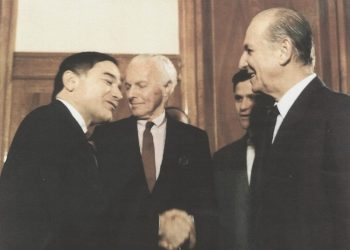
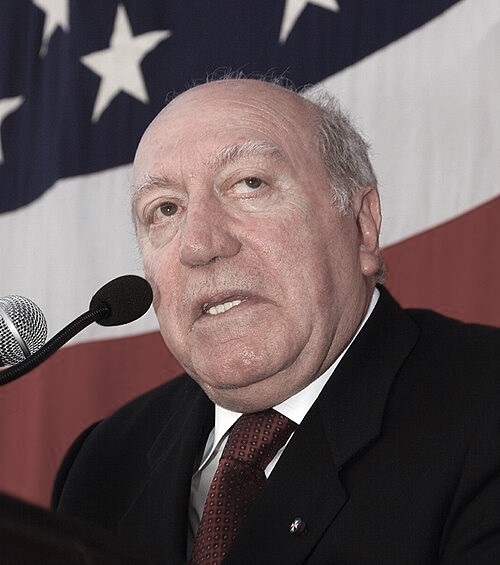
FROM THE MEETING OF COMRADE RAMIZ ALIA WITH THE CHAIRMAN OF THE 45TH SESSION OF THE UN GENERAL ASSEMBLY, GUIDO DE MARCO
28.9.1990
After the greetings and customary congratulations, the Chairman of the General Assembly, Deputy Prime Minister and Minister of Foreign Affairs of Malta, Guido de Marco, took the floor, who among other things said:
Guido de Marco: “We have followed with interest the developments and reforms that have been made recently in Albania. We are aware of your role and responsibility in the great developments that you are making in your country. I come from a Mediterranean country like you; therefore we necessarily follow events in Albania with interest. We have also learned with interest that you have requested that Albania participate in the CSCE, no longer with observer status, but with full rights like all other participating countries.
In the sensitive zone of the Mediterranean, we all have great responsibilities for preserving the peace and tranquility of our countries. But things in the Mediterranean can become very serious; therefore closer cooperation is needed between us Mediterranean countries. I would wish we had more time to talk with each other in order to discuss also the possibilities of cooperation relations between our two countries. Perhaps we can both find the time, Mr. President, to meet again and talk about this.”
Comrade Ramiz Alia: For his part, Comrade Ramiz Alia, after expressing his satisfaction for the acquaintance and meeting with him, told the Chairman of the Assembly that; “our countries are very close to each other. I also agree with your opinion that for our Mediterranean region, the closest and most sincere cooperation between Mediterranean countries is of great importance, thus also between our two countries. I would gladly talk with you also about the development of bilateral relations and to exchange opinions on the ways to concretize them in various fields of mutual interest.”
Then Comrade Ramiz Alia, after congratulating him on his election to the post of Chairman of the UN General Assembly, continued:
“We greatly appreciate the role of the UN and we strive with all possibilities to cooperate with the international community to create as positive a climate as possible for friendly relations between peoples, to give our contribution to the preservation and strengthening of peace and international security. In small countries, like Albania and Malta, we are very interested in strengthening peace and security in our region and in Europe, therefore, in this framework, our country is also very interested in participating in the Conference on Security and Cooperation in Europe. Nothing separates Albania from peace and security in Europe and from positive European processes toward their preservation and strengthening.”
ARCHIVAL DOCUMENT WITH THE MINUTES OF THE MEETING OF THE HEAD OF THE ALBANIAN STATE, RAMIZ ALIA, WITH THE UN SECRETARY-GENERAL, PEREZ DE CUELAR, 28 SEPTEMBER 1990
FROM THE MEETING OF COMRADE RAMIZ ALIA WITH THE UN SECRETARY-GENERAL, JAVIER PEREZ DE CUELAR
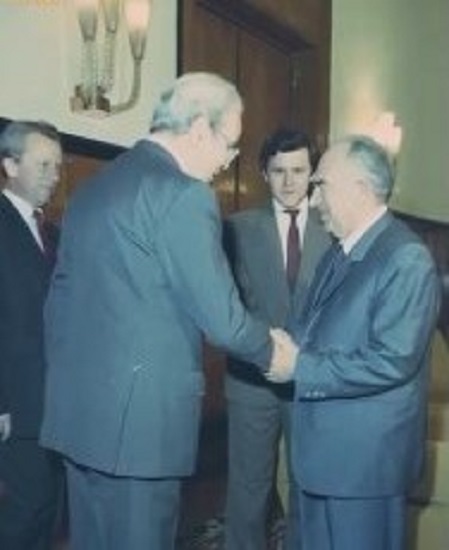
On 28 September 1990, the UN Secretary-General, Javier Perez de Cuelar, received in his office, at the UN Headquarters, Comrade Ramiz Alia. After the greetings and customary congratulations, the Secretary-General took the floor, who, among other things, said:
Javier Perez de Cuelar: “It is a special pleasure to meet you, Mr. President. I welcome you to the headquarters of the United Nations in this Your first visit here, which, as far as I know, is the first participation of a president of Albania in the proceedings of the session of the UN General Assembly. I take the opportunity to express to you also in my name and in the name of my colleagues who accompanied me during my beautiful visit to Albania, my thanks and deep gratitude for the cordial and warm reception that you reserved for us.
During that visit we had the opportunity to become closely acquainted with the development of your country and the important changes and reforms that you had undertaken in various fields of the political, economic, and social life of the country. We, even afterward, have followed with interest and appreciation the changes and new decisions that you have undertaken, especially those in the field of legislation, economic mechanism, in the field of human rights and freedoms.
I, Mr. President, followed with attention the speech that you held today before the General Assembly and I was very pleased that your word was received with great interest and found welcome also from the public. This was shown also by the applause of the public and especially of your compatriots. I followed with interest and attention the position of your country regarding the situation in the Persian Gulf and the condemnation that you make of Iraq’s aggression and the annexation of Kuwait.
The UN greatly appreciates this position. As you are aware, the situation in the Persian Gulf is now extremely grave. The risks for the outbreak of war are great. This is primarily because of the stubborn and unwavering position of Iraq and especially of President Saddam, who continues to openly defy the decisions of the Security Council and the International Community.
In my opinion, there is no preparation or readiness at all for a peaceful solution. It is truly required that my mediating role be used for the resolution of the crisis, but there is no indication from Iraq to start a path toward the implementation of the Security Council resolutions or any sign to discuss the withdrawal of Iraqi troops from Kuwait, which is the precondition of any discussion and talks to find a peaceful solution.
I undertook my steps by going to Amman, Jordan, where I met with the Foreign Minister of Iraq, Tarek Aziz, who is an old friend of mine, but he was not able to make even the smallest concession. Meanwhile the King of Jordan, Arafat of Palestine, and other Arab personalities have undertaken initiatives and are making efforts to find a peaceful solution and to avoid war.
Meanwhile, four permanent member countries of the Security Council are working to have approved by this Council a resolution that requests from me to resume my efforts for the resolution of the crisis. I do not know if such a resolution would solve anything, because in my opinion it is too difficult for me to achieve any success before the intransigent position of President Saddam Hussein.
This is also because it is not up to me to discuss with Iraq the resolutions approved by the Security Council, on which Iraq insists. Those of the Security Council have it easy to remove the burden from themselves and pass it on to me.”
Comrade Ramiz Alia (intervention): “They certainly appreciate your talent and abilities.”
Javier Perez de Cuelar (continuation): “So, Mr. President, such is the situation in the Gulf. As you also emphasized in Your speech, we must in no way divert attention from the essence of the problem: the resolution of the Middle East problem as a whole and especially the Palestinian one, the return of the occupied territories of the West Bank and Gaza and of Syria’s Golan, as well as the removal of foreign troops from Lebanon and the return of peace to this tormented country. I want to emphasize that the situation in that region is extremely dangerous.
Currently, the resolution of the crisis in the Persian Gulf is urgent, and if this problem is resolved, the five permanent member countries of the Security Council must immediately be set in motion for the discussion of the Middle East problem. I would like to know how your relations with Yugoslavia are and how the situation in the region of Kosovo presents itself. I heard your position on this problem. In your speech you addressed the position of the Republic of Serbia and differentiated it from Yugoslavia as a whole and the federal leadership.”
Comrade Ramiz Alia (intervention): “We differentiate it because this is a reality.”
Javier Perez de Cuelar (continuation 2): “We hope that this problem will find a just resolution as soon as possible because the Balkans must be stabilized. How do you have the situation in Albania? I have heard about very important new developments that have occurred there and the steps that you have undertaken.”
Comrade Ramiz Alia: Taking the floor, Comrade Ramiz Alia, among other things, said: “I want to sincerely thank you for the warm reception that you are reserving for me. I have the special pleasure for this meeting, not only because I am being received by the Secretary-General, but because now I meet you as a friend. So it is a meeting between sincere friends. Your visit to Albania had a great effect, not only in official circles but also in our people.
They have greatly appreciated your statement as well as the friendship and love shown by you toward Albania and our people. Today, in my speech, I expressed the views of our country on the international situation and the situation in the country. We see the situation as very serious. Now on the international scene various difficulties and problems are emerging. The problem of Iraq’s aggression and that of the annexation of Kuwait and consequently the grave crisis in the Gulf is a great problem, but not the only great problem.
It is not only Iraqi aggression that is a danger to peace and security in the region and in the world. The oil issue can also cause war. It may create greater risks and threats than Iraq. Yesterday some journalists asked me. I told them that aggression must be condemned and peoples must be protected. If such precedents are created as the occupation and annexation of a small country like Kuwait, for peoples and small countries it constitutes a great danger. I agree with your views Mr. Secretary-General as well as those of the UN. I know that it is too difficult to speak with a deaf person. When one side does not approach for dialogue then one goes in the opposite direction.
Now more dialogue and understanding between states is needed. I think that with your efforts, those of the Security Council and of the Arab peoples and countries, something will be achieved. I believe that Iraq will see that the way out it seeks is dangerous also for itself. I want to assure you that Albania is fully aware of the steps that the UN must undertake and supports every positive step for achieving the resolution of this dangerous crisis. For the Balkans and Eastern Europe I think that a serious problem is emerging on the surface, the economic one, which may have serious and very dangerous consequences. I have the impression that the political aspect is being overvalued, it is being stimulated, leaving in oblivion the economic one, which may bring great perturbations. The developments in Eastern Europe have another basis. To pass immediately from one system to another brings explosions.
Comrade Ramiz Alia: I mentioned incidentally the issue of civil war, which should not be neglected. As for Albania, as I told you when you were in Tirana, we are making many steps to well coordinate economic development with the social one and the democratization of the country, so that all the factors that constitutes the unity of economic, political, and social problems march in parallel. Advice is given to us a lot. Everyone gives advice. The first advice: “Hurry up!”. I do not agree with such advice. According to the Bible, even God himself needed a week to create the world, therefore we also need time, because things are not done in one day, otherwise haste brings risks.
But I can tell you that we are moving with consistency. Those that I told you in our meetings in Tirana we are implementing. We take steps in adaptation to the conditions of our country. The people understand it rightly; the political forces are all in unity, regardless of what the foreign press writes. The political leadership of Albania all walks on this path. With us it is not a matter of persons and we are all aware that we cannot walk alone but on this path.”
After the Secretary-General asked Comrade Ramiz Alia how long he would stay in New York, Comrade Ramiz answered until 1 October and added: “I will try to take advantage of the opportunity and meet with many heads of state and government. My principle is that the more people you discuss with, the better it is.” Meanwhile, the chief of protocol of the UN intervened and begged the Secretary-General to conclude the meeting since he had other meetings. / Memorie.al
Continued in the next issue