

Part Twenty-Eight
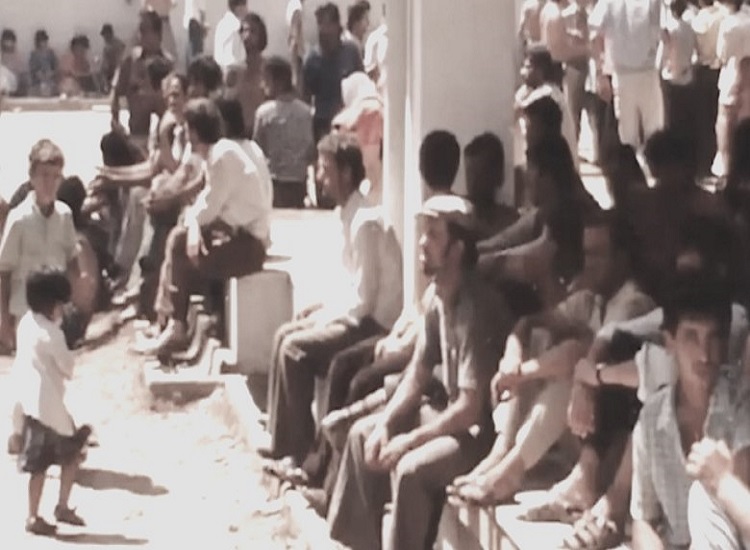
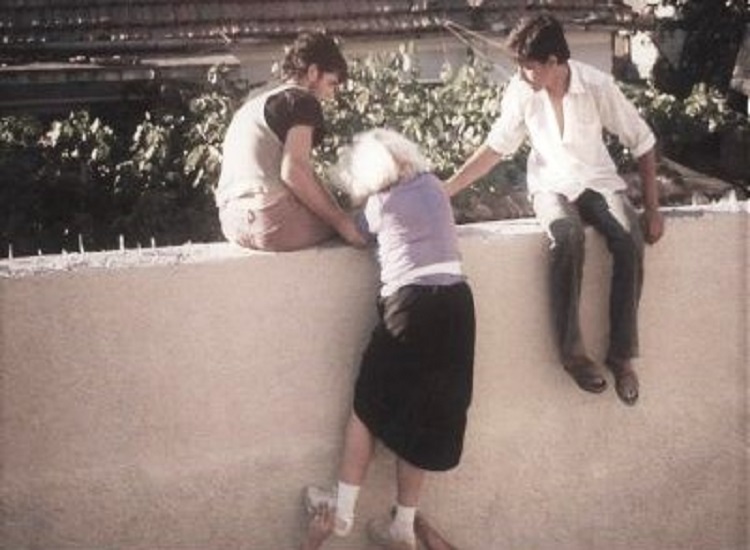
Memorie.al / The American secret service, in addition to attempts to overthrow the communist regime, has also devoted importance to the early years of transition. In a document declassified a few days ago for the year 1990, the influx of refugees toward the embassies is shown. The CIA writes that in July 1990, about 6 thousand persons had entered the embassies, half of them in the German embassy. On the other hand, it is said that in Tirana there was a power struggle, between Ramiz Alia’s people who had begun to relinquish power and communist radicals, who had State Security behind them. The role that Adil Çarçani had and the fear of Greece and Yugoslavia for a Balkan war are also shown.
6 July 1990
Negotiations with the government and foreign embassies where hundreds of asylum seekers have taken shelter have been interrupted amid signals of anti-regime activity. Albanian police allowed yesterday a wave of 100 Albanians to enter foreign embassies, while Tirana has not accepted the request of the Germans and Italians to bring food and medicine by planes. Criticism from Western countries about yesterday’s situation and the safety of refugees led the government to deny that there had been deaths during Monday’s demonstrations.
Official Tirana says that Albanians have the right to travel abroad and that their presence in embassies is unnecessary. The Central Committee of the Communist Party met yesterday and is expected to approve the emigration of those sheltered in embassies. According to press reports, changes in government are being considered, while other demonstrations are planned.
Comment
The Albanian government is trying to shift the blame for the refugees onto the foreign embassies that are sheltering people. Perhaps Tirana thinks that by allowing more refugees to enter, with food shortages and sanitary conditions, Western governments will finally be forced to return them. The continuation of demonstrations will certainly worsen the situation, forcing leaders to begin the campaign of suppressing unrest.
Public disobedience is likely to spread to other major cities, where the regime may also use greater repressive force far from the view of Western monitors. In Tirana, the power struggle between President Alia’s moderates and communist radicals is expected to continue. In the event of a final clash, the radicals have more connections with the security forces and State Security, and would most likely win.
9 July 1990
The situation in Albania is turbulent and is expected to remain so. Officials are not sending a clear message on the refugee issue and the cabinet changes over the weekend did not bring new faces into government. The authorities collected passport applications from refugees at at least four embassies yesterday. The flow of refugees into foreign embassies seems to have stopped for the moment, but their number is believed to have exceeded 6,000 people, of whom about 3,000 in the German embassy alone.
Sanitary and food conditions in the embassies are worsening. Prime Minister Çarcani and other leaders are maintaining a hard line and are blaming the embassies themselves for the situation, denouncing the “brutal interference” in Albania’s internal affairs. Çarcani reiterated Tirana’s refusal to allow Western planes to bring aid and medicine.
The area around the embassies was closed yesterday by a police siege, blocking the entry of other refugees. Unconfirmed reports from Greek sources suggest that Albanians attempting to cross the border toward Greece have also been met with fire from Albanian border forces. On Saturday the Albanian government announced changes in government, after the two-day meeting of the Central Committee of the Communist Party.
Hardline communist ministers, Stefani of the Interior Ministry and Murra of the Defense Ministry, lost their posts along with several elderly members of the Communist Party from the Politburo. Stefani retained his seat in the Politburo and was replaced by Hekuran Isai.
President Alia announced other political and economic reforms, especially that for private businesses and the service sector which will be allowed to expand.
The regime seems to be moving toward the release of refugees, but easing measures may bring worsening of incidents. Perhaps the power is doing this in the hope that softening the rules may soften tensions, but promises may not be enough to calm the crowds, which demand real changes toward improving living conditions and democracy.
The removed members of the Politburo may have been planned for some time, and their replacements are expected to be more moderate, but the fact that Stefani retained his seat in the Politburo means that radical communists remain a factor.
10 July 1990
Albanian unrest spreads in the region
Greece seems to be preparing for a flow of refugees and has requested from Albania security for the Greek minority community in Albania, while Belgrade is concerned that the unrest may worsen the delicate situation in Yugoslavia. Greece has engaged commando forces and naval vessels on the borders with Albania, according to press reports. An elite Greek Naous unit, near the border with Yugoslavia, perhaps with about 350-500 people, is reported to have been transferred to Ioannina, near the border with Albania.
A naval force with at least one frigate has been deployed on the southwestern coasts near the island of Corfu. Belgrade has limited its involvement in providing mediation through its ambassador. No unusual movement of Yugoslav military forces has been observed near the borders with Albania. In all likelihood Athens seeks to secure its borders to avoid a possible influx of Albanian refugees, as well as to show its determination in protecting the Greek minority in the country.
Its nationalist conservative government certainly prefers to work with members of the European Council for the resolution of the conflict, but any act of violence against members of the Greek minority would put the government under pressure to increase military forces on the border, and as in extreme cases, to act militarily inside Albania. Belgrade undoubtedly fears that the continuation of unrest will increase tensions in the Albanian province of Serbia, Kosovo, as well as the possibility of a flow of refugees.
Changes in government
In Tirana, yesterday’s government changes affected the ministers of Economy and aimed at calming the situation of food and other shortages. The press reported that demonstrations continue in Kavaja and strikes in Elbasan, at the Metallurgical Combine. State Security and the Army have blocked the roads to Tirana and the train lines to the capital have been stopped. The government seems to be keeping its promise to allow the departure from the country of about 6,000 refugees in foreign embassies.
The German, Italian, Hungarian and other embassies have begun filling out asylum forms and about 3,000 refugees estimated to be sheltered in the German embassy are expected to leave tomorrow or Thursday, although concrete plans for their departure have not yet been made. The Italian government is considering the departure of about 3,000 refugees by sea route.
The large number of refugees and their illiteracy has slowed the registration process. Meanwhile, Albania has tightened the granting of visas for foreign correspondents. A Greek journalist confirmed that officials have stopped foreign journalists at the airport and force back those who do not have a visa.
30 June 1994
CIA on Albania-Greece relations
Relations between Albania and Greece have worsened greatly after a violent border attack in April, the latest incident during three years of tense relations. Greece has increased accusatory rhetoric about repression against the Greek minority, while Tirana fears that Athens has plans for the minority in Southern Albania. Greece accuses that Tirana systematically violates the rights of the minority, with the aim of removing it from Albania, but these have no basis.
The report of OSCE officials says that the rights of the Greek minority are in line with OSCE directives. Albania fears that Greek expansionist policy is prompted by Athens’ failures in controlling extremist nationalism, which seeks to provoke the Greek minority.
This has reinforced suspicions that the main Greek political organization in Albania is manipulated by Greece. A bilateral crisis over minorities could destabilize the pro-American government of Tirana, to the advantage of former communists, and could have consequences for the region.
Harsh diplomatic clashes between the two countries
The Greek government of Papandreou considers the issue of the Greek minority in Albania as the most explosive in Greece’s policy. The improvement of relations seems impossible without the help of the West for the clarification of information and misinterpretations by both sides. Tensions have been permanent in Greece-Albania relations in recent years.
Last year, Greece removed from the country about 25,000-30,000 Albanians without documents, after Tirana expelled a Greek clergyman, who was supposed to have distributed Greek expansionist literature (territorial claims). Relations worsened after the border incident of 10 April where two Albanian officers were killed. Albanian authorities claim that the attackers fled toward Greek territory.
An unknown terrorist organization called the “Liberation Front of Northern Epirus” (“MAVI”) took responsibility for the attack, according to Greek media. Albanian President Berisha publicly accused the Greek government of protecting those responsible, but the government denied any involvement. Tirana then arrested six ethnic Greek leaders, on charges of promoting Greek separatism. Berisha assured that the trial of the six Greeks would be public and open to international examination.
They held positions in the Greek ethnic organization OMONIA. The government accused Tirana of persecution of the Greek minority. Athens has twice canceled meetings for the improvement of relations, which has brought blockage of European funds for Albania and protests. Albania protested to several international organizations. After internal pressure, Greece increased diplomatic pressure on Albania and began discussion of closing the border and the penetration of illegal Albanians.
Police investigations into the border incident brought other sharpening of rhetoric, after the questioning of about thirty ethnic Greeks in May. Athens accused Tirana of starting a wave of arrests and pushing for the departure of Greeks from Albania. Berisha told journalists that he could go for talks in Athens, if invited.
The situation of the Greek minority in 1994
We have not found evidence that Tirana implements systematic policies of intimidation and pressure against the Greek minority. Information suggests that on the contrary, Athens has human rights violations more serious than its accusations on the opposite side. The OSCE High Commissioner for Minorities, Max Van der Stoel, visited Albania twice last year and said that the Greek claims had no basis (there is no signal of programs for the removal of minorities.
Tirana is resettling some poor families from the North on agricultural land in central Albania, the minority areas are untouched). Most ethnic Greeks travel to Greece for economic reasons and not to escape discrimination.
OMONIA’s ties with Greek radical organizations
The breakdown of relations with Greece has increased Tirana’s suspicions about possible ties between OMONIA and Athens. The group was founded in 1991 with support from several Greek organizations.
Omonia maintains ties with several Greek radical organizations that openly defend the theory of “Northern Epirus” and its leaders travel to Greece and are received by Athens officials.
Although most of its leaders are moderate and engage with the Albanian system, some elements, such as one of the six arrested in April, made a public call for the union of Southern Albania with Greece.
Some of those arrested had carried out expansionist activities. OMONIA leaders deny ties with Greece and recently at a press conference have declared that they are independent from foreign forces and relatively distanced from the Tirana government.
Some complaints of ethnic Greeks against Tirana are legitimate, especially those regarding the representation of ethnic Greeks in education, police and army. Greeks have also complained about the refusal to return the properties of the Greek Orthodox Church./ Memorie.al
Continues next issue