





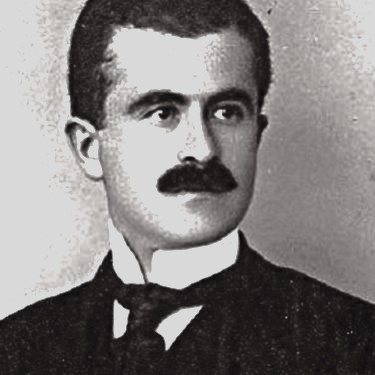
By DASHNOR KALOÇI
Part Eight
Memorie.al / Although he was the main leader of communist Albania for 40 consecutive years, governing his country with an iron hand from 1945 until he died on April 11, ’85, but even after his death, and until the collapse of the communist regime at the beginning of 1991, a complete official biography of Enver Hoxha was never published, even though he himself left written a series of works of around 80 volumes. In fact, even after the 1990s and up to today, a biography of the former communist dictator Enver Hoxha has not yet been published, one that would be based on archival documents that shed light on the early origin of the family, with its genealogical tree, as well as a life story of him, from the day he was born until the day he died…! This apparently also due to the fact that throughout his life, there were many light and shadows, in fact many dark stains, which made him himself never give approval for the publication of a biography of his in a separate book, even though such biographies have in fact existed. In fact three of them and with different authors, which are found, even today in Enver Hoxha’s personal fond, in the Central State Archive in Tirana.
The first official biography of Enver Hoxha became public in 1946, within the framework of the “popularization” of his figure, as “the main leader and first secretary of the Communist Party of Albania, commander-in-chief of the National-Liberation Army with the rank of colonel-general, chairman of the presidium of the Democratic Front of Albania, prime minister of the Albanian government, minister of People’s Defense and minister of Foreign Affairs.” As can be seen also in the respective facsimiles attached to this writing, this biography, which is a small booklet of 58 pages, published at the “Rinia” Printing House (formerly the “Gutenberg” printing house), on the first page (after the dark maroon cover and the photo of Enver Hoxha in the military uniform of a general with medals on his chest), has written in capital letters: “ENVER HOXHA, A SHORT BIOGRAPHY”. That first official biography of Enver Hoxha was prepared for publication by the employees of the Agit-Prop sector (Agitation and Propaganda) at the apparatus of the Central Committee of the PPSh [Party of Labor of Albania], but in truth its compiler and author was the first captain, Ndreçi Plasari, whose name does not appear in the book in question, but is found written in his own handwriting on the first page of the typed material that was sent for printing.
The book, or more precisely the brochure “ENVER HOXHA, A SHORT BIOGRAPHY”, begins with a description of the city of Gjirokastra where Enver was born on October 16, 1908, and continues with several paragraphs on the history of the Hoxha family (a thing which occupies only the first two pages), while the entire remaining part is devoted to his role (Enver’s) during the period of the “Anti-Fascist National-Liberation War” with some of its main events (the founding of the PKSH [Communist Party of Albania], the Peza Conference, the Labinot Meeting and the creation of the General Staff of the National-Liberation Army on July 10, 1943, the Mukja Agreement, the Përmet Congress, etc.), concluding with January 11, 1946, with the event of the proclamation of the Republic. Even today it is not known with precision why that brochure with the first official biography of Enver Hoxha (where a life story of him for the period of Zog’s Monarchy is almost entirely missing), which glorifies his figure and role (or that of the Hoxha family), from the period of childhood up to the time it was published, was immediately withdrawn from circulation (it is said after two-three months) and was never used again even for references, in books, albums, or other works dedicated to his figure.
Because from that time onward, Enver Hoxha began the elimination of his close collaborators (members of the Politburo, ministers, deputies, etc.), by imprisoning, internment or executing them, and the book in question with his biography could no longer circulate with the names of “enemies of the people”. The second biography of Enver Hoxha was written in 1950 (15.VI.1950) and it has as author Misto Treska, a close man and very trusted by Enver Hoxha, since the period of the French Lyceum of Korça and the Communist Group of that city where he was a member, who during the War period was political commissar of the partisan Battalion “Reshit Çollaku” and after 1944, was promoted to major, being appointed as prosecutor and member of the judging body in the Special Trial of 1945, which sentenced to death former prime minister Maliq Bushati and the members of the Regency, Lef Nosi and Father Anton Harapi..
Just like the biography written by Ndreçi Plasari in 1946, also that of Misto Treska, which has 238 pages of handwriting and the same title (“Enver Hoxha, a short biography”), glorifies beyond measure the figure and role of Enver Hoxha, in all the time periods treated there. Perhaps this has also been the main reason that that biography written by Misto Treska about Enver Hoxha, not only was never published, but was not even typewritten with a typewriter, like the 1946 biography of Ndreç Plasari, or the other one that was written later. Likewise, it is not known with precision whether this “service” that Misto Treska did to the main leader of Albania, Enver Hoxha (with whom he had acquaintance also from the period of studies in France), influenced his later career, where he served as jurist, translator, book author, diplomat, ambassador of Albania in France, Belgium etc., as well as chairman of the Committee for Friendly and Cultural Relations with the Outside World, where he also retired in 1981.
Likewise the same thing also for professor Ndreçi Plasari, historian and researcher who during the communist regime held important academic and political posts, being for a long time also deputy director of the Institute of Marxist-Leninist Studies in Tirana, directed by Nexhmije Hoxha. In those duties, professor Plasari served until 1982, when he was struck by the Party, accused as “a man of Mehmet Shehu, who had been sent by him to the British archives to inflate his (Mehmet’s) cult and had hidden the documents that proved that Mehmet Shehu had been an agent of the Intelligence Service”! The third biography of Enver Hoxha was written in 1969 and it has as author Aqif Selfo, a close friend of childhood and youth with Enver and his neighbor in the city of Gjirokastra and, later in the French Lyceum of Korça, where they studied together and Selfo served for some time also as dormitory supervisor at that lyceum. On the first page of that biography, it is written: “Memories from the life of the Hoxha family, its origin and a life story of comrade Enver Hoxha, for the period 1908-1930 and 1931-1939, 6.1.1969, by Aqif Selfo”.
That biography, or more precisely a life story, as the author himself has titled it (it has 124 pages of handwriting, while typewritten 82 pages), just like those of Ndreçi Plasari and Misto Treska, from beginning to end, glorifies the figure and role of Enver Hoxha, in fact with distortions and falsifications of historical events and facts. (As for example, on p. 46 of his memories, Aqif Selfo among other things writes that: “Enver set off for Belgium, settled in Brussels and began the duty of secretary of the Consulate. He stayed here partly in 1934, the whole of 1935 and partly in 1936. Alongside the duty of secretary of the Albanian Consulate in Brussels, Enver also continued his studies at the law faculty and took the exams of the second year”. While in another archival document found also in Enver Hoxha’s personal fond, the Albanian diplomat Nos Qosja who served in our embassy in Paris, among other things writes: “During my visit to Belgium with comrade Harrilla Kola, we went to the University of Brussels (Faculty of Law) and asked and established: Comrade Enver is registered at the Faculty of Law for the academic year 1934-1935. In the archive of that faculty, there exists a card with these data;
HOXHA Enver
Academic year 1934-1935
Date of birth; 3 October 1908 (Gjirokastër)
Register number; 2821
His address; “Legation d’Albania 155 Rue de la Loi, Brussels”.
The card is white; it does not appear that he has taken any exam”.
Paris, 22 February 1969 Nos Qosja
From what is said also in the archival document in question (which is conditioned with the period when the biography of Enver by Aqif Selfo was written), it results that Enver Hoxha has not taken any exam at the Faculty of Law of Brussels, a thing which refutes what Aqif Selfo writes, that “Enver took the exams of the second year”! Perhaps this has also been the main reason why those “Memories” were never published as a book, since in the period they were written, many of Enver’s and Selfo’s comrades and peers were still alive (in political prisons or free), as from the period of their childhood in the city of Gjirokastra, that of the Lyceum of Korça, or also of studies in France. But even though those “Memories” never saw the light of publication, in all likelihood they served their author Aqif Selfo as a shield for a quiet life (he worked as a teacher in Tirana at the “Qemal Stafa” gymnasium, until he retired), unlike his two cousins, Riza and Syrja Selfo, whom Enver arrested and shot, even though they and the entire Selfo family had helped him with money, during the War period, 1939-1944.
On the basis of these three biographies, in 1978, a book was published or more precisely a brochure-type with the title: “Enver Hoxha, beloved leader of the Albanian people” – (Material for conversations, on the occasion of the 70th anniversary of birth), where on the first page after the cover, it is written: “Prepared by the sector of Marxist-Leninist education, at the C.C. of the PPSh. – In aid of agitators and propagandists”. The book in question is published by the “8-Nëntori” Publishing House at the “Mihal Duri” Printing House in Tirana. The fact that these three biographies of Enver Hoxha are found in his personal fond, in fact even with interventions and corrections by other persons, if they were not done by his order, in all likelihood they were written with Enver’s approval. Nevertheless these remain within the framework of hypotheses where there is room to investigate longer, but in this writing we are publishing first the biography of Enver Hoxha, which is written by Aqif Selfo, which is published for the first time and with the respective facsimiles in several issues, by Memorie.al.
THE ARCHIVAL DOCUMENT EXTRACTED FROM THE PERSONAL FOND OF ENVER HOXHA THAT IS FOUND IN THE CENTRAL STATE ARCHIVE, WITH THE MEMORIES WRITTEN BY AQIF SELFO, ON THE ORIGIN OF THE HOXHA FAMILY AND A LIFE STORY OF ENVER HOXHA
Memories from the life of the Hoxha family, its origin, and the life story of comrade Enver Hoxha for the period 1908–1930 and 1931 – 1939
By Aqif Selfo
6.1.1969
His stay in Paris was short and in a not good economic condition, but fruitful. Here Enver had the opportunity to become acquainted with the Marxist circles of the French Communist Party and with editors of the party newspaper “L’Humanite”. The magazine “Agitatori” No. 5 October 1947, in its main article – Enver Hoxha, short biography – regarding Enver’s collaboration in the organ of the French Communist Party, writes: “In the offices of ‘L’Humanite’ he became acquainted with the editor-in-chief of the organ of the French Communist Party, Paul Vaillant Coutourier, whom he asked to write articles in the newspaper on the situation in Albania. Vaillant agreed and published several things in the newspaper.
At this time when he was looking for some work Enver learned that in Brussels (Belgium) our state had an honorary consulate and as representative performing the functions of consul, was a Belgian. Enver writes to the consul if there was need for a secretary, who possessed the French language well. The consul answered positively. Enver set off for Belgium, settled in Brussels and began the duty of secretary of the consulate. He stayed here partly in 1934, the whole of 1935 and partly in 1936. Alongside the duty as secretary of the consulate Enver also continued his studies at the Law faculty and took the exams of the second year.
In Brussels Enver was very well informed on the situation in Albania, since here came many news and newspapers from Albania. Taking advantage of these materials he drew the proper conclusions on the grave situation of the country. Enver, better informed on the situation of Albania and equipped with a sound progressive culture, of the left, continued to send to the organ of the French Communist Party, “L’Humanite”, articles on the situation in Albania. The articles of this period, sent from Belgium, on the grave situation in Albania, were with deeper and more studied content. Regarding Enver’s stay in Belgium, two persons who have been, also in this same period in Belgium, Vasil Gjymyshana and Gaqo Papallopulli, tell several things about Enver’s life.
Vasil Gjymyshana, from Berat, had gone to Belgium in the summer of 1935, with the aim of attending school there. The expenses for the time of study had been promised to him by a relative of his who was in the United States of America. But since this one did not help him, Vasil was forced to return to Albania. During the short time that Vasil Gjymyshana stayed in Brussels, he also became acquainted with Enver. He tells the impression that Enver’s behavior made on him. Comrade Enver, he says, has been in the Albanian consulate of Belgium as secretary. At that time when I have known comrade Enver, he lived in a simple room, but I do not remember the street and the number of the dwelling.
Comrade Enver frequented a small cafe – “Bar Horloge” -. A great impression was made on me by the warmth, the behavior and the great love that he showed for me, a boy then fifteen years old. Comrade Enver has behaved toward me like a parent. I had his house as my house. A great impression was made on me by his conversations. In that short period that I stayed with him, comrade Enver did not leave a moment without speaking about Zog’s regime, he spoke with a great hatred for it. Comrade Enver every day leafed through the various newspapers, especially at this time when there had occurred in Albania, the Fier uprising.
While Gaqo Papallopulli was a former student in Belgium and was following higher studies, at that time, tells: “I met by chance with comrade Enver in Brussels, around the spring of 1936, together with comrade Koço Theodhosi. In this first meeting we talked more about various issues especially on the political and economic situation of Albania. My meetings with comrade Enver have been rare, since I lived far from Brussels but nevertheless, in those few meetings that I had with him, I noticed, from the conversations with him, that he was a determined anti-fascist and anti-Zogist. My opinion is that comrade Enver was very reserved in his work, but I am convinced that he worked a lot: he went to meetings and conferences that were held by the parties of the left.
I have this opinion because several times that I have gone to his house – ‘Rue Royale’ – I have not found him; this has made me believe that he ran after meetings and conferences. In Belgium comrade Enver helped those Albanians who needed his advice, as well as with those possibilities that he had. In Belgium also came Albanian workers to work, in those cases when they did not find work in France, and to these too comrade Enver tried to find work and to ease their sufferings. Gaqo Papallopulli after Enver’s departure from Belgium tells about the opinions that the Belgians who knew Enver had for him.
He tells: “In 1936 or 1937 (since I have stayed in Belgium until 1938), I was visiting an exhibition of the Belgian Communist Party, there some Belgian comrades of the university call me, together with them was also another person that I did not know (later I learned that this person was charged with giving explanations about the exhibition). This person together with the other Belgian comrades approached and we greeted all. The Belgian comrades introduced me to their comrade. This one upon learning that I am Albanian, asks me if I was really Albanian, in my positive answer, he immediately tells me that surely you too are a communist. Right then I told him where he had this opinion from.
The one charged with the duty of the exhibition’s explainer answered me: I have known an Albanian who not only spoke French very well but also wrote, this Albanian was called Enver Hoxha. I think that according to what this Belgian said, comrade Enver must have written in the organs of the left press, since the exhibition was also of the Communist Party and the one charged with the duty of the explainer, must have known closely and in work com. Enver. Gaqo Papallopulli tells also about the opinion that the consul had and his interest toward Enver. The consul and his wife, he says, had a very good memory of com. Enver. Whenever I went to the consulate, for some work, both the consul and his wife always asked me about com. Enver: if I had learned where he was, what work he did etc.
This shows that they were interested in him and that he had left good impressions on them. They always said that com. Enver was a young man with broad culture and they had the opinion that he had progressive ideas. The consul’s interest was so great, that when I went to the consulate to return to Albania, the consul ordered me, with a great insistence, that when I returned, to give him information on the situation of com. Enver: his health, what work he did etc. Enver’s great activity in Belgium caught the eye of Zog’s agents and spies, who had spread their net also here.
These reported and as a result the Albanian government ordered his dismissal as secretary of the Albanian consulate in Belgium. Enver after the dismissal returned to Albania. During his stay abroad, to follow studies, Enver returned almost every year, in the summer holidays, to Albania. Even in this short time of holidays he was always active. One of his actions, of this period, was on the occasion of the discovery of the Vlora Movement in August 1932, of the arrests of dozens of people of the movement and of the heavy sentences given, by the special trial, against the majority of the members of this organization.
The aim of the organization was anti-Zogist. It was formed as early as 1930. In this period Zog, according to widespread rumors, suffered from an incurable disease. The leaders of the movement thought that in case Zog, as a result of the disease, might die, to overthrow his regime and proclaim the republic, otherwise to use the movement to form an anti-Zogist bloc.
But the discovery of the movement, the numerous arrests as well as the heavy sentences made a great impression throughout the country and especially in Vlora, as well as in other cities in Gjirokastra, Shkodra and Tirana, where the organization had recruited many members with anti-Zogist inclinations. A great impression was made also on the youth of the country and that of Gjirokastra. The Gjirokastra youth responded to the draconian measures of Zog’s regime in its own way.
Enver, with some Gjirokastra youths, wrote some slogans on the walls of the market shops, near the prefecture. These slogans unmasked Zog’s regime for the oppressive policy, they at the same time were insulting and threatening toward the regime. The written slogans were dictated. The authorities of the country, immediately, arrested some of the youths of the city headed by Enver. The arrest did not last long, in the absence of facts, the authorities left Enver free again as well as his comrades.
But during the period of studies abroad, Enver whenever he went to France or Belgium and on his return to Albania, stayed several days in Bari (Italy), at his sister’s, the wife of Bahri Omari, a political fugitive since December 1924. Fahrije Omari, Enver’s sister, says: “In our house came for visits, often, the political fugitives, such as Qamil Çela, Muharrem Vllamasi and especially Baba Sheh Karbunara, here these have also known Enver”.
When I asked Muharrem Vllamasi what he thought, he told me, among other things: “I have known Enver in Bari at Bahri Omari’s. During the short time that he stayed in Bari, Enver was young then and we, as older and more beaten in life, did not open up much about political issues, but nevertheless I have noticed that, from the conversations with him in Bahri’s house, in the walks we did or in the cafe, that Enver had very progressive thoughts and ideas, for me he was, at that time, an extremist of the left. This conviction I formed even more when I read his speech held at the grave of Bajo Topulli. This speech made a great impression on me for his progressive and very courageous ideas for that time”.
Enver’s activity during the summer holidays of 1936
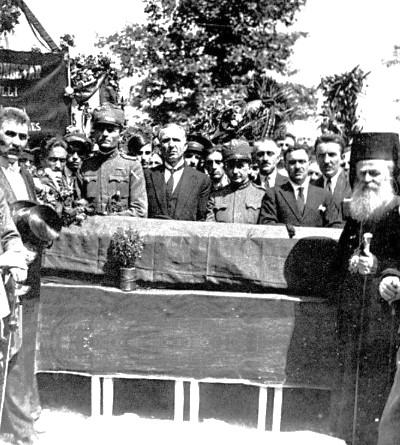
So in the summer of 1936, after the dismissal from work as secretary of the Albanian consulate in Brussels, Enver returned to Albania and spent the summer months in Gjirokastra. The summer months of this year have been for him a period full of important events: The inauguration of the grave of the patriot Bajo Topulli, Enver’s meeting and acquaintance with Ali Kelmendi, as well as the raising of the bones of the patriots Çerçiz Topulli and Muço Qulli. On July 24, 1936, Bajo Topulli died in Saranda. On that same day his body was brought to Gjirokastra escorted from Saranda with great honors, received and escorted also in Delvina, also with great honors. After noon Bajo’s body was brought to Gjirokastra, to his birthplace. The fellow citizens, great and small, received with deep respect the body of this fighter who had sacrificed everything for the liberation of the homeland and for the good of the people.
His body, placed in an elegant coffin, was displayed in one of the halls of the Municipality for the city’s people to greet, for the last time. On that same day his body was brought to Gjirokastra escorted from Saranda with great honors, received and escorted also in Delvina also with great honors. After noon Bajo’s body was brought to Gjirokastra, to his birthplace. The fellow citizens, great and small, received with deep respect the body of this fighter who had sacrificed everything for the liberation of the homeland and for the good of the people.
The next day, on July 25, 1936, his burial took place with great honors, escorted, to his final resting place by a great majority of the citizens of Gjirokastra. At his grave the appropriate speeches were held, while the wreaths were numerous. The burial of Bajo Topulli took place on the hill of Pllaka. After six years, finally, the Municipality of the city managed to arrange the grave of this patriot. Bajo Topulli’s grave was of marble and surrounded with iron railings. It also contained his photograph with the inscription: To the Veteran Bajo Topulli – Municipality of Gjirokastra./ Memorie.al
Continues next issue