
By Lutfi ALIA
Part Two
Memorie.al / On September 3, 1943, the Prime Minister of Italy, Marshal Badoglio, signed the armistice with the Anglo-American Allied forces, who ordered him to communicate this decision immediately to the Italian people. Badoglio hesitated and was not proclaiming the armistice, but the Anglo-Americans applied pressure by bombing Rome and Naples. On September 8, 1943, at 18:30, General Dwight Eisenhower, on Radio Algiers, proclaimed the capitulation of Fascist Italy. One hour later, Prime Minister Badoglio was forced to notify the Italian people of the capitulation and the signing of the armistice.
Continued from the previous issue
Xhelal Staravecka remained in Fushë-Gurrë for 48 hours. October 16, 1943: The Command of the Çermenika Battalion ordered Colonel Gamucci and Captain Ramiddi, who were still in Zdrajsh, to report to Fushë-Gurrë, in order to depart with the column of carabinieri for Burrel. According to the diary of Second Lieutenant Galiardi, Colonel Gamucci and Captain Ramiddi left Zdrajsha at 16:00 on October 16.
October 17, 1943: By a letter bearing the apocryphal signature of Colonel Gamucci, the group of other officers, isolated in Zdrajsh, was invited to go to Fushë-Gurrë, in order to depart as well for Burrel. On the morning of October 18, this order was temporarily cancelled, on the grounds that the journey to Burrel was not safe.
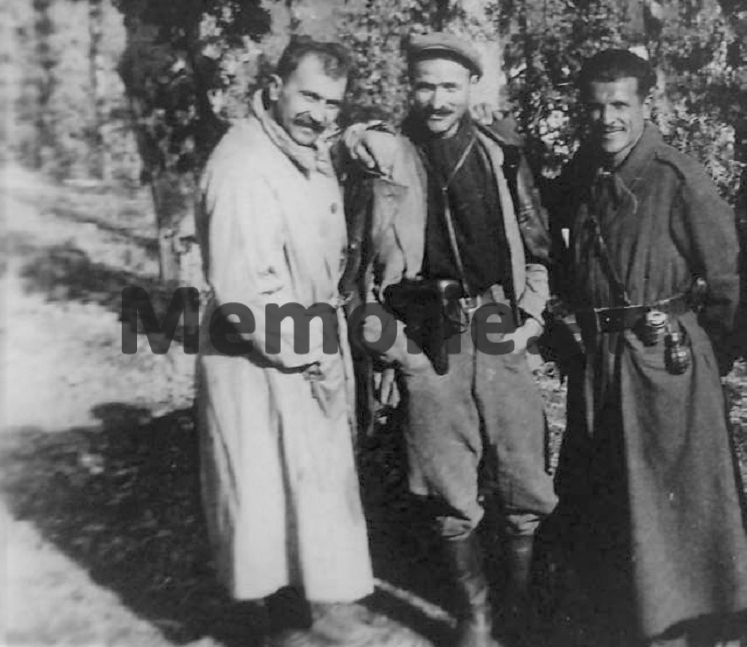
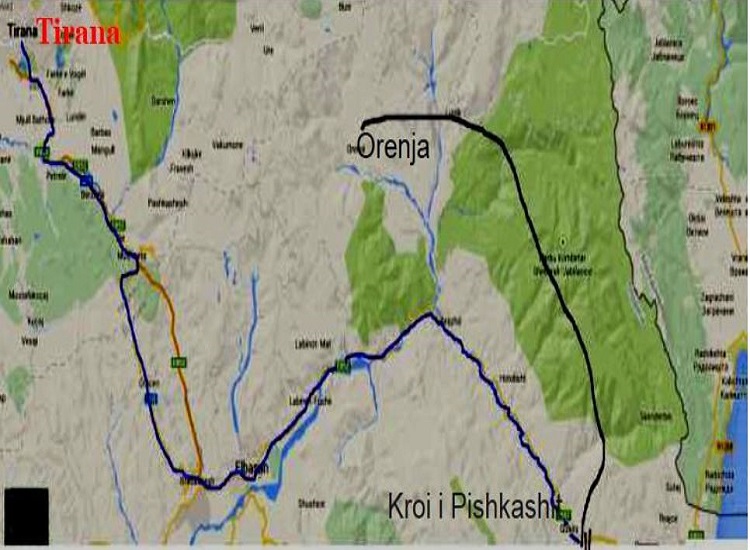
October 17, 1943: On that day, 111 carabinieri and 10 Italian officers were executed, as testified by Xhelal Staravecka, commander of the II Battalion of the I Assault Brigade: “They woke me at midnight and told me to report to headquarters. When I entered, Dushan Mugosha was waiting for me, with eyes that gleamed. He said to me: ‘In Orenjë of Çermenika there are 111 Italian carabinieri; take your battalion and go shoot them, because we need the uniforms to dress the partisans.
Do not speak to anyone, for it is a secret, and if others find out, they will protest against us, especially now that they are friends of the allies. It will be worse if the ‘National Front’ people find out; they will have one more weapon against us.’ Everything Mugosha said was an order, not to be discussed. I went to Orenjë, to the center of the Çermenika Battalion… where everyone was aware.
The next day, I took the 111 carabinieri together with Colonel Gamucci, their commander, and about 10 officers. I told them that we would go to Burrel. After two hours of travel, we stopped, tied up the carabinieri, and after dividing them into five groups, we stripped them and then shot them…! For the shooting of the carabinieri and their officers, Kadri Hoxha was involved; using my battalion, while 17 of them I shot myself, with my own hand…”!
The presence of Kadri Hoxha at the shooting of Colonel Gamucci, the officers, and the carabinieri is also testified by the Italian soldier Mario Eriko, the only one who survived the shooting. Mario Eriko was not a carabinier, and therefore Kadri Hoxha removed him and saved his life. Two days later, he appointed him as storekeeper of the uniforms, armaments, equipment, and personal objects seized from the carabinieri.
This massacre cannot be the work of only one or two persons. Certainly, in the first two weeks of October, Enver Hoxha, Mehmet Shehu, Dushan Mugosha, Tahir Kadare, and Ramadan Çitaku, etc., together had decided the shooting of the carabinieri and officers, which is confirmed by the letter that Mehmet Shehu sent to the command of the II Battalion on October 29, 1943, in which he emphasized: “The commander was Colonel Gamucci, deputy chairman of the Supreme Court of the Carabinieri (Military Court)…”!
It is no coincidence that this massacre was pinned on Xhelal Staravecka, known for his aggressiveness, for acts of violence, and for the shooting of Italian prisoners in groups, especially carabinieri. After these positions and the massacre in Fushë-Gurrë, Xhelal Staravecka betrayed the National Liberation War and went over to the Gendarmerie of the fascist regime, who rewarded him by giving him the rank of first captain, with duty at the command of the Gendarmerie of Tirana.
After the war, he fled to Italy, but his name was known for criminal acts, so they arrested him, tried him, and sentenced him to imprisonment. His life as a partisan, the shooting of the carabinieri and Italian officers, as well as his activity as a gendarmerie officer, he has recounted in the book published in Tirana in 2006 by the publishing house “Naimi.”
Kadri Hoxha, in his memoirs of the war years and in the television interview in 1996, has accused Xhelal Staravecka of the shooting of the carabinieri and Italian officers. Xhelal Staravecka admits that he directed the shooting and that he killed 17 carabinieri with his own hand, but also emphasizes the presence of Kadri Hoxha in this massacre. The presence of Kadri Hoxha is also testified by the soldier Mario Erriko. Who is right in these mutual accusations?
The partisans of the II Battalion of the I Brigade, participants in the execution of the Italian carabinieri, and the partisans of the Çermenika Battalion, who were aware of that event carried out in their territory, unfortunately remain silent, do not speak out, making this event even more enigmatic, and indeed, with this stance they pass the responsibility on to their two commanders, Xhelal Staravecka and Kadri Hoxha.
Yet another enigma. Colonel Giulio Gamucci had studied at the Military Academy of Naples, together with Mehmet Shehu and Kadri Hoxha, so they knew each other. Then why did they eliminate the “old friend”? Is the shooting of Colonel Gamucci justified, without a judicial process and solely on the accusation of being deputy chairman of the Military Court? And the 111 carabinieri and the other 10 officers, on what charge were they shot?
October 23, 1943: The two officers of the British military mission, David Smiley and Billy McLean, went to a meeting with the General Staff in Labinot, where they also met General Azzi, former commander of the “Florence” Division, who was the representative of the Italian army at the General Staff of the Albanian Partisan Army, but no one provides information about the execution of Colonel Gamucci and the carabinieri.
The British military mission had visited the camp where the carabinieri were held on October 10, so it knew the situation well; certainly Kadri Hoxha had also informed them about this event, but in order not to be accused as accomplices in this massacre, they have remained silent. / Memorie.al
Bibliography
Documents of the General Staff and of the General Command of the National Liberation Army. Tirana. 1965
Proclama del Generale Lorenzo Dalmazzo, comandante del IX Armata. Tirana, 12 settembre 1943.
Tulio Mereu. Da Tirana a Fushe Gurra, la storia della colonna Gamucci. 2004
Franco Galiardi, S. tenente, 49o art. Div. Parma, autore del diario sui movimenti della Colonna Gamucci. 1943.
A.Q.Sh., PPSH, Fondi 41, Dosje 20, Nr 5, viti 1943
Tullio Mereu, Laura Mereu. La Colonna Gamucci. Alla ricerca della Verità. Alcione, Trento, 2014.
Alessandro Serra. Albania 8 Settembre ’43- 9 Marzo 1944. Longanesi, Milano, 1974.
Xhelal Staravecka. “Përpara gjyqit të historisë – 1912-1966” Botimet “Naimi”. 2012
Archivio Storico Dipl. Mininistero Esteri Itialiano. (Affari Politici 1946-1950 Albania -Busta n.15)
Dichiarazione autiere Mario Errico, datata 5 gennaio 1946.
Antonio Magnano. L’eccidio della Colonna Gamucci. Storia dei Carabinieri Reali comandati dal colonello, Giulio Gamucci. Roma, Herald Tribune, 2015, f. 30 – 120
David Smiley. Albanian Assignment. Hogarth Press, London, 1984