Part Six
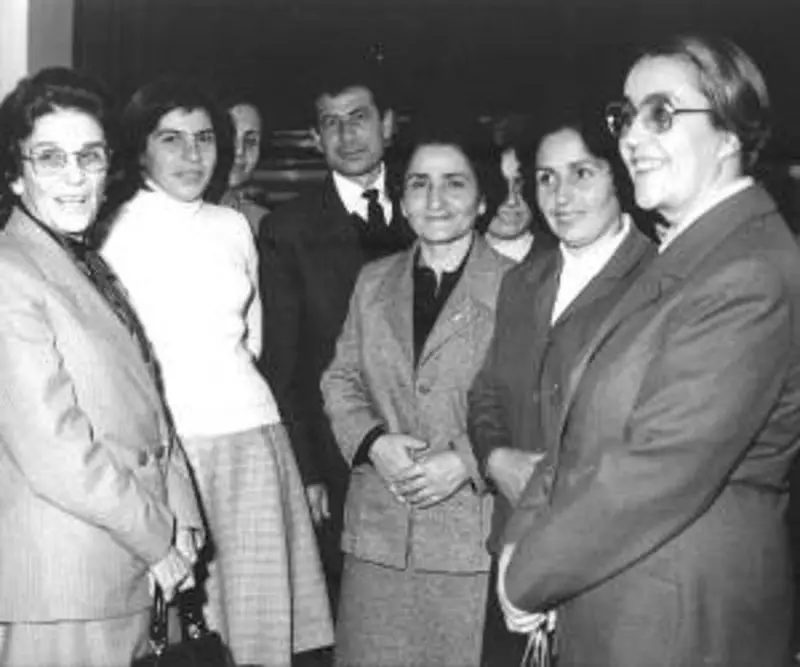
Memorie.al / The CIA have given great importance to the relations between communist Albania and Marshal Josif Broz Tito’s Yugoslavia. There is described an incident that occurred on the maritime border, after an Albanian was shot dead and this was a move that could have brought about a military confrontation. On the other hand, it is shown how Liri Belishova and Nexhmije Hoxha were at the head of propaganda.
Continues from the previous issue
October 1950
The situation in agriculture, newspaper “Bashkimi”
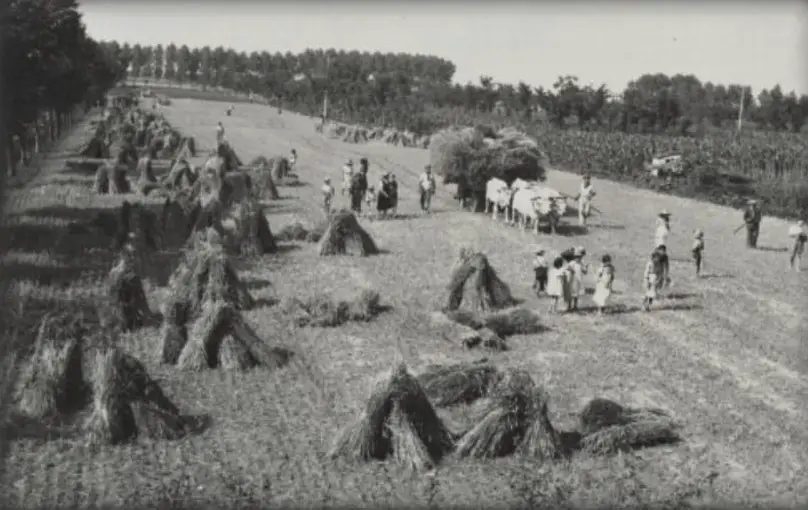
Gaqo Nashi reports as follows on the grain purchasing program for the first half of 1950: The law on grain purchasing this year has encouraged peasants to increase their production and seek new sources of production.
Farmers in mountainous areas are encouraged to cultivate medicinal plants. The grain purchasing system has created the possibility of buying and selling in rural area cooperatives.
Compared to the same period in 1949, the production of wheat, maize has been exceeded, and the plan for meat, wool and hides has been realized. During the first half of 1950, the meat buying and selling system was realized at the rate of 81 percent, wool 63.5 percent and eggs 60 percent.
The plan could have been realized in all aspects but the shortcomings came due to the lack of organization at the lower levels of the structure and in the shortcomings of following the party’s instructions.
The main shortcomings were in filling the reserves from the 1949 harvests, a deficit that the 1950 plan inherited until their completion. Even the wheat harvests did not reach the set targets. Government agencies have collected 10 percent less than the plan.
In the Vlora area the plan should have been realized on August 23, but until August 25 the plan had pronounced shortcomings in the collection of wheat, oats and barley. This failure is attributed to the malfunctioning of the People’s Councils and the negligence of the mass organizations.
A large part of the responsibility also falls on the agitators who have not intensified their propaganda in favor of the government. The villages of Kocul, Novosela and Sevasteri, have delivered almost nothing. Abaz Kondo, president of the Executive Council of the Durrës district, was accused as a kulak and enemy of the government.
Sulejman Gallai of the Executive Committee of Shijak, Hysni Çyrbia of the Executive Committee of Maminas, had taken vacations during the entire harvest period and as a result of this, the peasants had managed to hide large quantities of wheat.
Ramadan Bushi, secretary of the People’s Council of Radoshina, was accused of underestimating the activity of the kulaks, while Daut Bushi, collector in Radoshtija, was accused of not taking the necessary measures against reactionary peasants. The People’s Council of the village of Seferaj, near Kavaja, had become one with the peasants and the plan was not realized.
Punishments for non-delivery of wheat
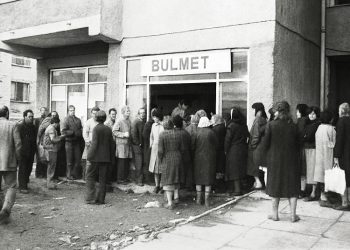
More than 300 peasants in the Korça district have recently been arrested for non-delivery of wheat quotas. They were taken to the Elbasan prison and most of them were later released, but about 60 remained imprisoned. During the harvest season, many clashes have been recorded between the population and the peasants.
The disappointing results of the harvest plan and the killing of political commissars in the village of Dardhë in Korça and in Koçishtë near Bilisht, reflect the critical situation that is being created in the last two months. Meanwhile, according to ATSH, cotton production this year is greater than last year’s. About 15,700 hectares of land were planted with cotton in 1950, compared to 10,600 in 1949.
While in Durrës about 1000 hectares more land were planted with cotton than a year ago. The best production is expected in the Lushnja and Elbasan districts, where the irrigation system is used regularly. This year cotton has been cultivated with scientific methods and with chemical fertilizers. In the Elbasan area farmers have used the “Lysenko” method of pruning the non-productive branches of cotton.
Increase in rice production
This year about 40 dynyms of land have been planted with rice in the Lushnja district, where previously there was no rice at all. Both the land and the climate in this area promise a good production of the crop. The cultivators have been given all technical assistance and the land has been worked with tractors. A total of 50 dynyms of land has been planted with rice in the village of Stan-Karburanë, and also in the areas of Sejmenas, Koçaj and others.
Canals
In Shkodra work has been completed on the Ashta irrigation canal. The new canal is 1750 meters long and irrigates about 1800 hectares. Work on it began in early June and was carried out by 2200 volunteers. The Dardhë-Drin canal which is more than 5 km long is now connected to the Dardhë canal and also connects five other villages.
The two canals will irrigate the villages of Ashtë, Beltoje, Aliaj, Hekaj, Bërdic e Mesme, Bërdic e Poshtme, Trush, a part of Melgusha and a part of the agricultural cooperative “Perlat Rexhepi”. In Gjirokastra, the people of the village of Poliçan, completed a 4500-meter-long irrigation canal, which will irrigate more than 250 dynyms of land. The inhabitants of Poliçan have contributed 700 days of volunteer work, saving the state about 50,000 lekë.
September 1955
The Directorate of Agitation-Propaganda
The Directorate of Agitation-Propaganda of the Central Committee of the Party is headed by Nexhmije Hoxha. Its activities are organized by Liri Belishova, who is responsible for that sector in the Political Bureau. The press section is headed by Vandush Vinçani, the culture section is headed by Fatmir Gjata, propaganda is headed by Xhorxhi Robo and the Marxism section is headed by Sotir Manushi.
The Albanian Telegraphic Agency is the source of all news, diplomatic documents and government press releases.
The agency has a correspondent representative in all districts, which receive and distribute news from party and government bodies to local propaganda media.
ATSH also receives news from foreign agencies (Western and satellite countries), as well as monitors foreign broadcasts about Albania. Its headquarters in Tirana has the translation branch for foreign news, broadcasts and newspapers. The translations pass further to the ATSH news branch which distributes them to newspapers and ministry offices.
News from Western agencies is distributed daily in the “Yellow Bulletin” which is secret and distributed only in high state offices. While news from satellite country agencies are distributed daily in the “Blue Bulletin” and are not secret. ATSH has about 30-40 employees in Tirana and is headed by Thanas Nano.
The activities of Radio-Tirana do not have a special importance, except that it broadcasts every day the main editorial of “Zëri i Popullit.” It is headed by Petro Kito, deputy director Alqi Kristo, cultural director Sofokli Afezolli, Dhori Nini director of internal information, and Findia Veizi, in foreign news.
“Hosteni” is the satire organ of Albanian journalists and is published twice a month, with a circulation of 7,000 copies. The magazine is not allowed to criticize or mock the party, but can criticize certain organs of it, such as those that have fallen behind with the plan, down to the rank of deputy minister.
“Hosteni” and “Zëri i Popullit” do not receive directives from the agitation-propaganda organs, as other press organs receive, but is directed directly by Vangjush Vincani, choosing the subjects of satire from articles of Zëri i Popullit and other newspapers.
A kind of monthly plan of “Hosteni” is submitted to the agitation directorate for approval, but only in the form of orientation. “Hosteni” has fewer personnel than for example the newspaper “Bashkimi,” and they are paid less. Its editor-in-chief is Dhimitër Tona, Polikron Kotini, heads the economic section, Spiro Çomora heads the cultural section and Zef Bumçi, the drawing section.
January 1955
Yugoslavia-Albania, scenarios
Both the regimes of Albania and Yugoslavia have as priority the preservation of their survival and the avoidance of complete domination by foreign powers, therefore their practical demands for the preservation of power will continue to rely on purely nationalist or ideological reasons.
If it distinguishes any threat from Western Europe, then Belgrade may turn to the Soviet Bloc and vice versa, while the Soviet threat to Yugoslavia has been reduced after Stalin’s death. As for regional interests, Yugoslavia will preserve its special ambitions in the Balkans. They certainly desire an Albania influenced by them, or rather completely controlled, as it was before.
Although they publicly claim that they have no interests in Albania and that they wish it to be free and independent, they continue to support the organized anti-communist groups of the Albanian emigration and the resistance elements among them. Efforts have been made for the coordination and rivalry of the action of other Albanian emigration groups in Italy, Greece and Britain.
However, the Yugoslav power will most likely restrain the anti-Albanian propaganda activities as long as the current program of normalization with Albania is yielding results. It is not expected to carry out major unilateral intervention, except in cases of government crises or fear of Greek, Italian, American or British opposition. For the same reasons Yugoslavia will not revive claims to the Greek and Bulgarian parts of Macedonia, as long as the internationals seek the smoothing of frictions between the countries.
February 1976
Deterioration of Yugoslavia-Albania relations
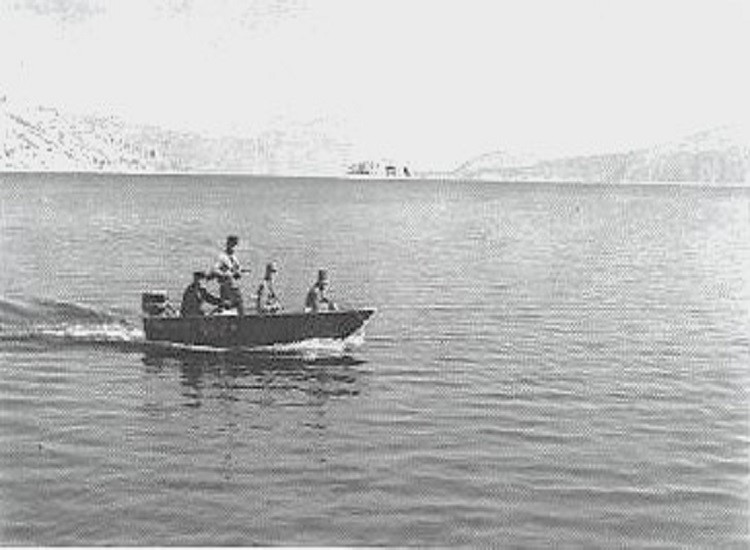
Yugoslavia-Albania relations have been very tense in recent months, after a serious border incident. In a press release of February 5, 1976, Belgrade said that one of its border patrol boats opened fire on an Albanian fishing vessel in Yugoslav waters, on December 15.
The Yugoslavs expressed their regret for the incident and for the death of the Albanian boat driver, but stressed that he had ignored their calls to stop the boat.
Tirana claims that the boat was in Albanian waters and the Albanian Political Bureau posthumously gave the killed the title “Hero of the People,” while it is using the incident as a propaganda tool to incite nationalist tensions among its minority in Yugoslavia. Meanwhile the Belgrade press announced on Sunday the sentencing of 19 “irredentist and counter-revolutionary” Albanians, in the autonomous region of Kosovo.
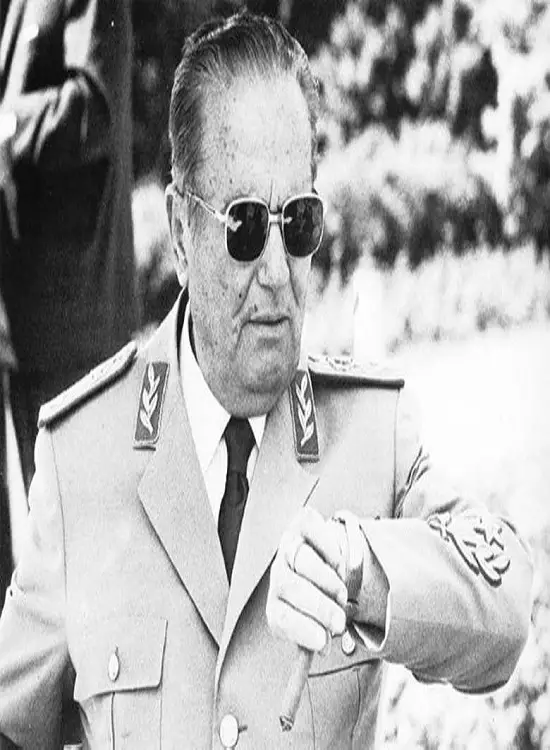
Although Yugoslavia has not made any direct connection between the irredentist movement of Kosovars and Albania, it declares that the irredentists have been supported by foreign anti-Yugoslav elements. On February 3, 1976, a member of the Yugoslav presidency repeated that future initiatives for the improvement of relations between the two neighbors, this time must come from Albania. / Memorie.al
Continues in the next issue