
By Erald Kapri
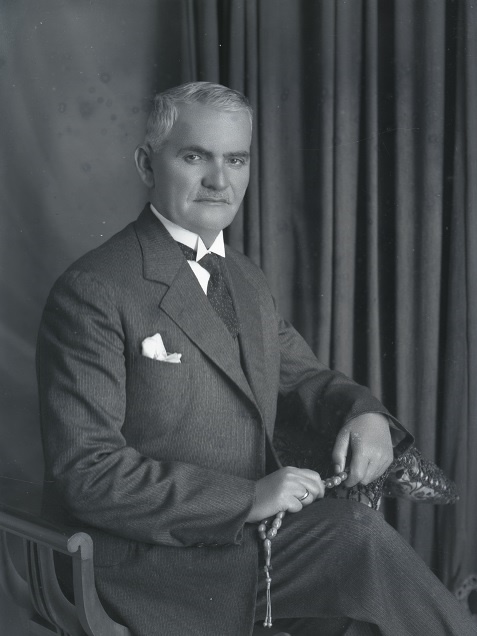
Memorie.al / King Zog maintained a pro-war stance against the occupier at every turn and always expected a clear decision on Albania’s independence from the Western Allies. Although his government-in-exile was not recognized by the British, King Zog did not hesitate in any instance to ask his followers to fight the Italian and German occupiers. The documents below are two letters that King Zog wrote in February 1944 to two of his supporters in Albania, at the request of the British Foreign Office. One letter was for Abaz Kupi, who had mobilized thousands of troops in support of King Zog, and the other letter was for Salih Vuçiterni, a well-known Albanian activist from Kosovo who had served as a minister during the Kingdom period.
These letters hold fundamental importance for understanding King Zog’s stance, as he clarifies his position. He calls for an uncompromised fight against the foreign occupier and guarantees that the issue of the regime will be decided by a free vote of the Albanians after the war.
“The issue of the regime is of secondary importance, which will be decided as the Albanians wish after the war. Therefore, regarding this issue, you can reassure all Albanians, even all those who have been my opponents,” the letter states. These two letters were written by King Zog to be brought to Albania by the British military mission “Consensus 2,” headed by Billy McLean.
However, they never arrived in Albania because the British Foreign Office requested their editing. The document also contains the ministry’s demands for altering the letters. Despite this, without a full explanation being given, the letters remained in the drawers of high-ranking British officials without reaching the hands of King Zog’s supporters.
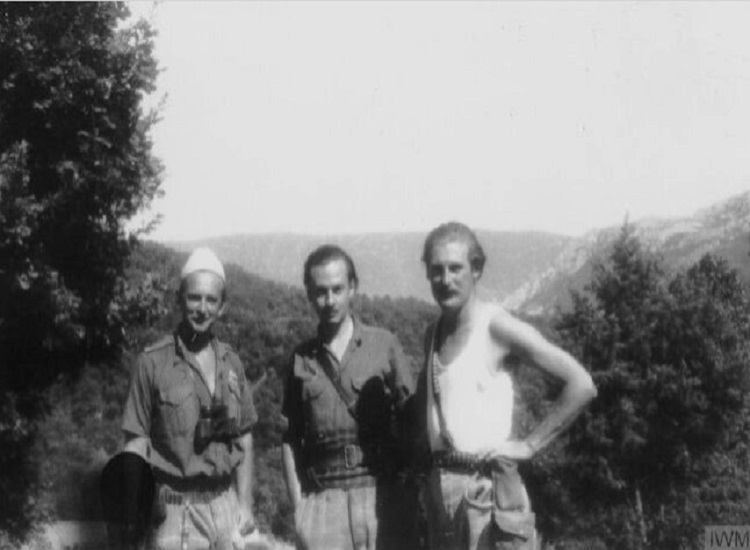
Nevertheless, the three senior British officers, McLean, Amery, and Smiley, set off for Albania and established themselves at Abaz Kupi’s headquarters. They aimed for a broad front with the Zogists, but managed to carry out only a few small battles. Abaz Kupi requested political guarantees from the British, which they were not prepared to offer. The British also recorded clashes between the Zogists and the Communists, and in several instances, gunfire was exchanged.
CORRESPONDENCE
FILE HS 5/5
KING ZOG’S LETTER TO ABAZ KUPI, FEBRUARY 26, 1944
Colonel
The three gentlemen who will deliver this letter are friends of Albania and of mine. Therefore, it is necessary that these three gentlemen and officers of the British mission have your protection against any enemy danger. Our common goal is the freedom of Albania and securing its independence within its national borders.
To achieve this goal, we must do everything we can. The Great Powers have guaranteed the independence of our country. The integrity of Albania will be secured by our joint effort and strength. To achieve this, we must all be united.
Therefore, I ask you to do everything you can to unite Albanians without any exception. As soon as unity is achieved, we must request Albania’s entry into the United Nations. Together, we must prepare for the final goal when I give the proper signal. (British note: to be changed to: according to the orders and plans of the Allied command).
Until then, we must prepare. It is not in our interest, nor in the interest of the Allies, for there to be unnecessary destruction and burning of villages in Albania, and while I give the order for war (British note: in civil war), the Allies request to have as many Albanians as possible ready to fight the enemy (British note, to be added: against the foreign occupier of our lands). For the moment, these are our goals and the goals of every friend who wishes the best for our country.
Baz! Through your work, you have proven my unceasing gratitude, as well as my trust in your manhood and loyalty. Awaiting a response, I send my best wishes to you and all your followers.
KING ZOG’S LETTER TO SALIH VUÇITERNI, FEBRUARY 26, 1944
Honored Friend,
The Homeland is facing a great danger; Korça, and in particular Kosovo and Gjirokastra, are targeted by our neighbors, who will spare no effort to sever them from us. We have done everything we could to withstand this danger.
We have worked to influence public opinion here and in the United States. The two associations of friends of Albania in Britain and the US, formed by prominent personalities, have joined together to defend our national rights and to respond to malicious propaganda.
We have accepted no compromise regarding the territorial integrity of our country and have rejected any proposal for any mandate over Albania. The declaration of the three Great Powers regarding Albania’s independence is a major victory for us. We believe this will be implemented soon.
Despite our neighbors being strong and their voices being heard more, we believe that in the end, the Anglo-Saxons will recognize our rights and, with their victory, our country will be completely free.
We Albanians must not forget that the only power that can save us is Great Britain. Just as in the League of Prizren and the Congress of Lushnja, today we must unite, and no Albanian should be excluded from this union. For the good of our country, I do not wish for any Albanian to be excluded, even those who have attempted to take my life. My example should be followed by every Albanian to realize this sacred union.
With the cooperation of Bishop Noli and the late Faik Konica, this union is almost achieved. You, personally, must do everything to ensure this goal is realized. You must do everything so that every committee in Albania, regardless of political color, unites, and then, united, you in Albania and we abroad, can take the necessary steps for its legal entry into the United Nations. To secure national interests during the war and to represent Albania at the Peace Conference, we must be prepared and ready for any possible action.
If, to realize this union, you need formal approvals in writing from me for any person you deem necessary, let me know. Salih, as a loyal friend, I wish for you to act for this sacred union for the greater good, for Kosovo, Korça, and Gjirokastra. The reason I ask you to carry out this mission is that I have full confidence in your friendship and capacity, and I know that you are on good terms with all necessary circles. Homeland above all.
The issue of the regime is of secondary importance, which will be decided as the Albanians wish after the war. Therefore, regarding this issue, you can reassure all Albanians, even all those who have been my opponents. Awaiting your reply, I shake your hand and send you my warmest greetings.
Battles of the Zogist guerrilla units documented by the British in ’44
- June 23. Destruction of the Gjoles Bridge along the Shkodër–Tirana road by a Zogist guerrilla unit. This bridge was the third largest in Albania and was located in an area defended by the Germans. This occurred more than a month before the Germans built a temporary bridge guarded by 60 soldiers, during which time the main Shkodër–Tirana–Durrës road was closed and German transport (roughly 200–300 vehicles per night) was significantly forced to take a detour. Major Smiley and Sergeant Jenkins were present.
- September 6. A Zogist unit attacked and took control of a German position, killing 10 Germans, including their captain, seizing war material, and capturing 12 Italian prisoners. The wooden bridge was set on fire. This position was identified as the headquarters of the 3rd Battery of the 297th Artillery Regiment. Lieutenant-Colonel McLean, Major Smiley, and Captain Amery were present.
- September 9/10 (evening). A mixed Zogist and Ballist unit attacked a convoy traveling on the Shkodër road to arrive near Preza. Result: 1 ammunition truck was blown up, 2 trucks were burned, roughly 15 trucks were looted and damaged, 8 motorcycles were destroyed, 35 German soldiers were killed, along with 2 light machine guns, 30 rifles, and other military materials seized. Lieutenant Merrett, Sergeant Jones, and Corsentino were present.
- September 10/11 (evening). A Zogist unit and Sergeant Jenkins mined the main Shkodër road. 3 trucks were blown up.
- September 11/12 (evening). A Zogist unit with Major Smiley and Sergeant Jenkins blew up the concrete bridge on the main Shkodër road at G.2558, blocking the road for three consecutive nights.
(The Parmoor House in Britain where Zog stayed for several years)
- September 12/13 (evening). A Zogist unit attacked a German convoy at Kulakumit G.21; a convoy of 9 vehicles was completely destroyed by fire and all German soldiers were killed or dispersed, including two Feldgendarmerie Light machine guns, rifles, and other military material were seized. A briefcase belonging to the 181st Division of the 21st Mountain Troops was among the seized documents. Lieutenant-Colonel McLean, Captain Amery, and Sergeant Jenkins were present.
- September 14/15 (evening). An ambush by a Zogist unit on the Tirana–Durrës road, two miles north of Tirana. Mines were placed. 1 truck transporting German soldiers was completely destroyed, 1 truck was damaged, and 3 German soldiers were killed. The action was disrupted as the FNC (National Liberation Front) began attacking the Zogist unit from behind. Major Smiley was present.
- September 15 (evening). Zogist and Turkestan forces attacked and repelled a German armored car traveling toward Shkodër. Lieutenant-Colonel McLean, Captain Amery, and Sergeant Jenkins were present.
- September 20. A joint Zogist and Ballist unit attacked a convoy and at the same time blew up the bridge located on the road leading to Shkodër near Laç. 1 truck was destroyed. Sergeant Jenkins was present.
- September 21. The same unit attacked a German column on the Shkodër road, forcing it to retreat. Sergeant Jenkins and Sergeant Shoemaker were present.
- September 24. The bridge at Hani i Teqes on the main Shkodër road was blown up, and the German column was attacked and forced to retreat by the Zogist unit. Major Smiley was present.
- October 12. The Zogists repelled a German attack against the British mission headquarters in Velsh. 3 casualties among the Germans, possibly more. Lieutenant-Colonel McLean and Captain Amery were present. / Memorie.al