
By Erald Kapri
Memorie.al / “Early in the morning, I found myself on the deck, as I hadn’t slept a wink all night. Durrës lay before me. I cast my gaze over the ancient Roman walls and further beyond, the Venetian ones, pierced by Turkish bullets, and behind the mountains, tall grey granite cliffs rising above the sea. The untamed landscape was completely different from anything I had seen until then. We were asked to remain on board until all the other passengers disembarked, and when the quay was empty, a black Mercedes appeared. I was greeted by Colonel Sotir Martini, a minister of the Court, who remained by the King’s side until he died in exile in 1950.”
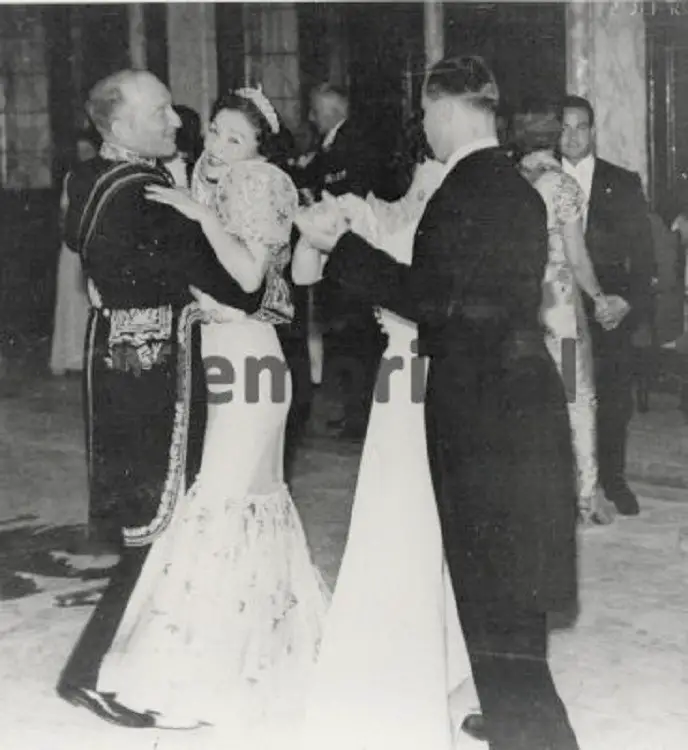
This is Geraldina De Nagy Appony’s account of her first contact with the country that would place the crown upon her head. She was 21 years old and emotional. She had set out towards the unknown, believing in a happy ending. At the port, the King’s adjutant was waiting for her, who accommodated her as a guest in the Toptani family and clarified “tactfully” that her trip was and would remain a secret until she and the King made a decision. Geraldina was invited to the New Year’s Eve ball of 1938. Throughout her life, in dozens of interviews and biographies, she always remembered the first moment she found herself face-to-face with the one who would become her future husband:
“My knees were trembling and I couldn’t see anything. I was exceedingly scared. The room was so long it seemed endless, and I just wanted to disappear. Suddenly, I found myself face to face with a handsome face, a tall, flawless man, dressed in the white uniform of the army’s colonel general. It was his eyes I noticed first, piercing sky-blue eyes.
I had practiced a curtsy like those we learn in dancing lessons, but I forgot it out of confusion and simply made a slight bow. The King immediately lifted me up with an attractive smile, thanked me for visiting his country, and asked if the journey had gone well.”
Geraldina did not know that despite the secrecy, the news of her arrival had intrigued the capital immensely. Almost the entire Court, influential people, and diplomats knew that she had come with the King’s approval and was the primary candidate to become Queen of Albania. The King was there, along with the princesses whom he introduced to her one after the other. Geraldina always recalled that moment:
“He never took his eyes off me, while offering me a glass of champagne. Our fingers touched and at that moment the lights dimmed. It was exactly midnight, and such was the Albanian custom. Being in anguish, I dropped the glass, which shattered into thousands of tiny crystal shards.
I felt myself go pale, but the King laughed. ‘Shards bring luck,’ he said in German and squeezed my hand as if to reassure me. The echo of the twelve midnight chimes had not yet faded when a strong wave of applause seemed about to bring the room down. From all sides and in all languages, the cry was heard: ‘Good luck!’ I felt like never before. I had fallen in love.”
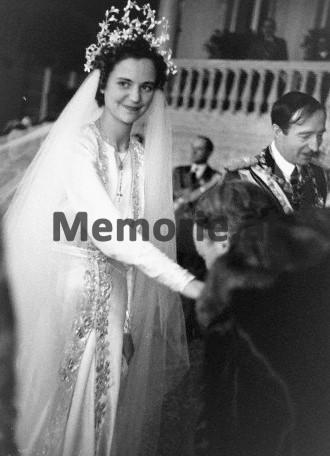
It was the year 1938, the year of the marriage of King Zog I with Queen Geraldine. Geraldina never left Albania from that day on. The engagement was planned to be announced in January and the wedding in April. On January 25, 1938, the British ambassador in Durrës informed Foreign Minister Anthony Eden:
“Countess Appony arrived in Tirana in the latter part of December. On December 31, King Zog danced with her on New Year’s Eve at the evening organized at the Royal Court. When I met the Albanian Foreign Minister on January 24, he confirmed the engagement of King Zog with Countess Appony. It is thought that the official announcement will be made within a few days.”
The engagement was announced on January 31, 1938. The announcement was made in an extraordinary parliamentary session called at the request of King Zog himself. The Albanian Constitution stipulated that the request for the King’s engagement had to pass for approval in both Chambers of Parliament. The hall was packed, and in the main lodge sat the King’s sisters. The Speaker of Parliament announced that both houses had approved the engagement and that Geraldina could become Queen of Albania. According to Geraldine’s biographer, that evening, Geraldina made her first full introduction to her fiancé’s family:
“At dinner, Geraldina wore a thin silk dress, the color of sapphire, which the King had chosen at Worth in Paris, as a surprise for her. Her ring finger sparkled with a magnificent fourteen-carat diamond of a light sky-blue hue. For the first and only time, the King wore an engagement ring from Hungary, made of gold, ruby, and sapphire, which had belonged to Geraldina’s grandfather, Count Giula Appony. The King’s six sisters represented the family.
Before dinner, the King had asked the family to gather in the antechamber, where Princess Geraldine, adorned, appeared beside the King. ‘I am very happy and I hope my fiancée is happy too,’ he said in German in a cheerful and unusual voice, and these were his only words regarding the engagement. Continuing in his soft voice, he added:
‘I would be very grateful if you would observe a few moments of silence to pray. I know my mother’s spirit is with us in these moments. Blessed be her memory!'” Geraldine recalls that before the engagement, another delicate conversation about their union had taken place. She had reminded the king of the difference in religious faith and the difficulty this posed for her from the Church: “I know I can love you forever, but you are Muslim and I am Catholic. How shall we settle this? Nothing in this world will make me change my religious faith.” The King smiled and said: “I have thought about this too, and there is no question of you doing such a thing. We are European Muslims and I have great respect for your Church.”
The first problem of the marriage had just arisen. It was the permission that the Vatican had to give a Catholic to marry a Muslim. This issue became global news and was discussed in more than 180 newspapers around the world. As early as February 16, 1938, London’s “The Daily Telegraph and Morning Post” clarified in the article titled “Pope Awaits Guarantees from King Zog”:
“As foreseen, the Holy See has not granted Countess Geraldine Appony the permission she had applied for, to marry Zog, King of the Albanians, who is a Muslim. A religious marriage according to Catholic rites will be solemnized before the civil marriage; and the children born from the marriage of Countess Geraldine will be raised as Roman Catholics. King Zog has so far not taken any step to sign these guarantees.”
Presumably, something changed in the secret negotiations, because about a month later, on March 22, 1938, New York’s “Daily Mirror” wrote: “With some adjustments, the Vatican has permitted the forthcoming marriage of the King of the Albanians, Ahmet Zogu, with Countess Geraldine Appony of Hungary,” announced the mother of the bride, Mme Girauld, to the international news service. “Pope Pius allowed the marriage,” she said, “on the condition that the children born of the marriage be raised in the Christian faith.”
On March 31, 1938, in an interview with Zog’s sisters who were in transit at the Ritz Hotel in London, the Daily Mail gave details about the wedding, including the news that it would simply be a civil marriage. “The wedding will take place in the old palace in Tirana and it will be entirely civil, the same as any civil marriage in any other country. Although the fate of the Albanians is Muslim and the countess is Catholic, this procedure is entirely constitutional. Furthermore, the difficulty of obtaining the Pope’s approval will be overcome. There is no doubt that my brother and his queen will visit the Pope during their honeymoon month to receive his blessing,” said Princess Myzejen.
In the same interview, Princess Myzejen clarified: “The three of us will be bridesmaids alongside our niece. Our dresses will be white and we will not wear veils. The wedding will be very modern.” The months of engagement must have been like magic for King Zog, as much as for Geraldine. Although they were 21 years apart in age, Geraldine stated that she never felt it in any case. He fell deeply in love with the young woman. Referring again to the British ambassador’s reports in Durrës:
“He is said to have fallen in love with her, so much so that he is ready to face the displeasure of the Italian side if it appears, and according to my Yugoslav colleagues, who have spoken with me regarding the financial aspects, even an Italian financial aid, which they were prepared to give for obtaining an Italian bride, will be sacrificed.”
The King began to make staggering and unjustified expenses for the young woman. Every morning, Geraldine was greeted by a fresh bouquet of flowers and a gift. Every evening, when she went to bed, she found two bunches of flowers and a surprise under the pillow. Geraldine’s biographer, referring to her memoirs, writes: “With the officialization of the engagement, the King covered his fiancée with jewelry bought from the Viennese silversmith Osterisher.” Geraldine herself recalls:
“One morning, when the King and I finished talking, he called one of his officers, who entered with a large tray full of boxes. We opened them one by one. First was a diadem sparkling with diamonds, with a stone in the center where Skanderbeg’s helmet was engraved?
Among the necklaces was a tie pin with a large diamond. I was breathless with excitement when the King chose a diamond bracelet and put it on my wrist. Then he chose earrings with a diamond to match the diadem. I saw a box that had a white gold chain with a diamond cross. I could hardly take my eyes off it. The King set it aside and said nothing. I also saw him set aside three other boxes, one smaller than the other two.”
Geraldine’s biographer continues: “Most of the loot was brought from Paris by the King himself, who had refined taste and really enjoyed choosing clothes for Geraldine. He had ordered a tailor to come from France to take Geraldine’s measurements, while the two fashion houses Chanel and worth, chosen by the King, made a mannequin with her measurements. Geraldine had no chance to consult anyone, as the King personally chose three morning dresses, six afternoon dresses, three suits, six ball gowns, and sportswear.
From the Maison de Blanc in Paris, he ordered very beautiful dresses for the home and dozens of silk lingerie sets, adorned with elegant lace. Each garment had its own combined shoes, hats, gloves, and bags, along with fine silk stockings. Truly, it was a wardrobe befitting a queen.”
Nothing more than the Albanian and world press can give the atmosphere that existed in the world and in Albania for this wedding. But while the local press is filled with praise and often tiresome dithyrambs, the international one has been inclined more toward sensations, such as these two taken from two American newspapers, the “New York Herald Tribune” on April 14, 1938, titled “Nazi Regime May Upset Plans for Zog’s Wedding. Non-Aryan Tailor Arrested in Vienna”:
“Vienna, April 15. Plans for two aristocratic weddings have encountered difficulties in the German camp in Vienna. The future Queen of Albania may not receive her wedding dress. Hedi Raab, a tailor from Vienna, who together with Chanel of Paris is preparing the wedding dress for the marriage of Countess Geraldine Appony to King Zog of the Albanians on April 27, could not get permission to go to Tirana for the final fittings.”
Or “The Sun” of Baltimore, on April 24, 1938, titled “Zog’s Wedding to Halt Italo-French Talks”:
“Negotiations for the Italo-French agreement will be suspended until the Italian Foreign Minister, Count Galeazzo Ciano, returns next Thursday from the wedding between King Zog of the Albanians and Countess Geraldine Appony. Since Count Ciano himself is leading the negotiations for Italy, nothing new is expected until he returns from Tirana, the Albanian capital, where the Royal Wedding ceremony will take place on Wednesday. Count Ciano will be one of the official witnesses of the Monarch.”
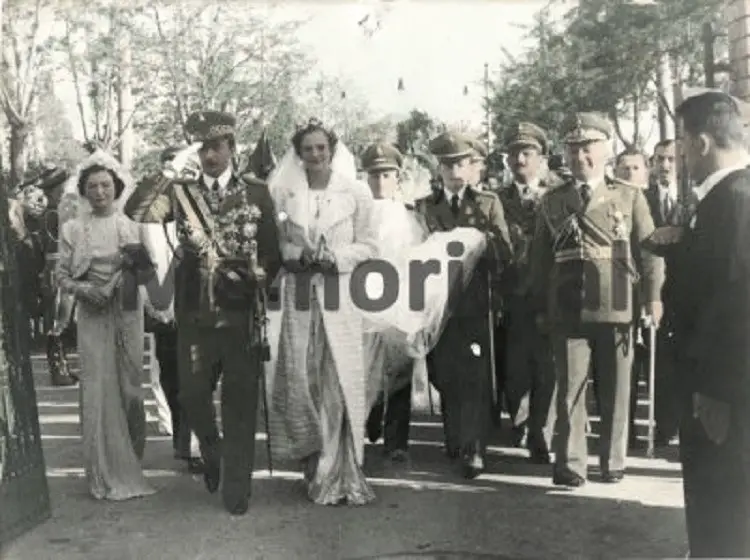
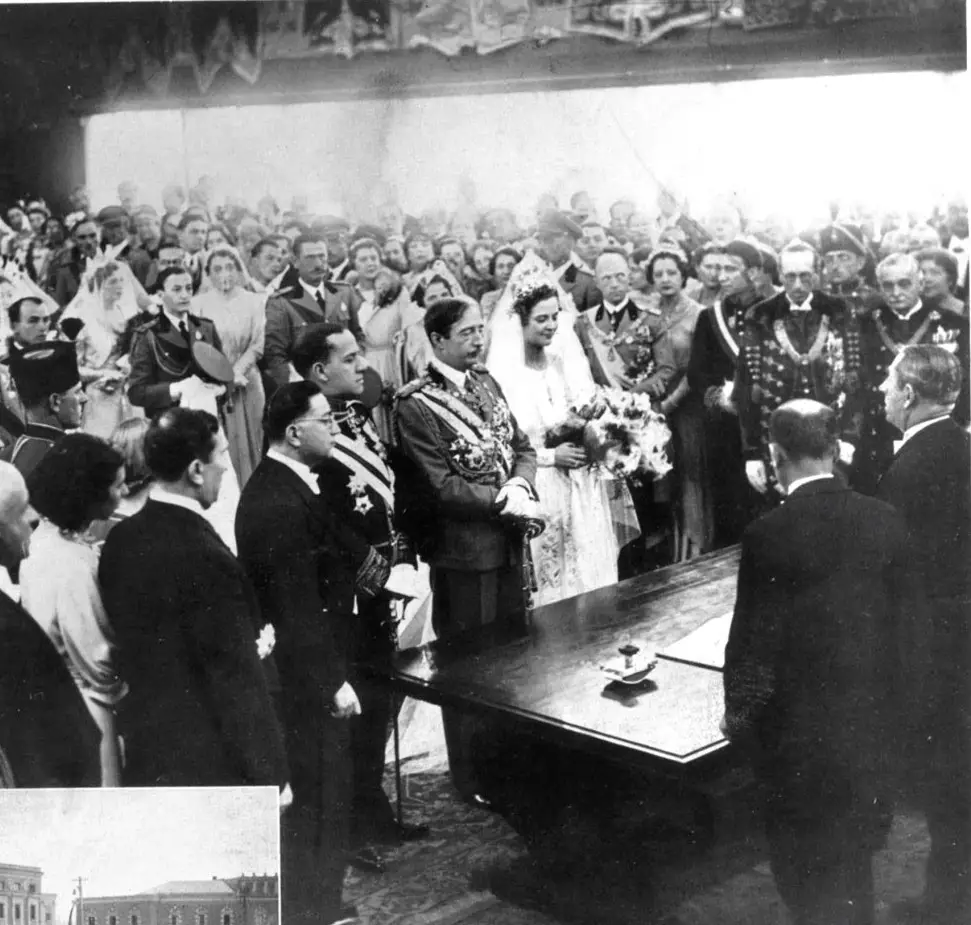
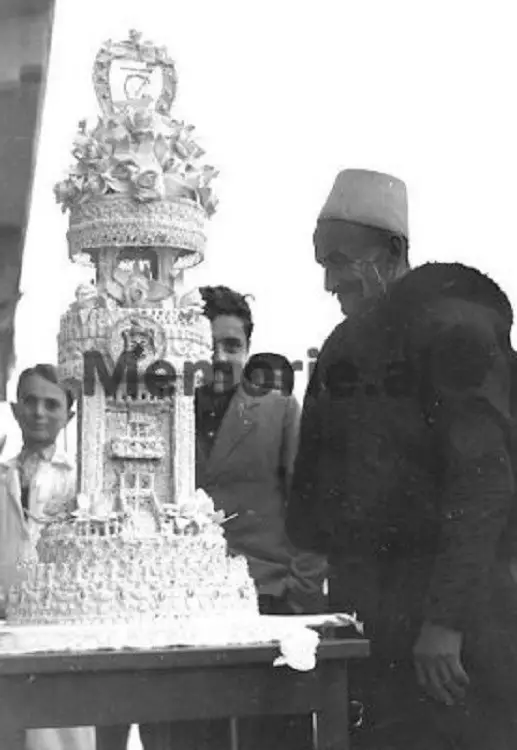
The wedding began on April 23, with a reception given by the King and the future Queen for the diplomatic corps and foreign journalists who had arrived in Tirana. The wedding expenses were never disclosed. The newspaper “Shtypi” of April 24, 1938, reported on the front page: “The National Bank placed 10,000 gold francs at the Sovereign’s disposal on the occasion of his marriage.” But the official sum was much smaller than what individuals and private companies poured in for this occasion.
It seems paying tribute to the King became a sort of mania, as evidenced by these headlines in the Albanian press: “The ‘SITA’ Company places at the disposal of H.M.T. the King the sum of 5,000 gold francs.” (Java, 1938, no.46, April 18, p.12). “The Electric Company placed 15,000 gold francs at the disposal of H.M.T. the King on the occasion of his marriage. The Selenica Company 20,000 gold francs and the E. i. A. A Company 1,000 gold francs” (‘Korça Newspapers’ 1938, no. 2943, April 23, p. 4).
The wedding became a global event. The few hotels in the capital were reserved for the King’s guests and the 79 photographers and journalists who came from all over the world, including South Africa, Argentina, and Japan. Gifts took center stage in the foreign press. The Regent, Horthy, of Hungary had offered a carriage drawn by two Lipizzan horses, France, a Sèvres porcelain service, Mussolini several vases that once belonged to Napoleon, while King Victor Emmanuel an ancient bronze statue.
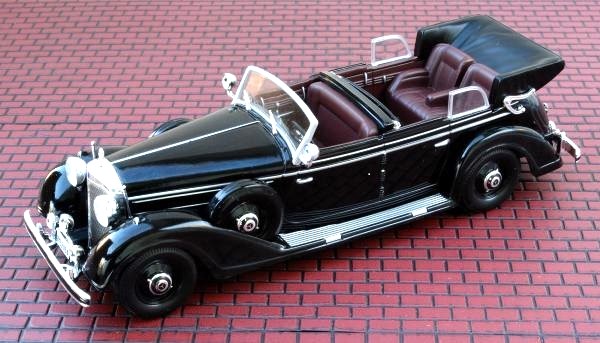
The gift that stood out the most was that from the German Chancellor, Hitler, a red Mercedes-Benz sports cabriolet. According to Corriere della Sera, there was only one other example of this model, Hitler’s. In fact, the Italian newspaper was wrong. The Mercedes-Benz delivered to King Zog on April 19, 1938, was the 540 K cabriolet model, the same one that Hitler gave that same year for the wedding of King Farouk of Egypt and to the Soviet leader Stalin on the occasion of his 60th birthday. The car was red, with a beige interior, and the royal crest stamped on both doors. After the Italian invasion of Albania, Zog took it with him to Britain. / Memorie.al