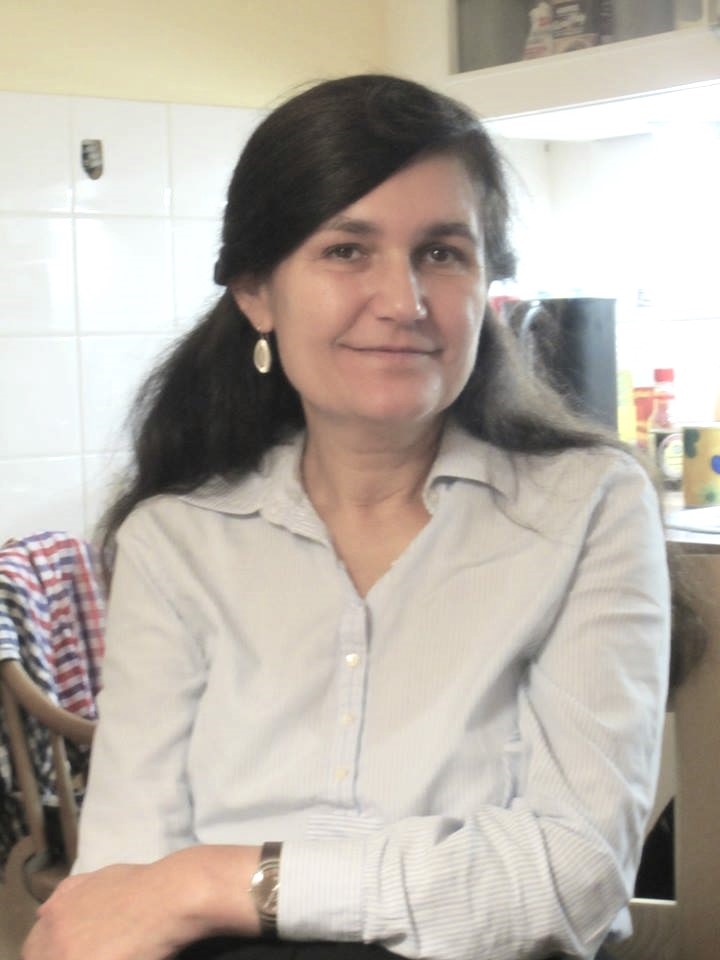

Memorie.al / The first time translator Zuzana Finger came to Albania, although still a student and uninformed about the situation in 1988, she felt the shadows following her around Tirana. They never approached close enough to frighten her, but neither did they move far enough away for her to think they were no longer around. It might seem strange that a German woman speaks Albanian so purely, but Finger has come to Tirana so often and met so many people and collaborators that it is now quite ordinary for her. This time, after 10 years, she returns as a guest at the “Poeteka” residency to work again on translating into German the works of her Albanian authors and friends. She has been in Tirana for a month (she left on Friday), but it doesn’t seem like a long time. The first times she came, she stayed even longer.
Today, Albania seems changed to her, not only when compared to the communist era, but also to that of 10 years ago. It is precisely the changes that time and people have brought to the country that are always at the center of her conversations. In this interview, Zuzana tells why she first came to Albania, why she chose to learn Albanian, what later connected her, during democracy, to the country she already knew well, and all the strange things that used to happen to her, just because she was a foreigner…!
Ms. Zuzana, you speak Albanian so well that I can only ask you: how and why did you learn it?
I studied Linguistics and traveled to Yugoslavia. Since my native language is Slavic, I had no difficulty understanding the Slavs when they spoke, but I couldn’t understand Albanians, and this made me even more curious about the language. I had a very good professor in Berlin, Norbert Reiter, who dealt with the Albanian language, and he had his influence.
You learned the language, you could already understand Albanians; didn’t you think it was a bit dangerous for a foreigner to travel to Albania in 1988? You were very young when you came for the first time…?
I didn’t think of it as dangerous, because the first trip to Albania was organized by the school; I didn’t come on my own initiative. When I was a student in West Berlin, one of our professors organized a trip for Linguistics and History students. We stayed for a week, and during that time I started practicing Albanian quite well, even though it seemed like a very difficult language to me.
Did you like it enough to return a year later?
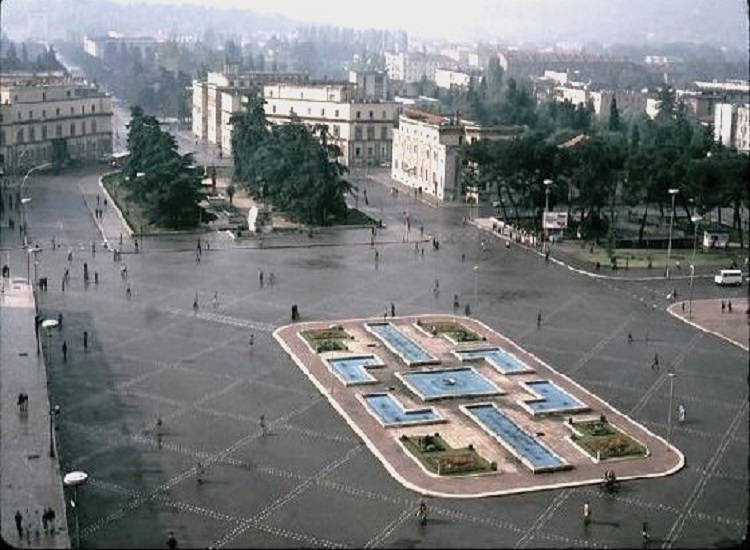
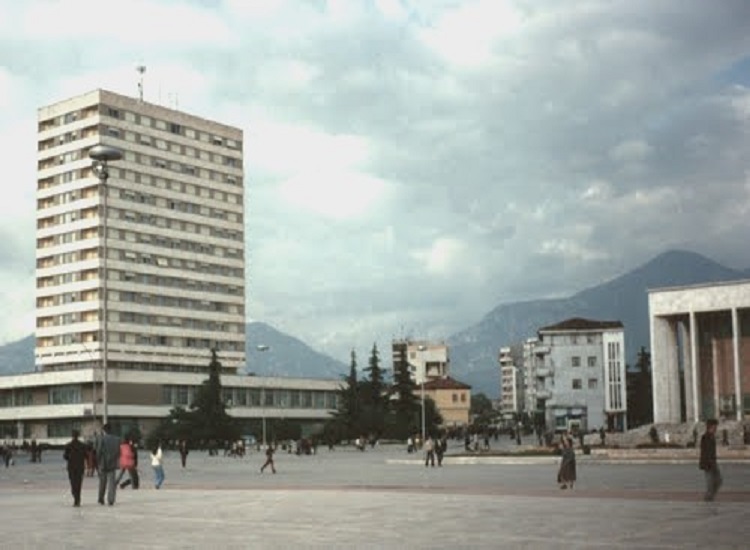
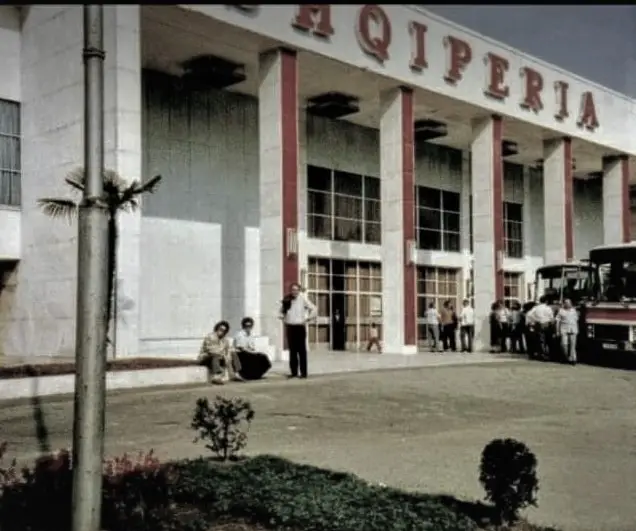
A year later, I applied for a scholarship from the German Academic Exchange Service. A one-month scholarship to attend an Albanian language course in Tirana. We stayed in the same hotel, at “Hotel Tirana”, and went to classes at the Faculty of Foreign Languages.
Even though you were a student, it’s unlikely that a foreigner wouldn’t be viewed with suspicion in those years. Did you have prior information about this?
We had heard so, and that was one of the reasons why we, the other students and I, tried not to establish connections and to have no communication with Albanians. Firstly, because we didn’t want to harm them, and secondly, to avoid raising suspicions about ourselves.
If that’s the case, surely there was always someone watching you… Did you notice anything?
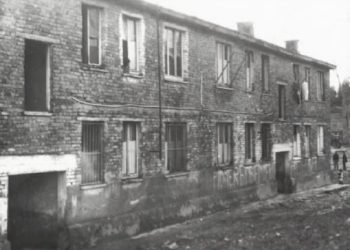
Oh yes! It was very difficult not to notice them! Every time we went out, my old friend and I always had two men following us. They never approached, they never bothered us or tried to communicate, but they were always there.
What were your first impressions when you arrived in Albania?
I am originally from Czechoslovakia and had grown up with the rules of socialism; it’s not that the atmosphere here was completely unfamiliar. Earlier, I used to collect postage stamps when I was little, and I had some stamps from Albania. I always had some connection with it. Then, when I came to the airport, I saw it up close, as well as during the days we went by bus to various cities like Saranda, Kukës, Pogradec, etc. There have been very good Albanologists in Germany. I found there people very interested in Albania and Albanian culture.
Did you strictly follow the “order” not to communicate with any Albanian?
During the first visit, yes, but during the second, also because the stay was longer, we had some random episodes. I remember that there were many, many men on the streets, and we were surprised, not women. It seemed to me that women were busy at home. When we asked why there were no women, they told us they were on other tours, and when we saw them, they weren’t working. In parks, streets, and squares, there were only men. The second time I came, in 1989, the atmosphere had changed a bit; things were cheaper. Nevertheless, we continued living the same way, until one time my friend fainted on the street, and some residents of a neighborhood I don’t remember came to help us. They took us into a house and helped my friend recover. As soon as she felt better, they signaled that we should leave. I remember that the whole neighborhood gathered in those minutes we stayed in their house. They were curious, I don’t know, but they gathered to see the two foreigners who had entered that house.
Have you had other similar experiences?
Yes, generally on the streets people would stare, but when I came for the second time, unlike the first, I found a hair salon. I went there to fix my hair, and I don’t remember how many women gathered just to watch!
How did your relationship with Albanian continue after leaving Albania?
For some time, I had no more contact. I returned to Kosovo for two years for the German Academic Exchange Service, from 1999-2001. I worked at the Faculty of Philology in Pristina as a lecturer of German. I was happy to be among Albanians. It was a frightening time for me. I met Kosovar writers. In 2000, I met Nevijana Dosti, who worked at the German Embassy. She encouraged me to translate literature.
Which Albanian authors have you translated?
I have translated from Serbian and other languages, but Albanian is the most important. I translated “In Search of the Lost Shirt” for an anthology in Austria. In 2006, I translated Arian Leka, some poems, for a reading in Germany. Some I have translated only for readings at book fairs. I have translated five plays by Jeton Neziraj and am translating the sixth; Xhevdet Bajraj has also been published. I have also translated Arben Idrizi, Parid Teferiçi, Luljeta Lleshanaku, Luljeta Dano, Ervina Halili, Lisjana Demiraj, Doruntina Basha, Ledia Dushi. Now that I am at the literary residency in Tirana at Poeteka, I am meeting those I know as authors but have not met up close. I mainly deal with poetry translations, but I have also translated drama, not novels.
This is the 5th time you come to Albania, whereas you have only told us about the first two. What brought you later?
I worked as an external collaborator with the OSCE and came here as an election observer in 1996. The riots came later. There were political conflicts then, chaos, anger, and resentment. I was stationed in Himarë, and it was even more difficult there. You could find armed people in bars; see the abuses they committed with votes. People voting several times…
Did you intervene in cases like these?
Of course, whenever we spotted them. I also tried to intervene on other occasions, but I realized I had my limits.
What situation are you referring to?
I remember once when people had entered the headquarters of one of the major parties, and I was there to ensure that the people came out, because they were innocent. The police issued a public statement that they would let the people go free, but in fact they escorted them to the region. There I asked for explanations and tried to intervene, but the way they removed me made me understand that I could not do more than necessary.
Your connection with Albania has also made you part of a group that awaited the Albanians in 1990 in Italy, to then transfer them to your country. What is that story?
The German Embassy was part of the developments at that time, and it was the one that asked for help in Germany. The German government decided to ask the German Red Cross for help in organizing three trains that were to come to Bari, where they would pick up Albanians to take them to Germany. Then they requested that the train have doctors, nurses, and translators. I was a translator for the group of this humanitarian action and accepted immediately, along with Robert Elsie and a journalist who works at Deutsche Welle, with whom I had been here in 1989 to learn Albanian. It was a very dramatic situation. I saw the Albanians disembarking from the ships in moments that are unforgettable. They were exhausted, partly sick, desperate, but hopeful. For many, many years I stayed in contact with some refugees. They had a very difficult time, because no one took care of them. They were people from various professions, like technicians, engineers, people who also studied later in Germany. While they were in the refugee center, they were easy to contact, and later they got private apartments. My experience was mostly good. They came from another regime to a big, cold city and found it hard. Their challenge was that no one looked after them./ Memorie.al