By Bashkim Trenova
Part Fourteen
NAZIBOLSHEVISM – LITERATURE AND ARTS
FOREWORD
Memorie.al / Historians, political philosophers, intellectuals of various schools or positions have dedicated thousands and thousands of pages, entire volumes, studies, and articles to the comparison between Nazism and Communism. Generally, their publications and studies focus on the police control of society by these dictatorships, the role of the dictatorial state hierarchy and the head of state as suppressors of free thought, the omnipresence of official propaganda in society, the mass massacres and the network of concentration camps, the activity of the secret police – the NKVD in the USSR (later the KGB) and the Gestapo in the Third Reich. In his book “Le Passé d’une illusion” (The Past of an Illusion), François Furet notes that Nazism and Communism share the same opposition to liberal democracy and what they call “capitalist bourgeoisie.” Both ideologies claim to be socialist and use the image of socialism. Communist countries called themselves “socialist.” “Nazism” is an abbreviation of National Socialism.
Continued from the previous issue
Chapter II – MUSIC
The year 1948 was a year of great dangers for Soviet composers. A year earlier, Stalin had ordered that, to celebrate the 30th anniversary of the October Revolution, composers should create works of a high level. After one year, the result was highly unsatisfactory. The works created did not represent, according to the dictator and his circle, the grandeur of communism; moreover, the creations of some of the most listened-to composers, who were also labeled “enemies of the people,” had slipped toward decadent and petty-bourgeois Western music, which could not be tolerated. Any music that was not enthusiastic, with romantic, melancholic, or somewhat tragic notes, was declared suspicious, bad for the people, not understood by the people, and consequently useless to them, if not hostile.
“Despite some successes in film and song music,” Zhdanov would emphasize in a decree of February 1948, “our composers have not fulfilled their duty to the people. The state of contemporary Soviet music is worrying and unsatisfactory; the influences of anti-people formalism remain strong…! A number of our so-called ‘star composers’ have been poisoned by the decadent formalism of the West.”
In 1948, following a resolution of the Central Committee of the Communist Party of the Soviet Union, “Concerning the opera ‘The Great Friendship’ by Vano Muradeli,” the composer and conductor Leonid Alekseyevich Polovinkin was accused of “formalism.” After this, he died quite suddenly on the street on February 8, 1949, and was forgotten until 2009, when pianist Anait Karpova recorded a selection of his piano compositions on CD. Unlike several other composers of the time who stopped showing interest in jazz music, Leonid Alekseyevich continued to include elements of this style in his compositions even at the end of the 1930s, at a time when jazz had been declared un-popular, and even hostile. He also introduced jazz themes into his classical and romantic works for piano and symphony.
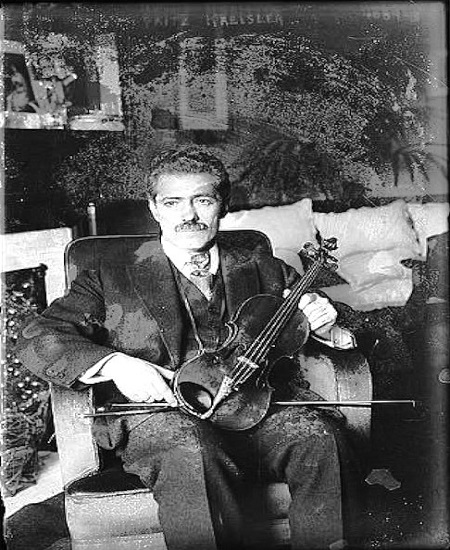
Composer Nikolai Yakovlevich Myaskovsky is often considered the founder of the Soviet symphony. A 1935 CBS survey of its radio audience, asking the question: “In your opinion, which of the great contemporary composers will stand among the world’s greats in 100 years?” placed Myaskovsky in the indisputable top ten alongside Prokofiev, Rachmaninoff, Shostakovich, Richard Strauss, Stravinsky, Sibelius, Ravel, De Falla, and Fritz Kreisler. A five-time winner of the “Stalin” Prize, at the end of his life Myaskovsky was also accused of being the author of formalist, anti-Soviet, and anti-proletarian music. The composer did not accept the accusations, did not engage in self-criticism like many others. He was dismissed from his functions in 1948 and was only rehabilitated after his death from cancer in 1950.
According to the Bolsheviks, “formalism” was equated with “modernism” in the negative sense of the word. It was condemned because the musical form, the construction of a musical piece, was placed above parameters such as melody and because it conveyed such “decadent” phenomena as atonality. In the deadly Bolshevik whirlpool of “formalism,” other well-known composers of the time, such as Shostakovich, Prokofiev, Khachaturian, Vissarion Shebalin, Gavril Popov, etc., were directly condemned as the “embodiment of formalism,” as the main culprits for the problems in Russian music. To prove that everything is done for the people and solely in the name of the people, the sacred interests of the proletariat, and the working masses in general, the Bolsheviks organized or fabricated a large number of rallies and debates across the country, in factories and on collective farms. According to the noisy communist propaganda, the “workers” – millions of simple people everywhere – after heated debates, united unanimously, indignant, against Shostakovich, Prokofiev, and other “formalists.”
Stalin’s jealousy of others’ glory certainly played its role. It had fatal consequences on the life and activity of many personalities, including those who excelled in the field of music. Sometimes even something utterly trivial was enough to anger the Kremlin chief and make him lose his self-control. An incautious word from someone was enough; someone who, in his opinion, spoke too much or who in his view was too cultivated; someone who prepared a report for him and seemed to him “too capable” – even just that was enough for him to hurl Zeus’s thunderbolts upon the fate of this or that person.
This was his tactic to sow terror even among the personalities of the world of culture and art. Accordingly, a composer could be condemned and denigrated one fine day, only to be suddenly valued afterwards as a true hero of Soviet music, and then pass again onto the black list of official authorities. Shostakovich, in particular, but also other musicians, would suffer these “acrobatics” of Stalin and his followers – whether they were fanatics, or servile, frightened, terrorized individuals.
In the early 1940s, Stalin decided to announce a competition for writers and musicians regarding the creation of a new anthem for the Union of Soviet Socialist Republics. For this purpose, a government commission was also formed. Among the composers participating in this competition were the great names of the time: Prokofiev, Shostakovich, Khachaturian, etc. After several months of work, each composer presented their anthem, but Stalin would decide otherwise. He suddenly remembered that a ‘Hymn of the Bolshevik Party’ composed by Alexander Alexandrov before the war, “is more suitable as an anthem; it sounds more triumphant.”
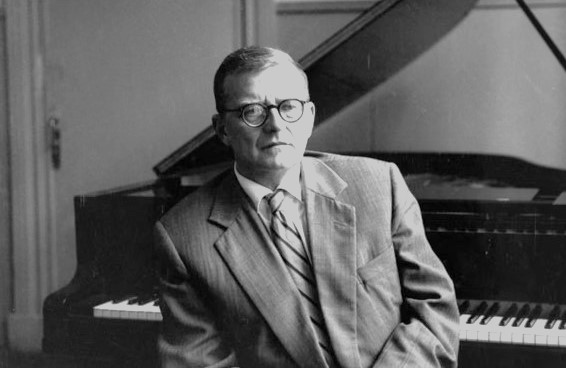
Thus, Alexandrov’s composition officially became the anthem of the Soviet Union, regardless of the opinion of music specialists and the composers who had worked and participated in the competition, or of the government commission, which in fact could have no other opinion than Stalin’s. It was Stalin who would also decide the fate of the opera ‘Lady Macbeth of Mtsensk’ and its author, Shostakovich. The opera was composed by the author at the age of 30 and was first performed on January 22, 1934, in Moscow. Over two years, it had extraordinary success domestically and internationally. Everything would end on January 28, 1936, when Stalin, accompanied by Zhdanov, decided to see the opera.
‘Lady Macbeth of Mtsensk’ deals with the story of Katerina Ismailova in a small Russian town in the second half of the 19th century. This merchant’s wife is bored and cannot bear a life of loneliness. Her husband works far away, absent for weeks at a time. She desires a different life and decides to rebel against the despots who prevent her from being happy. To achieve her goal and live her new love with Sergei, she does not hesitate to destroy those despots. At first glance, the opera seems to be in line with the regime. Katerina symbolizes the revolutionary people rising up against tyrants. The latter represent the rich Russian peasants or kulaks – a “class” whose annihilation under Stalin’s orders had begun as early as 1929.
Despite everything, the Kremlin chief did not like the opera. He left before Act III, without following it to the end, and did not greet the author, whose fate was placed on the guillotine. The next day, Pravda, the central newspaper of the Communist Party of the USSR, published an article about the opera titled: “Chaos Replaces Music.” Shostakovich was labeled by Pravda as an “enemy of the people” because he had composed unpleasant, overly cacophonous music, or “neither simple, nor realistic, nor comprehensible,” and that “its rotten formalism was proof of contempt for the real world.” In short, the opera was contrary to the ideal of Socialist Realism!
‘Lady Macbeth of Mtsensk’ is also criticized because it ends pessimistically with prisoners walking in the cold. In the context of the massive deportations of Russian citizens to the Gulags of Siberia, this opera was judged by Stalin as harmful and was banned. The “lesson” was clear. If Shostakovich, the greatest Russian musician of the time, was not spared, then others even less so. Every composer must submit to the doctrine of Socialist Realism, try to exist and be cheerful, despite constant persecution, because any composer who deviates from the official line will be crushed.
In this situation, Shostakovich was toppled from his throne, sidelined from the musical landscape. As he he relates in his memoirs: “The label ‘enemy of the people’ followed me everywhere. They treated me as an enemy of the people, both privately and aloud, from the podium.” One day, Shostakovich received a summons from the NKVD (the predecessor of the KGB). He was asked to appear at its headquarters, a gigantic building in the center of Moscow. There he would be interrogated by an NKVD agent. The questions would be: “Who are your friends?” “Whom do you meet regularly?” “Do you know Marshal Tukhachevsky?” The Marshal was, in fact, one of his close friends. The NKVD officer wanted to force Shostakovich to affirm that Tukhachevsky belonged to a terrorist group preparing a plot against Stalin. War would change Shostakovich’s fate. From an enemy, he would be transformed into a hero.
It is well known that on September 8, 1941, the Nazi forces began the siege of Leningrad, and that this siege would last almost 900 days. Hunger and cold, with temperatures as low as 40 degrees below zero, would bring death to 1 million Leningraders. Corpses covered the entire city during the years 1941–1942. It is hard to imagine that in these conditions there could be a real musical life in this city. However, precisely under these conditions, in December 1941, Shostakovich composed “Symphony No. 7 in C major, Op. 60 ‘Leningrad’.”
This work by Shostakovich was unanimously praised by the official authorities. The composer was honored with the “Stalin” Prize in 1942. Very quickly, this symphony gained popularity both in the Soviet Union and in the West. This is explained by its very subject matter, which exalts resistance against the German invader. Shostakovich’s Symphony No. 7 played the role of a psychological weapon and was broadcast repeatedly via loudspeakers throughout Leningrad, to be heard by the people and the enemy troops. German artillery tried to prevent the performance of the Symphony, but to the joy of the Leningraders, it was forced to remain silent by the batteries of Soviet artillery.
It is interesting to note that after World War II, this symphony by Shostakovich was also evaluated as an anti-Stalinist work. In 1948, Tikhon Khrennikov, General Secretary of the Union of Soviet Composers, would declare: “Shostakovich’s musical inspiration echoes more the crimes of fascism than the heroism of our era. Shostakovich’s abstract atonality, the cosmopolitanism of his musical language – which even during the war did not take the smallest step to approach the musical language of our people – make the Seventh Symphony not a popular work for a long time.”
Shostakovich died in 1975 at the age of 69. Pravda announced his death on the third page, four days later, through an article filled with eulogies. In his honor, a grand funeral was organized by the Communist Party. Those who had persecuted him for years stood in its front rows.
Another Great Russian composer of the 20th century, Sergei Prokofiev, was also not spared by Bolshevism. After a relatively long stay in emigration, the composer decided to return definitively to the USSR. In May 1936, he settled with his family in Moscow.
After returning to his homeland, Prokofiev proved to be an obedient soldier of Socialist Realism in music. As early as 1935, he had started work on composing a grandiose cantata for the Party: Cantata for the 20th Anniversary of the October Revolution. The cantata is inspired by the history of the October Revolution and the creation of the Soviet Union. It spans from the taking of the Winter Palace in 1917, then passes through the sufferings caused by the Civil War, the funerals for Lenin in 1924, continues with the construction of factories and collective farms in the early 1930s, and ends with Stalin’s absolute control over the country with his new constitution of 1936.
At a quick glance, two things can be noticed about this work. It requires extraordinary forces to be performed, to mobilize and exalt the masses – no fewer than 500 persons: a symphony orchestra, a wind instrument orchestra, a male choir, a percussion noise ensemble, an accordion orchestra, and two different choirs. Another thing that draws attention is the use, as reinforcement, of important texts based on communist ideology. It uses passages from the Communist Manifesto and Marx’s Theses on Feuerbach, from speeches or publications by Lenin and Stalin.
Prokofiev uses these texts in their raw state and justifies this by saying: “Lenin’s language is so expressive, lively, and convincing, that he did not want to paraphrase his thoughts into verses, preferring to stick to the original text and use the Leader’s own phrases.”
This work by Prokofiev seems to meet all the requirements to be seen as an ideal creation of Socialist Realism. Its content is fully in harmony with the ideology, and its form as well, involving the masses through the choirs and numerous musicians. Listening to the Cantata for the 20th Anniversary of the October Revolution, one senses in its notes the presence of revolutionary heroism. It could also be said that Prokofiev’s use of the accordion in this work is in line with the official thinking of the 1920s, which gave this instrument a chosen place in the new socialist order.
During the time of the great Stalinist purges of the 1930s, Prokofiev was careful not to face danger. The year 1937 is remembered, in particular, as a year of terrible Stalinist terror. Generally, in his work, he treats heroism – a young boy saving a child from flames, or another who wants to avenge his brother who gave his life for the homeland, etc. Prokofiev exalts communist ideology and Stalin. His work, including the Cantata for the 20th Anniversary of October, could be seen as a glorious page of Socialist Realism in Soviet music.
However, this is neither the view nor the evaluation of the Kremlin. This cantata was declared heretical. Officially, the reason given for the regime’s position was that “the speeches of the ideologues of communism are not meant to be sung.” By using the “sacred texts,” Prokofiev had committed a great sin, which provoked the fury of the communist authorities.
Platon Kerzhentsev, a theorist of proletarian culture, in the role of prosecutor, addressed the composer with the words: “How is it possible then, Sergei Sergeyevich that you took these popular texts and set them to such incomprehensible music?” The chairman of the Union of Soviet Composers, Tikhon Khrennikov, also sought to show, in a discussion on the “history of Soviet music,” how and why Prokofiev is a completely foreign composer in relation to the Russian tradition.
Khrennikov, in order to denigrate and humiliate Prokofiev to the end, carrying out the orders of his great bosses, did not forget to speak also about his travels outside the Soviet Union. “After mentioning all the modernists as decadent, nervous, cacophonic, religious, sexually perverse, perverts such as Olivier Messiaen, Jolivet, Hindemith, Alban Berg, Menotti, Benjamin Britten, Khrennikov attacked Prokofiev, trying to prove how much he had been deformed and deeply turned into a Westerner.” / Memorie.al