By Prof. Gazmend Shpuza
Part One
Memorie.al / The 7‑month defense of the city of Shkodra represents, in terms of the power of resistance, one of the greatest battles fought within the context of the Balkan Wars. It will remain one of the brightest pages of patriotism and determination of the Albanian people – not only of that city and its environs – for the defense of the territorial integrity of their ancestral lands, a high example of inspiration for the ultimate realization of the Albanian National Revolution. It is at the same time evidence of the combat cooperation of our people with the realistic forces of the Ottoman society of the time, primarily with the Turkish people, in defense of their mutual national interests and their future.
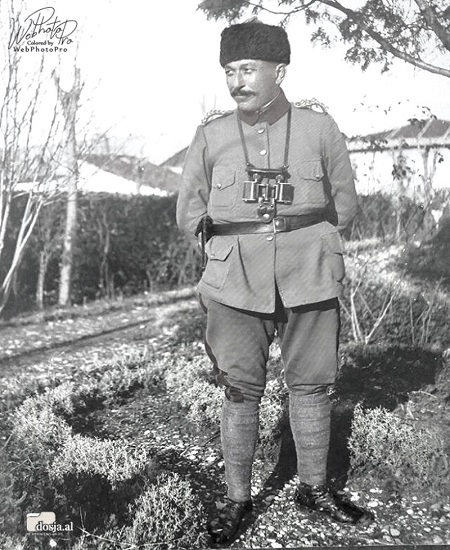
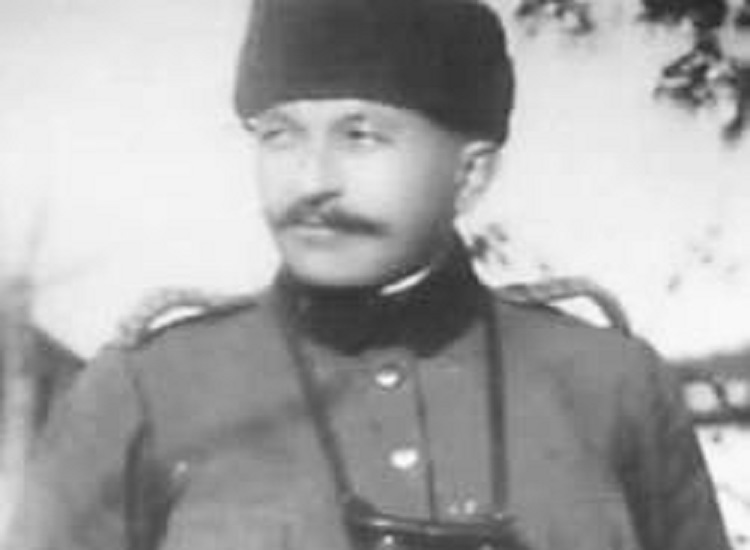
The famous commander Hasan Riza Pasha expressed his realistic stance toward developments in Albania after the July 1908 revolution, called the Young Turk revolution, as soon as he arrived in Shkodra. He was among the first and among the few of the Ottoman authorities of the time who understood that under the given conditions, and especially on the eve of the First Balkan War, the interests of Albanianism and Ottomanism had in fact diverged. Hasan Riza Pasha, who before the Declaration of Independence had proposed to Father Gjergj Fishta that he write a march in the Albanian language for Albanian soldiers – the vast majority of whom were Muslims – to sing in their mother tongue during drills and battles. The march, published by the well‑known Shkodran folklorist Kasem Taipi, ends with the verses:
“In the front of the army the banner was raised… / Strike, lads, where blood is shed, / For freedom and for the King, / Whoever is a man in the Sultan’s army / Let him come out today into the battlefield / To give his life for the homeland / May the Ottoman army be blessed / Aligned under the flag, the battalion / It never yields from its ancestors’ ways / For they fall alive into the grave before it.” According to the Shkodran chronicler Hamdi Bushati, “Hasan Riza Pasha rewarded each stanza with a gold lira.”
After November 28, Hasan Rizai declared in the Ottoman headquarters that Shkodra could only be defended as an “Albanian city”. In this spirit, he called upon Mahmut Hajret Pasha (Jella) to act in the name “of Albanianism and Ottomanism”. His call came after the decision of the London Conference of December 17, 1912. With that decision, the Great Powers did not recognize the independence declared on November 28 of that year. For several more months, they recognized only its autonomy under the sovereignty of the Sultan.
Given the new realities, Hasan Riza Pasha was not interested solely in saving the Ottoman garrison under his command – something he could have achieved immediately in agreement with the Montenegrin rulers, as E. Toptani did after a few months. Hasan Rizai agreed with Basri bej Dukagjini, deputy of Dibra in the Young Turk parliament, on the means of “saving Albania”.
As commander of its garrison, he no longer viewed the defense of Shkodra narrowly, only from the perspective of his interest in extracting the Turkish‑Ottoman forces under his command from encirclement.
Hasan Riza Pasha saw the defense of Shkodra as linked to the resolution of the Albanian question, in the spirit of the decisions of the Assembly of Vlora and in accordance with the once‑and‑for‑all recognition of Albania’s autonomy by the London Conference. Quite telling of the concept that Hasan Riza Pasha had developed regarding interethnic relations in the Ottoman Empire in its final years, and of Albanian‑Ottoman relations in particular, is the letter he sent to Mahmut Hajret Pasha (Jella) on December 27, 1912.
He asks the commander of the Western Ottoman Army to engage as soon as possible the forces under his command in combat actions against the Serbian forces marching toward Shkodra. The commander of Shkodra’s defense now calls upon him not in the name of the Ottoman Empire, but in the name “of Albanianism and Ottomanism”.
Hasan Riza Pasha’s commitment to the defense of “Albanianism” is rightly expressed by the folk poet of Shkodra, even if clothed in an outdated lexicon that was in wide use at the time – as is also evidenced by the march written by Father Gjergj:
“Esad Pasha and Hasan Rizai / Debate and confer together, / For aid there is no hope, / But we are raising our flag. / Hasan Rizai had thought / To serve this land, / To revive the Albanian that has been forgotten, / And to save this nation. / He set the day to raise the flag / According to the plan he had marked, / Serbia with Karadak is crushed / And Shkodra, surrounded, is saved. / The Ottomans thought / And organized with skill, / They set up Esad to betray / He killed him with his own bread.”
Through a now‑outdated lexicon and Shkodranisms, the folk poet faithfully conveys the Shkodran people’s perception of the dramatic events of those days in their city, the predisposition of Shkodra’s commander, and his end.
In those circumstances, according to the folk poet, Hasan Riza Pasha had thought to place himself in the service of this land, to save the Albanian nation, first by reviving the written Albanian language. After debates with Esat Pasha, he reaches the conclusion that the only way to save Shkodra was to raise the Albanian flag, also setting the day for the realization of this major historical event of national importance for the fate not only of Shkodra but also of other regions.
Starting from the positions and interests of Shkodra’s inhabitants, Hasan Riza Pasha seeks to make the Albanian flag the battle flag of the fight he had until then commanded only under the Ottoman flag. The folk song turns out to be an authentic chronicle of those days. According to Mikel Prendushi, author of the still‑unpublished dissertation on the Defense of Shkodra, the flag was raised by the Shkodran girl Bernardina Marubi.
The folk poet divides the defensive forces of Shkodra into two camps. On one side, he places the Albanians, alongside whom he unhesitatingly lines up Hasan Rizai and the garrison under his command. Opposite them, the author of the song places the camp of the Ottoman Young Turks, which also included Esat pasha Toptani and his close men. They devise the plan to eliminate the commander.
They realize this goal through Esat, who betrays his chief and guest after coming to an agreement with the senior Young Turk officers, leaving a great stain on himself not only as a traitor to the Albanian land but also as a faithless man. Therefore, Cetinje and Belgrade, calculating the benefits they would gain from taking control of Shkodra, paid Esad well. The data coming from various sources, although not matching, are considerable.
On April 22, 1913, Cetinje informed Belgrade that Esat pasha Toptani, in exchange for Shkodra, demanded from the allied Balkan states – Montenegro, Serbia, and Greece – 300,000 dinars, i.e., 100,000 dinars each. Eqrem bej Vlora writes that, as Esat Pasha himself had asserted to his father, Syrja bej Vlora, in 1913, “to take the decision to surrender Shkodra, half a million gold francs delivered to one of his trusted men in Trieste had influenced him.”
At Esat Pasha’s trial in Paris in 1920, the Albanian representative Mithat Frashëri declared that “even at that time, it was said of Esat Toptani that he sold Shkodra for the sum of 600,000 francs given to him by the Montenegrins.” The Russian historian Nina Smirnova, relying on British sources, testifies that Esat Toptani received from Serbia a sum of 16,000 pounds.
Above all, the pasha secured from Belgrade and Cetinje support for the realization of his ambitions to place himself at the head of an autonomous Albania under the suzerainty of the Sultan. In exchange, he renounced Shkodra and the territories north of the Drin River in favor of the Montenegrins. With this support, Esadi, as soon as he returned to Tirana, opposed the government of Vlora, which he declared he did not recognize.
Thus, the benefits that the neighboring states expected to achieve – and indeed did achieve – after the surrender of Shkodra, especially with Esad’s unconditional engagement in the service of Belgrade, fully justified the generosity of the Slavic rulers toward him.
For these reasons, the Albanian public opinion unanimously condemned Esad’s treachery. The same ideas as those of the folk singer are further elaborated in the poetry of Dom Lazër Shantoja dedicated to Shkodra’s defender. Its author curses the treacherous murder of the Hero. Overcoming the sense of proportion, although Esadi committed the crime of betrayal, he placed the shame on all of Albania:
“Treacherously they took your life, a son of Albania with a traitorous hand… Fate and doom! In vain is loyalty and patriotism sought in some of Skanderbeg’s grandsons! With shame and disgrace Albania is covered today, the face of the whole earth…” To conclude with a message addressed to Skanderbeg’s grandsons: “Learn from the foreigners, learn once more, O Albanian, to die for the homeland”!
With these words, in my opinion, the author addresses the representatives of the landed aristocracy of Esat Pasha’s category, because the representatives of the mass of Albanians, villagers and townspeople, were fighting in the trenches against the aggressive armies. In the verses of Dom Lazër’s poetry, all of grieving Shkodra calls out for its loss: “Where are you, Hasan Riza?”
As a commander with a clear vision, not only military but also political, Hasan Rizaj succeeded in overcoming the divisions created by the blind policy of the Young Turk rulers since the time they came to power. First, as soon as the approach of the Balkan War was felt, he drafted the strategic plan for the defense of the city of Shkodra.
Shkodra’s commander took measures to strengthen the fortifications of Rozafa Castle and at Tarabosh and Bardhej. The efficiency of these measures, according to eyewitnesses of the time and according to today’s specialists in the history of military art, proved fully effective even after his murder by Osman Bali. Against them, one after another, all the attacks of the Montenegrin forces were broken.
Edith Durham, an eyewitness to the events of those months, highly and unequivocally appreciates the merits of the commander of Shkodra’s defense: “One thing is true: Hasan Rizai was an excellent soldier, and the thanks of all Albanians are owed primarily to him and his excellent fortification plan. He saved Shkodra.” / Memorie.al