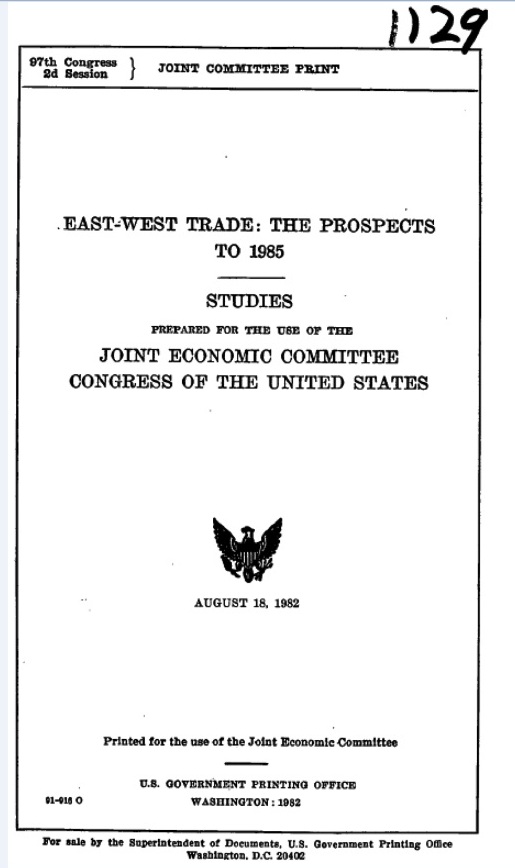
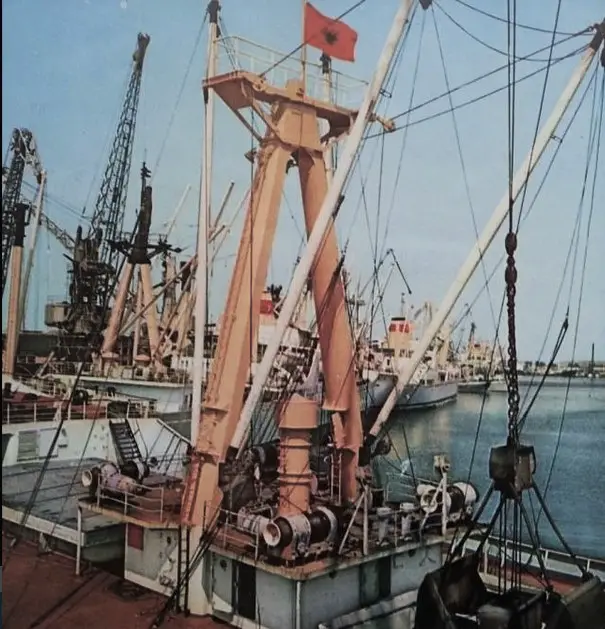
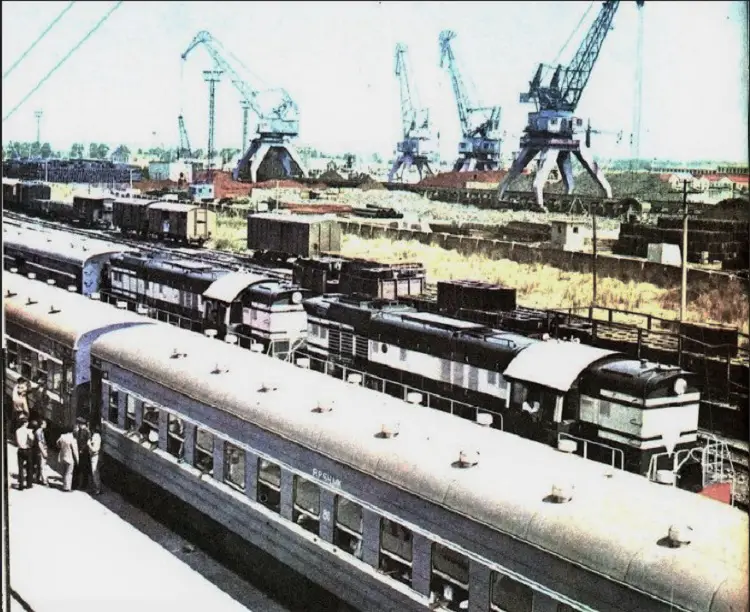
Memorie.al / In the 1970s–1980s, the jargon of Durrës port workers spoke of unloading ships with “coal from across the ocean.” Thus the communist dictator Enver Hoxha, although he cursed America and refused to restore diplomatic relations with Washington, secretly traded with the capitalist superpower at the height of the great purges in the economy, culture, and defense. This fact is confirmed in the American study of August 18, 1982, on East-West trade, prepared for the Joint Economic Committee of Congress and the Senate, from which we have excerpted a fragment. The aforementioned document states that on April 4, 1973, the United States of America publicly offered Albania a friendship agreement. Enver Hoxha’s Diary does not touch upon this fact directly, but it is confirmed in a NATO information report, which evaluates Enver Hoxha’s “neither Easy nor West” policy as being in favor of the West, since it did not allow the Soviets to establish bases in the Mediterranean.
Meanwhile, an article in the well-known American daily The Christian Science Monitor of June 19, 1973, gave messages of détente between the two countries at a time when the American-Chinese rapprochement and the Albanian-Chinese rift were taking shape. This careful article also provides interesting facts concerning “unofficial” trade and tourism between the USA and Albania, at a time when this was not happening with the Soviet Union.
Document 1
From the study of August 18, 1982, on East-West trade, prepared for use by the Joint Economic Committee of the U.S. Congress and Senate
The Hoxha regime’s turn toward the West has been carefully orchestrated and selective. Tirana has been particularly cautious in expanding relations with the United States, which the regime has labeled “the last capitalist imperialist superpower.”
Thus, several American offers during the 1970s to resume diplomatic relations and thereby steady trade relations were officially rejected. Deputy Secretary of State Kenneth Rush, on April 4, 1973, summarized U.S. policy toward Albania by stating: “If and when Albania wishes to resume diplomatic relations with the United States of America, we will be ready to respond.” (This offer was repeated under the Ford and Carter administrations.)
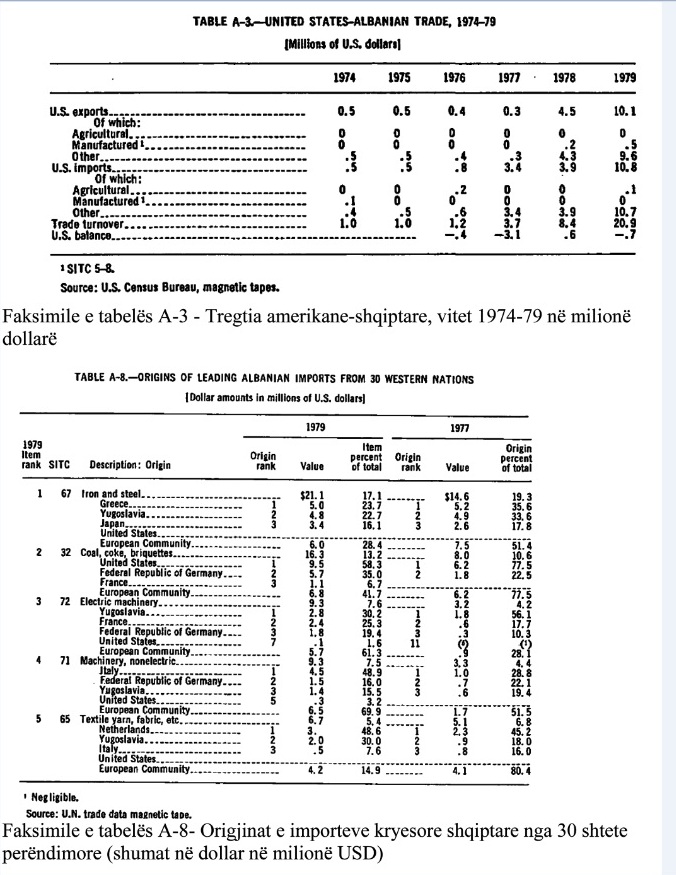
Nevertheless, trade between the two countries has been increasing (see tables below in the original English). Pragmatic Albanian foreign trade ministers realized revenues from importing American coal (to compensate for several bad years in domestic coal production), in exchange for shipments of Albanian chrome. In the early 1970s, America imported over 90 percent of the chrome it consumed, mainly from South Africa and the Soviet Union, and was doing its utmost to diversify its supply sources. This was the basis for the U.S.-Albanian trade relationship, which grew from under $1 million in 1974 to nearly $21 million in 1979. American companies operating through third countries facilitated trade links between the two nations.
Document 2
U.S. Offer to Albania
(Article in The Christian Science Monitor, June 19, 1973)
America has introduced a new factor in its relations with Albania, the ally of Communist China
On April 4 (1973), Deputy Secretary of State Kenneth Rush made a friendly public proposal to Albania. He said the United States is ready to normalize relations with Tirana. Washington has had no diplomatic relations with Tirana since 1939, when Italy attacked and occupied Albania.
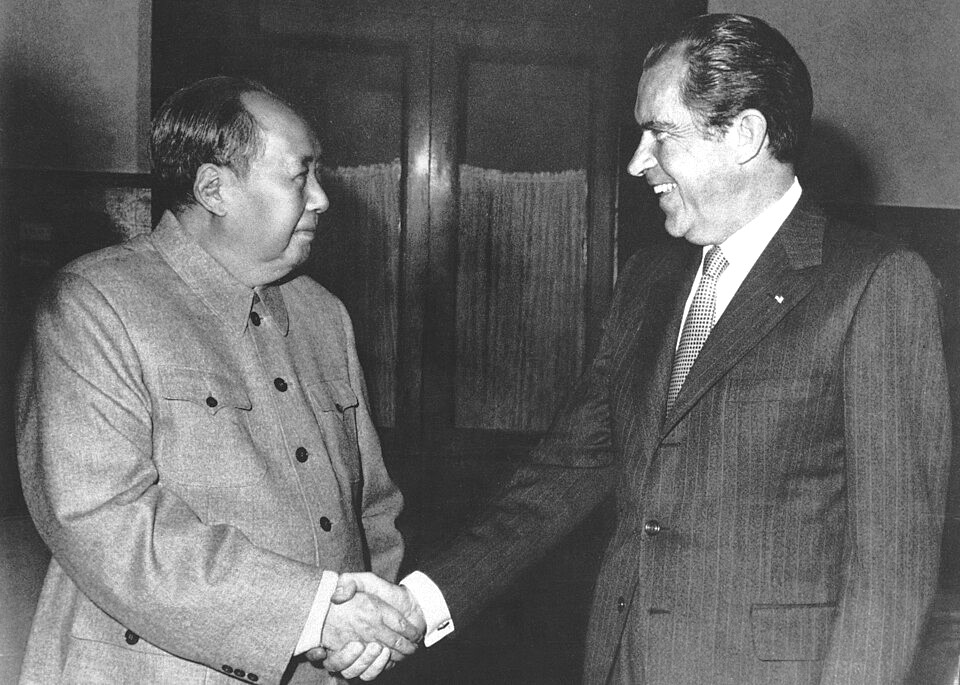
What prompted Mr. Rush? And what are the chances for improvement in Albanian-American relations? So far, Albania has not officially responded to the American offer. It is almost certain that America’s new interest in Albania has been influenced by U.S. relations with Mao’s China. If diplomatic success is possible with Peking, then it should also be possible to improve relations with Peking’s Balkan ally.
Moreover, since 1968 Albania has taken steps to expand its diplomatic, economic, and cultural ties with Western Europe. It has normal relations with its neighbors – Greece, Yugoslavia, and Italy – and with most Western countries. Apparently, American officials believe that Tirana may now be ready to take another step and also expand ties with the United States.
An encouraging sign is trade. American trade with Albania has expanded in the last decade. In 1961, America imported $73,000 worth of goods from Albania. In 1971, that figure reached about $280,000 – nearly four times as much. Exports to Albania have been significantly smaller. More important, however, is the fact that the exchange of goods has continued uninterrupted since 1963.
The Washington diplomatic initiative toward Albania also has another dimension. It is based on a long tradition of friendship and cooperation between the American and Albanian peoples. Albanians remember with gratitude President Wilson’s efforts for Albania’s sovereignty after World War I.
In December 1942, Cordell Hull, then U.S. Secretary of State, promised American support for the restoration of Albania’s sovereignty and its right to self-determination after the defeat of the Axis powers.
In another friendly gesture, President Eisenhower in 1956 (in fact, on March 4, 1955) proposed sending about $1,000,000 worth of food products to Albania to help alleviate the country’s serious food shortage.
What are the obstacles to resuming diplomatic relations between America and Albania – the only openly Stalinist country in Eastern Europe?
One is the bitter legacy of the Cold War. Albanian leaders have long disliked America’s support for anti-communist Albanian exile groups. Another serious obstacle is the question of the pre-war treaties concluded between the United States and King Zog.
The Hoxha regime does not recognize Washington’s treaties with the last Albanian monarch. Tirana declares that it is not obligated to respect agreements it did not sign itself.
In addition, there is an ideological roadblock. Albania’s militant leaders see the United States as a state that, together with the Soviet Union, seeks to dominate the world. For more than a decade, they have waged a bitter ideological struggle against “American imperialism and Soviet revisionism.”
The Cold War has weakened. Hoxha’s leadership is no longer militarily threatened by its political opponents in exile. The benefits from growing trade with the West continue to be conspicuous.
Above all, China’s increasing rapprochement with Washington will inevitably affect Albania’s attitude toward the United States. China has already softened its ideological polemics against Washington. In time, Tirana is likely to follow its example. Otherwise, it would isolate itself from its ally Peking.
Indeed, it can be said that a limited détente already exists between Washington and Tirana. Although Albanian leaders insist that the United States and the Soviet Union are equally dangerous for state security and world peace, the United States of America seems to be considered the lesser enemy.
Tirana conducts limited, “unofficial” trade with America. On the other hand, it conducts no trade at all with the Soviet Union. Likewise, there is limited tourism between America and Albania. There is no tourism whatsoever between Albania and the USSR.
Internal social and economic tensions, plus international developments, appear to be moving Albania from open hostility toward a gradual accommodation with Washington. How fast the transition will occur is still an open question.
A dramatic, sharp turn in Albanian-American relations in the near future is unlikely. But there is a long-term trend toward détente.
From the Political Diary of Enver Hoxha
Tirana, June 4, 1973
NATO, at its recent meeting held in May in Brussels (1973), apparently also discussed Albania…! The information says: “Judging Albania’s position and condition, NATO members concluded that the situation in Albania is stable, there is unity, and there are economic advances. Albania has a strong geographical position in the Mediterranean, but its policy regarding this sea is in our favor. It opposes us, but it also opposes the Soviets. Therefore, we should not disturb Albania or aggravate matters with it; on the contrary, we should try to improve them. The United States of America and England should try to establish diplomatic relations with it, but without rushing or pressuring…”
… Moscow tired itself out trying to restore diplomatic relations with us; Washington, too, made advances in this direction first, and was later followed by England. We rightly turn a deaf ear. The United States of America is not rushing, in this regard… The Soviets, for their part, are rushing because they want to get out into the Adriatic and the Mediterranean, but we are resolutely fighting this aim…!
This suit the NATO states, so, according to the information, they say that Albania’s policy in the Mediterranean is in their favor. Our policy is just as much against and determined against the American imperialists in the Mediterranean, but NATO thinks that the danger does not come from Albania, but from the Soviets…! / Memorie.al