Memorie.al / These were the difficult years of communist repression, when people were afraid “even to talk to themselves”. It was the time when the party-state took on the role of “radiologist”, passing everything through “X-rays” and exposing those affected and those with shadows in their biographies, resulting in dozens of innocent victims among patriots and intellectuals. During the plenums and congresses of the time, the dictator ordered that “art and culture be kept untouched from bourgeois-revisionist influences” that sought to corrupt “our socialist culture”. Quietly, words began to circulate about the removal from Tirana (meaning exile) of several well-known personalities, for various ideological reasons or because they were married to Russian women they had met while studying in the Soviet Union.
I recall that in these circumstances, around 1976, the presence of a particular couple stood out in the city of Shkodra, different from others. The curiosity of the monotonous life of the periphery was “stimulated” by two figures about whom much was said, sometimes with sympathy (by those who knew them closely), but also with harsh and aggressive words from people who lived by the principle of class struggle or who had been instructed to speak that way.
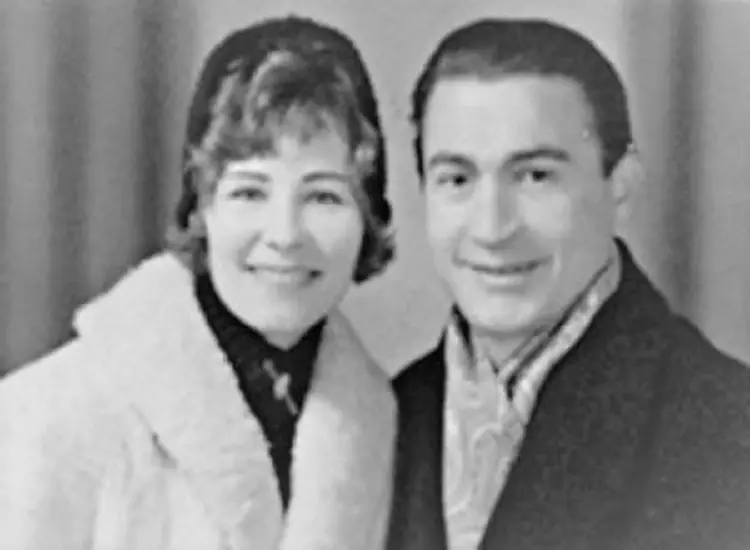
A man and a woman, middle-aged, simply dressed, short in stature, radiating culture and tolerance, who passed silently along the daily itinerary that was “determined” for them, from their workplace to the apartment building where they lived. They were the Shkodran artist Pjeter Gaci and his Russian wife Tamara, who “chose” the city of Shkodra to (survive) live on.
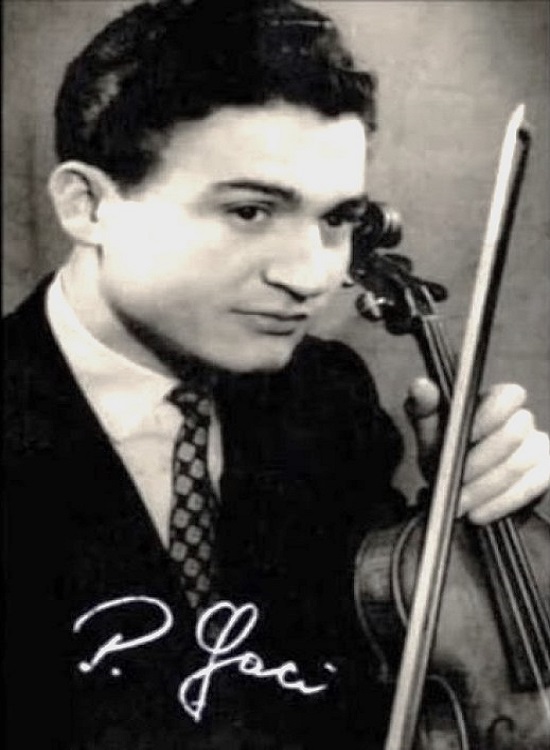
And who had not heard of the artist Pjeter Gaci, who was an inseparable part of Albanian musical life? A complete artist, with all the premises of a virtuoso – a genius, as an instrumentalist – soloist on the violin, composer of a series of works that remained a valuable legacy in the Albanian music fund. Who had not heard of the artist characterised by a refined national feeling, the small man full of charm and pleasant humour, the discoverer and educator of many talents that Albania was proud of in the world?
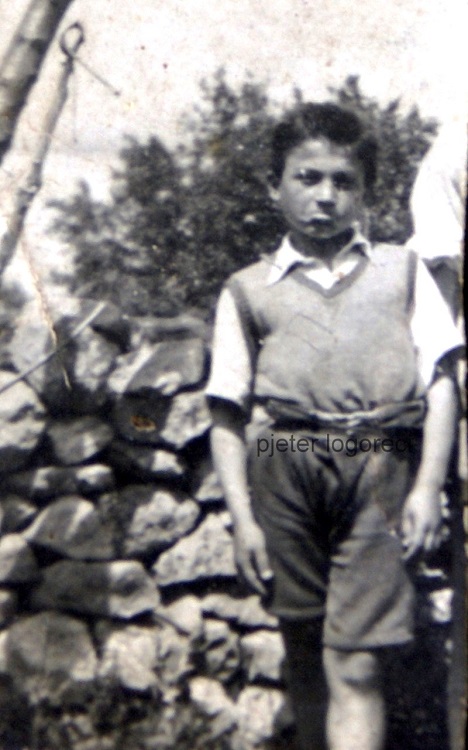
Pjetri, just like the name he bore (Latin: stone), was a strong rock in the national foundation. He was born on 27 March 1931, into a simple family from the village of Shirq, but grew up in Shiroka. As a child, he showed the first signs of talent as a musician and instrumentalist. In his family, everyone sang at every celebration, and many musical instruments were used.
His father Gaci was a well-known rhapsode. He composed, played, and sang his own songs. Pjetri, who tried to be like his father, used many instruments as a child (guitar, violin, mandolin, accordion), so much so that he caught the attention of some Italian citizens who at that time lived in Zogu’s Villa, near their home in Shiroka.
The Italians had asked Gaci to send the talented young man to Italy, but his father, due to his age, did not allow it. Pjetri’s mother, Mrika, a housewife, had three children: Ndoc, Luka, and Pjetri. To develop their son’s talent, the parents sent him to the Jesuit College in Shkodra. Until the state boarding school of the “28 Nëntori” school opened, where he also met his friend Rifat Teqja, he and his childhood friend Ernest Volaj walked every day from Shiroka to Shkodra.
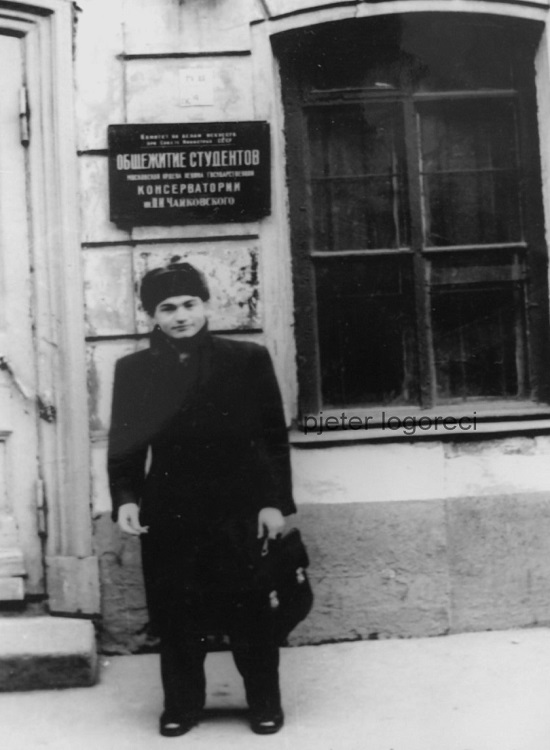
After finishing high school, Pjetri entered the capital’s high school (“Jordan Misja”) in the violin department, where thanks to his talent as an instrumentalist, he caught the eye of Russian artists who helped him go to the “P.I. Tchaikovsky” Conservatory in Moscow.
“When Pjetri appeared before the conservatory’s admission committee,” recounted former student and colleague Çesk Zadeja (who also acted as a translator for new students at the conservatory), “his violin execution technique drew the attention of the renowned professor Jan Polski, who happened to be passing by and heard him. He called Pjetri’s performance brilliant – and asked to see the Albanian violinist’s hand. Then Polski recommended to the commission: … the admission of the candidate and his placement in my group of students.”
Pjetri was a born instrumentalist. Nature had gifted him with a hand unlike others; his two middle fingers were of equal length, which amazed Professor Polski immensely and greatly favoured the violinist Pjetër Gaci. He began his studies in 1953, until the end of the 1956 academic year. Then Pjetri returned to Albania for a holiday and was not allowed by the communist state to go back to Moscow. His relationship with Tamara, a girl from Moscow, was not viewed favourably by the regime, which subsequently did not approve Pjetri’s request for a one-year specialisation and to defend his diploma.
In Tirana, he was employed as a simple violinist in the symphonic orchestra, where his virtuosity stood out. At the request of foreign diplomats who appreciated his talent, he was present as a soloist in many prestigious concerts. Also upon the insistence of foreign ambassadors, Pjetri was appointed artistic director of the State Variety Show (which included the Circus and the Puppet Theatre), where he stayed for nearly two years, later working as a teacher at the Artistic High School in Tirana. There, he tried to stimulate in the talented students he selected himself the opportunities that the communist regime had deprived him of.
Pjetri was not satisfied with the elements that came to compete for the High School; he went out himself to various regions of the homeland to seek and discover talents for the school. After the period at the High School from 1959 to 1976, he was left as a freelance professional, engaging in various compositions, creating songs for May concerts and national festivals, and musical pieces for violin, thus enriching the national fund of Radio Tirana.
I wish to emphasise that the breaking of relations with the Soviet Union also caused an economic-psychological earthquake for the most famous violinist of our nation, Pjeter Gaci. He became a victim of the brutality, terror, and communist revenge. Seen as “philo-Russian”, the High School teacher Pjeter Gaci was forcibly sent to Kavaja as a common soldier, abandoning his family, wife, and elderly parents who lived together in Tirana.
It was the generosity, but also the sympathy for the culture and talent of the “soldier” virtuoso, that drove General Abaz Fejzo to secretly help Pjetri, “to protect the hands and golden fingers that produced music,” by placing him in the library of the Military House in Durrës. Under the pressure of the events of the time and the dictatorial state, Pjetri’s wife, Tamara, applied for Albanian citizenship. Upon her gaining citizenship, the party decided to return Pjetri to the bosom of his family, releasing him from the army early.
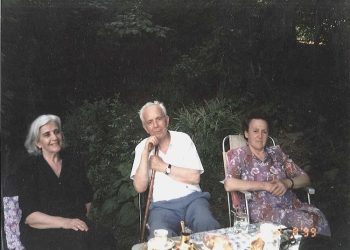
“There were also people who loved us and tried to help us (but by staying away from us),” the long-suffering wife, Tamara Gaci, told me during our conversation. Once, a high official from the Ministry of Education (Ma. Ba.) secretly advised Pjetri, in a street corner, to leave Tirana, as he was in the centre of the executive’s attention. Meanwhile, the political pressure on the artist increased. Tamara was dismissed from Radio Tirana and sent to the rug department of the “Migjeni” Artistic Enterprise, while Pjetri, to be kept “under control”, was assigned to Vlora.
Even in these moments of fear and denigration, Pjetri’s humour did not run dry. His witty retorts to provocateurs or “friends” who tried to console him are well known. When the party cadres in Vlora, where Pjetri did not feel well, advised him not to leave but to stay there, Pjetri replied with his charming humour: “I can’t stay here! …Have you ever heard of a Lab from Shkodra?”
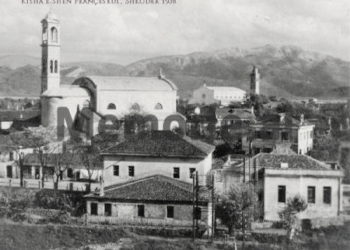
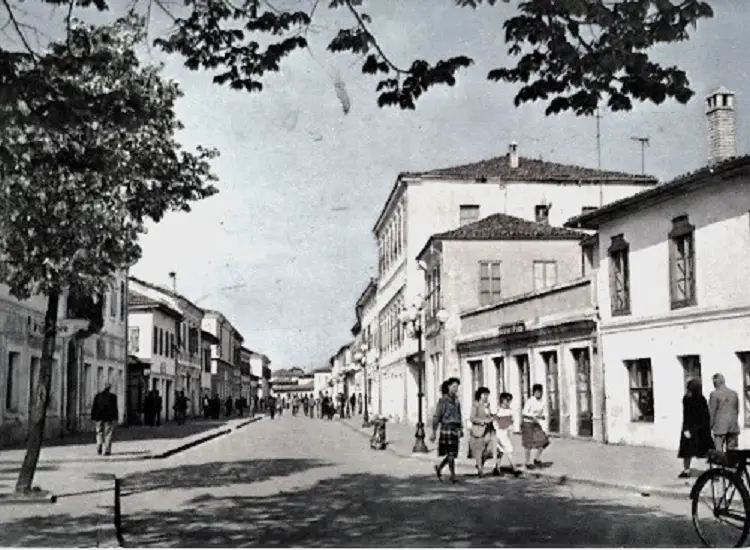
Shkodra was the city where the Gaci family, in 1976, decided to move to (survive) live, as they felt better there, among people who knew and appreciated them, among family members who somewhat softened the couple’s spiritual pain. However, even here, the circle and meetings with people were limited. Often he had to pretend not to see friends or acquaintances passing by. “Once,” Tamara recounts, “we encountered Doctor Sandër Ashta, who was coming towards us with his wife. When he saw us, with joy he opened his arms and began loudly and with longing to rejoice at the meeting. Pjetri, who had noticed a ‘party type’ on the other side of the street, did not react but passed close to him and whispered: ‘…go away, Sandër, keep walking, it’s not good to meet me… I’ve just fallen from the fig tree… and it could be bad for you…’! The doctor, with his characteristic generosity, took Pjetri in his arms and said: ‘…where do you get that fate,… for a fig like you to fall for us in Shkodra’.”
In Shkodra, Pjetri started working as a violin teacher at the music school, while Tamara worked as an accountant at the city’s Befetrof (Baby Home). The musician’s severe spiritual state left no room for the necessary inspiration for a composer. “One day,” Tamara recalls, “he came back very shaken from the street. I didn’t understand what had happened, but he turned to me with these words: ‘…I am alive, but Pjeter Gaci has died…’!”
The great economic difficulties isolated the artist from the high circles of art, where his counterparts, not so much for their merits but as servile supporters of the politics of the time, enjoyed undeserved favours. Although poor and forgotten, he was always dignified and never agreed to “lick the bones” of the dictatorship, which some of his former Moscow students had long since swallowed. The grandeur of his works and his unmatched work prevented the worst – political prison. Class struggle, but more so malice and ambition among colleagues, brought many victims, including the imprisonment of the super-talent Luk Kaçaj. At no moment did Tamara notice any marital “fatigue” or “cooling” in Pjetri.
The change of systems did not bring any major change in the life of our great artist. Working with students remained the only pleasure of artistic life for Pjeter Gaci. He often told his friends: “I will send to Tirana two explosive talents who will dominate the national stage… Lorenc Radovani and Elisabeta Qyrsaqi Dodmasej…!”
Financially, Pjetri received a pension of 8,800 lek, which did not even cover his needs for “Partizani” cigarettes. To meet his family’s needs, he was forced to sell his piano, his only working tool, which was half of his soul. To survive, he tried to do secondary work, engaging in various artistic projects in the city and nationally. He spent his free time in nature, where he also found the source of inspiration. Fishing was his hobby, but also a way to stay in touch with friends and comrades. He spent a lot of time with his fishing rod, together with artists Danish Jukni and Ferid Kola, along the shores of Velipoja or the lake.
Tamara told me: “Out of a desire to have a more sophisticated tool for fishing, Pjetri had built (designed) the machine himself, which his mechanic friends at the NSHRAK workshop realised for him.” He always spoke with sympathy about his friends Rifat Teqja, Gjon Simoni, Gaspër Çurçia, Nikolla Zoraqi, Pavlin Shtjefni, and Zef Çoba. He often recalled with nostalgia his friendship with the painter Guri Madhi, the dean of the history faculty Ali Ostreni, the tenor Latif Hoxha, the composer Tonin Harapi, and the painter Kel Kodheli.
With Kel Kodheli, who was his neighbour (in Tirana), Pjetri had many humorous episodes. They say that Keli began every conversation by mentioning his wife Roza, something that greatly annoyed Pjetri: “Leave Roza aside, at least for one day, without mentioning her, man…!” he would plead. The opportunity came when Pjetri had to paint his apartment; being colour-blind and unable to distinguish colours, he asked Keli, as a painter, to give the painter an idea for the bedroom colour…! Keli, who was waiting to “get back at” Pjetri for not being able to stand Roza, accepted the request…! When he came home, Pjetri found the living room painted a pink colour that he didn’t like. “What is this nonsense, man Keli? Neither I nor my wife are ‘pink types’; wasn’t there any other colour?” Keli: “Now you can experience what it’s like to spend all your time only with Roza…!”
“I cannot fail to tell the story of the song ‘Për ty atdhe’ (For You, Homeland); we had gone on a work trip to the Kaçinar mountains in Puka, where the highlanders, with honour and respect, were preparing some traditional dishes that amazed me,” recounts Tamara Gaci. “Pjetri had climbed onto a high rock from which the whole valley could be seen and was enjoying the majestic view opening before him. ‘Come,’ I said, ‘because I want to eat lunch.’ ‘Enjoy you eating stuffed peppers,’ he replied, ‘because I have found my place of pleasure. From here where I am, I can see all of Albania.’ The rest of us sat at the table prepared for lunch, while Pjetri, after spending some time captivated by the amazing view, disappeared into the hotel room for four straight hours. I knew he was writing something. Later, he came out of the room, waving the composition notes for the song ‘Për ty atdhe’ and telling me joyfully: ‘…this will be the hymn I have dedicated to the homeland; it will have a long life…’!”
Master Pjeter Gaci left his nation a great legacy. Around 500 creations, 45 musical works, concertos for violin or choreographic tableaux, romances, several operas – of which 7 were awarded prizes – about 175 songs, among them 45 won prizes. He was a laureate of the “Naim Frashëri” prize, first class, the “Red Flag of Labour” prize, second class, and held the titles: “Merited Artist”, “People’s Artist”, “Republic Prize” first class, and the honour “Pride of Dajç”, etc. Although he had a long and successful activity, he died poor, so much so that even his funeral expenses were helped by his friends, outside the care of a state that took everything from him.
In truth, with his music he hymned not only the homeland, but also the love for his wife Tamara, who for Pjetri had the same grandeur. Tamara’s resistance to difficulties, discrimination, persecution, the arrogant behaviour of the state; the way that woman never uttered a single word of complaint that could ruin her husband’s inspiration or spiritual state, greatly resembles our Albanian homeland. She stood like a giantess, unbowed in the storms of the life she endured, without losing for a moment her love for her family. / Memorie.al