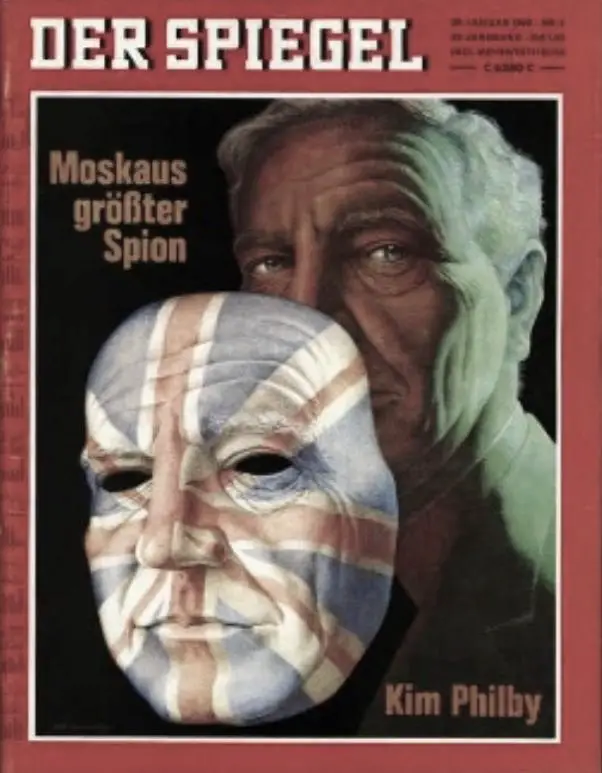
Memorie.al / Two well-known German newspapers of the time scan in depth the activity of England’s most professional spy of the last century, whose victims included Albanians. Seen from their perspective at that time, many years after the failure of the operation, it turns out that the greatest catastrophe which we must count on the account of Kim Philby’s deeds is without a doubt the “Albanian fiasco”. “Operation Albania” – as the West German *Der Spiegel* characterised it (at the time) in one of its issues in 1968, an issue to which *Die Zeit* added a year later in 1969, supplementing it with other facts and evidence – took place at a time when the Cold War had already reached its peak.
At this point in developments, the Foreign Office and the State Department were outlining the same idea, arriving at a unique stance: Why can’t we fight Russian influence in that country by fighting together with “Albanian nationalists”? – But everything, as is known, turned out according to the article as a true “catastrophe” on the human plane, which thus consumed the lives of hundreds of Albanians, who went to the other world without knowing that the guilty party’s name was Kim Philby.
Meanwhile, in professional terms, for the Anglo-American secret services, but also for the politicians of both countries, the article conveys the idea that all this unfortunate effort was a real “fiasco”. Seen from their perspective at that time, many years after the failure of the operation, there was no longer any doubt that “the damage Philby caused during his two-year activity in Washington should not be underestimated” and that “the policy of so-called ‘positive interference in internal affairs’ in the countries of Eastern Europe had fallen into deep distrust”.
The essence of the articles in both cases is Philby’s activity and the publications that had taken root about him, both in newspapers and magazines, as well as in literature (by that time – according to them – we learn that three books had already been published about his activity). The part that interests us – where Albania is discussed – is only a small part of the total volume of the two above-mentioned articles, which, it must be said, are relatively voluminous in true journalistic terms.
Interesting and previously undiscovered also appears to be the fate of the surviving part of the Albanians from these failed operations, for whom the competent British authorities should have cared, to provide them with employment and housing.
Meanwhile, we learn many things from the articles regarding who inspired the start of this enterprise, what the goals were, who supported it and who hindered it, how it was to be carried out and on what the success depended, up to the unmasking of Kim Philby. The latter fact constitutes a separate moment, which we learn by reading the article of the German newspaper Die Zeit in 1969.
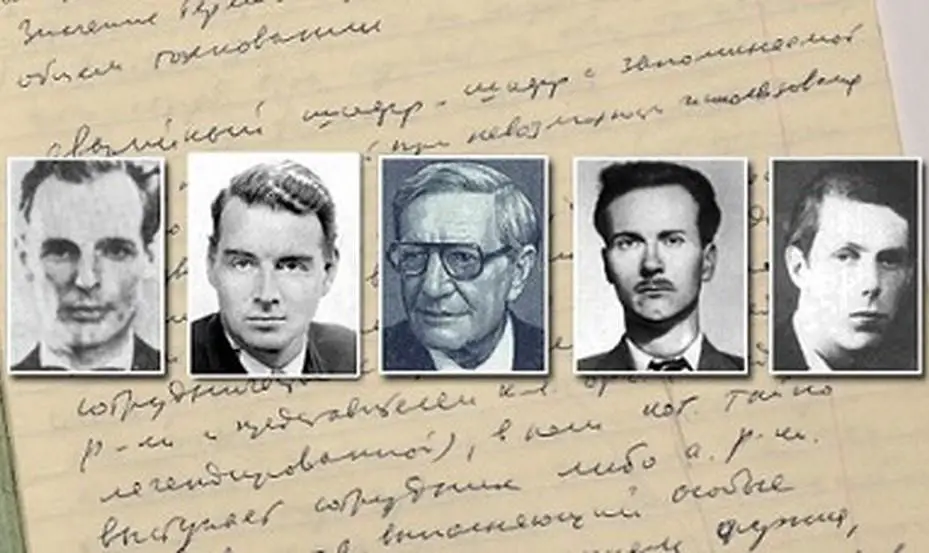
Likewise, in the same article, we are informed of the way of life and the ground prepared to recruit Philby’s two colleagues, Burgess and Maclean, who also preceded Philby’s escape, taking the same step. There it is clearly alluded to that they were homosexual and that they led a visibly dissolute life, which they could have continued without a hair on their heads being touched, if the Americans had not uncovered them.
“Operation Albania” and the whole enterprise connected with it, as the article itself emphasises (and as we all already know), nonetheless ended in a true catastrophe, immersed in a tragic balance. Within a month, about 150 guerrilla fighters (or diversants, as the state propaganda of the time called them) – nearly half of the entire force – killed or captured, and likewise a large number of local Albanians, who showed themselves willing and did not show care, while waiting for and sheltering the anti-communist guerrillas, believing that their cause would win.
Within the framework of the cycle “Monist Albania in Western media, 1945-1990”, all the above prompted me to return from another perspective, again to the topic “Kim Philby”, whose activity the former charismatic British Prime Minister, Tony Blair, had once referred to, emphasising that: “The failure of British operations in Albania in the 1950s ranks as one of the most emblematic failures of the British secret services of the last century”. Below is the full article:
“The damage Philby caused during his two-year activity in Washington should not be underestimated. The greatest catastrophe which we must count on the account of Philby’s deeds is, without a doubt, the Albanian fiasco. The ‘Volkov case’ in 1945 could be corrected with fast measures, cold-bloodedness and a ‘surgical operation’. The ‘Albanian fiasco’ – which would start to be cooked five years later – on the contrary, was entirely an issue that cost many more victims and consumed much preparation time.
“Operation Albania” took place at a time when the Cold War had already reached its peak. It was an attempt by England and America to prevent Soviet influence in Albania, with the help of a popular rebellion through guerrilla warfare. For 17 consecutive years, this unfortunate action remained one of the best-kept secrets by both sides in the conflict brought by the Cold War. For the West, this enterprise meant a catastrophe, which cost the lives of about 150 people. For the Russians, it was a display of triumph over phenomena that could be repeated elsewhere, on the borders of their empire.
The unsafe zone of Soviet control in 1949 already had the name ‘Balkans’. In Greece, the communist rebels were on the brink of the abyss, Yugoslavia had meanwhile broken with Russia. Even Albania was considered not very trustworthy in its movements by them. Since the end of the war in Albania, the leadership role had been played by the Yugoslav communists; now it was the Russians who, because of Tito’s break with Stalin, began to send their own advisors to Tirana.
At this point in developments, the Foreign Office and the State Department came to the same conclusion: Why can’t we fight together – with the help of Albanian nationalism – Russian influence in that country? – British Foreign Secretary Ernest Bevin was initially determined against such proposals. But in the Foreign Office, there was also a persistent group of ‘unruly ones’ who hammered away at the same point: the organisation of anti-Soviet insurgent movements, practically in all Eastern European countries taken over by the Soviets. This idea was especially supported by the sensitive people of the 515, above all by the long-standing sabotage specialists in the Southeastern European region, following the motto: ‘Politics is the continuation of war by other means – or perhaps even by the same means’.
Apparently, the group composed of people and officials from the Foreign Office and SIS specialists quickly agreed to act together with the ‘eagles’ in the American State Department. Bevin managed to be convinced to allow an ‘underground experiment’; anti-communist guerrilla groups had to infiltrate Albania to incite anti-Soviet uprisings and to support elements that could fight from within. Responsible for coordinating British and American covert actions was, of course, the British liaison man in Washington, Kim Philby. Because he had previously covered Turkey in his duty, thus gathering much experience, his advice was overvalued in the planning of the covert actions.
In fact, the operation was very well prepared. Already in the summer of 1949, a so-called ‘Committee for a Free Albania’ was founded, which had its operational support base in Italy, and that at that moment was nothing other than an organisation set up with the aim of recruiting guerrilla fighters. In the spring of 1950, these guerrillas were already ready for action. In small groups at first, then large, they entered mountainous areas and illegally crossed the Albanian border. They first infiltrated their previously well-known places and tried to provoke unrest there as well. If danger approached, they withdrew again to the mountains.
The enterprise in question, nonetheless, ended in a true catastrophe. The Russians seemed to know everything in advance, with precision, waiting for the guerrillas to parachute or land in the predetermined places. Within a month, about 150 guerrilla fighters – nearly half of the entire force – were killed or captured, and likewise a large number of local Albanians, who showed themselves willing and careless to receive and shelter the guerrillas.
The 150 survivors left for Greece – thus becoming the next embarrassment for the Greek government. In London, the SIS had to pressure the Home Office to secure for the 150 Albanians (who carried many secrets) the journey to England. The Ministry of Public Works took on the task of providing the Albanians with jobs. Thus, even the forestry sector there gave them a leather jacket each and employed them mostly as sawyers, while the rest were placed in a munitions factory.
The investigation into this catastrophe was postponed, taking a long time to be processed and reach conclusions. The Americans were only half-convinced that all this could come from treason. The suspicions and the few pieces of evidence they could hold onto nonetheless pointed in the direction of Kim Philby. The SIS in England, meanwhile, largely ruled out the ‘treason’ version as the cause of the catastrophe.
Today it is more than clear that the preparation of the ‘Albanian enterprise’, as well as much other information which had meanwhile been passed from various sources to the American and British services, had leaked to the Russians. And thus in England, the policy of so-called ‘positive interference in internal affairs’ in Eastern European countries had fallen into deep distrust, and also in America, this kind of policy was no longer supported for some time and fell off the agenda.” (*Der Spiegel*, 29.1.1968)
Kim Philby, in 1967: “I lost my diploma, but I kept my conviction”
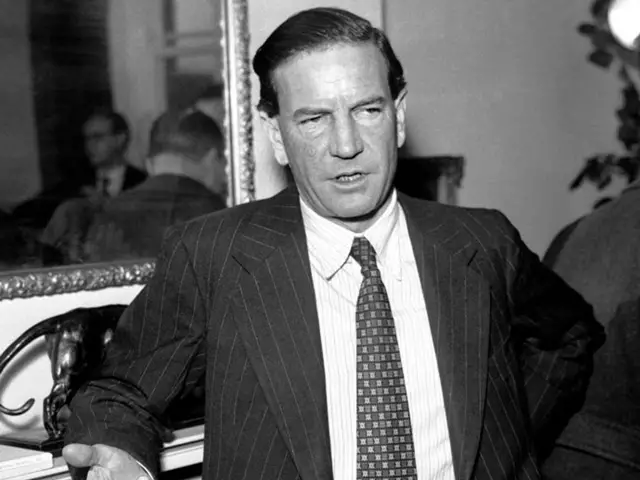
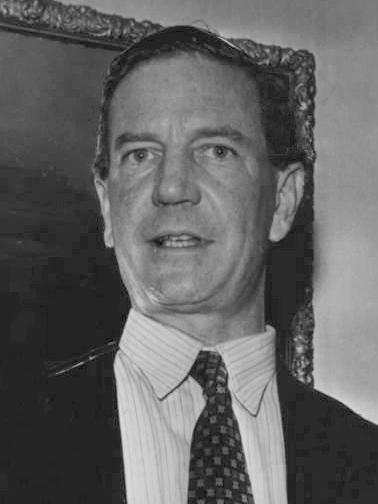
Kim Philby was born in 1912 in India, the son of a civil servant and geologist, John Philby, who later became known as a famous scholar of the Arab world, even converting to Islam. Both father and son can be described as “social rebels”, from Cambridge, the famous British university. Philby senior even developed a concept where he clearly proved that one could live without needing human society. While the other Philby (the younger) converted his political faith to communism in 1931 and lived in Moscow throughout the last 25 years of his life, in the precious and chosen company, beyond cohabiting with his legal wife, the Russian Rufina. In his autobiography, titled “My Silent War”, Kim Philby says that he left Cambridge in 1933: “With a degree in my pocket, believing that my life must be fully dedicated to communism. From that time, I lost my diploma (in fact, I think it is in the hands of MI5). But I kept my conviction.” This was written by him in 1967, five years after he managed to escape to Moscow to avoid persecution and punishment by the British authorities, who by then were accusing him with evidence of espionage.
Die Zeit, 1969: How was “the third man”, Kim Philby, uncovered?
If it hadn’t been for him, Albania would today be a NATO partner. Dozens of newspaper articles have been written about Kim Philby, and three books printed. There were sufficient reasons for this: Kim Philby was England’s most professional spy. He was the best, in a tragic sense for the English. As a leading official in the British secret service, he was in fact an agent of the Soviets; and this man of the Kremlin was assigned, head and shoulders, to lead, i.e. also the counter-espionage section.
So it happened: There was Kim Philby and he acted so idiotically that the blonde Patricia, the secretary of the British defence liaison officer in Istanbul, had already managed to spot him and knew that he was a traitor! There were also often “men with moustaches” from the land of the “Skipetars”, from Karl May’s stories, and if they had not been betrayed by Kim Philby before the firing squads, to be mown down one by one like wheat before the scythe, then surely Albania today would be a NATO partner.
And it was above all Guy Burgess and Donald Maclean who drank more whisky than Kim Philby and whored around, and don’t think they did this normally with girls, and spied for no one other than the Russians; of course, risking the maximum punishment. They did all this while being attached as English diplomats. If it hadn’t been for Allen Dulles himself, the head of the American secret service, at the top, these types would be who knows where, having fun in some corner of West London’s prostitutes, without a hair on their heads being touched. But because there was hesitation for a long time to arrest them, they managed to escape to Russia.
And there again was the blonde Patricia; she had meanwhile changed places with them in an anteroom of the salon where luxurious parties were organised, and luckily had married a loyal British officer. For her there was no doubt: Kim Philby was “the third man”! Only he could have provided protection and helped Burgess and Maclean fulfil their plan. Similarly, other people in the Foreign Office had also developed suspicions, but it was already too late. Not long passed, and Kim Philby himself sent espionage greetings to his former colleagues from the Moscow headquarters of the secret service. He now lives there as a retired agent, having turned 57. (Die Zeit, 11.7.1969)
Die Zeit, 1969: Philby and his friends, a thorn from the rose
In a fragment from the article of the German newspaper Die Zeit, published in 1969, we encounter another interesting assessment, about what should be treated as truly critical and serious in this whole story, beyond the fact that Kim Philby caused the failure of “Operation Albania”. “That Kim Philby had been an agent of the Russians since 1934, that he managed to prevent an anti-communist uprising in Albania and that he covered Soviet espionage in atomic matters – in Washington, all this is as clear as sunlight,” it is written in the article, continuing later: “But that thus it would also be the seed of a non-productive fruit”!
The allusion is clear, regarding the British secret service and the products it put out, while it had and still has today the naming of one of the best intelligence services in the world. “But this also has to do with the product that the equally famous university, Cambridge, could bring to the market. That is the issue,” writes *Die Zeit*. Further, the article emphasises: “The real subject here is the blindness of a closed society, of a true club, for which cannot be what must not be. Kim Philby, Guy Burgess and Donald Maclean belonged to what is in every sense worth calling the ‘Establishment’.
They were pupils of Westminster or Eton and students of Cambridge, and especially enjoyed the reputation of so-called ‘good English families’, let’s say, cut or predetermined to work in the secret service or to serve in diplomacy. They feared no test, nor becoming the prey of any disciplinary punishment. Even the Foreign Secretary himself swore by Kim Philby.” (Die Zeit, 11.7.1969)/Memorie.al