Memorie.al / “A Parliament of Letters with Friends” – the rich correspondence of Mustafa Merlika-Kruja, contained in four volumes, reveals not only the dimension of this personality but also documents and sheds light on many dark aspects of our history during the most delicate period, before and after World War II, when the communists took power. It is 11 years of correspondence with the Pukë-born friar that found the Krujë signatory in a difficult spiritual state, “without family, but with the hope that one day I will see her, yet without friends forever.” This is one of the most surprising letters that Mustafa Kruja sends to the Franciscan friar, related to one of the most painful events of the civil war among Albanians. Regarding this, Mustafa Kruja informs the priest about an article written in the Italian newspaper “Il Tempo,” which describes the event of the English mission to blow up the bridge between Krujë and Shkodër. But this mission failed, as the next day the English heard the laughter of Albanians over their brothers, also Albanians, from the north, whose ears they had massacred.
In the fourth volume of the series of correspondence of Mustafa Kruja with friends and collaborators, personalities from various fields of Albania’s political and cultural life, published by “OMSCA-1”, this is considered the most complete and perhaps the most interesting for the reader, as it presents a correspondence between two completely different personalities in age and background, but with a valuable contribution to national culture, who, through their literary conversation, examine and delve into various events and themes of Albanian history in the first half of the last century.
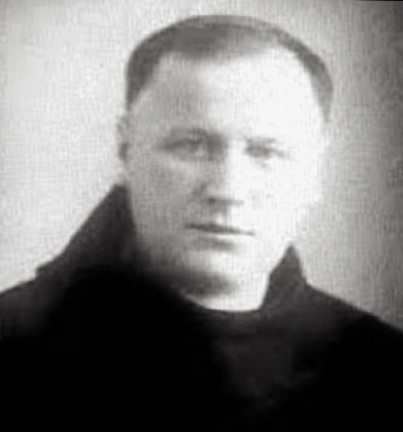
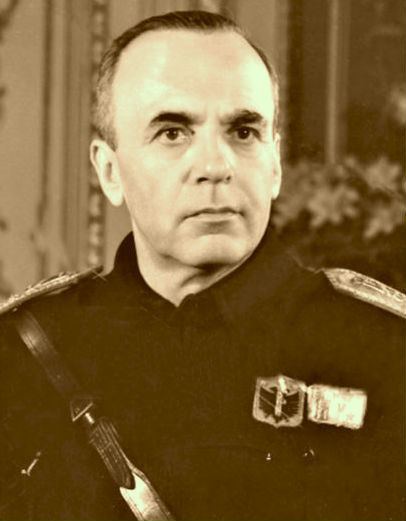
One was a protagonist of political life, but also of cultural life, one of the signatories of the Independence Document, a participant in most of the events that marked the history of the Albanian state in the first thirty years of its existence. The other was a Franciscan friar, a former history teacher at the “Illyricum” high school, who had made the research of this subject the main goal of his life, alongside that of a religious servant.
They were separated by an age difference of twenty years, but united by the desire for deep study, love for their country, persistence in seeking historical truth, and hope, remaining only within the limits of the term, to see a democratic and dignified Albania. The correspondence began on an April day in 1947, when Father Paulini, who lived in Bolzano, in a convent where he served as a priest, learns that in Ortisei, a tourist locality in Trentino, one of the most beautiful places in Italy, resided Mustafa Kruja, a well-known name in Albanian life. He decides to write to him to establish a connection.
“The letter from the Pukë-born friar found the Krujë signatory in a difficult spiritual state ‘without family, but with the hope that one day I will see her, yet without friends forever.’ An 11-year correspondence from different countries and continents, always becoming warmer, more open, between two representatives of different generations, linked not only by the common fate of political exile but also by the shared pain for the fate of the Homeland, to which they dedicate the fruit of the labor of their minds in their continuous studies of its history,” – writes Mustafa Kruja’s heir, Eugjen Merlika.
These letters are part of the fourth volume, where the rich correspondence of Mustafa Merlika-Kruja, contained in four volumes, reveals not only the dimension of this personality but also documents and sheds light on many dark aspects of our history during the most delicate period, before and after World War II, when the communists took power.
Letter from Father Paulin Margjoka sent to Mustafa Merlika Kruja
BOLZANO, June 10, 1951
Very dear Friend,
Yesterday I received your long letter and I thank you very, very much, both for the grammatical lessons and for the explanations of great importance you gave me regarding our historical issues. I especially thank you also for the part of Ciano’s Diary, which deals with our beloved Albania. Until now I have not yet had the chance to get my hands on Ciano’s Diary, nor to read it.
Regarding that request, concerning my past in Austria, I beg you again that, even under the difficult circumstance you present clearly and frankly in your long letter, you try once more to mention this matter to the King, as you say. You say in your letter that you do not expect to use this bullet for my sake, and if nothing comes of it, so be it. Thus I can tell my conscience that I have tried all possible and imaginable roads.
But after you have fired this bullet, which kills no one – unless, if it misfires badly! – Only my ideal, have the kindness to write to me immediately. If something comes of it, take care to have it sent to me as soon as possible. If nothing comes of it, let me know as soon as possible. Around July 15th I intend to leave for Graz, and if I receive nothing from the other side of the Mediterranean.
Naturally, before saying goodbye to Bolzano, I need to know where I stand with my affairs. When I know and when I have the necessary means to stay in Graz for a long time, then I will say a final goodbye to Bolzano; otherwise, I will leave here without goodbye, since I will leave the road open for any eventuality. I cannot say goodbye to the locals here and then, after two or three months, be forced to return to them.
So I beg you to send me a reply as soon as possible this time. If something comes of it, you know the ways to send money. By bank draft, in a registered letter, one can send as much money as one wants. With this letter, I am not asking you anything but a very simple question, which I take from what I read some time ago in the Italian newspaper “IL TEMPO”. Perhaps you have also read this article in “TEMPO”; nevertheless, I am copying a good piece of the article here:
(The English mission, which had only a few machine guns, some Italian orderlies taken from our divisions dispersed after September 8th, some radios, and some bags of the “Order of St. George,” i.e., gold pounds sterling, understood after a few months of staying in the mountains of Ostren (where they are) that the internal situation of the “Land of the Albanians” was different from how it appeared from the outside.
The internal landscape of the tribes, different in race, religion, customs, and civilization, was untouched: the communist mission had won over only the areas of Elbasan and Lake Ohrid; to fight the Germans in the rest of Albania, a complicated and difficult game of chess was needed. Especially the northern and western tribes, richer, who willingly leaned towards America and England, demanded weapons: these were needed, firstly, to fight among themselves, secondly, to fight the southern tribes, more or less linked to the communists, thirdly, to fight the Germans.
The Western allies never sent those weapons; they supported Abaz Kupi, an exponent with Western leanings, with some sums of money and thousands of words, and went so far as to parachute machine guns and rifles only into the areas controlled by Hoxha. A fatal mistake, the fruit of the blindness that saw in the Russians the great “democrats” of the century, the generous “liberals,” the saviors of oppressed peoples.)
The story of this mistake is told in detail in a recently published book by J. Amery (son of a minister in the English war government, brother of the traitor who spoke on Radio-Berlin and was later hanged in London) and assistant to the head of the mission, Colonel Mac Lean. The book also explains the origins of the current anti-British spirit, the only spirit that unites all Albanians in one mind and with anger tells of the allies’ promises, unkept for the sake of the Soviets.
One night, Amery recounts, among other things, the English had sent a group of Albanian saboteurs to blow up a bridge on the Krujë – Shkodër road; the orders were precise: not to touch people, whether Germans, Italians, or Epirotes, but only the bridge pillars. The next morning, at dawn, the English officers were women in their shelters by the loud laughter of those who had returned from the mission; half-asleep they came out of the tents, went to the campsite square, and saw the Albanians, gathered joyfully around a point in the meadow, on which they had spread a tent sheet.
They approached and their blood froze: on the sheet were lined up 50 human ears, 50 personal trophies cut from as many Albanians of a southern formation, captured suddenly during the operation. “And the bridge?” asked Amery. Later it was understood that the bridge was still untouched, they had only scratched one pillar a little. The horror of the massacre committed against compatriots had prevented the saboteurs from acting with method and measure.)
I am most interested in knowing whether this fact of the bridge is true, which Amery’s partisans allegedly forgot to destroy, only because they had lost their minds from the 50 ears that the Albanians-brothers of the south had plucked from these Albanians of the north. The Albanian has had the custom that when he kills his own Albanian brother, if the deceased happened to be a giant and fell dead backwards, he would go and straighten him out. And now, in this last war, there are supposedly such “hero” Albanians, who martyred and plucked the ears of their own dead brothers.
What do you say about this fact? Naturally, I would be very pleased if this fact were a lie, nothing else. Nevertheless, even self-styled civilized Europeans have given clear evidence of cruelties even more terrible than these plucked ears of Albanians by Albanians, so even if we Albanians are cruel, we have plenty of company in civilized Europe.
The other things in the article are not equally precise and accurate, but you don’t need to explain them to me this time, because there isn’t as much time, as your answer will reach me a bit sooner than other times. For today, enough! I thank you with all my heart in advance for that bullet you have to fire for me, and I hope it will not turn out to be a blank.
Much health and all the best from
Your friend as always
P. Margjokaj O.F.M.
Ramleh (Alexandria), 6/25/1951
Letter from Mustafa Merlika Kruja sent to Father Paulin Margjokaj
Dear Father,
I could not reply to your letter of June 10th any sooner than this. And if the answer does not satisfy you, I am not to blame. I gave you no hope, and if something comes of it, however small, you will owe it to your persistence more than to my intervention.
So, I spoke with the King, I read to him textually the words pertaining to the matter, and I added as much as I knew and could from myself. Before answering the essence of the matter, his first reaction was a kind of disapproving surprise regarding the place you are headed to, which he did not find suitable for the purpose. “Leaving Italy, with Naples, Venice, and especially Rome and the Vatican, to go to Graz to study Albanian history, I do not understand,” he told me.
“Nevertheless,” he added later, “how much are you asking for?” I answered that it was not for you to specify and that he himself, if he wished, could give as much as he could and as much as his heart allowed. But he insisted that you present a minimum figure that could get you started, and then he would assess his own ability and decide on that basis. And he ended this conversation by telling me: “But don’t forget to also tell him the objection I made regarding the place of study.”
Regarding the Tempo article, I cannot tell you anything. I have not read Amery’s book because I don’t know English. As for the cut ears, it is a matter that could be investigated in Rome by Abaz Kupi, if you have any friend there.
This is perhaps my shortest letter since we began our correspondence.
With health and all the best
Mustafa Kruja
BOLZANO, July 9, 1951
Letter from Father Paulin Margjoka sent to Mustafa Merlika Kruja
Very dear Friend,
Your letter arrived much sooner than I thought. I myself was outside Bolzano for a week, and that is why I am only replying to your letter today, which fell into my hands yesterday when I returned to the city.
The King’s objection regarding the place of study is completely valid. I had to choose this road to escape from Bolzano, where for five years I have been tied to this convent here. My first step would be precisely this: to leave Bolzano, where I am forced to work for others, without any benefit for myself, and even less for my homeland. And I could not take this first step otherwise than by asking to go to Austria. Had I asked to go to another Italian city, they would have answered me: “Go, but come back to Bolzano in the autumn,” – to continue as I have done for 5 years and so on.
It is known that I asked to go to Graz, because Vienna is difficult to reach, as one must cross the iron curtain. And I only have permission to stay in the zones of the three Western powers. The reason I chose Austria is this: my studies on Albanian history focus mostly on the modern period of Albanian history. And Austria has played the biggest role in the Albanian history of this period, therefore more material for exploitation is found here than anywhere else. As I told you, I go to Graz only because I cannot reach Vienna. Later, I hope things will change and I can go to Vienna as well.
This does not mean that I will leave Italy with Naples, Venice, and Rome. On the contrary! I am forced to come to Italy at least every 6 months, because the re-entry visa lasts only 6 months and must be renewed. And furthermore, the Passport also lasts only 1 year and must be renewed every year with all the expenses this entails, not forgetting the various visits to Austrian and Allied authorities. Just this time, it cost me more than 6,000 lire to get these documents. I must necessarily spend a few months in Italy, and I will use this time to go and stay especially in Rome, where there is plenty of material to exploit, since Italy together with Austria have shown great interest in the Albanian question.
What I seek most are the relations of the Albanian people with the Slavic peoples, especially Serbs and Montenegrins and through them the “clutches of Russia,” and our relations with those northern fellows. For this, Austria is the most suitable place, because both in Graz and Vienna there are special faculties for Slavology. In Graz there are many renowned Slavologists, and the university library is very rich in works concerning Balkan affairs, and especially Albanian affairs. I intend to specialize in this city. For lack of Vienna, I chose Graz.
The King asks me to present a minimum figure. This plan I have made will be implemented within a period of 2-3 years. In all likelihood, I will also need to enroll in specialization courses at the University of Graz. Therefore, a minimum of two years up to a maximum of three years will be necessary. Naturally, I will not spend all this time in Graz. I will spend a lot of time in Italy, but also easily in other countries, especially France.
The minimum sum that would get me started for two years is around 1200 dollars. At 1 dollar per day, this would be given to the convent where I will live from time to time. As I have explained once before, when one lives in a convent working for it, but for him, as in my case, that convent must be paid. And I hope that with 1 dollar per day I will be content. The surplus I need for various other expenses, such as: photographing documents, travel, enrollment in specialization courses with related fees, then buying clothes, some books, etc., etc. I have tried to set a minimum, because I am afraid of asking for too much. I hope that the King will not find a sum of 1200 dollars for two years too much.
It is understood that the King does not need to send me this sum all at once. He can divide it into two installments: half now and half next year. If he wishes to set even smaller installments, it is all the same to me. Once I am sure of the amount I will receive, it is the same as if I receive it. I know how to manage: how this sum will be sent to me, you will figure out there, because I don’t know the circumstances there. You can ask at a bank, and they will know how money can be sent to Austria from Egypt. My address is:
“P. Paulin Margjokaj – Franziskanerkloster – Graz (Austria).”
See to it that the sum of money, whether in the form of a check or however it comes, reaches me directly in my hands, before others know. The reason is that when the people at the convent know that I am receiving money from the King, they will ask for much more. And I have no intention of giving them more than 1 dollar per day. So the check – if you choose this method – should come sealed in a registered letter, and not send the sum by postal money order, because the money order comes open and everyone sees it.
I hope this request of mine, which your kindness is supporting, will turn out well. I, to tell the truth, since I started this request of mine, knew that when the King is asked for something, he finds it very hard to say no.
Meanwhile, I thank you for the trouble you have taken on yourself for my sake. I will leave for Austria on the 17th of this month. So I await your answer and the King’s sum in Graz at the above address.
Much health, with all my heart
P. Margjokaj O.F.M.
P.S. – From Graz I will write to the King, thanking him for the generosity he is showing towards me. Is it better for me to write to him directly, or through your hand? What do you tell me? / Memorie.al