First part
Memorie.al /The country is communist, but almost nowhere, not even in Ronald Reagan’s America, have such wild caricatures been published, both of Brezhnev and of Mao. The national hero Skanderbeg, whose name graces the central square in the capital Tirana, a football club, and an alcoholic beverage. He was a practicing Catholic, chosen by the Pope to lead a crusade to the Holy Land. But Catholicism, like any other practice of religion – even possession of the Bible – is punishable by death, by firing squad. Taking foreign loans is forbidden by the constitution. Nevertheless, 200 million dollars came into the country from the Soviet Union, and even five billion – according to Beijing – from China.
And when the people in this country voted three years ago, every citizen gave his vote to the state party, exactly 100 percent (in the German Democratic Republic, it was only 99.86 percent, in June 1981). One single eligible voter did not exercise his right to vote.
The big chief of Albania is an intellectual who had his educational experience in France. He behaves like a feudal lord. The fact that his subjects nod their heads when they agree, but also nod their heads and say “yes” when they mean “no”, is considered a relic from the Orient.
In Albania, where people still pay homage to Joseph Stalin – even though his statue now stands in a place where no ray of sun ever falls – in Albania, where the simple life is propagated, but at the same time, officials and their families go to a nobleman’s lodge, the Hunting Lodge (the Hunting Hotel on the outskirts of Lezha, our note), which once served as a shelter for the Italian fascist, Count Ciano – in Albania everything is different.
The 2.7 million inhabitants do not call themselves Albanians, but “Skipetars” (“Sons of Eagles”), as Karl May already put it. Therefore, their state is called the “Socialist People’s Republic of Albania”. And compared to the walled-in German Democratic Republic, it is the most isolated state in the world, on the Adriatic, and yet it seems like it is on another planet.
Entry into the inaccessible mountainous region is possible only at one border crossing in the north, on the half-Yugoslav, half-Albanian Lake Shkodra, and via the small airport of Rinas on the outskirts of the capital Tirana, where a Czechoslovak or East German airplane arrives twice a week, and Greek “Olympic Airways”, which “landed” once.
Delegations of visitors, hand-picked by Albania’s diplomatic missions abroad (individual visas are not available), must undergo rigorous checks: On the customs declaration, the brand of camera and everything brought with you is required, as well as a wristwatch, or alarm clock, as well as magazines and books brought individually. The declaration of contents to be listed; The import of the Bible, or other religious literature, is strictly prohibited.
The country’s children, carefully kept away from temptations, must not be terrorized by high consumption, distracted by foreign ideas, or – to which they are apparently particularly sensitive – exposed again to a belief in the old gods. Nor should they become aware of any foreign and unfamiliar fashion that might suddenly irritate them.
That is why the foreign guest is not allowed to wear a mini or maxi skirt, or overly wide or tight leather trousers, and for male immigrants, long feminine hair and full beards are forbidden: “The part between the ear and the chin must be clean-shaven,” recommends a folded sheet. (p. 147)
Not long ago, at the airport, a barber stood ready to trim the “violators” of this rule – in an adjacent room. After all, Karl Marx and Friedrich Engels hang in the waiting room, with their densely grown cheeks, moustaches, and long beards.
In the hidden corners of the old city of the capital Tirana, the foreigner often appears as the first foreigner in decades – he looks with extraordinary curiosity, without turning his head, then goes his own way, but only looks out of the corner of his eye. The “Skipetars” do not return greetings, shy away from conversations, worried, and children who wave their hands in greeting get a slap on the hand from their mother.
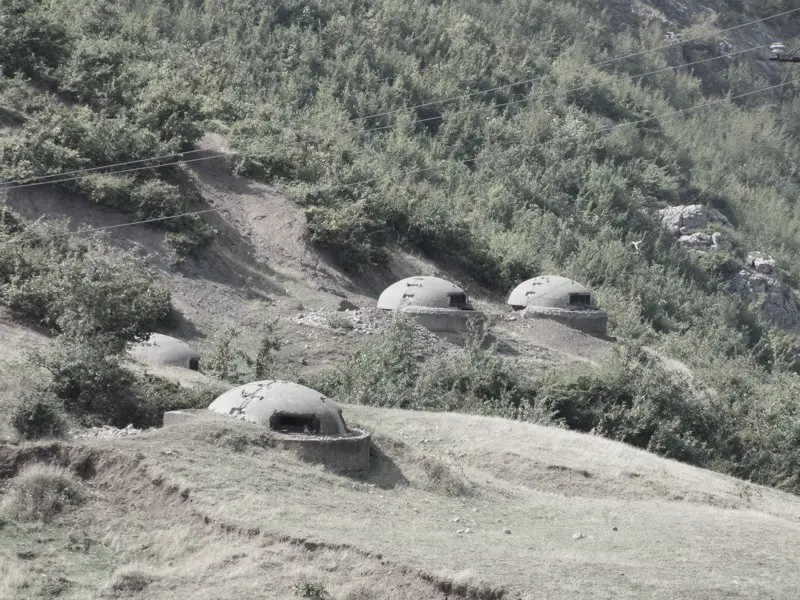
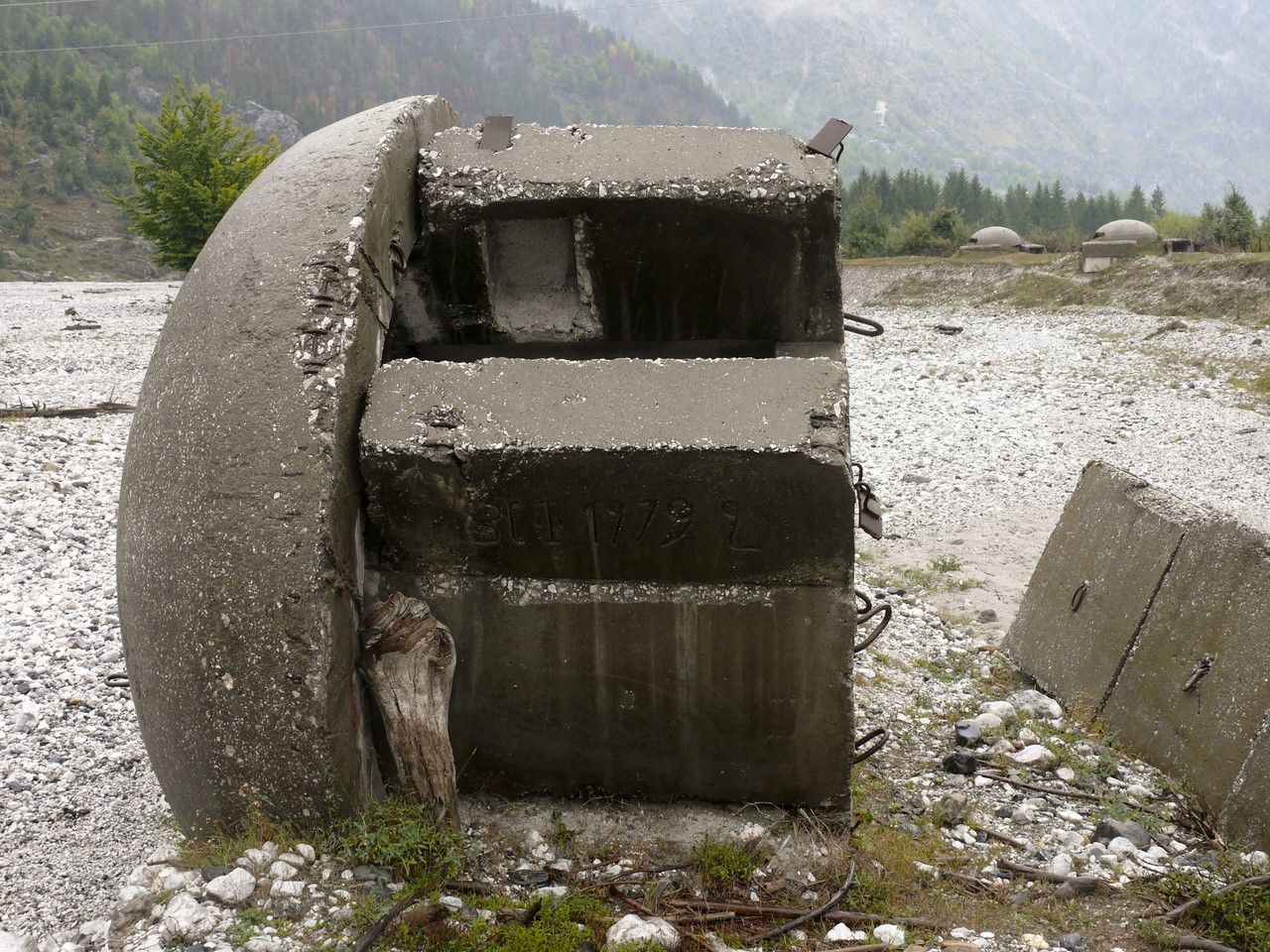
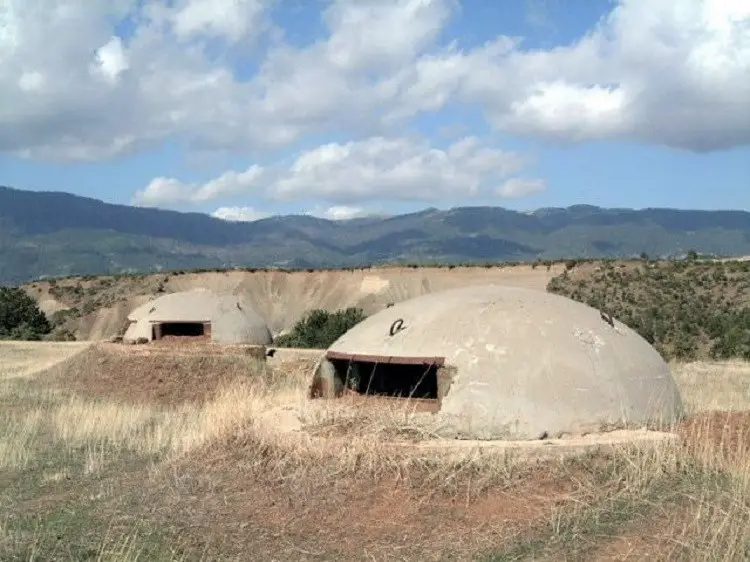
A special welcome for uninvited visitors to Albania is already announced at Tirana airport: around the runway, the place, as everywhere in the Republic of the “Skipetar”, is dotted and covered with small concrete hemispheres, open from the back. Front: bunkers against a potential enemy.
There are dozens of them in fields and schoolyards, at crossroads and on mountain tops. Like the plague of mice, the entire “Socialist People’s Republic of the Skipetars” is covered by tens of thousands of communist-style buildings.
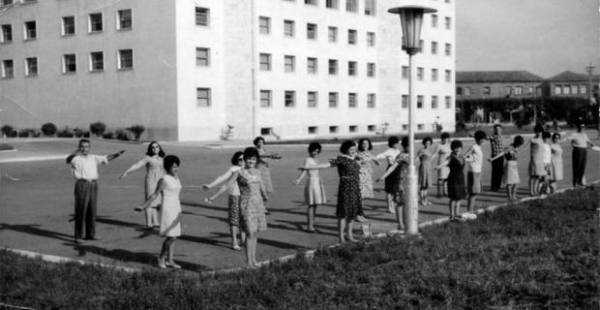
Compulsory military service of three years, plus one month each subsequent year, is enforced for males. The military salute is the raised fist, based on the model of the German Red Front Fighters’ Association of the Weimar era. The constitution provides for the death penalty for surrender to the enemy in wartime.
So far, since they were built three years ago, the bunkers have “terrified” every opponent. In some cases the concrete is already crumbling, in others flowers are growing from the debris that has piled up for camouflage. Only the bunker’s chains at the airport, under the apple trees, are occupied by soldiers.
“You wait,” explains Aleks Buda, a sophisticated historian and president of the Academy of Sciences of Albania, meaningfully and at the same time dismissively, about this unique precautionary measure.
They are waiting – and for good reason: “Throughout its history, Albania has always been prey to its neighbors, a transit zone for powerful people from all four sides – Greeks and Romans, Huns and Ostrogoths, Normans and Slavs, Byzantines and Turks, who mixed with the existing Illyrians and imposed their religions on them – the Turks were particularly successful, who stayed for centuries and cut off the Albanians from Europe, just as the Tatars once cut off the Russians, or as the communists now cut off the Albanians.
Albania, otherwise xenophobic of the communists, allowed itself to be industrialized first by the Soviet Union, then by China, and has now broken with both red superpowers, with its neighbor, communist Yugoslavia, anyway – Balkan quarrels in which a world war could ignite again, as an Italian television film has already predicted.
Albania’s irredenta, the Kosovo region populated by Albanians but part of Yugoslavia, has been in open revolt against Slavic domination for months.
If war were to break out between the two Balkan states, the Soviet Union could use the opportunity to intervene as an arbiter and advance into the Adriatic – and in the process retake possession of the four Soviet submarines that are in the Albanian military port of Vlorë, (already part of that small state), simply commanded them when it split with Moscow in 1961.
Then the “imperialists” in the Kremlin, whom the Albanian party leader Enver Hoxha accuses of being “warmongers” with the aim of world domination, would finally have gained the base in the Mediterranean, (Pashaliman), that Russia has desired for centuries, right opposite Italy.
The suggestion that the presence of the US Sixth Fleet might also protect Albania from such developments almost leads to the collapse of the worldview of a factory director, (national pride), trained in the German Democratic Republic: military aid from abroad, especially unsolicited, is unimaginable to him.
Ever since her country became too expensive for the Soviet leader Khrushchev 20 years ago and also for the Chinese three years ago, Albania has lived in complete and happy isolation from its environment.
The strange state the size of Belgium is a member of the UN, but withdrew from the Warsaw Pact unpunished during the Soviet invasion of Prague in 1968. Albania is the only European state that has not signed the 1975 Helsinki Declaration on Security and Cooperation, or the Nuclear Non-Proliferation Treaty.
It has no diplomatic relations with Washington and Moscow, or with Bonn, which Tirana has recently seen as a failure. It is the only country in the world that still erects monuments to Stalin and that also diligently practices Stalinism. But unlike other parts of the world where such experiments have been abandoned, Stalinism works very well here, at least for the moment:
A tidy country, well-cultivated fields, well-fed people who, although modest, live at their own level. Standards according to the standards of today’s enlightened youth produce a decent standard of living, completely independent.
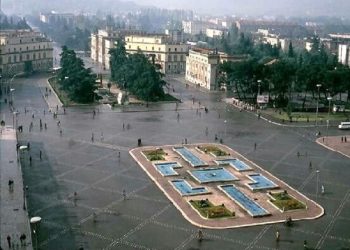
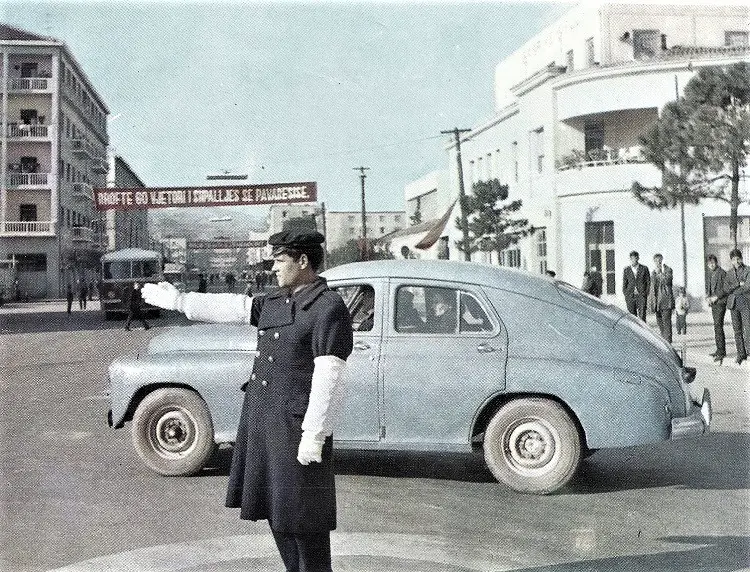
This is – similar to North Korea – a dream kingdom of the “Greens”, where there are no private cars, where the traffic police on “Skanderbeg Square” almost only direct cyclists and pedestrians, where according to the constitution no taxes are levied and where the (overcrowded) buses have zero fare, why not, since everything belongs to the state anyway?
Farmers have neither private gardens, 200 square meters as in China nor two hectares, as in the Union of Soviet Socialist Republics; There are still individual private farms in the mountains, but according to Hoxha (Enver), they; “step by step are disappearing and dying out”.
All land, all livestock, all instruments of production belong to the state, which punishes the theft of its property with at least four years in prison, while the theft of private property is punished with at least one month in prison.
After all, all people belong to the state and its single party. “The party,” says Hoxha, “directs and controls everyone, it calls everyone to account”! George Orwell’s “Animal Farm” has become reality here before. Enver Hoxha, now 73, re-elected to office by his party at the beginning of the month, gained power over the Albanians at the age of 36, when Roosevelt, Churchill, Hitler, and Hoxha’s mentor Stalin were still in office.
The son of a Mohammedan cloth merchant from Gjirokastra (Southern Albania), where people speak the Tosk dialect – today the official national language – began his career: With a government scholarship, he began studying Natural Sciences in France, where he was said to also write articles for the Communist Party organ “Humanite” and “Jura”, in Belgium. There he became secretary of the embassy. But because of his communist-inspired articles, he was fired and returned to Albania in 1936, where the self-proclaimed King Zog ruled.
Hoxha taught French at the Korça high school. When the Italians invaded Albania in the spring of 1939 (without much resistance), Hoxha opened a tobacco shop in Tirana, (the “Flora” kiosk, our note), from where he is said to have plotted against the occupier.
A photo from those days that hangs in his birthplace in Gjirokastra shows him as a; “provincial dandy in breeches”, with a pistol in his belt and a cigarette casually in his hand.
Finally, on November 8, 1941, a day after the famous revolutionary parade in front of Stalin in besieged Moscow, Hoxha founded the Communist Party of Albania, in the gorges of the Balkans, and with it, his fighting group, which soon received Western aid: The Anglo-American command in Bari, from then on, no longer supported the nationalists, the religious, and the anachro-partisans, but Hoxha’s communist partisans.
After the shift of the Italian front in 1943, the Germans came, who blew up the port of Durrës and in their torture cellar in Gjirokastra wrote the slogan: “Lord Hoxha who is with us, today demands two billion dollars, plus interest, from Bonn and Zog’s gold treasure, deposited in the United Kingdom, in the banks of London”. In the case of Italy, Hoxha was satisfied with reparations of 2.6 million dollars.
When the Germans withdrew again at the end of 1944, Hoxha’s 200 communists took power and their self-appointed Colonel General Enver Hoxha also appointed himself the provisional head of government.
The communists were considered nationally unreliable; They had agreed on a post-war solution with their Yugoslav comrades, on whose support they depended in the fight against the Italians and Germans. Then, the Albanian province of Kosovo was to be returned to the Serbs, to whom it had belonged since 1913, since the founding of Albania on the ruins of the Ottoman Empire.
Shameful for Hoxha and his comrades: the Italian invaders had shown more respect for the national sentiment of the conquered than the Albanian partisans, and had united their colony of Albania with its eastern province of Kosovo. But Hoxha was – at least at that time – not a nationalist; above all, he knew how to correctly assess his realities and possibilities.
However, four years later, his Yugoslav comrades thanked him poorly for his sacrifice: Tito expanded his territory into the Southern Slav Empire, which Bulgaria had already agreed to. Now Albania was to be annexed as well.
Then Stalin – who feared a powerful, communist, and independent Balkan federation – rescued Hoxha, broke with Belgrade, and approached Tirana.
With the help of Stalin and later Mao, Hoxha did not regain eastern Albania, but made western Albania “flourish”, his Albanian Republic.
He had found a barren and isolated mountain landscape in which bandits and Muslim saints lived similarly to Karl May’s Mübarek, in which clans carried out their respective blood feuds across generations (which is why their fortified farms were far apart), where people lived on corn mush and could rarely afford a meal of meat, and where malaria crept from the swamps on the coast.
Today the swamps are drained and malaria has disappeared. Every usable scrap of land is carefully cultivated – and that is the best thing that can be said about a developing country.
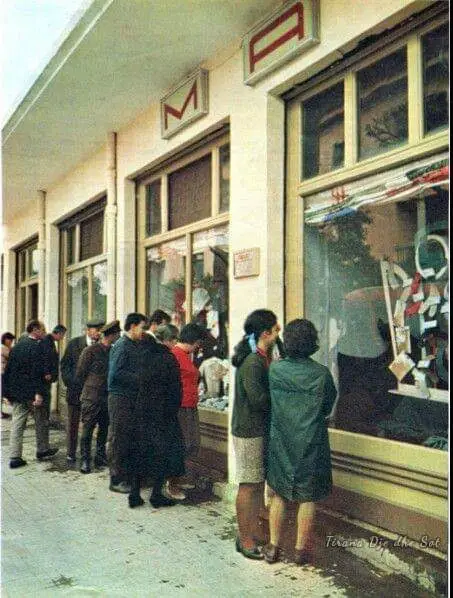
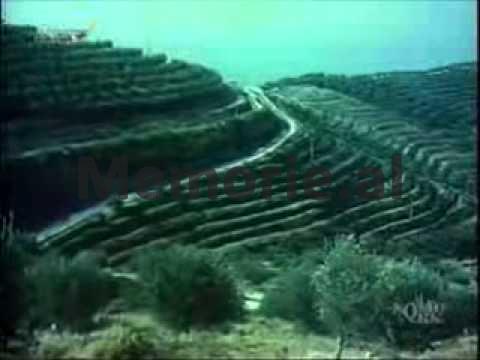
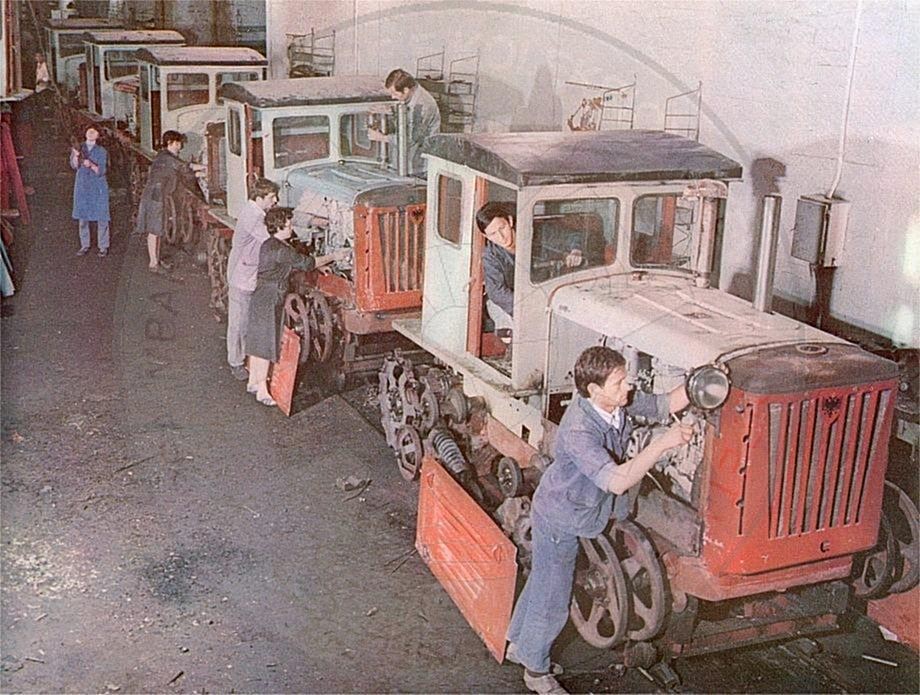
Where corn and peppers have been harvested, the land has already been plowed with wooden plows or Chinese tractors. Many mountains are terraced, following the Chinese model. Markets sell tomatoes, peppers, melons, and apples, and you see no queues of buyers; The butcher sells pre-packaged portions of meat and poultry.
Wheat for bread no longer needs to be imported for five years. A network of paved roads connects villages and cities, and hydroelectric plants harness the energy of Mountain Rivers. Albania has been fully electrified for eleven years and now electricity is exported to Greece and Yugoslavia.
Many mineral resources, initially developed by the Italian invaders, bring foreign currency to the mountainous region: chromium, bitumen, copper, and even more profitable thanks to a factory built by the Chinese, copper wire. The volume of trade with the Federal Republic (1980: 54 million marks) doubled this year.
The country now produces textiles, plastics, fertilizers, paper, and radio equipment. “Sabotage,” explains an official, and thus he also assesses the delay in the construction of a thermal power plant by the Chinese. /Memorie.al
Editor of the West German Newspaper “Der Spiegel”