From SAMI REPISHTI
Part Thirty-One
Sami Repishti: – In Albania, the communist crime of the past has not been documented and punished; there has been no “spiritual cleansing”, conscious confession and denunciation of ordinary communist criminals! –
‘In the Shadow of Rozafa’
Memorie.al / During the 1930s and 1940s of the last century, with the unstoppable downpour of fascist and communist storms over Europe, sooner or later over the whole world, “fate” also seized the Albanian nation by the throat. Like all young people, I too found myself at a crossroads where a stance had to be taken, even at the risk of life. Back then I said “no” to dictatorship, I took the path that had no end, a sailor in the wide sea without shores. The rebellious act that almost killed me liberated me at the same time. I am an eyewitness to life in the fascist and communist hell in Albania, not as a “politician”, “personality” of Albanian macro-politics, but as a student, as a young man who became aware of my role, in that time and in that place, out of love for the homeland and the desire for freedom; simply, as a young man with marked sensitivity, faithful to myself, to a life with dignity.
Continued from the previous issue
The old highlander from the village of Reç, who lived only for revenge, had died. He was one of the rarest cases I encountered during my years in prison. One day, the Sigurimi had arrested his twenty-six-year-old son, tortured him to death, and thrown the corpse into a septic tank. Everyone in power remained silent! When the news spread, the victim’s father demanded explanations. He received none. The enraged old man began cursing everyone, publicly. He was arrested for “agitation and propaganda against the regime” and sentenced to long years in prison. In the room where they brought him, the old man isolated himself.
He had only one inseparable companion: tobacco. He ate very little and did not move at all. He greeted generously those who approached him. Nevertheless, from time to time, he would openly say that he would not die without avenging his son. After my departure to the labor camp, I never saw him again. The weight of hatred inside people frightened me; I had been accustomed to thinking that love for others was the strongest feeling that animated human beings on earth. From the old man, I understood that hatred also existed!
Again, another death. It was Marku, the “son of Dukagjin”, as we, his friends, called him. Together with him, we had spent ten years in prison and forced labor camps. After “release”, he had found work as a warehouse keeper. I met him several times in the city. He told me about the work he did and how he lived; “as bad as it gets!” in a shack, without a bedroom. “I put together some planks and laid the bed inside the office…! Summer passes somehow,” he told me, “but winter is unbearable…! Wind, rain, snow come in…! I come to town by bicycle every Friday evening to spend time with my mother who lives here…! I have no place there where I work…!”
And with his usual laugh, he added: “…as bad as it gets”! One morning, they found him dead in bed. He was thirty-five years old…! He was buried simply, just as he had lived his entire life. I returned from the funeral, troubled. I embraced his mother, and a feeling of shame covered me at the idea that one day I would kick her aside, in search of a world where I could breathe freely. She was pleased with my embrace, kissed me on both cheeks, and stroked my head…!
The sudden death led me to new thoughts. Now, nothing disturbed me more than the fear of death, forgotten, despised, in a place that offered me only emptiness. Hunger and physical suffering caused by hard labor had become daily attire; my life was lifeless, dragging on day after day, without rest, without relief, and without hope of improvement. Such continuity opened the way for rolling forward without obstacle. Everything was stale and meaningless. Then, the dramatic, fortunate moment came: for a second, like a rifle bullet whistling overhead, without knowing where it comes from or how it comes, it broke the suffocating stillness.
The links of the chain of monotony crack like breaking ice, and like a miracle, which always comes unexpectedly, opened my eyes…! Man sees, hears, touches, smells and tastes the newly created atmosphere, as if, without waiting, another world had opened. Man lives again! The past rises before us like a worthless, meaningless, terribly threatening cardboard fortress. Only then do we understand that we have not lived, that the past has been a merciless and banal robbery of the days of our existence…! That is the beginning of revolt and entry into real life! This “fortunate moment” for me came when I decided to escape!
It was necessary that the thread of daily life be cut, that it break the chains that constricted my days, that denied me life, and that, in the unforgiving clash, it create a new state. Then, with full consciousness, I would stubbornly and forcefully reject what still remained in my hands: my monotonous life. To live at least for a moment, the minute of the victorious affirmation of life, to fill my chest with the breath of full mastery of myself, so much so that I would face death with the ardor of a martyr, looking it in the eye, without fear: “Oh, life-devouring monster, you have no power to subdue me! On the contrary, your threat to annihilate my life raises me to heaven,… it enlivens me”!
The ideal, like an unrestrained intoxication, despises the ordinary, the prosaic of beings who live because they are fed at the table. It exalts and annihilates simultaneously. Exaltation, as a compulsory exercise of abilities that exceed the limits of our powers, places the thirsty idealist for the infinite on the edge of the abyss that both attracts and repels, that inspires and endangers, but that creates for him the supreme moment of life, the fortunate minute of free existence, completely free, disregarding inevitable death.
Our work brigade undertook the construction of a three-story “palace” on the main street, almost face to face with the Sigurimi building. The idea that I would have before my eyes every day the walls that had broken me for weeks and months during the interrogation shook me. But now I had other “problems”, bigger ones; I had my daily bread, for myself and my family, which depended on my work. The idea of fully constructing a “palace” seemed quite interesting to me. The “masters”, old men who knew their craft well, could not understand the technical drawings of the projects on paper.
I began to decipher these drawings and instruct my workmates. With the laying of foundations and the raising of stone walls, I felt fatigue and dissatisfaction. Brick was uniform and flat. Stone, taken from the city quarry, required skill to prepare and place in the wall, to fit properly, well supported with the worked face outward. When we reached the height of the first floor, the construction of the slab required care, because it was a more complicated operation.
Along with the layer, vertical and horizontal iron and cement columns, the concrete staircase also had to be built. Concreting had to be done immediately, without interruption, and this required work until midnight. There I discovered the great pleasure of constructive work! I asked the “master” to allow me to build the armatures for the staircase and balconies. It was the first time. In the end, concrete was poured into the molds. I took care until the end that everything turned out as well as possible. Three days later, I removed the molds.
The sight of the balconies and the staircase filled me with an inexplicable pride. Those balconies hanging in the air, like short, spread wings of flying birds, seemed to give life and taste to the building’s squareness. I went out onto one balcony. Then onto another, as if to discover their strength. They held. But the creative act surpassed their usefulness. With my own hands I had built something, and something that attracted because of its beauty.
Oh! How happy must the artist, the writer, the sculptor, and anyone else be who, in simple forms or with perfected art, manage to create beauty, this divine gift? Art, in essence, is a form of competition with the Creator…! After the building was finished, whenever I passed in front of it and saw the residents on the balconies, a wave of joy filled my chest: “This is my balcony, built with my own hands!” I repeated with pride.
But the building – thick stone walls, a layer of cement, small windows, narrow corridors, primitive toilets, lack of light, and no care for aesthetics, for beauty, for pleasantness, which gives flavor to our lives and eases the heavy burden of daily work – was a cold dwelling, a cave in the middle of the city, bringing neither joy nor satisfaction. It was simply a shelter from rain, snow, wind and cold, but a shelter without warmth for those who inhabited it.
During the years of forced labor in camps, digging drainage and irrigation canals, building airfields, and later, work in the Construction Enterprise in Shkodra, despite the great suffering they caused me, also gave me a certain satisfaction that alleviated the physical pain. Work kept me focused on the greatness of human majesty, on the ability and will of the conscious individual to impose his own seal on dead, passive, and mindless nature! This confrontation of two irreconcilable opponents and their unceasing struggle seemed to lift me high and give me the assurance of a “being” that lives and acts upon dead nature… which never failed to show me that the final victory was not mine and that, before it, I was nothing more than a mortal rebel, infected with the virus of incurable heroism…!
Every day more and more, I had the impression that the communist experiment in Albania had taken on the character of an adventure that kicked logic and logical conclusions. Despite the noble claims that “they” were inspired by the desire to remove millions of victims from suffering and poverty, the communist experiment showed that they approached suffering and poverty even more. Trapped within the tragic prison of Stalinist communism, also by a second wall fashioned with their own hands, the uneducated Albanian communists had entered a dead-end road. Albania was becoming poorer every day!
In this suffocating atmosphere, the “leadership” came onto the stage with the flag of Albanians’ love for their birthplace, and distorted it into an aggressive nationalism: the whole world was against Albania! Such a sword, always sharp, ironically fell mercilessly upon the heads and hearts of those who nurtured this love, cutting them to pieces with the aim of humiliating them so much that the victim would accept the moral and mental decomposition that contained the core of pride and of being Albanian…!
Communism in Albania was stripping the Albanian of the clothes of body and soul simultaneously! Blessed are those who believe it! On the path they follow, they find the hand of the Creator stretched out toward them, ready to help them, to take them into his embrace…! And for the others?! Will we be again as before, like the countless generations that followed one another for more than a thousand years on this ancient land rich in history, hostages of the rigid order of the dead for it, slaves of the fabric woven with emotions and counteractions imposed by historical events? Will we be again tomorrow, slaves of the past that has dominated us until today, persistent and undeniable?
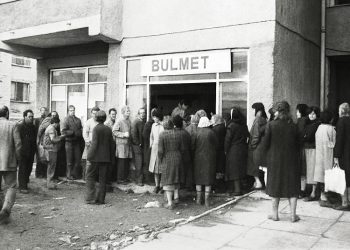
Word spreads like lightning that the food shop has cheese and olives. I leave work without permission and join the long line of citizens waiting in the queue. Unexpectedly, I saw old Zef, a former prisoner. I approached. He smiled when he saw me; it was something mixed: the stamp of suffering and the pleasure of seeing me, a trace of his urban past. – “Good afternoon, Mr. Zef,” I greeted him. “How are you?” – “I’m arguing with God,” he answered. – “I myself don’t know why I live…! I came here for a piece of cheese…! Usually, when the Soviet Union does not accept our products, it returns them… and the government sells them in shops…! Lucky the son, God has forgotten us… he has let us go… it’s clear…”!
I gave him encouragement, but without conviction. Deep inside me, a type like old Zef, completely surrendered into the arms of the Creator and waiting for everything from Him, irritated me. I did not answer any longer. Face to face with merciless and meaningless fate, I had to convince myself that the time had come to concentrate my powers, to become fully aware of the new situation, to despise oppression and no less false hope, to clench my muscles and grit my teeth, to throw myself fearlessly into the struggle with fate, with the full and unwavering conviction that the alternative was only submission and death in oblivion…!
Arise, O human being who gives me the feeling of supremacy, for the name I bear! And you, O heart, filled today with spite and ideal, explode, show that you still live, and that you hold life in your hands, if you yourself desire it, you yourself, and only you…! And you, “the others”, my subjugated compatriots and brethren, if the yoke of tyranny does not rip the skin of your necks, if the saddle of dictatorship does not wound your backs, if the foul air of the organization of lies and endless deception does not take your breath away and does not prevent the necessary air from preserving the purity of your blood.
Then, O farewell, oppression is your travel companion, it is the trained horseman who enjoys the comfort of a crafted saddle, for him and for your back, O you wretches, who prefer to be animals out of fear of being human, O you who do not know the majestic call of dignity that you bear within yourselves, you, O untilled matter, who are born and die without seeing, without feeling, and without living…!
XXX
The spring of 1959 came earlier than usual. Greenery was seen everywhere, and the fresh breeze had replaced the winter murk. For us, manual laborers who worked in open environments, the passing of winter was welcome. Tired of the cold and tired of the half-pay given for each day of rain, snow, or lack of work front, we waited impatiently for the arrival of the new season. In the foundations of buildings, or in the raising of walls and roofs, we would no longer be hidden from wind and cold, and at the end of the fortnight, the pay would be full, securing the piece of bread on the table. The company messenger notified me to appear at the directorate.
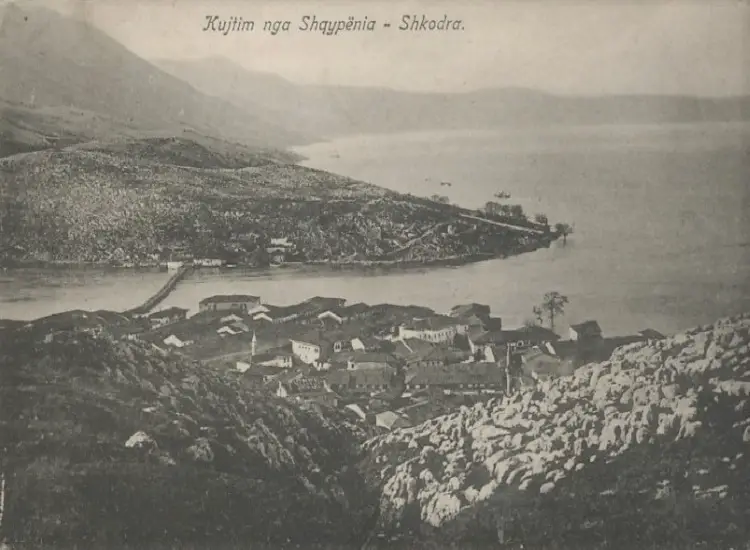
I left my work tools in place and, followed by the fear-filled looks of my “brigade” comrades, who knew my past, I left full of suspicions. In the office, the person in charge of labor cadres informed me that I had to go to a new construction site where work was beginning on the construction of a red brick factory. “Yes,” I said in a half voice, and left. The new site was located near the shore of Lake Shkodra, not far from my home, and in an area I knew well. On the other side of the lake lies Mount Tarabosh, which joins Mount Rumia and Kraja, a region inhabited by Albanians in Yugoslavia?
The view of this mountain range is magnificent, and together with the lake, it recalls the beauties of alpine panoramas seen in tourist advertising photographs, mainly of Central Europe. But the lakeshore was a “forbidden zone”, due to its proximity to Yugoslavia. Every movement was controlled by the Sigurimi. The assignment of my work to a site so close to the “forbidden zone” immediately created suspicion. Was I dealing with a provocation?! Any move of mine could be interpreted as an “attempt to escape” and justification for arrest. At first, I was shaken. This provocative act spurred me to make the final decision to escape.
The time for internal debates had passed. Now, determination, courage, and caution were needed – especially caution, so as not to arouse suspicion. I had no way back! The hardest part was the evening hours at home with my family. Above all, they must not know about my state. I showed them that I would start work at the new site, and they were happy. “It’s close to home,” they said. But deep inside, I felt I was terribly deceiving them. It was necessary to create an emotional distance from them, the most beloved creatures to me.
The next day, I reported to the new site. The technician was an old man, a master, and a very good person. The norm-setter was a young communist. My “brigade” had only three carpenters; the others were manual laborers. Although their attitude toward me was correct, I was sure that among the new “collective” there were informant agents who submitted regular reports to the Sigurimi on the worker’s work at the new site. I worked with great care to avoid any mistake that could be taken as an “act of sabotage”.
In the morning, I was at work a few minutes before eight o’clock, and in the evening, I finished a few minutes after the hour. I was calm, always ready to help others, smiling, and especially avoiding disagreements that could be paid for with a “report”, speaking to the Sigurimi…! We ate lunch together. No word, no gesture of mine showed even the slightest sign of dissatisfaction. A few days later, I made contact with a friend, a former prisoner, whose house was located near the border in the Anë e Malit area, southwest of the city.
Two weeks later, on a market day, I did not go to work, “for health reasons”! At the market, I found my friend who, together with his wife, was moving slowly and carefully. I approached, greeted him, and while walking beside him; I told him that the noose was tightening around me and that the time to escape had come. He showed himself ready, but advised me to wait for the month of August, “when the Buna has little water,” he said, “and the river is crossed with difficulty”! We also decided that the day of departure would be Saturday, his market day, and a work day with a single schedule for me, as well as a preliminary meeting in the small park near the stadium, at four o’clock in the afternoon. He would suggest the date. I agreed. We parted without shaking hands.
The supreme gesture of my friend, who agreed to risk his own life to save mine, touched me deeply. He was still young, married, with two children still infants. He led a difficult agricultural life in a mountain village, but did not complain. A stoic, an opponent of the communist tyranny, he justified his stance by “the destruction of the customs that have kept our society alive” and especially by the government’s interference in the daily life of the village, through spies, police, and Party members. “We live in fear every day…!” he told me. During our meeting, his wife walked behind us, silent, not knowing the content of our conversation, although her fate was also being decided there. A tragedy for the husband was a tragedy for the whole family, especially for the mother of two infants.
They could be interned without knowing the reason, condemned as a “hostile family” without being enemies of anyone. My friend’s wife was a symbol of the Albanian woman throughout history, a symbol of crucified innocence, of the noblest sacrifice on the altar of centuries-old Albanian tradition, which demanded of her submission and the replacement of the husband in holding the family together on ancestral lands. A worker bee, always silent, this stoic creature lived and closed her life without voice, without complaint…! Memorie.al