Part One
– The Testimony of Isuf Mullaj, How He Was Recruited and Trained by the State Security, and How He Was Treated by the Intelligence Agencies in Greece?
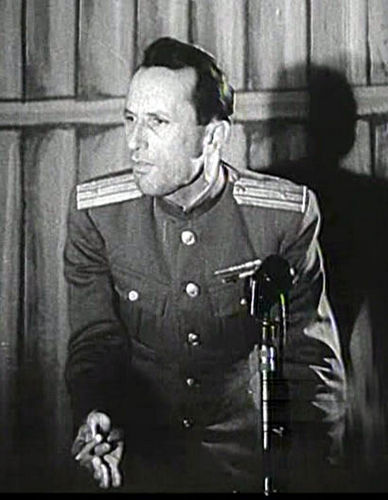
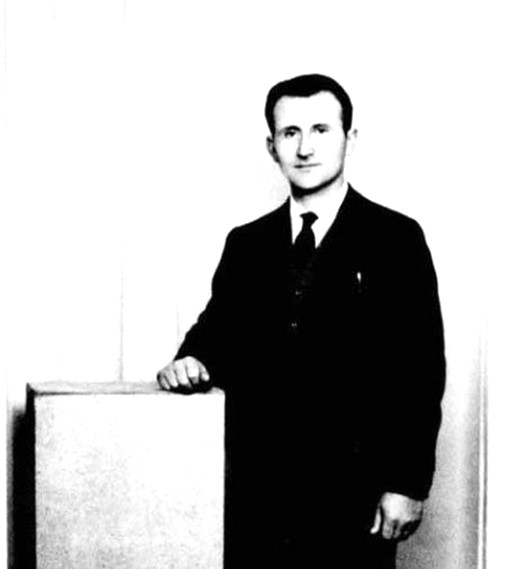
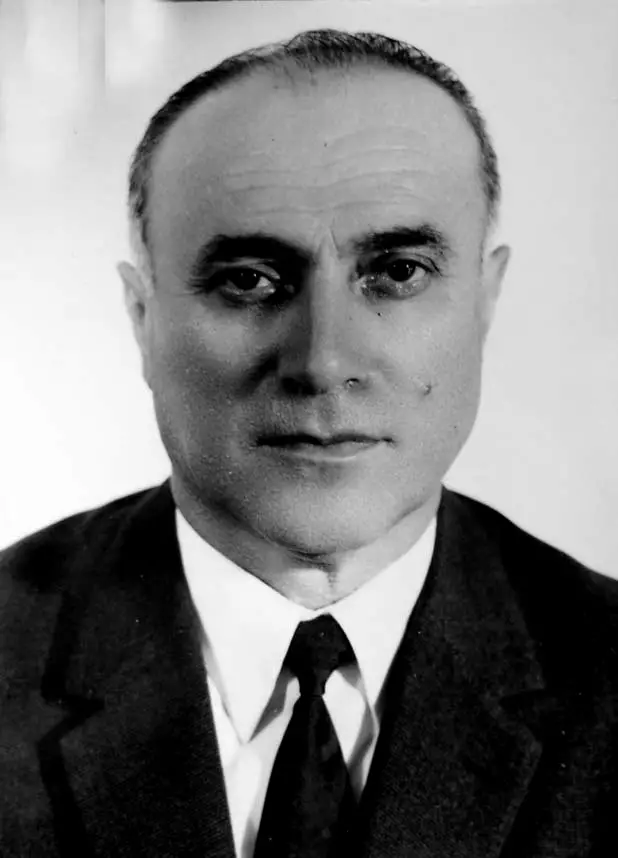
Memorie.al / Isuf Mullaj, or otherwise known as Cufe Mullaj, one of the former key men of the Albanian Secret Service around the world, recounts for the first time on “Opinion” with journalist Blendi Fevziu everything about the dark years of the dictatorship. His initial recruitment in Albania and his dispatch to the West, to uncover as much information as possible from the “enemies”. And how he escaped the Greek secret services, after the torture he suffered in their camps?!
Mr. Mullaj, how old is you?
I turned 84 now, in February. However, as long as we have strength and as long as we have the means, we will say those things that do no harm and that…!
You don’t say the things that do harm…?!
Those that do harm, intelligence officers do not say them.
How did you become connected with the State Security and why did the Security choose you to be sent abroad?
It is a long story. From an early age, I was a student at the Royal School in Tirana in 1938, and from there I went to high school in Gjirokastër. Then in 1939, fascist Italy attacked Albania, and the Royal School was also disbanded. I went to high school in Gjirokastër and continued there. The premises were created that the people did not want the occupier, they had to fight him; the parties were organised, the National Liberation War. I was an ardent sympathiser of that war, like all the young people at that time. All Albanian youth, educated with the history of the Renaissance figures, especially when we were in school, in high school, we read the history of Skënderbeu, and all of us young people wanted to become like Skënderbeu.
We too wanted to become famous, to fight, and not to let the occupier stay in our country; this inspired us to take an active part in the National Liberation War. However, I had an obstacle, because my father was an admirer of Zog and was also a reserve officer, released in 1935, but he was retired; three gold napoleons a month at that time was a lot, with a great reputation. We were like middle peasants; we were not poor, but middle class. We were part of high society; my father had many well‑known friends of that time, such as ministers, colonels, generals, etc., and you could not separate yourself from that nationalist sphere. So he did not support my ideas of war and the left‑wing National Liberation forces.
Your father was against it?
My father was against me and I was against him. This was the matter: we were between two fires, the whole family, my whole clan, would either be thrown into one side, or thrown into the other side. The outcome was that I was not convinced to be with those right‑wing forces; my relatives certainly knew that they held much to my father, since he was an officer, he was high‑ranking, he knew Bahri Omari, and they were all close friends. He knew prefects; he also knew many others who leaned toward them. He knew Ali Këlcyra, he knew Hasan Dosti, and he knew the entire elite of that time. He could not separate himself from them and he held this until the end.
The National Liberation forces, since I was the son of an officer, thus paid more attention to me, they used all forces and means to prevent me from breaking away from their influence, but to take an active part. That is how it happened. Those who were organisers of the National Liberation War, for example, Dilaver Poçi, Bexhet Mema, there were many of them, like comrade Dilaver; these were more distant, not in Tirana; later he became deputy battalion commissar in Tepelenë and did not stay long in the village. While those who stayed in that region were Bexhet Mema, Gani Aloçi, secretary of the Communist Party cell, then in illegality, in a village nears us. I was very close friends with him, and with Dilaver, who was a communist from 1941; he loved me very much, because I kept him at the mountain pasture, I gave him food and hid him.
And after the war, what did you do?
Then, from 1944, this work continued; these men activated me, they explained to me about secret intelligence from that time.
In which year did you join?
Late 1942, early 1943. We talked then with three or four, with Bexhet Mema, with Gani Alushi…!
What was understood by secret service at that time?
It meant that we should gather data on the Italians, on the Germans, on their movements, where they came from and where they went, everything. But there was also this: to infiltrate behind enemy lines, because it was difficult, you understand, they tracked you. While I was not tracked, because I had a family connected to the other side. Because my father was friends with Bahri Omari and with others, who were elite and were not controlled. This was exploited. I did not want to engage in such services. However, they said, the work you are doing is honourable work, gathering information from the enemy, from the Germans or Italians, because we cannot get in there, you can infiltrate behind enemy lines. This had great results for me, in the war there. However, the opinion there spread that I was an indifferent person, a person who did not want to get involved in such things, so I was masked, camouflaged in this way. Until 1944.
Then these comrades of mine, who were also like me, went on to become brigade commissars, battalion commissars. But I was not the same as them; I could even be more capable. That is to say, I would stay in the field, I could not go on like that, to wage open warfare, and these men sent me; my comrades studied this matter well. Then they told me, the other cells decided – Ganiu, we called him Çakalli, three or four other comrades, the most loyal – we will send you to the Bicaj brigade, since you also have your own villagers there. The deputy brigade commander at the time was Mit’hat Koni. We will send you there; we will give you a character reference of our own, as we know it, a good one, so that you can move forward very quickly and make up for this time you lost in the field. That is how it was done. They sent me to the brigade and immediately gave me a sealed envelope; I did not open it to see what they had written inside. I took the envelope, presented myself to that deputy brigade commander – a villager he was – he was also the head of the operative sector, a certain Mit’hat Koni, and other villagers were there too.
So I went there and continued, somewhat strangely, as head of the operative sector of the brigade. They gave me a push, because they did not usually take people and put them in like that straight away. Then the deputy brigade commissar, who dealt with party work, with secret work – because they also directed the Security, the deputy commissars – he comes to me and says: come here. He opened that envelope, the character references that those in the field had written. He tells me that I must be engaged in intelligence duties, because, he says, you have done this all this time and that is how you will stay. You are with intelligence, he tells me, you are with the operative sector of the brigade, don’t worry at all, because I will find the best opportunity to catch up with your comrades. Because I had complained, why those men during the wars, why would I stay like a poor wretch in the corners? I didn’t like that work; it seemed to me like it wasn’t real work. That’s how they did it. The war ended. I was among the first, and 100 others, to be raised up from those who had lagged behind, from the field. You will go, they said, to an officer course in Yugoslavia. And they sent us to the naval force.
Where? In which part of Yugoslavia?
In Split. They brought us to Durrës and selected the 100 best. Some of them were already officers; some of us were undeclared soldiers, completely unknown. We were to become officers directly, because we had lagged behind from the field. That is what they did; they brought us here to Durrës. It was February 1946. In February we arrived there. Abdi Mati was the Navy commander; Abdiu was a very cultured man, he had finished the academy in Italy and had a broad culture. He had been with the war and was a fleet commander. So it happened. He took all the character references there, he saw everything and saw that mine was the strangest of all. That is, my father was on the opposite side, while I was placed here on this side; they would take me, they would make me an officer, because I had lagged behind in the field. The three guarantees that I fulfilled had been given by those men, that I was a man of the war.
The company commissar came, after we stayed two months in Durrës. He said to me: come here Isuf, I will take you as my secretary, he says. No, man, I told him, I’m not coming as your secretary here. He was a lieutenant at that time. “Come on Isuf, I’m taking you as the best man, why won’t you come, I’m taking you as the best man?!” He also had Spiro Kote as his coachman. He had another, a non‑commissioned officer; they were called quislings. He tells me: I will remove that quisling, and also this Spiro, watch out; I will take you as my secretary. No, I tell him, I have been sent to go to school in Yugoslavia; we would make a career in Yugoslavia. I will go there, I told him, I will not stay as your secretary, get that idea out of your head. He pleaded with me. He changed my mind, he guaranteed that he would not do anything bad to me, he tells me: I guarantee that when all your comrades go, you too will go to Yugoslavia.
Well, since that’s how it was – it was still February, we slept in the evening, we had nowhere to stay there in Durrës – all right, I’ll come, I told him. I had a small office, a drawer and a small file that was the secretariat, I had it there on the table. He tells me: no one will enter this office at all. I’m ashamed, I told him, my comrades will come and I won’t let them in here; I felt embarrassed, I can’t do this. You will do it, he tells me, that’s why I’m removing these others. I was young then, 20 or 21 years old. What is he saying, I thought, am I such a good man?! And I laughed to myself.
Yes, yes, he tells me, here. He removed them. Two months there, and then Spiro comes with the sailors with the carriages; he was a good fellow, like that. So I tell him, Spiro, you will not stay in my office here. Why, he says, I’ve been here until now. The commissar has given me the order, I tell him. Only I and he will stay here and…! Spiro became furious. We had one key there, a key to a drawer and a small file; there was nothing else there. The rules are set like this by the commissar. Three months there, February, March, April. Who knows state business why they brought us there, verifications and such? In May, we to Yugoslavia. A plane came, picked us up, straight to Montenegro.
How long did you stay in Yugoslavia?
Two years as a naval officer. During the time we were there, I was in communications, because communications was the most secret work; that’s how they had made the documents for it, for communications. There were various professions in the navy: communications, helmsman, and motorist. I was communications, and I liked it and I didn’t like it, because I wanted meteorology, since there were also five or six who were there for meteorology, to observe the weather, a good thing. I told them: I want meteorology. It’s no problem, they told me; you can learn it anyway, even without being in that specialisation, we can give you the opportunity to learn meteorology. That’s how it happened. We finished that course there. However, in two years we were there as students; we knew nothing about what relations our state had with Yugoslavia. Relations had been broken off here, but we there did not understand it. We saw that the Yugoslavs treated us badly, to annoy us, to make us explode, to shout, but we did not know why this was.
In the end, we finished the course; they did not give us any diplomas, nothing. Go, they said, we have sent the diplomas to Albania. They had done, they had written whatever they wrote; they know. They put us on a ship, they even took our clothes, and they treated us badly. There were 5 or 6 of us as sailors, as non‑commissioned officers, because we were promoted there. In ’46‑’47, we were all promoted to kapter (captain), all the same, with the same criteria. When we came here we would become officers directly. This work continued like this. We came here as persecuted people, because we did not know how things were, we knew nothing. When we came here, they brought us to Durrës, 100 men. All of us officers, communists, party candidates, all different. A friend comes from Tirana and tells us: do you know how things are; now it has changed.
Who was he?
It was Kadri Hazbiu, he was a colonel. It has changed, he tells me, it’s not like before with Yugoslavia, and we have thought about you for a longer term. What you mean, for a longer term, I told him. We have arranged things, he says, so that your work will go on for a longer time. So what’s going on, tell me, I say. He explains that we have broken relations with the Yugoslavs, we also have broken relations with the West; we have thought that you should go abroad. Man, I tell him, I’m not going abroad; I’ll stay with my comrades. That matter has been discussed at length, that’s why I think you will carry out the duty, because apart from you there is no one more suitable, who has the conditions to go there. He further refined it, raised my ego a little, as if I were something special. So how is it, explain it to me, I said. The preparation will start now, he tells me. All these others will be promoted, you will not be promoted, and he tells me. But why, I said, because I didn’t know these things well.
You will not be promoted, because you are more promoted than these. But, so that opinion is created here in the Navy, you are the son of an officer and you are persecuted. Because they don’t know the other matters. To tell the truth, I was not pleased. I went back and forth like this, I was going to get married, I had other worries, a young man, and 23‑24 years old. What is that work I will do, I tell him. We have studied that matter; the terrain will be opened first, you will undergo psychological preparation that I was persecuted etc., etc., and I would continue Security school later, at night. I will give everything step by step. So how long will I stay there abroad, I said. Because wherever I went to stay abroad, I would leave my family, this and that. He tells me: accept it, as if you were at school in the Soviet Union.
In which year did he tell you that you would go abroad?
In 1948, when I returned from Yugoslavia. Well, all right, I told him, I will start a family and other things. Go ahead; he told me, you can start a family even there. You can start a family even there, we’ll sort those things out, and they’re not unregulated. Well, I told him, I want one thing. I was 21‑22 years old. How many years I will stay abroad, I told him, because I will not stay abroad all the time. Four years, he tells me, at most four, as if you were at school in the Soviet Union. That school that you would do there, we will do it here. Kadri Hazbiu and some other comrades had done the school in the Soviet Union, for high‑level intelligence. That school that lasted 3 years, they had done it in a year and a half, summarised of course. But they had done the high school of security. My closest comrade, Esat Kondi, had done it. There were 8 of them, all in one class. Moreover, this comrade of mine had come out with all the honours, with the highest grade.
And then what happened?
He accepted it. He says: we will do it. So how will we do it?! You will receive your salary as an officer, as you are. But, he says, we will make all the moves, we will discharge you from the army, we will open false rumours, he says, this and that, and they will send me to Gjirokastër. Well, I told him, but in Gjirokastër they know me, how can I escape them? No, we will prepare the terrain. That’s how it was done. During this time I got engaged, but that family was communist, devout there, the base of Shefqet Peçi, you understand. And so I took her; five years I married. About a year later, I had a child. However, from the beginning, they then released me; they told me that I would go to Gjirokastër.
Did you keep contacts with Security officers?
Of course. Constant contacts. I went there, to Gjirokastër; they opened the terrain for me there: he has been discharged; he does not have the right conditions. He is persecuted by our regime, his father was an officer, all kinds of tales, and they filled all that. Ah, they said, they did well to him, some. Some one way, some another. They did well to him, because he wanted to get in like this, all kinds of other words. There were other things too; some who knew me felt sorry, oh, what does he have, that he has been like this, why are they coming down on him, etc. They opened the terrain for me and I went to Gjirokastër.
They did not give me a job, but I received my salary, I was an officer. The man who had connections from the ministry with me would come. In the end, six months passed in the village; I stayed, I didn’t talk, I didn’t do anything, just like a persecuted person. They said: why are you keeping him here?! But there were also people who felt sorry for me. Give this poor wretch some job; he has always leaned toward our side, with his heart, and so on. They arranged other things, other jobs, they who knew nothing about these matters. “Go on, give him a job, it’s a shame.” Well, let him work in the aviation field. In the aviation field I earned 4,000 lek, for three years. During this time, the intelligence course was prepared at night; they came from Tirana.
Where did you do the course?
There in the office, in my office. I worked three shifts; I was on the third shift, at night.
What was the course, what was it for?
The course was for intelligence, against the West. What they had learned in the Soviet Union, they taught me everything. And I did the course for 3 years there, twice a week. Once I did it on Sunday and once in the middle of the week, when I had the night shift. They would call me on the phone, they came from Tirana. But they were generals. They came there and I learned the course. I learned everything that was taught in Russia, in the great Soviet Union.
Had they told you what mission you would have?
No, no. The mission was intelligence in the West, without any specific target. Intelligence in the West; if a suitable front opened up, they would inform me.
It’s not that you had a specific mission regarding King Zog?
King Zog, when circumstances arose there as they did, because there I had more friends, support from my father.
But it’s not that you were sent specifically for King Zog?
I was not sent only for him; I could also end up in another state where I had no connections at all. That’s how it was done; I finished the course excellently.
In the meantime, did your family know that you were persecuted in the village…?
My family, my wife, what did she have, what did she find in him, he was even a naval officer, and what did she find in this poor wretch, he hasn’t been sincere…?!
You didn’t even talk to your family?
No, man, what family. The family knew nothing. They felt sorry when I went there with 4,000 lek a month. But I had money, because I received 6,000 from here and 4,000 there, making 10,000 lek a month. That’s how much the chairman of a large district earned at that time, or a ministry director; that’s how the money was. And they said: this poor wretch, how will we manage…?! However, those who needed to know, 4 or 5 people at most, knew this matter. I finished the course excellently. But we encountered a problem in communications, an interesting thing. For communications it was very difficult. There we encountered major obstacles.
Why?
Because I was also a bit of a person who would raise questions.
But they didn’t like you raising questions?
No, they didn’t like people asking too many questions. But I had become skilled at it; I would ask questions. The matter came to communications. Then, in ’55, around April or May, I finished the course excellently and there were those last three months where we would go over the communications once more, since it was the most difficult part. I told them: well, I will go there, and I had learned 4‑5 types of communications; I was a first‑class radio telegraphist, because I had learned it in Yugoslavia. Those codes, those secrets, four types of codes I had memorised, the disguises, how to write with letters and with ink, the disguises like Lenin did in Siberia; I know those too because we had the means, but not as they have now, means of the time, more sophisticated. But the matter came to meeting face to face. I told them: well, who will come to meet with me?
Someone from those first secretaries of the embassies will come, they tell me, because they covered the security, those colonels, with ranks. He tells me: they are the most trusted comrades, don’t be afraid at all. They will communicate with you; no one else communicates with you, because you are of the high sphere. Well, I will accept it, well, I told him. But then, I asked again: I cannot make contact with all the embassies?! Well then, if we don’t make contact, we will put you in touch with a first secretary, with a general or colonel from the Soviet Union, you will give it to them and they will give it to us. Here the grasshopper got stuck.
Why? I told them, I cannot do this. But that’s all we knew, we were young. I told them, I cannot do this. Why, they said to me, they are more trusted than us, we too learned from them, they do not betray. I only trust an Albanian, I told them; I agree with these from the embassy. If one of you four that I know here – they were colonels, generals – if you come, I make contact with you; another, I do not want any foreigner. I have only trusted my own head. He explains: why should I take the blame for someone else? I take the blame only for myself; for the mistake I make myself, I answer myself. Even if they kill me, slaughter me, I made that mistake myself, its fine. No, man, they say to me, an instructor, a colonel, oh Isuf, they are more trusted. This was when I had finished the course in ’55. / Memorie.al