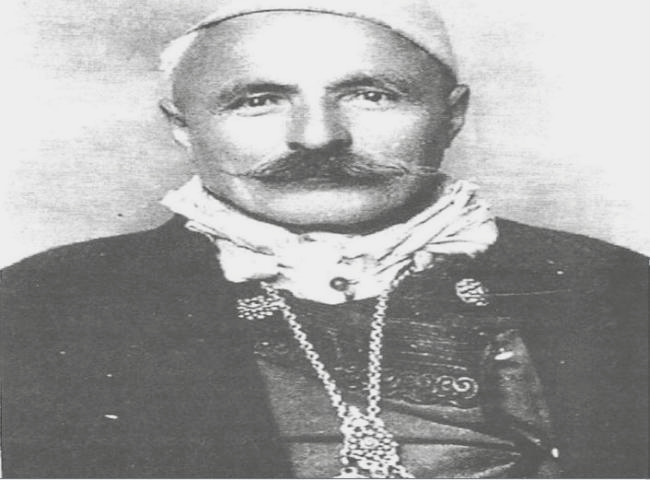
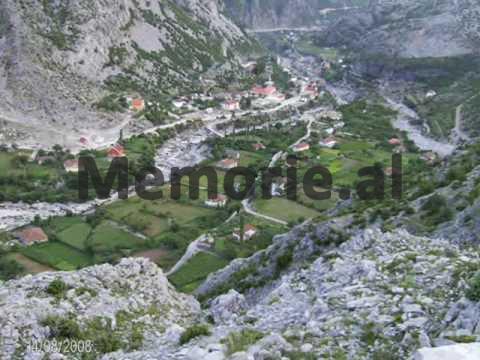
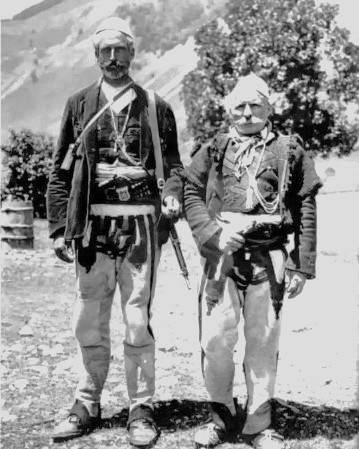
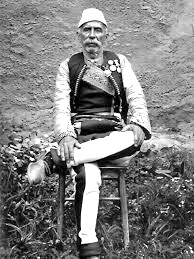
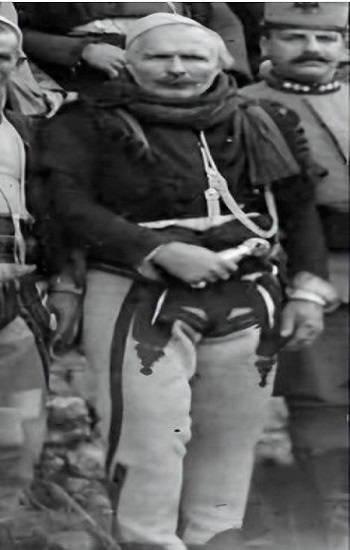
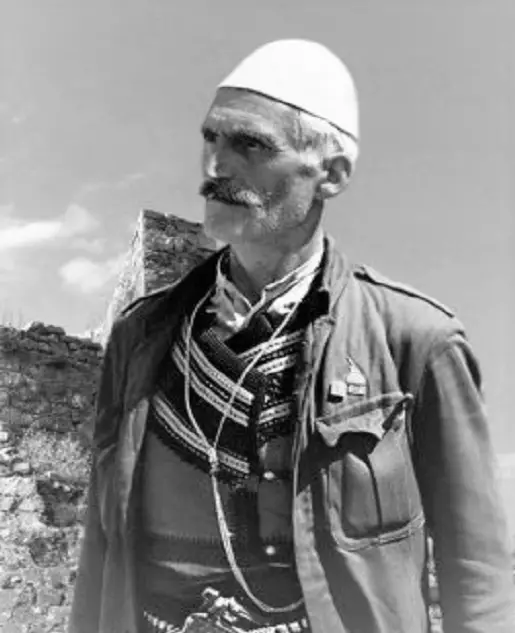
Memorie.al / Uc Turku was born in Selcë of Kelmend in 1860, into a noble family with authority in Malësia e Madhe (Great Highlands). His father was Turk Shabi, a leader and Vojvoda (Duke) of the Kelmend tribe, a duty which, according to the Kanun and tradition, he passed on to his son, Uc Turku. Uc Turku carried out this role successfully, leading the people of Kelmend and the Highlands in all the historical events and upheavals that Malësia e Madhe experienced during those times, when the fate of the homeland was at a crossroads. Turk Shabi, Uc Turku’s father, was a participant in the Albanian League of Prizren and a member of the League’s branch for the Vilayet of Shkodër. And in this role, according to Father Gjergj Fishta, Turk Shabi distinguished himself in mobilizing the people in the fight to protect Albanian lands from partition.
He fought with a weapon in hand, together with his 19-year-old son, Uc Turku, and also as the leader of Kelmend, for the defense of Plav and Guci, as well as Hoti and Gruda. For this activity, the great poet Gjergj Fishta, in his epic poem “The Highland Lute” (Lahuta e Malësis), portrays the chieftain Turk Shabi in Song 19, Song 21, and in Song 25, about the bloodiest battle of Nokshiq in January 1880.
With this patriotic spirit of the highlands’ triumph, under the direction of the Albanian League of Prizren, the leader of Kelmend, Uc Turku, was raised, educated, and tested. From a young age, he was forced to fight for the protection of Albanian lands from Montenegrin occupiers. Historical documents speak of Uc Turku as a popular leader of Kelmend. He fought with a weapon in hand against Montenegrin military forces, such as in the “Battle of Dobri” (lufta e Dobrisë), which took place in June 1880.
It was an unequal battle, where the Montenegrin forces were turned back after a bloody fight, failing to achieve their goal of conquering Kelmend. There were many killed and wounded from among the people of Selcë, while their leader, Uc Turku, was seriously wounded in these fierce battles, as the people of that time sing of the hero: “You, Uc Turku, what do you say / your own cartridge belt ran out of bullets”…!
Another struggle against regular Montenegrin forces, in the fight to defend Selcë, took place in 1908, again in the Dobri valley, the only path through which the enemy could enter Kelmend. But this time as well, after a sublime resistance from the people of Selcë, the enemy was forced to retreat. In these battles, there were killed and wounded; among them, the leader of Kelmend, the battle commander Uc Turku, was left wounded.
In 1902, after the death of Turk Shabi, Uc Turku replaced his father in the institution of the xhibal (mountain assembly/council?), becoming a member of the Highland Court (gjykata e Maleve), attached to the Vali (Ottoman governor) of Shkodër. In this function, Uc Turku did devoted work for the protection of the highlanders’ rights, won through battle. As the leader of Kelmend, Uc Turku became the right-hand man of Ded Gjo Luli in the anti-Ottoman uprising of 1911.
Regarding this, Dr. Luigj Martini, in his book “Prek Cali, Kelmendi and the people of Kelmend” (Shkodër 2005, pp. 50-51), writes: “while Turgut Pasha stopped the momentum,… on April 24, 1911, the people of Kelmend, led by Uc Turku and Prek Cali, attacked Et’hem Pasha’s Turkish army in the ravines of Kelmend. The peak of Golish became the site of an unparalleled battle. There, the brave men of Kelmend cut down 150 soldiers, captured eight tents and hundreds of weapons. The Turks who survived retreated back to Guci.”
And further, the document emphasizes that: “Uc Turku, together with other leaders of Kelmend, gave maximum contribution to the successful conduct of the historic Assembly of Greçë,” where our 12 national demands were drafted and approved.
He participated in the raising of the national flag in Deçiq on May 6, 1911, as well as the raising of the independence flag on December 4, 1912, in Lezhë. With the establishment of the Regional Government of Lezhë, Uc Turku was elected as a member of the Commission in the Local Government Council for the region of Mali i Kolës and Velipoja. Moreover, he was decisive in the appointment of Ded Coku on October 13, 1913, as chairman of this government.
With his authority, they managed to avoid the provincial separatism of council members. Regarding this, Franz Nopcsa, the special envoy of the International Commission of Borders for the establishment of the local government of Lezhë, who participated in this meeting, in his memoirs in the book “Travels in the Balkans” (pp. 448-454), explains that: “I achieved this (the creation of the Lezhë government) because I promised Uc Turku, who had great influence over Llan Turku, that in case of election (of the government with Ded Coku as chairman), I would give him a ‘Mannlicher carbine with binoculars’.”
He received this after Sunday, when Deda was elected almost unanimously as chairman of the Lezhë government. When the International Commission of Borders came to Shkodër, Uc Turku was very active with this commission, with the sole aim of protecting Albanian lands, marking them within the state border of the Homeland. Many documents and memoirs from that time speak of this, such as Andrea Ordioni’s “A French Officer in the Balkans,” which elaborates, among other things:
“In Vermosh, I always saw the chieftains of the Kelmend tribe, Uc Turku and Prek Cali, with whom I had formed a true friendship. Illiterate but very patriotic, both defended their own property and that of the tribe with unprecedented harshness, providing convincing arguments that made me think deeply. The people of Kelmend had one head who directed them, and no one acted without his permission and approval.”
And further, Andrea Ordioni, the French commissioner on the Border Commission, recalls: “The chieftains of the Kelmend tribe, Uc Turku and Prek Cali, were very energetic and very clear in their testimonies, while the Kuči (a Slavic tribe) and the Montenegrins were not so assertive.”
Meanwhile, Mehdi Frashëri, in his “Memories,” describes the leader of Kelmend thus: “Uc Turku, the vojvoda of Kelmend, an old man with clear understanding and a patriot.” Similarly, Gjon Karma, in the journal “Among Our Mountains” (Ndër malet tona), folklore section, Shkodër 1940, would write: “The highlands of Vermosh would have been taken by Montenegro, if Uc Turku, Prek Cali, and others had not stood firm.” / Memorie.al