


Part One
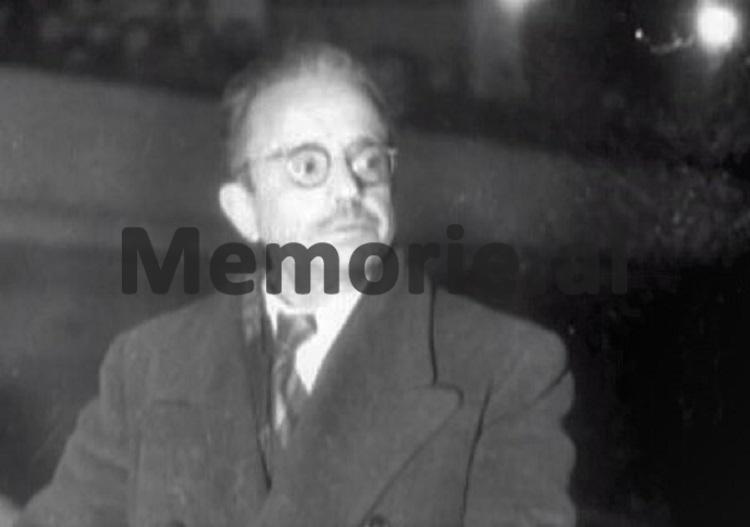
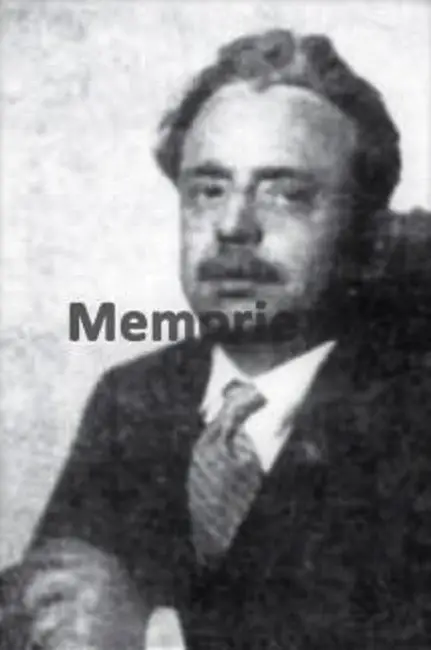
Memorie.al / No Albanian, inside or outside Albania, has drawn or moved me to do something for them by leaving a few fingers’ width of paper as a memory, to be etched into the memory of descendants so they may remember with the greatest honor a man who loved Albania with all his heart. Although his ancestors had left as early as the 15th century, Terenci still found the strength and remembered the land of his forefathers. He wrote a lot, not because he was a writer – his profession, for which he studied, was law – but he found time to also engage in writing, which, when I have read it, amazed me with the depth of thought and the primary conscience he had for Albanians born and raised under the shadow of the Canon of the Mountains (Kanun).
He connects every thought with the manly character of Albanians. Wherever possible, he cites details from the Kanun, which he held so dear to his heart. He knew Albanians to their very core. His misfortune was that he also came to know the communist scoundrels, who, as we will see below, destroyed him root and branch so much that today no one remembers to say that a certain Terenc Toçi had an Albanian and Italian passport and had settled in New Tirana, but now his house, appropriated by the wasteful communists, must be somewhere, but the dictatorship changed the boundaries.
In a piece written by his daughter, Roza, it is said that their house was taken by a certain Bedri Spahiu from Gjirokastër during the war. And now, I say, the heirs of the General Prosecutor, whose seed the dictatorship obliterated completely, must be living in that house of Terenc’s; perhaps they even interned the family members, and the house might have been taken over by some half-baked Lab from the mountains who left the quarries of Labëria, Mallakastra, Çamëria and settled in the heart of the capital, as if his father had left it to him generation after generation.
But no, I swear, those communist pups put down roots in old and new Tirana; only some miracle that might happen could make it so that the heirs of Roza Toçi, who currently live in Italy, can reclaim their property with house and home, now that it’s said Europe won’t accept Albania into the EU unless property is returned to its owners.
I desire for this to happen so much that I can’t even express it. I’ve said everything keeping in mind Terenc’s descendants, as it’s certain they owned their property in New Tirana, because there are plenty of those turncoats who served the Turk and acquired properties without paying a single cent. Now I’ll leave it to the piece I intend to write about Terenc:
Terenc Toçi was born in San Cosmo Albanese on March 9, 1880, into an Arbëresh family with wonderful traditions, especially concerning the land of his ancestors, beautiful Morea. His ancestors had gone under Skanderbeg to Italy to fight against the barons. It was an ancient agreement between Skanderbeg and Venice to help one another.
When he grew up, Terenc remembered the land of his ancestors on this side of the Adriatic Sea, Arbëria, so he permanently left his birthplace of San Cosmo Albanese right after the First World War and settled definitively in Albania. He was a man not only of deep thoughts but also of energetic action, uncompromising in the service of Albania. He had graduated in Law, but also understood economics, though journalism was closest to his heart.
He was shaped as an unparalleled politician, a polemicist and investigator to the highest degree. In his work and activity, he took Giuseppe Mazzini as a model, just as a later Albanian would take another Giuseppe, Ungaretti, as an exemplar. That was Martin Camaj, who, like Terenc, wasted his life in exile, writing and striving for Albania occupied by the communists. In 1900, when he was no more than a twenty-year-old youth, he wrote the study “The Albanian Question,” which was published a year later, after he refined it and consulted with thinkers who wished well for this country and this Albania, left abandoned like a stray on the roads.
He was convinced that the old Ottoman Anatolian regime would soon collapse, as he knew well the history of Europe and the “sick man of the Bosporus,” but he was worried and feared immensely the influence and penetration of Austria during those years in Albania. In his writings, Terenc expressed: “The Eastern Question is a terrible anxiety for Europe because its solution could unleash a war that would lead to catastrophic consequences for peoples dragged along and massacred by governments that are nothing but the absolute negation of every action and principle of justice or law.”
During his time in Albania, he visited several Albanian colonies in South America and held conferences on two themes: “Two Unliberated Peoples” and “Italy and Albania in the Adriatic.”
In America, in New York, Terenc met Klementina Romana and, as a man who made immediate decisions, asked her brother, Xhenerino, a notary in New York, for his sister’s hand. The brother hesitated at first because news about Terenc coming from Italy wasn’t very good, portraying him as a dangerous revolutionary. Nevertheless, after two months, they married.
TERENC TOÇI IN THE MOUNTAINS OF ALBANIA
In 1911, we learn that Terenc sets out on a journey through the mountains of Northern Albania, climbing the slopes of Kelmend, passing through the two Shalas (the Great and the Small), heading to Berishë and Toplanë… crossing the Drin… arriving in Orosh and more precisely, in Fan of Mirdita, which in its time was the heart of Albania. Marching through the highlands of the North, such as: Shalë, Shosh, Mertur, Mekaj, Toplanë, Thaç, and other “flags,” accompanied by a highlander named Sadri, Terenc tells of their readiness, like that of Andrea Prenka, to fight the occupying Turks.
The highlanders, for the League (Besa), swear by the tradition of the Kanun, such as: “As God is true, I pledge my besa (word of honor) that, as long as I live, I will fight with my comrades for the Albanian Flag… I will not kill except in battle… I swear I will not fall alive into the hands of the Turk nor yield to his threats and temptations”!
On April 26, 1911, Terenc Toçi in Bisak near Orosh, gathered men in an assembly, calling people who loved the fatherland from the villages mentioned above, but also from Hasi and throughout Mirdita.
At that gathering, the bajraktar (flag bearer/chieftain) of Orosh invited him to take the lead and organization for creating a provisional government. Two days later, i.e., on the 28th of that month, Terenc wrote to Riccioti Garibaldi, telling him he could pin his hopes on thirty thousand men and to come immediately with arms and volunteers…!
Seeing the readiness of the highlanders, who gathered in such numbers at the call “Who is brave?!” the Turks and their servants became very worried and promised one hundred thousand mexhite (money of that time) for Terenc Toçi’s head, but no Albanian, bound by besa or not, betrayed him. Regarding those unforgettable days that became the prelude to the Declaration of Independence, the analyst of Albanian affairs in America, Sami Repishti, writes: “From Iballja of Puka with Terenc Toçi to the Fortress of Deçiq with Ded Gjo Luli, the raising of the red and black flag served as the precursor to our national holiday on November 28, 1912, in Vlorë of Ismail Qemali.”
Despite the readiness of Albanians for an armed struggle against the Turks in cooperation with Garibaldi’s forces, as had been promised to Terenc for providing arms and necessary means for fighting, it did not happen because Garibaldi had definitively given up on sending Italian arms and troops to Albania. This was a grave insult to the Italian youth who had shown themselves ready to shed blood for the Albanian cause.
For this, Terenc Toçi became as angry as no one can describe, but nevertheless, the news that had spread that an Albanian from Italy had placed himself at the head of a Provisional Government for an armed uprising in Albania was a great initiative; indeed, this was even published in the prestigious Italian newspaper, Giornale d’Italia.
It published the details based on an interview that Toçi himself had given in June 1911 when the uprisings of the northern highlanders had taken on wide dimensions to overthrow centuries-old Turkish occupation. In the interview, Terenc had responsibly declared that there were sixty thousand insurgent men ready, who obeyed as if they were a single soldier.
When one of the journalists asked him about the Turkish forces, he replied objectively, without diminishing their worth: “Excellent, it would be unfair to deny it.” During that conversation, Terenc had produced as evidence three sheets of a protocol, where the names of the insurgents were, and as traditional evidence, their thumbprints were affixed, according to the theory of forensic science, something he knew well, being a jurist.
As is known from history, those uprisings were drowned in blood by the inhuman massacres of Shefqet Turgut Pasha, about whom Toçi said: “… he has no human feelings, but is an intelligent and brave man, who sought to hang the priest of Mirdita because, according to him (the Turkish Pasha), he had not helped the government much.”
After the Declaration of Independence by Ismail Qemali, certainly under the dictate of the Great Powers, especially Austria, Terenc Toçi began to proclaim and express his opinions in favor of Albanians in a press organ titled Revista dei Balcani, published in Rome. Among other things, in that journal he wrote: “A people that has had a great civilization… that prevented the crescent moon from crossing the Adriatic… a people that scientists have determined as the most beautiful and strongest race of the Balkans… should not disappear.”
TERENC CONTINUES TO DEFEND THE RIGHTS OF ALBANIANS
At the International Congress convened in Trieste in March 1913, a few months before the Congress of Berlin, where the problems of the Albanian people would also be addressed, Terenc said among other things in his closing speech: “Let’s go to Albania, and either we die there, or we live for freedom.”
Later, he founded the daily newspaper Taraboshi in Shkodër, in which he began to unmask the maneuvers of the Great Powers that, to smooth over their own contradictions, wanted to partition Albania, a country enslaved for four hundred years by the Ottoman invaders, but his calls fell on deaf ears, and Austria made Albania a principality and placed Prince Wied on the throne in March 1914.
After a year and a half of publication, the newspaper Taraboshi was shut down. Despite the value it had and the help it gave to the people of Shkodër, who were thirsty to know everything. Even though dozens of cultural magazines dealing with social issues came out in the city, they also loved Terenc’s Taraboshi. It had helped disseminate coherent news that was matters of the day, but it had also provided invaluable help for learning the Italian language. The red nomenclature, later, would claim his newspaper aimed to “fascistize” Albanians!
(I wonder, now after the fall of communism, having introduced foreign languages in schools, will we become internationalized and forget the Albanian language?! Why didn’t we become Slavs or Russians when we learned Russian?!) Nevertheless, the reason for the closure of that newspaper by the local authorities, the publisher argued through facts in eleven points he had published about the exploitation of the Albanian economy by foreign concessions operating in Albania. So, the intention of the newspaper’s author is clear: to protect Albania. The local authorities, relying on the daily press that trumpeted the “good” intentions of foreign firms, said Toçi’s newspaper published inaccurate news.
THE UNSCRUPULOUS HACKS OF THE DICTATORSHIP REGARDING TERENC
It’s an interesting fact that researchers and historians of the communist red nomenclature, among other “reactionary” newspapers published in Albania before liberation that did not trumpet Bolshevism as they would have liked, also include the newspaper Taraboshi. Among others, the erudite researcher, but deeply fervent with social-communist ideas, Gazmend Shpuza, who had extolled the deeds of Haxhi Qamili to the skies, writes:
“A newspaper in support of feudal landowner, chieftain, and clerical reaction”!
Now, we don’t know who to call reactionary: the author of Taraboshi, or the author of the “Studies…” who has elevated that grimy peasant we mentioned above, about whom he writes that the movement led by Haxhi Qamili was an anti-landowner movement against the exploiting classes, or Toçi’s newspaper, which called that rebellion “a serious defect undermining the reborn state”! The publisher of Taraboshi himself wrote that he “benefited from the conduct of patriotic friends, such as the poet Hilë Mosi…”! Everyone knows who Hil Mosi was. He had fought with a weapon in hand alongside the brave highlanders of Ded Gjo Luli.
The newspaper had issued an eleven-point memorandum. Point two states: “The newspaper fought against the so-called ‘National Bank of Albania’ which, founded by capitalists from Milan and Vienna to create a state within a state, chained the economic future of Albania instead of emancipating it”!
The publisher gives this clarification to show that through his writings, he had touched the capitalist interests of the Italian and Austrian states, which is why they closed it. It is known that the powerful are always “right.” Another publicist and folk poet, named Hamit Lumi, who had emigrated from Albania in 1911 to the USA, at a time when the country needed more than ever to be in the front line against the Ottomans, wrote a creation – a satirical poem (bejte) titled “What Toçka Says,” where he says; “he deepened the treason by becoming an instrument of Italian fascism in Albania… who, being Arbëresh, tried to sell himself as a patriot and defender of the Albanian nation”!
And he gives a fragment from the bejte where the author Hamit Lumi “satirizes” Terenc Toçi with “touching” verses: “Without suffering, without school (Terenci who had completed Law studies, B.S.) / and without knowledge / without a subtle mind / to have diplomacy / And I deserve… / For a ministry”…! At the end of the poem, the “impartial” researcher Mr. Braho, who elevates the fugitive Hamit, makes this note: “Thus says Toçka and this is his program and that of his comrades near or far, because thus are fulfilled the desires of Italy and Greece, by which they are paid,” Hamit Lumi.
The aforementioned researcher, Mr. Zeka, notes that these remarks were taken from the newspaper Albania – Shqipëria, dated December 4, 1919. And we have the right to ask: “Could it be that the late Lumi, who had ‘been taken by the river’ (passed away), on April 18, 1929 in Boston (poor thing, my note), that fascism in Italy was established from 1922 and couldn’t have given advances to the thoughts expressed in 1919, in that newspaper we mentioned, that ‘Terenci became a tool of fascism’?! Perhaps he deduced fascism when its ideologues (of fascism, B.S.) were still ‘pregnant’?!”
In the title of the poem: “What Toçka Says,” while at its end… “Thus says Toçka.” Again we ask a second question:
“Could there be some mistake or lapsus by the ‘researcher,’ poet – bejte writer H. Lumi, when by the name ‘Toçka,’ he implies T. Toçi, because Terenc wrote under the pseudonym ‘Milo Shini,’ while Milto Sotir Gurra wrote under the pseudonym ‘Toçka.’ If this is so, because anything could have happened in the past, for when eyewitnesses die, legends are born, and if all those ‘epithets’ were to be attributed to M.S. Gurra, what a pity, because he would have to be removed from Albanian literature, or we must tell the ‘researcher’ Hamit, who has been ‘taken by the river’ (Lumi): ‘You’ve messed up for nothing’…!” / Memorie.al